How do we close the gaps in care for children’s mental health right now — not months from now?
In part two, we highlight two evidence-based models delivering rapid, meaningful support: HealthySteps, which strengthens early relational health in primary care; and PATH, a telemental-health program offering fast, targeted access for kids and teens.
Rahil Briggs, PsyD, National Director, HealthySteps, and Amanda Lochrie, PhD, MBA, ABPP, Executive Director, Child and Behavioral Health, Medical Director, PATH, Nemours Children’s Health, join us to explain how these programs meet families where they are, reduce stigma, shorten wait times, and lay the groundwork for children to flourish. Their work is detailed in a new issue brief from the Nemours Children’s Office of Policy and Prevention: Promoting Mental Well-Being for Children: Promising Pediatric Mental Health Models That Help Children Thrive.
Featuring:
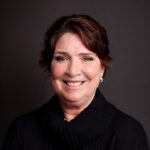
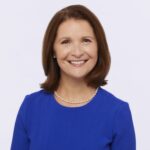
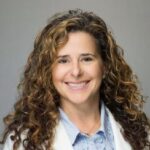
Rahil Briggs, PsyD, National Director, HealthySteps
Amanda Lochrie, PhD, MBA, ABPP, Executive Director, Child and Behavioral Health, Medical Director, PATH, Nemours Children’s Health
Host/Producer: Carol Vassar
TRANSCRIPT:
Announcer:
Welcome to Well Beyond Medicine, the world’s top-ranked children’s health podcast, produced by Nemours Children’s Health. Subscribe on any platform at nemourswellbeyond.org or find us on YouTube.
Carol Vassar, podcast host/producer:
Each week, we’ll be joined by innovators and experts from around the world, exploring anything and everything related to the 85% of child health impacts that occur outside the doctor’s office. I’m your host, Carol Vassar. And now that you’re here, let’s go.
MUSIC:
Let’s go well beyond medicine.
Carol Vassar, podcast host/producer:
Welcome everyone to the second of a two-part episode of the Nemours Well Beyond Medicine Podcast, in which we’re examining models for providing mental health services to children. Now, these models are discussed in great detail in a brand-new issue brief from the Nemours National Office of Policy and Prevention. It’s called Promoting Mental Wellbeing for Children, promising Pediatric Mental Health Models that Help Children Thrive. And we’ll put a link to that in our show notes.
With us to discuss telehealth and relational health, which are best practices in this area, is Dr. Rahil Briggs. National Director of Healthy Steps, a program of zero to three, and Dr. Amanda Lochrie, Executive Director for Child and Behavioral Health at Nemours and Medical Director of the Pediatric Acute Telemental Health Program known as Path, one of the two models we’re gonna take a look at today. Each of these programs tackles the issue of behavioral health access in different ways. PATH promotes rapid telemental health in a primary care setting, while HealthySteps focuses on early relational development. We begin our discussion with both Dr. Briggs and Dr. Lockerbie explaining, in their own words, the missions and goals of their respective programs. Here’s Dr. Rahil Briggs.
Rahil Briggs, PsyD, HealthySteps:
So good news, we’ve got a lot of science these days, and it tells us that the early years are really important to all of us. We’re basically building the foundation for wellness. So when you think about early brain and biological development, this critical period of early childhood is where we’re building the foundation for a child’s future health and well-being. I always say it’s not really an exaggeration to say that then those healthy children form the basis of our collective future wellbeing and prosperous society.
So HealthySteps is an evidence-based program of Zero to Three, which is a big national nonprofit. And we transform the promise of pediatric primary care through a unique team-based approach that brings in a Healthy Step Specialist and that person is an expert in early childhood development, behavioral health prevention and promotion, and they become part of the healthcare team alongside the pediatrician nurse, family medicine doc, focused on kiddos birth through three and their families and we provide a tiered model of services. So all families get something in terms of universal screening to then risk-stratified supports really responding to need. And right now we’re reaching just over half a million children, and our North Star goal is to reach over a million children by 2032.
Carol Vassar, podcast host/producer:
Now, this is the relational health that I mentioned in the introduction. I’m not even sure what relational health is. Can you give our listeners and our viewers a sense of what that is?
Rahil Briggs, PsyD, HealthySteps:
Absolutely. So I’m a psychologist. When we think about children’s mental health, it’s a hot topic for a lot of people these days, but I think most people think about school-aged kids, adolescents, teens, often missing in that conversation about children’s mental health are the babies, and the idea that babies and toddlers can have mental health or lack thereof, just like older kids can. So that’s where early relational health comes in, and that’s really early relational health being the key concept there. So it’s the idea that the health and well-being of these babies and toddlers is firmly rooted in the relationships they have and that those relationships are nurturing, responsive, supportive, safe, stable, that they’re nested really within a community and a culture and a language. And finally, it’s like a bidirectional fantastic thing when we can get this right because it benefits both the kids and the adults in their lives. So it’s the foundation for mental health for the kid, and it’s also the caregiver really benefiting from having the support they need to be well themselves and to really foster those nurturing relationships.
Carol Vassar, podcast host/producer:
Excellent, excited to learn more about that. Dr. Lochrie, tell us about PATH and the programmatic missions and goals of the PATH program.
Amanda Lochrie, PhD, Nemours Children’s Health:
Well, thank you. And echoing Dr. Briggs, thank you so much for having me. I have been a big fan and excited to be on this podcast today, and I’m really excited that was a great segue with what Dr. Briggs had brought up. So PATH stands for Pediatric Acute Telemental Health program. We created this program in 2023 really as a way to address what had happened after COVID, where we had this incredible surge and crisis really with what we were hearing a lot of us on our televisions and through social media, because we were all at home at that time, about what was impacting kids and adolescents at that time, and particularly how COVID being at home and being isolated from their peers, not going to school, not doing their normal routines, how that was impacting their mental health.
We were also not surprised to understand that some kids were already not doing very well. We just knew about it because of COVID. And so there was a little bit of, this is already going on, but now we are definitely hearing the call. We are also hearing about all the time, there are not enough of us. There are not enough mental health providers. There’s not enough appointments. There’s not enough access for kids to be able to get into services when they need it.
So this was the brainstorm of we have to do more. We can’t keep having these referrals come in and telling families they have to wait. And at that time, either places in our community were not even taking lists for new patients because the wait lists were so long, or we were hearing at least six months to a year for being on the wait list. So we had to do something else.
So PATH was really designed to provide rapid access. So we have families being able to get into appointments the same day/next day; our average is about nine days. So we save urgent care appointments for those same-day/next-day needs. If it’s not urgent and the family would rather make an appointment based on what’s convenient for them, that’s where we’re getting to that seven to nine days. Sometimes, depending on the timing of the year, we can go out a little bit further, but our longest wait has been about three weeks so far.
Carol Vassar, podcast host/producer:
Wow.
Amanda Lochrie, PhD, Nemours Children’s Health:
Telehealth has been a great way for us to really expand the services because we’re doing extended hours. So not only are we working outside of the normal eight-to-five part of the day, but we are extended to eight o’clock in the evening, and we’re also offering Saturday appointments. So we’ve expanded the number of hours in the work week, so to speak, and staggering kind of how we’re working with individuals. And I will tell you of all of our appointments, we try and put the most at three, four, five o’clock, and then weekends have been a nice option for families too. So that has been, I think, how we have been able to get families in more quickly.
And I guess I wanted to go back to what Dr. Briggs said, because I love that she explained the relational importance. We’re seeing kids starting at two, so I love that we have this overlap. A lot of those kids that we’re seeing it too is kind of addressing the things that she was getting to of some kids that are really struggling with behavior, developmental issues, a lot of parenting types of things. So I would say we’re doing more parental intervention at that time, but I love the segue of the idea. We need to provide those relational supports because we want to prevent as many problems as we can. Where Path is right now is we’re kind of dealing with when there is a problem, ideally, we would love to be able to do early intervention so that we can prevent things from becoming more severe. But to be completely honest, where we are now is really addressing a lot of the more moderate, severe, even crisis, because families have waited so long to get access to services.
Carol Vassar, podcast host/producer:
It sounds like there are gaps in the mental health care system that you identified as a result of COVID that this model can fill in terms of access. That seems like a big one. Convenience, making sure families can meet them where they are, maybe it’s three, four, or five o’clock in the afternoon, or if it’s the weekend. What other gaps do you think your PATH model fills?
Amanda Lochrie, PhD, Nemours Children’s Health:
So one of the things that we have really focused on is we need to make sure that you’re in the right line. So if we have families that are waiting for this appointment that they’re on, that’s six months from now, this in-person appointment. So they might say, “I don’t think my child would do very well with telehealth, so I’m not sure I want to have this appointment.” Well, we have put all sorts of scripting around, “Keep the appointment.” Because what we’re doing is actually providing that very targeted psychological assessment to understand the diagnostic criteria that are being met, to understand the process of what the needs are. So we are also kind of addressing that wait list, referral list, because we are saying, “Hey, go ahead and come and see us. Let us make sure you’re in the right line. If you are, we’re probably going to leave you there.”
And the other gap that we’ll do, and as part of this process, which has really been something we didn’t plan for, but has been a beautiful iteration of what we’ve been able to expand upon, is keep that appointment at six months, but we’re not going to make you wait that long to get any help. We’re going to provide very brief evidence-based target interventions. So ideally, maybe you just need a few sessions, and we can do this cognitive behavioral treatment or this parenting intervention, or get you connected with the specific thing that you need out in the community, whether it’s an autism evaluation or needing to see an eating disorder specialist. So we’re going to make sure that we are getting you the information that you need, giving you the intervention that you need, and keeping you on track for that next step, but we will follow you along the way. So you don’t have to wait several months to get the information. We can fill in the gap and then send you to that community provider that you’ve already connected with, or we will also provide the warm handoff.
So our team of social workers and case care coordinators, I like to call it a warm to hot handoff, because we are looking at insurance, we are looking at area of town, we are looking at specific type of intervention needed, specific type of specialty needed to get you to that place. And so making sure that wherever we’re sending you is not a dead end unless you decide not to pick up the phone and make that connection. And so that’s something that we felt like was a barrier as well in the past is sending a list of saying, “Hey, I’m sorry we can’t see you, but here’s a list of people we hope can,” but we didn’t always know if that was going to work out or not.
Carol Vassar, podcast host/producer:
Dr. Briggs, similar question, HealthySteps, how does that help to maybe bridge some of the gaps in mental health care that you’ve seen in the work that you’re doing?
Rahil Briggs, PsyD, HealthySteps:
Thank you, Dr. Lochrie. I love the “Let’s treat this with the importance that it deserves.” You need help now. This isn’t like, “Oh, here’s some solution that’s six months down the road,” or an appointment that’s two months down the road, or a list of referrals that go into what I like to call the referral black hole. So I think we share that perspective that mental health is such a critical building block of wellness, we need to meet families where they are when they are having concerns and not give them a list that may or may not play out. So HealthySteps leverages that pediatric primary care space, which is beautiful for a number of reasons.
Number one, there are 12 to 13 well-child visits in the first three years of life, and seven of those are in the first year of life alone. So even if your child is a miracle baby and never gets sick and never needs any follow-up, you’re going to be there a lot in those first three years. So you’ve got that repeated access. And as we all know, sometimes it’s the second or third time where you’re ready to talk about something.
Number two, I say this as a psychologist who tried to treat young children in the mental health system, there’s a real lack of stigma in the pediatric space that we don’t always appreciate. Sometimes I like to say it’s even positively stigmatized, like you’re a good parent if you take your kids to see the doctor.
So you’ve got this, positively stigmatized, repeatedly accessed, and then number three, over 90% of families regularly attend these well-child visits. So this is where families are. So let’s leverage that platform. Pediatricians have 15 minutes to do a well-child visit; it’s not always enough time to talk about these sorts of things. Let’s add a new team member, create high-quality team-based care, and just meet families where they already are because they make those appointments. No matter what else is swirling in the life of a young family, you make it to that well-child appointment for your kiddo.
Carol Vassar, podcast host/producer:
Dr. Briggs.
Rahil Briggs, PsyD, HealthySteps:
And the follow-up thing I’d say… Sorry, Carol-
Carol Vassar, podcast host/producer:
Go ahead.
Rahil Briggs, PsyD, HealthySteps:
The beauty also is that those babies don’t come there by themselves; they don’t get dropped off. They don’t come on the school bus.
Carol Vassar, podcast host/producer:
They’re not driving.
Rahil Briggs, PsyD, HealthySteps:
We’re not driving yet. Plus, Dr. Lochrie said a lot of this is parent work and parent/child work, and it’s the one place where young, busy, stressed parents of babies and toddlers, where you can find them.
Carol Vassar, podcast host/producer:
Yeah, absolutely. And I know that HealthySteps, the evidence that you have been able to gather, shows that stronger attachment equals fewer behavioral concerns. What happens, you brought up the well visit, what happens during a well visit that kind of builds those kinds of outcomes?
Rahil Briggs, PsyD, HealthySteps:
Yeah, so right, the well visit, this wonderful thing that you can take advantage of. There’s things that even that happen before the well visit, where there’s universal support with a family support line. There’s universal screenings that usually happen in the waiting room or via the healthcare portal to try to identify who might need some of those stratified services. But when you get into that well visit, again, 15 minutes is a typical well child visit where the pediatrician needs to do everything under the sun, from fluoride, to vaccinations, to are you growing? Enter the HealthySteps specialist, and now you can pay more attention to things like tantrums, sleep training, and housing needs.
And so you can have then a follow-up consult, not nine weeks later as Dr. Lochrie’s trying to solve for, but a couple days later, “Hey, did it work? Those things we tried with sleep training, come back in three days, let me know. We’ll fix it. Oh, you need a referral to a diaper bank. Well, rather than just give you that piece of paper that goes into the referral black hole, here’s a” I love your warm to hot handoff “To make sure that you actually get connected.” So, really, a wraparound approach using that well visit as the platform to meet families where they are and make sure they get everything that they’re looking for.
Carol Vassar, podcast host/producer:
When parents go to that well visit, they do want to ask questions about sleep hygiene. They want to ask how they’re going to deal with temper tantrums. Sounds like that takes a little bit of the onus off the physician, so the physician can look at weight, height, vaccinations, fluoride, whatever else physically is necessary. Is that part of the benefit of this, is kind of assisting with and supporting the physician as well as the family?
Rahil Briggs, PsyD, HealthySteps:
You’re exactly right. You’re exactly right. I just got off of a call while we were reviewing some interview work that we had done with HealthySteps, Physician Champions, and they all talked about burnout improving. Because I think what stresses all of us out more than anything when we’re in these helping professions is the idea that parents are presenting with a challenge or a problem, and I don’t have the skills to solve that problem. So if really the conversation needs to be half an hour on sleep training and the way in which it needs to work with grandma sleeping in the house and needing to get up early and this and that and the other, but what my tools are, are in another space that leads to burnout because you know you’re not sort of reaching the family’s needs.
The other thing I’d say, Carol, is you’re exactly right. There was some wonderful work that Tumaini Coker did many, many years ago, where she did focus groups with families saying, “If you could redesign those well-child visits, what would you make them be about?” And they all said, more on focus on development and more focus on behavior, because those are the things on our minds in these early years.
Carol Vassar, podcast host/producer:
And this model meets that in many ways, doesn’t it? Dr. Lochrie, you talked about PATH and we’ve talked to that nine day time to appointment, let me quote some stuff that I learned on the internet, some details, 1,596 telemental appointments, you screen 300 plus teenagers for depression, the median, nine day time to appointment. To me, having children who were teens 15, 20 years ago, that’s miraculous. What is the secret there operationally to that speed?
Amanda Lochrie, PhD, Nemours Children’s Health:
So I think managing and utilizing our telehealth system, obviously, extending the time we can see families. But I think the other thing about telehealth, which has been so beautiful, is I don’t have to be in your same town. I don’t have to be in your same zip code. I don’t have to be in even your same time zone, like in Florida, where we’re split a little bit.
Carol Vassar, podcast host/producer:
Yeah, that’s true.
Amanda Lochrie, PhD, Nemours Children’s Health):
So, taking away a lot of barriers, creating a lot more new patient appointments, trying to keep the intervention. What we know from all of the really good data and research and the evidence-based practice within psychology is one, we know our cognitive and behavioral techniques, we know they work. Hands down, we know they work. We also know that they can be very effective in a short amount of time. You do not have to have years of therapy to benefit from cognitive behavioral intervention. It is really designed to be short-term, effective interventions. And so we are able to really highly dose our appointments. And particularly because we’re doing telehealth, we have this dedicated space, just like you and I are talking today, very different than if I had you in my kitchen and I was making coffee and I was going around and getting something in a drawer, we’d have so many distractions.
So like in our offices, distractions can be a really powerful tool to really connect with kids and families, absolutely a time and place for all of those things, but we can do a lot of really good work, help the families do a lot of really good work to be able to use that time to really give a very high dose of intervention in a shorter amount of time. So I think that’s how we’re really capitalizing on this throughput so that we can keep seeing more families.
Now my other plug for… And I’m sure that in Dr. Briggs’ program, they’re using a lot of these skills because what we know about cognitive behavioral therapy is that it really could be called cognitive behavioral techniques because it is good for everybody. It is good for all situations. I tell the families that I work with constantly, “I do this all the time.” Everything that I’m telling you in terms of breathing exercises, relaxation, are all skills that thankfully I was lucky enough to learn because of the job that I do, but I use it every day. And I think it is such, truly for the kids that I see, and for all families, all adults, because I tell the adults, the parents that I work with all the time, “We all need to be doing this. Everything I sign for homework for your child is the same homework you could be doing as well.”
But it is truly the superpower. We are giving kids and families these superpowers if they can really manage and learn these skills early. And so it’s a very much kind of as we weave it into the fabric of what we do, I think a lot more families are going to benefit from that in an early intervention model, and certainly in this intervention model.
Carol Vassar, podcast host/producer:
And Dr. Lochrie, one thing I’ve noticed about PATH and also about HealthySteps is that you partner with primary care and you partner mostly with primary care sites that lack preventative behavioral health services. How do you get the primary care physicians up and ready, and feeling confident, and doing the screening and doing the referrals so that patients get the additional services?
Amanda Lochrie, PhD, Nemours Children’s Health:
So we are so excited to partner with all of our primary care practices, because exactly how Dr. Briggs says, that’s where they are. That’s where we can find them. It is not the only way for them to get to us because we are looking at expanding with like the YMCA, other community partners that we can say, “Hey, we’re here.” But with primary care, that’s exactly where we know where everybody is.
So one of the things we’re doing with the primary care practices that actually have embedded mental health supports is if there is a crisis need, they can get in to see us quickly. And so again, that’s that space where we can say, “Hey, come see us for a session, and then we’re going to send you back to your primary care office and see that behavioral health specialist there.” For those practices that don’t have any mental health therapists, because there’s no way we’re going to be able to tap into having somebody at every single primary care location. So again, another way that telehealth has absolutely changed the way that we can deliver this care is we can absolutely partner with those practices.
We have one partnership in particular, which is in, they have practices in six rural counties in Florida. So, really limited access to not only additional primary care, other types of services, but definitely their mental health services.
One of the things that’s changed over the years is a lot of the primary care practices, almost all of them are much more comfortable with screening for these things. So now they’re really screening for depression. This primary care practice in these rural counties they’re actually screening for social determinants of health, depression, anxiety, which is really remarkable. So we love that they’re doing that, but one of the questions we got from a lot of them before was, “Well, what am I supposed to do? If I ask these questions, what am I supposed to do if I don’t have a mental health therapist here or a psychiatrist or somebody to send them to?”
So one, 100% compliment to our primary care physicians, they have really had to do a lot of this work on their own and continue to do that, but we are so happy to be able to partner with them so that when they have specific needs that are identified, they no longer have to be the only people managing that. And so we are taking that burden of that complexity that they don’t have time to really address and giving them that really safe place to send these referrals to, knowing that these families can get access rather quickly and from the convenience of their own home. So they don’t have to drive 45 minutes to an hour, sometimes two to three hours from some of these locations, and get to this location.
(24:58):
We are actually tracking miles saved as a part of this project so that we can then put that into reality of like, this family would’ve had to travel this long, had to be in the car this long, had to take off this many days of work, this child would’ve had to miss this many days of school to be able to have this service, and we’re taking a lot of those barriers away.
Carol Vassar, podcast host/producer:
What does this look like if we combine these two? Where do these two cross paths, if you will, no pun… Okay, every pun intended. Paint for me, each of you, the ideal continuum from early relational support and primary care to rapid telehealth access when those needs emerge to that warm handoff, that hot handoff to community resources. Dr. Briggs, I’m going to start with you since early relational health really starts in the most early of days.
Rahil Briggs, PsyD, HealthySteps:
I love that question, Carol. It reminds me of some of our sites who do that first visit, tag teaming, just doing that warm-to-hot handoff in the well-child visit, meeting the family in person because they’re already there and then offering the family subsequent visits can be via telehealth.
Maybe you don’t want to come back to the pediatric practice. You already know me, you can trust me, and we’ll connect via telehealth. And I think, whereas very young children are at the pediatrician all the time, school-age kids shouldn’t be at the pediatrician that much. They might have an annual well check, but what are the ways in which we can sort of span all those different systems, meet families where they are? That seems to me the key piece about it. Where are these kids? Make sure that we are doing the kind of universal screening that HealthySteps requires and then helps to show us who might need a little bit more help, then offer them help in the space where they already are, and complement it with telehealth to the extent that that can make it easier for them.
Carol Vassar, podcast host/producer:
Dr. Lochrie, that makes a lot of sense to me. What are your thoughts? Anything to add to that?
Amanda Lochrie, PhD, Nemours Children’s Health:
Yes, 100% agree. And I was thinking about this example earlier and forgot to mention it with an earlier question when Dr. Briggs mentioned about the sleep. Sleep is such an important topic for these really young families, or families with young children. And so one of the things we have actually incorporated in our program, but also have some specialists that work with neurology with the sleep patients that are a little more severe, we are actually going in using telehealth as a way to say, “Show me your bed. Show me where you sleep. Show me what you sleep with at night and what’s your bedtime routine?”
So I think that particularly with really young children, we’re not going to necessarily engage them in the same way that I need to sit on the floor and play, which sometimes really works very well for very young and kind of that five to seven year old range. But sometimes it really makes sense for us to use this intervention and to have those specific things that we’re working on, so kind of enhancing the work that’s being done from that pediatric practice into the home with maybe somebody that can do a little more specialized work of that idea of, let me see exactly what your routine is so that we can kind of solve the problem because maybe this is the best space to work this out.
Especially with the parenting thing, so I can see that integration exactly how Dr. Briggs stated it, of “Hey, we’ve kind of set this up in the pediatrician office. We’re doing all these things, but this program could actually enhance on these specific skills. So, parent, show me what the dinner table looks like where you’re having struggles with your child eating and sitting at the table.” It’s like, well, we can go in… As long as it’s okay, we don’t want families to feel uncomfortable and feel like they’re being watched in their own home.
Carol Vassar, podcast host/producer:
Judged.
Amanda Lochrie, PhD, Nemours Children’s Health:
But the idea is using the tools and helping families solve those problems. Because a lot of times, particularly in this younger age group, all those problems are, “Yes, but if you could just see him or her at home. If you just knew what it was like to be in our space.” And so that’s where I see a lot of opportunities for integration with the work that Dr. Briggs is doing with HealthySteps and how we can incorporate even some of these things into a program like PATH.
I 100%, early intervention is the key to all of this. My hope is that we get to a place where a lot of the referrals we’re getting are because we’re just getting them right at the beginning. I have never been happier and less upset when I can tell a parent, “I’m really glad you came in, this anxiety is normal. This is how five-year-olds deal with the stress of life, and this is really normal, and so this is expected. But guess what? We also have these really cool tools that you can use of breathing exercises,” which we do with blowing bubbles, things like that that we can really incorporate into, “While you’re here, let’s set up some good coping.”
But if we can manage mom or dad’s anxiety about what it is, and make sure. I love that they come and ask us. And that’s really where I think we could make a lot of change is if we can get to these families earlier. But either way, we want families to know, even if it’s not early, we want you to have a place to go so that we can get you back on track.
Carol Vassar, podcast host/producer:
Dr. Amanda Lochrie is the Executive Director for Child and Behavioral Health at Nemours Children’s Health. We also heard from Dr. Rahil Briggs, National Director of Healthy Steps, a program of Zero to Three.
MUSIC:
Well Beyond Medicine
Carol Vassar, podcast host/producer:
Many thanks to Dr. Lochrie and Dr. Briggs for the time and the information provided about both Health Steps and PATH. Learn more about these programs, plus the initiatives to put mental health services into school-based health centers that were the focus of part one of this series, in the new issue brief from the Nemours National Office of Policy and Prevention. It’s called Promoting Mental Wellbeing for Children: Promising Pediatric Mental Health Models that Help Children Thrive. It’s available via a link in our show notes for this episode.
Thanks to you for listening, and don’t forget you can catch up on our latest episodes of the podcast by subscribing to the podcast on your favorite podcast app, or on our website: nemourswellbeyond.org. You can also go there to subscribe to our monthly e-newsletter and leave us your ideas for future episodes. Again, that’s nemourswellbeyond.org.
Our production team for this episode includes Cheryl Munn, Susan Masucci, Lauren Teta, and Alex Wall. Video production by Britt Moore. Audio production by yours truly. Join us next time when health information pioneer Micky Tripathi returns. He is currently heading up all things AI at Mayo Clinic. It’s an episode you don’t want to miss. I’m Carol Vassar. Until then, remember, we can change children’s health for good, well beyond medicine.
MUSIC:
Let’s go well beyond medicine.
Watch the episode on YouTube.
Featuring:
Rahil Briggs, PsyD, National Director, HealthySteps, ZERO TO THREE
Amanda Lochrie, PhD, MBA, ABPP, Executive Director, Child and Behavioral Health, Medical Director, PATH, Nemours Children’s Health
Host/Producer: Carol Vassar