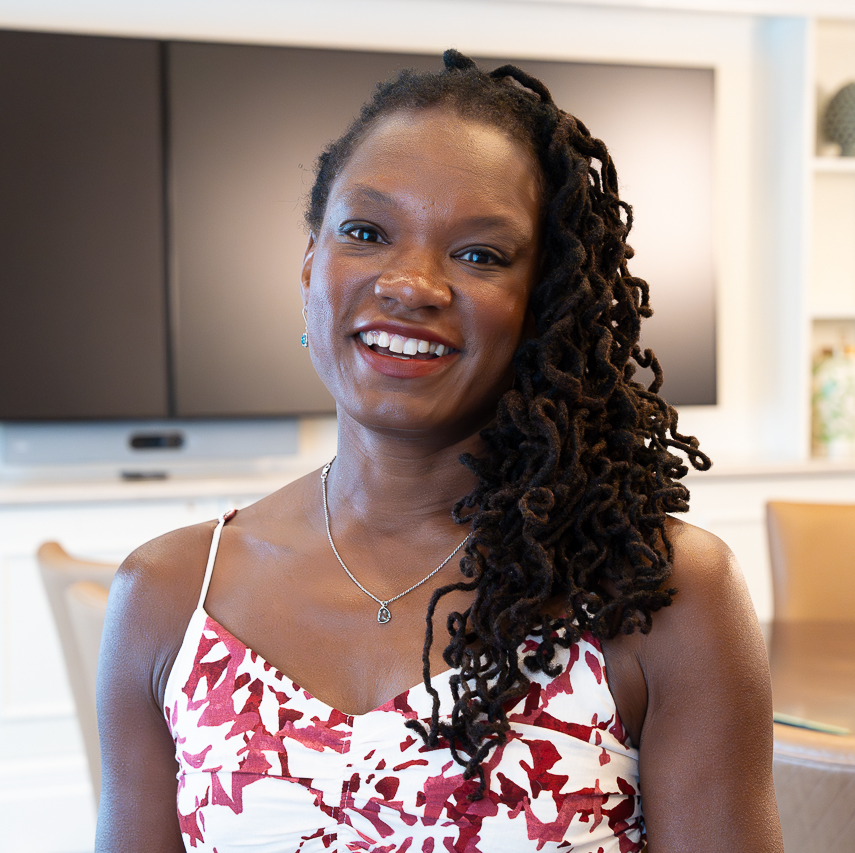
The foundation for lifelong heart health is built in childhood. Carissa Baker-Smith, MD, MPH, FAHA, FACC, FAAP, Director of Research, Cardiac Center; Director of Preventive Pediatric Cardiology; Professor of Pediatrics, Nemours Cardiac Center, Nemours Children’s Health, discusses why early screening for high blood pressure and cholesterol is essential to protecting children’s heart health. She also explores how factors like neighborhood environments and food access influence cardiovascular health, and what families, health systems and policymakers can do to reduce risk and build healthier futures for the next generation.
Featuring:
Carissa Baker-Smith, MD, MPH, FAHA, FACC, FAAP, Director of Research, Cardiac Center; Director of Preventive Pediatric Cardiology; Professor of Pediatrics, Nemours Cardiac Center, Nemours Children’s Health
Host/Producer: Carol Vassar
TRANSCRIPT
Announcer (00:00):
Welcome to Well Beyond Medicine, the world’s top-ranked children’s health podcast produced by Nemours Children’s Health. Subscribe on any platform at nemourswellbeyond.org or find us on YouTube.
Carol Vassar, podcast host/producer (00:12):
Each week we’ll be joined by innovators and experts from around the world, exploring anything and everything related to the 85% of child health impacts that occur outside the doctor’s office. I’m your host, Carol Vassar. And now that you’re here, let’s go.
(00:36):
Carol Vassar, podcast host/producer:
We’re at Hot Topics in Pediatrics in Orlando, Florida, and I’m pleased to welcome back to the podcast Dr. Carissa Baker-Smith. She is Nemours’ Preventative Cardiology Program director of research at Nemours Children’s Heart Center. Welcome back, Dr. Baker-Smith.
Carissa Baker-Smith, MD, Nemours Children’s Health (00:53):
Thank you for having me.
Carol Vassar, podcast host/producer (00:54):
We talked last time about hypertension. We’re going to talk about heart health because that’s really your expertise you’re presenting here. Your topic was called A Whole New World (I won’t sing) of Heart Health: Preventing Cardiovascular Disease in Youth. So let’s-
Carissa Baker-Smith, MD, Nemours Children’s Health (01:10):
I hear you have a beautiful voice.
Carol Vassar, podcast host/producer (01:12):
For another day, you can go to my website. Let’s start there. How has our understanding of children’s heart health changed over, say, the past 10 years?
Carissa Baker-Smith, MD, Nemours Children’s Health (01:23):
Yeah, I think we used to think that heart disease begins in adulthood for many, many years. And we’ve had the data to support that the risk factors for heart disease actually begin in childhood for many years. But as with many things, adoption of that information, making it a part of our practice, didn’t necessarily catch on.
(01:48):
I would say within the past 10 years, it’s probably caught on more. And I think there’s some pivotal studies and some pivotal findings that have helped secure that information in our brains as providers, guideline updates that have encouraged screening for risk factors for cardiovascular disease.
(02:10):
And not just our own pediatric guidelines, but the adoption of recommendations for screening for these conditions and kids in the adult guidelines, I think, has also helped to solidify that information in people’s brains and say, “Yes, in fact, I need to start thinking about the impact of hypertension in my nine-year-old or 13-year-old on their long-term heart health. I need to start seriously thinking about screening for high cholesterol in kids,” because that can have an impact on their long-term cardiovascular health.
(02:44):
So it wasn’t just… I think we’ve had our own pediatric guidelines for a while, but I think what’s been very helpful is the adoption of those recommendations into adult guidelines.
Carol Vassar, podcast host/producer (02:56):
It sounds like the healthcare world, the pediatric healthcare world, is thinking in those terms, that this is a preventative measure. These screenings can help for lifelong health. Do we have parents thinking like that? Do we have policymakers thinking like that, leadership thinking like that?
Carissa Baker-Smith, MD, Nemours Children’s Health (03:14):
That’s part of my platform. As a full professor, director of prevention, a director of research, a lot of my focus is on getting that word out. And it’s not just me. We have a rich community of other preventive cardiologists who do the same. I think that from a parent’s perspective, it’s complicated. We want our children to be healthy. We want them to have full lives. When possible, we don’t want to think that my child has an illness, the sick model.
(03:51):
But I think we have to start thinking carefully about how we frame things because it’s one thing to not want a particular diagnosis for a child, but it’s also another thing to know that by acknowledging that the lab values are off, the blood pressure is not normal, and these are things that we can address in childhood to give them a better future; I think it’s important for us to think about.
(04:20):
I may not want to say my child has hypertension or I may not want to say my child has high cholesterol, but the data is good and strong that having these conditions in childhood can, in fact, increase their risk for fatal cardiovascular events in adulthood.
(04:39):
The New England Journal article that summarized our I3C study, which was a cohort of about seven studies that brought together, basically brought patients from these studies back into analysis, if you would. So they were 12 and 19 when they entered the studies, and then we looked at their event rates in adulthood. You could see a significantly higher likelihood of having a fatal or even non-fatal cardiovascular event in adulthood because they had these risk factors in childhood.
(05:13):
And so as much as I have conversations with families about hypertension and obesity and dyslipidemia, and I do hear the pushback, I feel like our job is to help families to understand, primary care providers to understand, policymakers to understand that just because we don’t want the issue to exist doesn’t mean that it doesn’t exist. And just because we don’t want the issue not to exist, that we should ignore it. Because if we ignore it, it’s often like putting your head in the corner, pretending there’s nothing around. But that doesn’t get us where we want to go.
Carol Vassar, podcast host/producer (05:54):
I’m hearing shades of stigma in there. Is there stigma with regard to parents being fearful of having their child labeled as sick at a young age?
Carissa Baker-Smith, MD, Nemours Children’s Health (06:06):
I think it’s hard to put everyone into one group. I think there’s definitely parents I’ve interacted with who want to know. Sometimes a loved one, an adult family member, has been affected by a fatal heart attack or non-fatal heart attack. Maybe they’ve had heart failure or heart disease in their family. Maybe they have multiple family members with heart attacks or heart failure and want to know how can I prevent this from happening for my child to keep them safe?
(06:37):
So I definitely interact with families in that boat. I also interact with families who are just overwhelmed by life, and it’s just another thing. I talk about often that these conditions are tricky because having hypertension, obesity, dyslipidemia – yes, for high cholesterol, for instance – yes, there are genetic forms, but a lot of what influences a child’s cardiovascular health has to do with things outside of their individual, what makes them an individual, their own genetics. It has to do with interpersonal factors: what do they have access to, their communities where they live, social structures.
(07:16):
And so those things feel almost sometimes insurmountable to change. And so that’s where the work that I do and others do come in because first there’s awareness. Part of that awareness is trying to remove some of the stigma. I mean, I don’t think we have stigma about brushing our teeth or fluoride treatments, and we’re there, we’re trying to prevent cavities. I think we sort of have to think in a similar mindset about heart disease because it’s devastating for a family member to have heart failure or heart attack and to know that that was preventable in many cases.
(07:56):
I look at that as our opportunity. Again, not something we want to have a child to face, but the other thing to remember, I think for families to remember, is that there’s reasonable evidence that by addressing these issues early, we might be able to change the trajectory. So instead of them heading towards heart disease and heart failure, we might be able to ward that off just by thinking about it early in their lives.
(08:29):
The other stigma is medication. A lot of times parents will say, “Well, I don’t want my child on a medication for life.” Well, that’s kind of jumping ahead. I mean, I think it’s reasonable to have a dialogue to say, “Look, let’s try lifestyle interventions.” Maybe in some cases, medications are needed. In some cases, like familial hypercholesterolemia, yes, that is a medication for life. We can’t, at this point in our science, change the way your body fails to remove the cholesterol that it naturally makes, and that’s part of FH.
(09:06):
But in other situations, like having more dysfunctional adiposity or having hypertension, we might be able to change diet and exercise routine and sleep duration and avoid smoking and vaping and things like that that may have a positive impact.
Carol Vassar, podcast host/producer (09:26):
I want to pull on a thread that you mentioned when you were talking just now, and that is the influence of neighborhoods, the influence of communities on a child’s health, specifically a child’s heart health. You’ve done research into this, haven’t you? Talk about that.
Carissa Baker-Smith, MD, Nemours Children’s Health (09:40):
Yes. So it’s a challenging concept. I think one of the things that we’ve been able to use are some of these deprivation indices. None are perfect. The one that I use is area deprivation index. We look at, it’s like 17 variables that characterize a neighborhood and it looks at socioeconomics of the individuals, and education level and access, and median home value, median home value, but it also is getting a sense of what the economics is of the community.
(10:15):
And a lot of times it’s not perfect, but many times economics are tied to resources. So education systems tend to be better in areas where the home values are better. And then that means that there’s better quality food sources. So I may not be going to the corner store where there’s a lot of canned and ultra-processed food. I may be able to go to a Whole Foods or a grocery store where there’s fresh produce.
(10:40):
And so that makes a difference. If I have access and I can afford it, then that means that I have some choice. I had a recent grant; we’re just wrapping up, and hopefully we’ll be getting more funding, but that was really driven by one of my patients who said, “Look, I even drive, but the grocery stores are so far away. Gas prices are too expensive.” He has a brother with autism. He said, “My brothers have a very selective diet. We have a limited budget, and we can’t afford the healthy foods.”
(11:17):
So we started a partnership with a sanctuary farm in Philadelphia, and we provided produce to kids who met certain criteria. And the goal was to improve their diet composition. So there are things that we can do to try to address some of these issues. But yeah, where you live, what you have access to, certainly influences the ability to eat and to do things that may ultimately have a better impact on the heart.
(11:52):
Similarly, being able to go outside and play. One of my family says, “Well, we live near a highway. I can’t really send my child out to play. I can’t afford gym membership. I can’t afford the Y.” So you’re thinking creatively about what this child can do, but these things matter. Sleep, right? If I live in a noisy environment, what quality sleep do I get? We know that impacts heart health as well. So it does matter.
Carol Vassar, podcast host/producer (12:21):
Air quality. We’ve been having this summer, the air from Canada is blowing in with smoke from the wildfires. If you’re in the Northeast, it’s palpable.
Carissa Baker-Smith, MD, Nemours Children’s Health (12:32):
I mean, think about if you’re a kid with asthma who has a flare and needs steroids. Steroids increase appetite, a vicious cycle. So yes, all of these things are connected.
Carol Vassar, podcast host/producer (12:44):
Let’s bring in the policymaker piece. What do you want to say to policymakers that is going to make your job in prevention easier?
Carissa Baker-Smith, MD, Nemours Children’s Health (12:55):
I struggle with this, and I know that many people will not be happy with me. I think that one is, yes, there’s a lot of information out there; not all of it is good. And I think that policymakers really should be partnering with us, preventive cardiologists, especially our pediatric preventive cardiologists, because we can reduce, as Dr. Matt Davis and I talked about, the excess incidence of heart disease in this country.
(13:31):
Are we going to remove all heart disease? Probably not. There’s still genetic causes and things like that, but the excess incidence, yeah. Food composition, and I travel quite a bit. And we went to Morocco two years ago, and my youngest was with me, and she says, “Mom, this is incredible. Everything is just so fresh.” She’s like, “It’s so different. Juice is freshly squeezed.” Where’s the-
Carol Vassar, podcast host/producer (14:03):
And it’s so much better.
Carissa Baker-Smith, MD, Nemours Children’s Health (14:04):
It’s so much better. I mean, those are the types of things that could make health better. If you’re going to get orange juice and it’s freshly squeezed oranges without all the extra stuff, that could have a huge impact. Blood sugars, we have pre-diabetes; we have metabolically active steatotic liver disease. We have dyslipidemia of obesity that is really affecting our population of kids.
(14:29):
And just reducing the sugar content of food right now is very salty. I don’t know that going out to a restaurant, even nice restaurants, the food is incredibly salty. So the amount of salt for those of us who are maybe salt-sensitive that we’re getting, and then holding onto water, and that’s raising our blood pressures. So policies around food, I think, could be huge, but it’s not a popular opinion. People want what they want.
Carol Vassar, podcast host/producer (15:00):
And the portions are big, especially here in the US.
Carissa Baker-Smith, MD, Nemours Children’s Health (15:02):
The portions are huge, and I don’t think people realize it. And so what happens is what looks like a normal amount on our plate. We get used to seeing that amount, and we don’t realize that it’s actually an excess of what we need. Not to segue into these GLP-1s, but sometimes with the medications, I noticed that there’s all sorts of issues around GLP-1s. But the medications that sometimes are used to help suppress appetite, I think part of it is just educating ourselves. How much do I actually need to function? I don’t actually need all of what I took in.
(15:43):
Now, I mean, yes, there’s muscle loss and fat loss and things like that that we have to think about, but I do think that policies around food composition and what’s in them and the foods that we consume, not making the healthy things so hard to obtain.
(16:03):
And then food preference, unfortunately, it’s going to take a learning curve because taste buds evolve, but not everybody’s going to want to choose that broccoli before the chips. But those sorts of changes, they do evolve over time. And so I think it’s important for us to think about that if we want to move the bar to a healthier society. If not, the way things are going, I don’t see things getting better unless people want to be on a bunch of medications.
Carol Vassar, podcast host/producer (16:34):
You brought up GLP-1, so I’m going to ask the question. What are your thoughts on that from a heart disease prevention perspective?
Carissa Baker-Smith, MD, Nemours Children’s Health (16:41):
Yeah. So I do prescribe them when we can access them. It is not a miracle drug or they’re not miracle drugs. I do use them as training wheels, as I describe it. The real work comes into the lifestyle change, but I have kids whose BMIs are like 50.
Carol Vassar, podcast host/producer (17:02):
Oh my goodness.
Carissa Baker-Smith, MD, Nemours Children’s Health (17:04):
Who, sometimes, and I’ll talk about this today, but yes, BMI is not a perfect measure. But we do have data that ties higher BMI with dysfunctional adiposity to metabolic changes, dyslipidemias, hypertension, sleep apnea, metabolically active steatotic liver disease. And it goes through the stages of cardiovascular kidney metabolic syndrome, which is just a fancy way of saying your organs don’t operate in isolation. So if one’s affected, likely many of them are. And the more that are affected and the more severe they’re affected, the closer you are to heart disease.
(17:45):
And so we do see changes in heart structure in kids who have this obesity. They can get eccentric hypertrophy, abnormal thickness of the heart muscle. Fat tissue is active tissue, so there’s inflammation and other changes. So it’s not as benign as people would like for it to be. And especially when you start thinking about if I have something else in addition to, so I have sometimes family members, or families, rather, where their family members have cardiomyopathies and things like that.
(18:20):
So it’s just an additive effect. So if we can have something in place that helps people to achieve a more normal weight for height, I can reduce their risk for diabetes. It lowers A1c. I might be able to reduce their risk for joint issues because we know when people have extra fat tissue weight that can damage the joints, and their sleep apnea, which can affect my ability to focus during the day and attention.
(18:54):
And so all of these things, they’re interrelated. So I do use them, but again, it’s meant to be used in combination with lifestyle intervention. And that’s the only way you can really get them approved. And they’re even much harder to get approved sometimes in kids, even though there is an FDA indication for obesity.
Carol Vassar, podcast host/producer (19:14):
I want to change the subject ever so slightly because I’m fascinated by this latest research that has been announced that you led, and that has to do with an initiative that increased cholesterol screening rates in kids from 36% to more than 80%. I think you’ve covered this a little bit, but let’s talk more directly about why identifying cardiovascular risk early is so important.
Carissa Baker-Smith, MD, Nemours Children’s Health (19:42):
Yeah. As you mentioned, one of the things that people think is like, oh, if I had a heart attack, it’s in adulthood. But lipid deposits happen very early within the walls of the artery. And so the whole purpose of performing lipid screening is to screen for familial forms of high cholesterol, like familial hypercholesterolemia, which is about one in 250 people, but we do detect other lipid disorders as well.
(20:11):
Elevated lipid is one risk factor, significant risk factor for premature cardiovascular disease. And we have data to show that, especially for those who have very high LDLs, that the trajectory to the onset of heart attack is truncated, meaning if I have FH and I am not treated, particularly if I’m male, despite lifestyle, you can have a heart attack at 35.
(20:40):
And I see these dads come into my office; they’re like, “I was a marathon runner. I didn’t believe my doctor. I thought I could diet and exercise my cholesterol to a normal level. I had a heart attack at 35,” because there are genetic forms, and those are preventable because if we treat and we get the cholesterol levels down, we can prevent the heart attack.
(21:03):
Likewise, we do have homozygous forms as well. They’re much less common, but I do have patients in my practice who have very high cholesterols at a young age, LDL 500 at five. So we have to do screening. Not everybody’s going to pick up on skin findings or family history. We do need to do the screening to identify these individuals because it’s a preventable form of heart attack. I mean, if we treat it, we can decrease the risk. We can approximate a more normal risk.
(21:38):
So it was exciting to know that we could work collaboratively with pediatricians and our Epic team to put in place screening to remind pediatricians to perform testing for lipid disorders at the recommended time intervals, nine to 11, 17 to 21. And this effort was combined with other efforts, some provider education and some other things, but it’s exciting, especially such a large number of practices.
Carol Vassar, podcast host/producer (22:11):
How did you really increase that at Nemours and any other practices that were involved from, what was it, 36% to 80%?
Carissa Baker-Smith, MD, Nemours Children’s Health (22:21):
Yeah. I mean, I think, well, Nemours is a very special place. I think that, and before I even started this, joined the project, Amy Renwick and others, Arzu, they were working on this, Jonathan Miller, others working on improving lipid screening within the health system. The part that I came in on was many times pediatricians says, “I just don’t know what to do with the numbers when I get them.” So yeah, I mean, I can test, but I don’t know what to do with it. What does it mean?
(22:53):
And so we put that into the algorithm, if you would, the QI initiative. And so I think that’s helped as well because now it’s not a question of–well, it shouldn’t be a question–of I get this number back and what do I do? There is a stepwise approach to what needs to happen.
(23:13):
The other thing is that guidelines change, and so we’re in the process, or I’ve already made the updates. We’re having some conversations with the pediatricians because guidelines change through different organizations. So the American Heart Association has updated triglyceride and lipid guidelines. The AAP hasn’t yet caught up, so we have a little bit of work there. But hopefully we’ll get to 100%. That’s the goal.
Carol Vassar, podcast host/producer (23:42):
That’s amazing.
Carissa Baker-Smith, MD, Nemours Children’s Health (23:43):
Yeah.
Carol Vassar, podcast host/producer (23:43):
That is amazing stuff. Do you think other healthcare systems could take this and scale it and make it something national?
Carissa Baker-Smith, MD, Nemours Children’s Health (23:52):
Yeah. I mean, Heather Ammirata, she presented at PAS the work that we’ve been doing. And the goal, we were going through her presentation before she presented. I said, really the goal here is so that health systems, other health systems can see what we did at Nemours and apply that to their own health system. And I do think it’s possible. I think it’s possible that we can screen for a number of the risk factors for cardiovascular disease through the Epic System.
(24:20):
We just got funding, actually, separate from the Lipid. We’ll start implementing the 2025 AHA hypertension guidelines for 18 to 21-year-olds, making sure that screening happens appropriately through the EHR. So that will be helpful as well because we know that there are issues with blood pressure screening for sure, and the guidelines are a little different.
(24:47):
So I’m hoping that the Lipid approach is just the first of many, but we share this information with other health systems that they too. And they can always reach out to us and say, like, “How did you do it?” We have a great team.
Carol Vassar, podcast host/producer (25:02):
You have your fingers in so many things and so much research and so many organizations. It’s great.
Carissa Baker-Smith, MD, Nemours Children’s Health (25:08):
Well, it’s necessary. I mean, it keeps me busy. I did definitely recently get sort of the multitasker award, but it was really an award.
Carol Vassar, podcast host/producer (25:19):
Really?
Carissa Baker-Smith, MD, Nemours Children’s Health (25:20):
Really. Yeah. In my clinic, the nurses nominated me for that. But I do it because there’s a true passion there, and I do feel like we can make a difference. And it’s not just in the US. So I also work more globally as well with other organizations across. As I mentioned to you, I was in Taiwan. They have similar issues to what we have here.
(25:41):
So I think there’s an opportunity from a global perspective to improve children’s health. And the more that low- and middle-income countries become more industrialized, they’re going to face the same issues that we face here. Kids survive infectious diseases and early events in life, and then they get exposed to some of the same things that our kids do here.
(26:03):
So there’s really an opportunity. Then we have pockets of our nation that are still adversely affected, rural communities or particularly low-income urban communities. We have our work cut out for us, and there’s pockets of knowledge.
(26:23):
So I was having a conversation with a mom the other day; her son’s a football player. And I asked my football players, “Have your coaches ever talked to you about a healthy diet?” My experience has been less than 1%, which is a huge deal. I’m sure I’m going to get some emails from some coaches say, “I always talk to my kids about healthy diet.” But there’s pockets, right? So her suggestion was like, “Why don’t you meet with the coaches to talk about what they should be encouraging our kids to eat to perform well?”
(26:59):
So there’s lots of work to be done, and I think that gets back to your question about policy, so many different fronts to address. But I think if we really want to tackle heart disease and if we really want to tackle heart disease in this country, and I say that emphasis on really, it begins in childhood.
Carol Vassar, podcast host/producer (27:20):
Dr. Carissa Baker-Smith is an adolescent medicine specialist and division chief for adolescent medicine at Nemours Children’s Health.
MUSIC:
Well Beyond Medicine
Carol Vassar, podcast host/producer:
Our conversation with Dr. Baker-Smith was recorded during the 2026 edition of Hot Topics in Pediatrics at Disney’s Grand Floridian Hotel in Orlando, Florida. More of those conversations to share with you in upcoming episodes, so please be sure you are subscribed to the Well Beyond Medicine podcast by visiting nemourswellbeyond.org. It is THE place to not only subscribe to have the podcast delivered to you weekly, but also to communicate with us about potential episode ideas and reviews, and to subscribe to our monthly e-newsletter. Again, that’s nemourswellbeyond.org. You can also subscribe to the podcast on your favorite podcast app, on the Nemours YouTube channel, or listen by asking your smart speaker to play the Nemours Well Beyond Medicine Podcast.
Today’s episode was produced by Cheryl Munn, Susan Masucci, Lauren Teta, and Alex Wall. Video production by Sebastian Reilla. Audio editing and production by Steve Savino and me. I’m Carol Vassar. Thanks so much to Dr. Baker-Smith for joining me, and thank you for listening. Until next time, please remember that together, we can change children’s health for good – well beyond medicine.
MUSIC:
Let’s go…Well Beyond Medicine