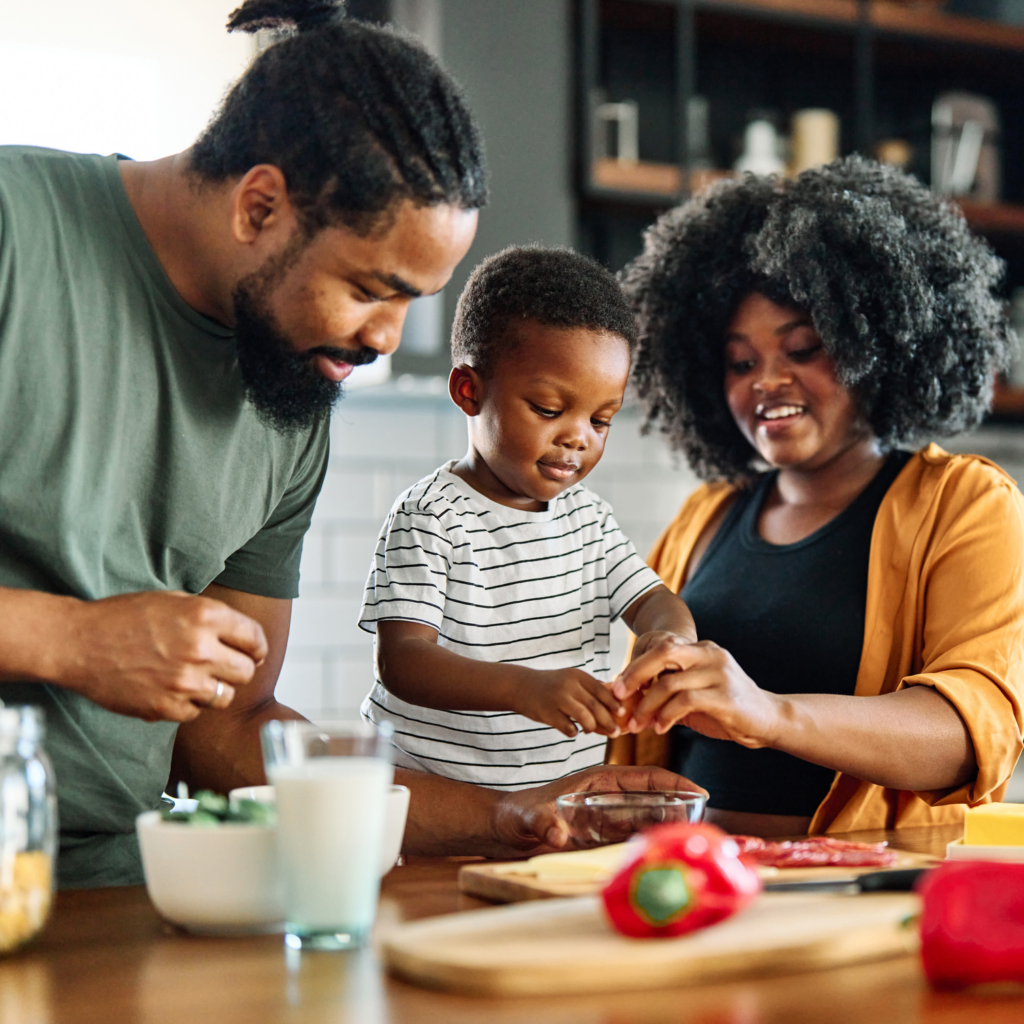
New federal dietary guidelines arrived earlier this year, introducing a redesigned food model and updated recommendations for children and families. From whole foods and age-specific guidance to ultra-processed foods, school meals, food anxiety, and obesity prevention, this episode translates national policy into practical, everyday strategies.
Jaclyn Albin, MD, CCMS, DipABLM, Associate Professor of Internal Medicine, Pediatric and Public Health, and Director, Culinary Medicine Program, University of Texas Southwestern Medical Center, and Marlene Rafferty, RD, Senior Clinical Dietitian, Nemours Children’s Health, break down what the 2025 -2030 Dietary Guidelines mean for kids.
Featuring:
Jaclyn Albin, MD, CCMS, DipABLM, Associate Professor of Internal Medicine, Pediatric and Public Health, and Director, Culinary Medicine Program, University of Texas Southwestern Medical Center
Marlene Rafferty, RD, Senior Clinical Dietitian, Nemours Children’s Health
Host/Producer: Carol Vassar
TRANSCRIPT
Announcer (00:00):
Announcer (00:00):
Welcome to Well Beyond Medicine, the world’s top-ranked children’s health podcast, produced by Nemours Children’s Health. Subscribe on any platform at nemourswellbeyond.org or find us on YouTube.
Carol Vassar, podcast host/producer (00:12):
Each week, we’ll be joined by innovators and experts from around the world, exploring anything and everything related to the 85% of child health impacts that occur outside the doctor’s office. I’m your host, Carol Vassar. And now that you’re here, let’s go.
MUSIC (00:30):
Let’s go-oh-oh.
(00:33):
Well Beyond Medicine.
Carol Vassar, podcast host/producer (00:36):
New federal dietary guidance is out, and with it, a redesigned food pyramid. The dietary guidelines for Americans now through 2030 set the national standard for nutrition across the lifespan, but what do they actually mean for children and for the clinicians and caregivers who care for them? To help us unpack the practical implications, I’m joined by Dr. Jaclyn Lewis Albin, Associate Professor of Internal Medicine, Pediatrics, and Public Health, and Director of the Culinary Medicine Program at the University of Texas Southwestern Medical Center, along with Marlene Rafferty. She is a Senior Clinical Dietician at Nemours Children’s Health. And I’d like to start at a very high level with you, Dr. Albin. What’s the difference about these new dietary guidelines? What is different and what should pediatric clinicians and families really be focusing on?
Jaclyn Lewis Albin, MD, UT Southwestern (01:31):
I think the key difference is a real desire to emphasize whole foods and helping people understand that foods that come not as much in a package, but in their natural state are the foods we want to make more space for on our plates. And when you actually get down to the differences and you read the text of the guidelines, it’s not that different from previous guidelines. There are a few things that have changed, but the real issue with guidelines and whether or not they improve American health is whether or not we’re able to support families in following them. And we know that families struggle to follow all historical dietary guidelines, and so the new guidelines challenge us to simplify it and to get real about eating whole foods and reducing some of the ultra-processed foods that typically have a lot of sugar, a lot of saturated fat, a lot of added sodium. Pushing those a little bit to the corner of the plate, I like to say, so that we have room for the missing good stuff.
Carol Vassar, podcast host/producer (02:36):
Marlene, as the nutritionist, the registered dietician on the phone today, on the call today, on the podcast today, let’s talk about child development. How well does this new model align with the nutritional needs of children across the lifespan, from infancy to young adulthood?
Marlene Rafferty, RD, Nemours Children’s Health (02:57):
Yes. So as Dr. Albin mentioned, it’s an emphasis on whole foods and really trying to support that children are getting that opportunity to get the most nutrient dense foods within their dietary intake. Again, the real themes that have been in past dietary guidelines, such as reducing saturated fat, sodium, and added sugars are still present in these dietary guidelines. But we do want to just emphasize that really from that infancy through that early child development, that we’re putting that emphasis on nutrient dense foods and trying to get as much variety as we can within all the food groups.
Jaclyn Lewis Albin, MD, UT Southwestern (03:46):
I would love to add that one thing that I think the new guidelines have a strong addition in is age-specific guidance. And frankly, children sometimes get neglected in things like guidelines in research and lots of things where they’re often an afterthought. But I appreciated that the new guidelines have some colorful guidance for families that will get at topics like, “Hey, you might have to introduce a food eight to 10 times, and by the way, you should model that behavior yourself as the feeder.” And then getting into older children where they’ve got the school pressures and peer pressures, how do we reduce added sugars? How do we think differently about each stage of development and how the food relationship evolves?
Carol Vassar, podcast host/producer (04:34):
Can one of you maybe talk me through those age-specific guidelines from a general from a real high-level place?
Marlene Rafferty, RD, Nemours Children’s Health (04:43):
I’m happy to take this. So with each of those ages and stages, it really starts with infancy, and that main recommendation I was really happy to see was the vitamin D addition. So, as many healthcare providers, especially in pediatrics, know, all breastfed infants require supplemental vitamin D. Now, with an infant formula, they have to hit a certain volume to meet that recommended guideline of the 400 international units or 10 micrograms. So they did add that in addition to breastfed infants, along with formula-fed infants who receive under 32 fluid ounces should have that additional vitamin D. And as Dr. Albin mentioned, I loved how specific it was for the introduction for those solid foods, so really just trying to emphasize sources of good protein and zinc, also those iron-rich sources, introducing those allergen-specific foods as well. Now, with the caveat of if there are concerns for allergens, please seek guidance from your healthcare professionals.
(06:07):
And then as it goes into young childhood, middle childhood, really that still emphasizes limiting those highly processed foods or those foods with the added salts, sugars, saturated fats, fried foods, really trying to minimize those. And supporting, again, the sugar content should be minimal in their diet. I did appreciate that there’s also emphasis on no caffeine, especially for school-age children and adolescents. There is a concern for energy drinks and regular sodas. That can be such a significant caffeine source. That can really impede some of that bone health and growth. So those were just a few takeaways that I really think were nice that were highlighted in the dietary guidelines.
Jaclyn Lewis Albin, MD, UT Southwestern (07:06):
As a culinary medicine professional, I have to add that they mentioned cooking and engaging kids in the kitchen, because if you really want your child to not only broaden their diet into a regular habit, you have to give them autonomy and engagement in the preparation of whole foods, and starting really at a toddler age all the way through high school. We actually assign my teenagers our sous chef at least once a week, where they have to choose what’s on the menu, and they have to plan the grocery list. And we’re building a life skill that also gives them ownership, and older kids want ownership over their food. It’s part of their autonomy. And it’s a real gift for us to give them the cooking experiences in the home.
Carol Vassar, podcast host/producer (07:55):
Even my three-and-a-half-year-old granddaughter…they make these special high chairs where you can stand and add ingredients to the cookie mix. And I was amazed that they even make such an appliance, but my granddaughter is learning from a pretty young age that cooking is an important skill to have. It sounds to me, as I’m listening to both of you talk about this, that some of the most practical shifts are whole grains, reduced sodium, and reduced caffeine. What would a typical, say, 10-year-old’s meal look like? Let’s talk about dinner, because usually dinner it’s recommended you have it with the family. I’d love to hear from each of you what would be a good dinner, looking at this pyramid, saying, “Okay, I’ll take this, I’ll take this, I’ll take this, and now serve it to the kids or have them serve it to themselves”? Dr. Albin, we’re going to go to you first.
Jaclyn Lewis Albin, MD, UT Southwestern (08:53):
All right, well, I’m going to speak in Texan on this one, which is tacos. Everyone loves a good taco, and it is an exceedingly versatile food. And so we love to think about flexibility built into a meal, but that children should be eating the same meal that everyone else is eating. Your kitchen’s not a buffet; there’s no short-order cook. If you don’t like what’s for dinner, there’s a very boring option available to you, like fruit, and maybe, in older children, when it’s not a choking hazard, nuts or yogurt. Something super simple that’s not exciting. So when parents offer a second meal to kids, they tend to learn that they can refuse the first meal. So that’s takeaway number one: the kids are eating what the parents are eating.
(09:44):
That said, building choice, autonomy, and the ability to be flexible into it is key. So if we’re going to have a taco night, I’m going to start with corn tortillas, which are a whole grain. I’m going to put a little olive oil on them and toast them in the toaster oven so they get nice and crispy, because this is about deliciousness too. It’s not about torture. I begin meal prep with what I call salsa chicken. I get lean chicken breasts, because poultry is a great source of protein for anyone, and I will blend it with just a mild salsa in a slow cooker or an Instant Pot. And then it turns into this lovely, shreddable, and easy to store in the fridge protein that we can add to lots of different things.
(10:31):
Then we’re always going to try to include a legume. And if someone’s a vegetarian, they can even skip the chicken and jump straight to legumes as the protein source. We keep canned beans on hand because they’re easy. Sometimes I cook beans from scratch if I’m feeling real culinary that week, but mostly I keep all types of legumes, and then we’ll top the taco with legumes. And then you’ve got all sorts of plants that you can build into this. My kids have learned to love purple cabbage, which when you slice it really small, it doesn’t have a lot of taste to it, but it’s loaded with antioxidants. It’s got that bright red, purple color. And that’s an easy one to top a taco with. And then we often have avocado, cilantro, different types of lettuce, and it’s like a build-your-own-taco experiment.
(11:19):
And that is a complete meal. We’ve got a whole grain, we’ve got protein, we’ve got fiber, we’ve got plants in a delicious package. And so sometimes we make this too complicated. That takes me 10, 15 minutes to throw together on a weeknight. We have tacos at least once a week at the Albin house.
Carol Vassar, podcast host/producer (11:36):
And what do you have to drink with that? Is it water? Is it milk?
Jaclyn Lewis Albin, MD, UT Southwestern (11:38):
Water.
Carol Vassar, podcast host/producer (11:38):
Is it something else? Water.
Jaclyn Lewis Albin, MD, UT Southwestern (11:39):
Sometimes the adults have something other than water.
Carol Vassar, podcast host/producer (11:41):
Okay.
Jaclyn Lewis Albin, MD, UT Southwestern (11:42):
But then they’re giving kids some water.
Carol Vassar, podcast host/producer (11:45):
Understood.
Jaclyn Lewis Albin, MD, UT Southwestern (11:46):
If our kids want a treat drink, we actually offer kombucha, which you can buy as a low … It can be a low-sugar option if you are careful about checking labels. Most sodas or juices are going to have 25 to 35 grams of sugar per serving. You can get a kombucha that’s got about eight grams of sugar. So it’s still a treat drink, but it’s going to add some probiotics in it. Sometimes we just want something that feels a little special, and the same is true for kids.
Carol Vassar, podcast host/producer (12:14):
Marlene, how are you going to top that meal?
Marlene Rafferty, RD, Nemours Children’s Health (12:17):
Oh my God, I was like-
Carol Vassar, podcast host/producer (12:18):
Let’s go to Delaware. What’s the Delaware cuisine?
Jaclyn Lewis Albin, MD, UT Southwestern (12:19):
She’s coming for dinner.
Marlene Rafferty, RD, Nemours Children’s Health (12:21):
Yes. Well, I was like, “Man, that sounds so good,” and yeah, it’s hitting all those points that we like to see. And oftentimes for families, I try to support, “Try to get three different food groups on your plate.” So yes, when we can get a whole grain offering, so hearing the corn tortillas, if we could do a wheat pasta, a brown rice, a quinoa, then pairing it with whatever protein works for you. I’m very much a seafood lover, so I love a piece of salmon. It’s one of the fish that my son will eat, and he loves the pink fish. But again, you can enhance those flavors with how you see fit. So we do a citrus chicken or a citrus salmon, so using those ingredients, and then pairing it with some type of veggie. One of the things that I like to do is just try to offer choice, and that helps with that shared decision-making. So even young kids can have that. So no, I just love that you can mix and match so many things together.
Carol Vassar, podcast host/producer (13:34):
One thing I heard in each of your meals, or didn’t hear actually, was ultra-processed foods. I know that the guidance is less toward that, more toward the whole grains, but I’m wondering how realistic is that guidance for families who are navigating time, cost in particular, but also access constraints. Marlene?
Marlene Rafferty, RD, Nemours Children’s Health (13:56):
Yeah. So again, with past recommendations, there was a push to at least make half of your grains that you’re consuming in a day to be whole grains. With the new guidelines, that emphasis for whole grains is pretty concrete and trying to make sure that it is the primary source of those grain servings. What I try to stress is there can be options that are, yes, processed, but accessible. So I think about things like an oatmeal, the corn tortillas, a wheat bread. So even working in just some of those changes can really have that impact of getting more nutrient-dense foods, you’re getting more vitamins, you’re also getting more fiber, and it should help with, again, overall satiety with the meal and not be as much of a cost burden at the store.
(14:58):
Time, I know it’s a stressor for all families, but if there are any little steps or planning that works well for a family, even if you can batch cook when you have time in a busy schedule, store some in the freezer, store some in the fridge. So that way, again, you can pull from what you have just to work on those grain recommendations.
Carol Vassar, podcast host/producer (15:25):
Dr. Albin, I see you nodding your head. Go ahead.
Jaclyn Lewis Albin, MD, UT Southwestern (15:27):
I mean, I just want to say it’s tough out there and that families should know this is not a you problem, this is a system problem.
Carol Vassar, podcast host/producer (15:36):
Yes.
Jaclyn Lewis Albin, MD, UT Southwestern (15:37):
We have a food system problem and there are many complex reasons at play, and it is also not accessible to everyone to have fresh fruits and vegetables.
Carol Vassar, podcast host/producer (15:47):
Exactly.
Jaclyn Lewis Albin, MD, UT Southwestern (15:48):
I work with families in the southern part of Dallas that don’t have a grocery store in their neighborhood, and we’re helping them see how frozen fruits and vegetables are an amazing choice and also more affordable. Canned foods can be a great option. And I also want to just jump to 20,000 feet and say that we don’t even have an agreed-upon definition of ultra-processed food in America.
Marlene Rafferty, RD, Nemours Children’s Health (16:11):
Right.
Jaclyn Lewis Albin, MD, UT Southwestern (16:14):
Or globally.
Carol Vassar, podcast host/producer (16:14):
Interesting.
Jaclyn Lewis Albin, MD, UT Southwestern (16:14):
Most of us in the research space are using something called the Nova Classification, which is a Brazilian-founded definition. And it has a lot of strengths, but it also has some gaps. And the first thing that it does teach, though, is that processed food and ultra-processed food aren’t the same. So, processed food, you cooked your broccoli with some oil and some spices, you processed it. You get canned tuna, which is a great source of protein and accessible and affordable; that’s a processed food. But ultra-processed foods, generally speaking, have additives in them that are coming at an industrial level, and they would not be in your kitchen. You find any chef, they’ll be like, “I don’t know what that is.” And so it’s an ingredient that’s not typically added in a culinary context; it’s added as a cosmetic additive to make it fluffy or have a certain color or a certain texture or shelf stability.
(17:10):
And so those foods, still that processing, we’re learning what that means in terms of health impact. There’s some evidence that it might be harming our microbiome, and there’s some evidence that the core reason could be that most of those foods are low in nutrients, especially those phytonutrients that come from plants, and high in sodium, sugar, saturated fat, the problematic foods. So again, it’s not that those foods can’t have some place. We just can’t let them dominate because then they take away from the body’s need for nutrients that we’re not usually getting in an ultra-processed food.
Carol Vassar, podcast host/producer (17:48):
I find it fascinating that there is no real scientific agreement on what ultra-processed food is-
Marlene Rafferty, RD, Nemours Children’s Health (17:54):
Right.
Carol Vassar, podcast host/producer (17:54):
… which I’m sure makes research very difficult.
Jaclyn Lewis Albin, MD, UT Southwestern (17:57):
Yes.
Marlene Rafferty, RD, Nemours Children’s Health (17:58):
Yes.
Jaclyn Lewis Albin, MD, UT Southwestern (17:58):
The interpretation of it, certainly.
Carol Vassar, podcast host/producer (18:01):
Yeah, absolutely. So I want to ask this. I raised a child who had some eating anxieties. How can caregivers apply this new guidance without creating that food anxiety, especially in adolescents whose bodies are changing it and growing so fast? Marlene?
Marlene Rafferty, RD, Nemours Children’s Health (18:23):
Yeah, so I often share in my clinical practice that what I would say for any child that I meet doesn’t really change. We have to nourish our bodies. We want to make sure that we’re not eliminating food groups or fearful of any food groups, and really just trying to support overall that the choices that we’re making are going to be beneficial for that growth, development, everything that’s going on in that adolescent stage. Other considerations are taking that step back and learning from the families, what can we do to help you feel supported, or help you feel like the choices that you’re making are okay? But it definitely, I feel like sometimes our thinking gets a little concrete. So it’s either like a black or white thinking around food, and nutrition is a big gray area, and it’s okay that it is. So we really just want to, again, just to support that they’re hitting those needs and really feeling like that they can have that say in their choices.
Jaclyn Lewis Albin, MD, UT Southwestern (19:40):
I love your allusion to the nuance because that’s what gets missed on social media, and you can’t moralize food. Food does not have morality. So a lot of people will say, “Oh, that’s bad for you, or that’s bad to eat.” And I think we need to back away from that type of language. I tend to like the word nourishing. That food is for pleasure only, and this food is nourishing, so we’re going to choose it. And, hopefully it’s also delicious, as it should be, but reframing that, and that pleasure eating needs to have a limit when it’s the main driver of our food choices. But when kids are exposed to adults who have guilt and shame about their food, who act like they have to earn their food with exercise, or who have a lot of negative body image talk around them, it’s the adults that put those ideas in the heads of children, and then they take that to school and share it with their peers.
(20:38):
And so adults need to be very careful about their own language about their relationship with food, not being processed around youth. And then I think parents can win by creating a sense of nonchalance about all of it. Like your kid ate broccoli, cool. Your kid ate a donut. Nice. We’re not going to overreact or underreact to any particular circumstance. And probably the most sensical approach to this is by a famous pediatric dietician named Ellyn Satter, who calls this the division of responsibility, that the adult’s job is the what, the where, and the when of eating. So we’re going to eat dinner at 6:00 at the table. And the child’s job is the whether and the how much. And unless there’s a medical condition where a parent needs to be hyper-involved, there’s too much hovering around whether or not your kid ate what you put in front of them.
(21:33):
I think we just have to get into the habit of putting it out there, kid charcuterie style maybe, where there’s options. And then you let them decide, and you don’t overreact to it. It’s going to create good habits over time and a healthy relationship with autonomy and choice.
Carol Vassar, podcast host/producer (21:49):
I love what you’re saying there, Dr. Albin, and I’d like to extend that a little bit and ask, when you were talking about adults and the way that they are nonchalant and presenting this, talk about how clinicians should be presenting these kinds of nutritional ideas.
Jaclyn Lewis Albin, MD, UT Southwestern (22:07):
We haven’t always done this well, especially physicians, and I think that it’s in part due to a deep lack of nutrition education in our training. And pediatricians talk about nutrition and food with every single patient, but yet it’s a very poorly integrated into our education. I’ve dedicated my career to improving this. But we’ve got to ask people what they eat, ask people what they have concerns about, and offer tailored guidance that’s respectful of culture and that is not specifically tied to weight. There needs to be a de-emphasis on weight as the primary outcome or marker, because there are a lot of people who are thin that have very poor metabolic health and a very poor relationship with food. And the same is true, there are a lot of people who would, by our BMI definitions, be overweight, that have worked really hard to have a healthy diet, and sometimes their weight doesn’t respond the way that we would expect. So I think disassociating this from weight and checking your own biases about food and nutrition and helping to celebrate small wins are some of the best things that we could do in clinical practice.
Carol Vassar, podcast host/producer (23:22):
Marlene, I’m going to turn to you and actually extend that even further. You work with families at Nemours. What are some of the common misconceptions that parents have, or even other clinicians might have, about healthy eating? Do you think that the pyramid helps to clarify those or complicate those?
Marlene Rafferty, RD, Nemours Children’s Health (23:40):
I wouldn’t say that the pyramid is helping or harming in any specific way. I think it really does highlight, again, that message on trying to eat more whole foods and minimizing those highly processed foods whenever possible. And I agree, we want to just build a relationship around making food neutral. Food energizes our body, the choices that we make, our choices that we do in this household. It doesn’t matter what happens when we’re at peers’ houses, family members’ houses. So, really just trying to emphasize that the choices that we’re making are building healthy habits. So, really trying to support even those small wins such as like, oh, if a child loves apple juice, can we start by cutting back that ratio? Can we increase the water? Can we also try to work on ways to experiment with those fruits and veggies? Such as, again, having your child make a choice when you’re putting together the grocery list, or, for example, at school, talking to your child around what’s on the menu when they’re there and seeing what might be options that they’ve tried.
(25:09):
So again, just really building that relationship. And again, I have all the time to really help my families with this, and I know with my medical colleagues, it’s such a struggle to impart good nutrition information. But it is so impactful for what our kids are hearing.
Carol Vassar, podcast host/producer (25:36):
Dr. Albin, and actually, Marlene as well, I want to zoom out a little bit, talk about this from a public health lens without going too far into the idea that we need to keep our kids a certain weight or a certain way. How does this new pyramid or the guidance that is in effect right now intersect with prevention strategies around things like obesity, type 2 diabetes, cardiovascular risk? Dr. Albin?
Jaclyn Lewis Albin, MD, UT Southwestern (26:05):
Well, I just want to start by saying that telling people what to eat hasn’t really ever worked.
Carol Vassar, podcast host/producer (26:10):
True.
Jaclyn Lewis Albin, MD, UT Southwestern (26:10):
And so the core impact of the guidelines is how they influence public policy, and hopefully improving school meals as a great place for kids to see the modeling of a balanced meal. But we’ll have to be creative about ensuring schools have the resources to be able to do that, which I think many schools are concerned about. And I think that the guidelines, again, draw attention to the fact that this matters at every age and stage. I think we’ve historically, as a med-peds physician, we focus on adults because you already have diabetes. But we really ought to move back towards a primary prevention approach that says, “This matters for your grandchildren. Let’s start then. Let’s start preconception.” So I hope that the guidelines inspire the public at large to think about how the lifespan view is critical here, and that many groups who are involved in ensuring that the resources that need to be available to make this reality, to make it accessible, are going to get mobilized. Because that’s what it’s going to take. It’s an all-of-society approach to make the healthy choice an easy choice, and we’re not there yet.
Carol Vassar, podcast host/producer (27:24):
Dr. Albin, you brought up schools. How can schools, after-school programs, and youth sports put these guidelines into practice in terms of meal planning and snack planning? Schools are really a prime place where kids are getting their food.
Jaclyn Lewis Albin, MD, UT Southwestern (27:45):
Well, I think educators are educators, so if you could train teachers to educate on some basic core public health principles around nutrition, you’ve set off a movement. And so that’s actually something that culinary medicine is starting to do, where there are certain districts that are sending dieticians into the school districts to train PE teachers and other educators to be able to deliver simple content. So I think those types of programs need to be scaled and escalated, because school environments actually help children escape some of the complex behavioral situations that lead to difficult eating at home. And in fact, an afterschool program that we do here in Dallas is in partnership with a local nonprofit, and we have what we call Snack Lab in a recreation center for afterschool youth.
(28:36):
And medical students, dietetic students, pediatric residents, they all volunteer to help support delivery of education. And one of the observations when they were giving kids the chance to experiment, that’s why they call it a lab, with a healthy snack that has lots of different parts, what do you think motivates the kids to try it? Is it the 40-something? Well, they’re not as old as me. Is it the medical student or is it their peer?
Carol Vassar, podcast host/producer (29:02):
The peer.
Jaclyn Lewis Albin, MD, UT Southwestern (29:03):
It’s their peer, right? So you have one kid willing to try something, and all the kids are willing to try it. And I think getting out of the home environment and letting the kid be the one who goes back and says, “Hey, mom, I want you to buy this fruit because I tried it at school,” is really empowering, because then the parent doesn’t feel like they’re the marketing specialist trying to get this on the plate.
Carol Vassar, podcast host/producer (29:27):
Marlene, you’re nodding your head and chuckling a bit. What are your thoughts?
Marlene Rafferty, RD, Nemours Children’s Health (29:31):
Yeah. And again, just thinking about what these dietary guidelines influence on a level, it’s school meals, it’s Meals on Wheels, SNAP, WIC. So we’re really seeing across the lifespan what these guidelines will influence. And again, thinking about some things that’ll be in play, there will have to be adjustments to infrastructure and budgeting, and really trying to make sure that we can work in these more nutrient-dense, less processed foods. Oftentimes, in some of my sessions, I do hear from parents that they don’t really understand the school meal program. And there have been changes within the past 10 to 15 years on what those guidelines look like. So I think, again, hearing from kids what they’ll eat, what they’ll eat in school, helps in the home, but again, I think it’s just going to really take a lot of innovation to really tease out what these guidelines are going to be able to do on those federal nutrition levels.
Carol Vassar, podcast host/producer (30:50):
Dr. Albin, about a year and a half ago, we did a whole podcast on MyPlate. Now, MyPlate is kind of on the side now. What’s been the reaction of the community to no longer having that visual and being able to say, “Okay, this goes there, and this goes over here?”
Jaclyn Lewis Albin, MD, UT Southwestern (31:09):
Great question. Actually, a lot of our patients have responded beautifully to really thinking about the proportions of different types of food and how much space they should take up on the MyPlate. And our community health workers and dieticians, who are part of doing community nutrition education, feel like that was an effective tool. But I do understand how the new guidelines wanted there to be pictures of food instead of just a plate that labels types of foods, really showing a visual of what we’re talking about, fruit, here’s some fruits, we’re talking about vegetables, here’s some vegetables. And so I think it would be really cool to see a pairing of both. And here in Texas, the Texas Nutrition Advisory Committee, which was commissioned as part of some legislation that passed earlier in 2025, for us to look at how can Texans take this on and really focus on making it easier for people to make the healthy choice, the easy choice. We really are thinking about how we could make a Texas-specific plate that would allow us to put food on it and pair both.
(32:22):
So I think maybe there’s a win-win in the future, so stay tuned for a Texas-sized plate that combines all of the great work that people are doing to help translate these messages back to everyone in a way that makes sense.
Carol Vassar, podcast host/producer(32:35):
A Texas-sized plate, that must be huge.
Jaclyn Lewis Albin, MD, UT Southwestern (32:38):
Maybe just Texas shaped.
Carol Vassar, podcast host/producer (32:40):
Okay. You got it.
Marlene Rafferty, RD, Nemours Children’s Health (32:43):
Yeah. And in clinic, I still use a similar healthy plate modeling, and Nemours has some lovely resources. They have their Nemours Healthy Plate, and it utilizes the shape of what was MyPlate and then imparts those visuals or those images of those different foods that could fit in each of those sections. So I definitely agree, I think it’s going to be just an ongoing evolution with taking these big messages from the dietary guidelines and making them work for our patients and families.
Carol Vassar, podcast host/producer (33:25):
Marlene Rafferty is a senior Clinical Dietitian at Nemours Children’s Health. We also heard from Dr. Jaclyn Lewis Albin, associate professor of internal medicine, pediatrics, and public health, and director of the Culinary Medicine program at the University of Texas Southwestern Medical Center.
MUSIC:
Well beyond medicine!
Carol Vassar, podcast host/producer:
Taking national recommendations and translating them into practical, everyday guidance that works for families – just among the many topics we cover on the Nemours Well Beyond Medicine Podcast, where anything that happens outside of clinical walls and affects children is up for discussion. Have an idea for a podcast episode? Let us know by emailing [email protected] or by visiting our website at nemourswellbeyond.org and leaving a voicemail. While there, you’ll also find all of our previous podcast episodes, and the chance to subscribe to both the podcast and our monthly e-newsletter. Again, that’s nemourswellbeyond.org. You may also find the podcast on the Nemours YouTube Channel, your favorite podcast app, or by telling your smart speaker to play the Nemours Well Beyond Medicine podcast.
Our production team for this episode includes Lauren Teta, Susan Masucci, Cheryl Munn, and Alex Wall. Video production by Britt Moore. Audio production by yours truly. Join us next time as we examine how a single strand of hair could be the basis of a child’s diagnosis of autism. I’m Carol Vassar. Until then, remember, we can change children’s health for good, well beyond medicine.
MUSIC :
Let’s go-oh-oh. Well Beyond Medicine.