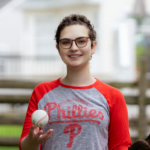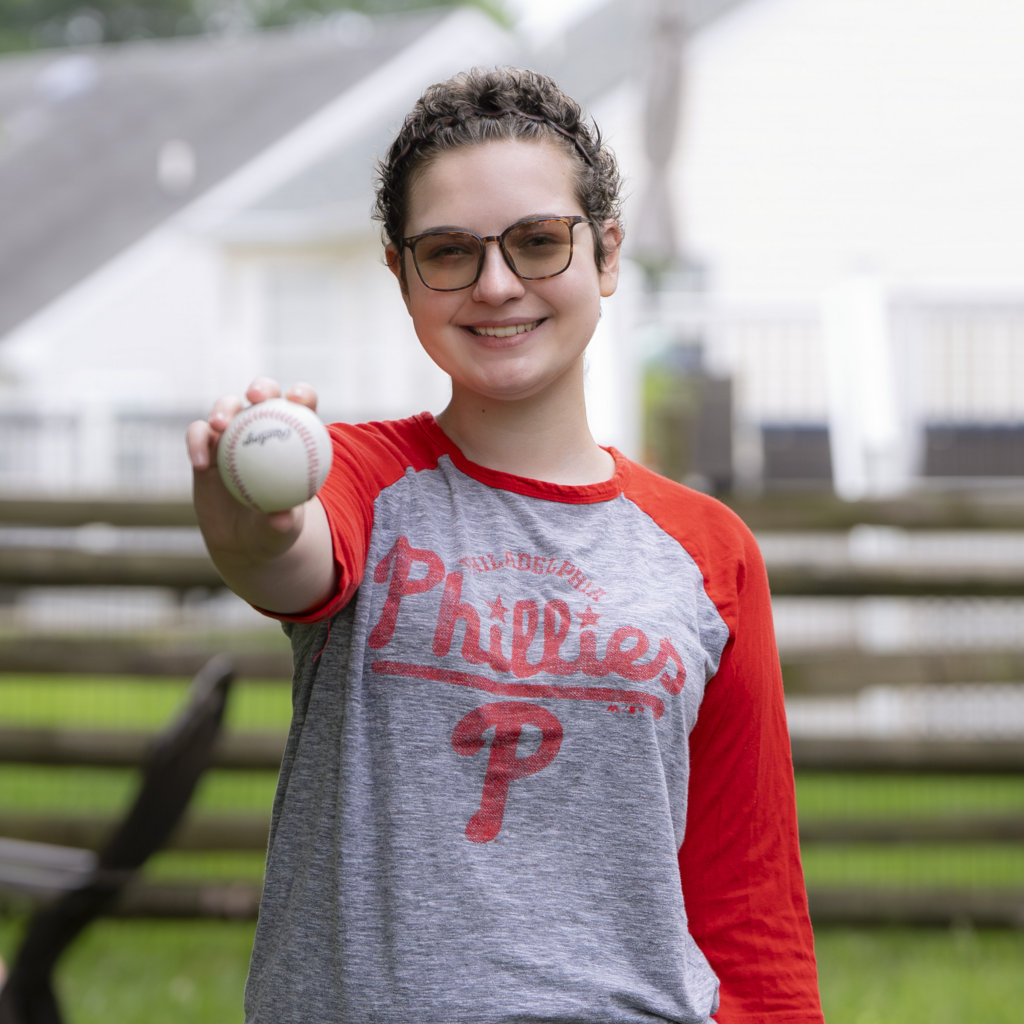
What does it take for a child to fight cancer while holding on to the life they love? This Childhood Cancer Awareness Day, we team up with the Philadelphia Phillies to share Alivia Eder’s inspiring journey alongside her oncologist, Nicholas Manini, MD, pediatric hematologist-oncologist, Nemours Children’s Health. Hear Alivia share what cancer, treatment and finding her way back to everyday life have been like, then join Douglas J. Harrison, MD, MS, Division Chief of Hematology/Oncology/Transplant and Cellular Therapy, Inaugural Lisa Dean Moseley Foundation Presidential Endowed Chair, Nemours Children’s Health, for a look at decades of research and emerging innovations giving children with cancer brighter futures.
Featuring:
Alivia Eder, student and cancer survivor
Nicholas Manini, MD, pediatric hematologist-oncologist, Nemours Children’s Health
Douglas J. Harrison, MD, MS, Division Chief of Hematology/Oncology/Transplant and Cellular Therapy, Inaugural Lisa Dean Moseley Foundation Presidential Endowed Chair, Nemours Children’s Health
Host/Producer: Carol Vassar
TRANSCRIPT:
Announcer (00:00):
Welcome to Well Beyond Medicine, the world’s top-ranked children’s health podcast produced by Nemours Children’s Health. Subscribe on any platform at nemourswellbeyond.org or find us on YouTube.
Carol Vassar, podcast host/producer (00:12):
Each week we’ll be joined by innovators and experts from around the world, exploring anything and everything related to the 85% of child health impacts that occur outside the doctor’s office. I’m your host, Carol Vassar. And now that you’re here, let’s go.
MUSIC (00:30):
Let’s go, oh, oh.
(00:32):
Well Beyond Medicine.
Carol Vassar, podcast host/producer (00:36):
On September 6th, the Philadelphia Phillies and Nemours Children’s Health are joining the rest of Major League Baseball and celebrating Childhood Cancer Awareness Day. That is MLB’s initiative to educate the public about childhood cancer, its prevalence, its treatment, and the ongoing research seeking improved survival rates and ultimately, a cure. As a preview of this amazing day in Philadelphia, we’re bringing you an update on research that is helping reshape treatment and improve outcomes for children with cancer with Nemours’ own Dr. Douglas Harrison. But first, I want to bring you the story of 14-year-old Alivia Eder. She’s joining me right now along with her doctor, Nemours hematologist-oncologist, Dr. Nicholas Manini. Welcome to both of you. Alivia, I’m going to start with you. If I have my facts right, and I hope I do, in April 2025, you went to an emergency room because you were having trouble breathing. What do you remember about those first few days and about learning that you had cancer?
Alivia Eder, patient (01:43):
I remember being very scared and overwhelmed and confused and not really knowing what was to come. I remember things not really feeling real. Everything was kind of a blur, and there was a lot happening at once.
Carol Vassar, podcast host/producer (02:06):
Was that the first symptom – when you couldn’t breathe – or were there other symptoms that you experienced leading into that emergency room visit?
Alivia Eder, patient (02:14):
That was pretty much it. I first started getting more exhausted than normal during physical activity, and then over time that got worse, and I eventually woke up in the middle of the night unable to breathe, and that’s when we decided to go to the ER.
Carol Vassar, podcast host/producer (02:32):
Alivia, tell me about yourself. You are like me, a theater kid, a music kid. What do you like to do when you’re not in school?
Alivia Eder, patient (02:42):
I play volleyball. I love hanging out with my friends. I love doing theater, arts and crafts. I’m very creative.
Carol Vassar, podcast host/producer (02:51):
Very creative, I love it. Dr. Manini, Alivia was diagnosed with stage four T-cell lymphoblastic lymphoma. Tell us in very understandable terms what that is and what you and the care team were facing when she arrived with a tumor that was affecting her airway.
Nicholas Manini, MD, Nemours Children’s Health (03:09):
Yeah, so T-cell lymphoblastic lymphoma is a type of lymphoma or blood cancer that arises when the type of immune cell, or the T-cells, start growing uncontrollably. It’s pretty common for it to be in your chest and compress the airway a little bit, like Alivia’s was. And when that’s the case, when she came in, priority number one is to try and get a sample so you can get a diagnosis, and then the next step is to start treating as soon as possible. So when she came in over that weekend, Dr. Caywood and the rest of the weekend team had to scramble and try and get those pieces of the puzzle together so that way we could start treatment within the next day or two.
Carol Vassar, podcast host/producer (04:00):
Is cancer the first thing you think about when a child or a young person comes in unable to breathe to the emergency room? I know you’re not an ED doc, but at what point does cancer come into consideration?
Nicholas Manini, MD, Nemours Children’s Health (04:12):
Especially in pediatrics, I think cancer is one of the things we’re thinking about, at least if I’m an ED physician, is one of the things I’m thinking about as being less likely just because there’s so many other things that are much more common: asthma, viral infections, pneumonias, things like that. But when someone comes in with a story like Alivia did, which is, “All of a sudden I can’t breathe.” You have to take a picture of the chest, which her emergency room team did. And that’s what led to this diagnosis because if it’s there, you’re going to see it.
Carol Vassar, podcast host/producer (04:50):
You’re going to see it right away. Alivia, it sounds like treatment began almost immediately and that included chemotherapy and hospital stays, many of them, I’m sure. What has the treatment been like from your perspective?
Alivia Eder, patient (05:05):
It’s definitely been the hardest thing I’ve ever had to do. It’s definitely been a mental struggle as well as a physical struggle because it’s hard knowing that in order to get better, you have to take something that’s going to make you more sick, which it was hard to get past that at first, but I’ve been so overwhelmed with support and love that it’s been helpful to have so many people around me willing to do anything they can to help me. And it’s nice knowing that even on my bad days, I have people there.
Carol Vassar, podcast host/producer (05:54):
Was that, you think, the hardest adjustment, that idea that the chemotherapy is going to kill cells that are healthy as well as the cancer cells? Or were there other adjustments that were also difficult?
Alivia Eder, patient (06:05):
I think that the mindset shift is definitely the hardest, just knowing that you have to take things one day, even one hour, one minute at a time because of just how much is happening and how sick you feel, how bad it is, but that it will get better.
Carol Vassar, podcast host/producer (06:29):
Talk about being diagnosed with cancer and how that changes. It obviously has changed your mindset. Most teens are not thinking, “I’m going to be sick for a long period of time.” In your case, it changed school, it changed friendships, activities, it changed your teenagehood. Talk about how that did affect you.
Alivia Eder, patient (06:51):
Yeah, so I actually was diagnosed right before the end of my eighth grade year, so I missed all of the end-of-year activities. I was luckily able to go to graduation, but I wasn’t able to go on my eighth grade camping trip. I wasn’t able to go to my eighth-grade formal. So I think just missing out on so many social events is quite isolating. And yeah, I don’t know, I missed my friends. I missed going to school, being around people other than doctors.
Carol Vassar, podcast host/producer (07:33):
Talk about how your family rallied around you. I’m assuming they did – how your friends rallied around you.
Alivia Eder, patient (07:41):
Yeah, I mean, I was still always invited to things by my friends, even though they knew I probably wouldn’t be able to come. And my family did as much as they could to be very accommodating to when I needed to rest or just to visit for short periods of time, knowing that I probably wouldn’t be able to do high-energy activities.
Carol Vassar, podcast host/producer r (08:05):
You look to me, just looking at you through the screen, you look well. How are you feeling today, both emotionally and physically?
Alivia Eder, patient (08:12):
I’m doing really well today. In about a month, I get to go back to school, and I’m really excited. I’ve started the process of just returning to activities that I used to be doing, and I’m feeling really good.
Carol Vassar, podcast host/producer (08:32):
Do you have that energy back, or is that still to come?
Alivia Eder, patient (08:34):
Yeah.
Carol Vassar, podcast host/producer (08:35):
Oh, good, good. Dr. Manini, Alivia’s treatment is expected to last two and a half years. What does treatment over that length of time look like? What does it involve?
Nicholas Manini, MD, Nemours Children’s Health (08:49):
So Alivia’s treatment is actually done.
Carol Vassar, podcast host/producer (08:52):
Oh.
Nicholas Manini, MD, Nemours Children’s Health (08:54):
It was less than a year. We had to change course a little bit. So normally if a patient has T-cell lymphoblastic lymphoma, like you said, treatment can be about two and a half years long with some really intense phases with a bunch of IV chemo, and then there’s some phases that are a little less intense where you’re taking some oral chemo medications and you can kind of go back into the world, back to school and those kinds of things. Unfortunately, Alivia’s lymphoma was harder to treat, and she didn’t respond. Her cancer didn’t respond to our standard treatments the way we would’ve liked. So we had to change up the plan.
(09:44):
We had to do a couple of different cycles of chemo that aren’t part of your standard upfront therapy, as we will call it. And then we ultimately had to make the decision to have her undergo a bone marrow transplant, which she did in November, and then was discharged home the day after Christmas, and that was the end of her planned therapy. So she’s been doing great for the last eight to nine months and is going back to school in the fall.
Carol Vassar, podcast host/producer (10:18):
That’s great. Now, bone marrow transplant- was that autologous? Was there a donor involved? Was it Alivia’s own bone marrow that was irradiated? How did that work?
Nicholas Manini, MD, Nemours Children’s Health (10:32):
Alivia’s dad was her donor.
Carol Vassar, podcast host/producer (10:34):
That’s great.
Nicholas Manini, MD, Nemours Children’s Health (10:37):
Yeah. So she got really high doses of intense chemo, and then she got total body radiation so we could prep her bone marrow to receive the donated cells from her dad. And then after that point, it’s just a long road to recovery, and she’s getting stronger every day.
Carol Vassar, podcast host/producer (11:00):
That is a rigorous treatment, Alivia. How did you react when the doctors brought up the idea of a bone marrow transplant?
Alivia Eder, patient (11:10):
I was definitely taken aback just because it was so different from what we had originally planned, but I knew that it would be a shorter treatment plan than originally anticipated. So in a way, I was almost willing; I was ready to be done with it, so I was somewhat happier to hear that I wouldn’t have to spend my next two years still doing chemo. However, I knew that it was going to be very intense for the time being, but I’m so, so grateful for my dad’s donation, and I’m so glad that I got my bone marrow transplant.
Carol Vassar, podcast host/producer (12:06):
Alivia, let’s skip to Phillies’ Childhood Cancer Awareness Day, that’s September 6th. You’re going to be recognized there. What does it mean to you to be a part of that day?
Alivia Eder, patient (12:16):
I am thrilled. I’m very excited. I am so glad to be part of something bigger. It doesn’t necessarily mean that it was worth it by any means, but I’m glad to feel like I’m at least helping people understand, spread awareness, and eventually raise money for a cure for every child with cancer.
Carol Vassar, podcast host/producer (12:49):
And there are going to be thousands of people there as the Phillies take on, I believe it’s the Atlanta Braves, that day. What do you want them to walk away with? What do you want them to understand about cancer and about kids, teens like you who are going through these rigorous treatments?
Alivia Eder, patient (13:03):
I want people to know that above all else, we’re still the people we were. We still have hobbies and interests, and despite treatment, we want to see people. We want to have fun and enjoy things. It’s just a little more complicated. But yeah, I think just being there, being around, knowing that people can support you is really the best thing.
Carol Vassar, podcast host/producer (13:39):
You’ve raised a really good point, Alivia. Cancer is part of your story, but it’s not your whole story. What do you want your next chapter to include?
Alivia Eder, patient t (13:49):
I definitely cannot wait to go back to school. I’m really excited to see my friends again, to start participating in sports again, to start doing theater again. And I just hope to start almost a new beginning of me and of things I like to do, and that doesn’t involve as much time in the hospital.
Carol Vassar, podcast host/producer (14:22):
With a whole lifetime ahead of you. Congratulations and best wishes for continued good health. Alivia Eder is a theater kid who just happens to have cancer. Thank you for sharing your story with us today, along with Dr. Nicholas Manini, who’s a pediatric hematologist-oncologist with Nemours Children’s Health. Don’t go anywhere. Dr. Harrison is going to be joining us, Douglas Harrison from Nemours, and he’s going to give us an update on research that is happening in the field of childhood cancer. Stay right there. We’ll be right back.
(15:02):
Welcome back, everyone. With me right now is Dr. Douglas Harrison. He is the Division Chief of Hematology/Oncology and Transplant and Cellular Therapy, also the inaugural Lisa Dean Moseley Foundation Presidential Endowed Chair for Nemours Children’s Health. That’s quite a title. Welcome to the podcast again, Dr. Harrison.
Douglas Harrison, MD, Nemours Children’s Health (15:23):
Thank you so much for having me back. The title is lofty. I mean, I’m so proud of our team at the Moseley Foundation and Institute for Cancer and Blood Disorders. Thrilled to be here. But yeah, the title is a lot. It’s a lot of work, so I apologize to you and everyone else ever.
Carol Vassar, podcast host/producer r (15:41):
I’m just glad I got through it without tripping.
Douglas Harrison, MD, Nemours Children’s Health (15:43):
Sure, exactly. Me too.
Carol Vassar, podcast host/producer (15:46):
So when we spoke last year, it was at Citizens Bank Park. It was part of Childhood Cancer Awareness Night; this year it’s Awareness Day. You were still pretty new to Nemours. You had a very ambitious vision for the Lisa Dean Moseley Foundation Institute for Cancer and Blood Disorders. Today, what parts of that vision have begun to take shape?
Douglas Harrison, MD, Nemours Children’s Health (16:09):
It’s so crazy that I’ve already been on the ground for a year, and I’m just so, so thrilled to be here. I was so excited talking to you last year, but honestly, I was brand new at the time. I was only, I think, maybe two weeks into my position and starting here.
Carol Vassar, podcast host/producer (16:22):
About that, yeah.
Douglas Harrison, MD, Nemours Children’s Health (16:23):
Yeah. We’ve accomplished so much this year, and I’m just so, so incredibly excited about all that we’re going to be doing. We are really homing in on our strengths to really make sure that we can have everything available for every child diagnosed with cancer or blood disorders in the state of Delaware and beyond. So we’re really growing our clinical trial research infrastructure to really make sure that we can bring novel clinical trials to these patients. We really want to make sure that everything is on the ground. We had a slow launch of our AYA center this year, so we’re starting to accept some AYA patients.
(17:02):
I think the biggest, most exciting two pieces of news and big accomplishments this year were the opening of our outpatient clinic and infusion center, which is incredible. And then the second thing is we started gene therapy for patients with sickle cell disease, and I know that today is Childhood Cancer Awareness Day, but that was a huge, huge accomplishment from our team.
Carol Vassar, podcast host/producer (17:23):
What’s AYA? Forgive me for not knowing that.
Douglas Harrison, MD, Nemours Children’s Health (17:25):
Sorry. No, I apologize. Our lingo is so confusing. So it’s adolescent and young adult, and we have started that program for those patients. So yeah, and I think we could talk a little bit more about that, but it’s really, really exciting for us as we are able to serve more patients. Adolescents and young adults have unique needs, need a unique focus. They tend to be a group of patients that kind of are orphaned in medical institutions without a great home. If you’re a 21-year-old, you don’t want to be treated next to an 85-year-old, and they have a very unique kind of resources that they require. So really trying to grow that, and we’ve been able to get approval to see patients older, especially if they have pediatric oncology diseases.
Carol Vassar, podcast host/producer (18:12):
You talked about strengthening this last year, and now Nemours works in adolescent and young adult oncology. Talk more about the progress made there and the gaps you feel still need to be addressed.
Douglas Harrison, MD, Nemours Children’s Health (18:26):
Yeah, we have a lot of room to grow in this space, and it’s a growing field in the world of pediatric oncology. We know that adolescents and young adults, especially with pediatric tumors, do better on pediatric protocols and regimens. We also know that adolescents and young adults, even if they have the same diagnosis as their younger counterparts, which often happens, they have worse outcomes, and that’s partly a biologic reason. Their tumors tend to be a little bit more aggressive. They tend to metastasize a little bit more aggressively, for lack of a better word, or they’re more expansive. I keep saying children, but the adolescents and young adults, they tend to do a little bit worse even with the same regimens, even with the same tumors. But unfortunately, they don’t have a focused kind of group of doctors, nurses, and support staff to really focus on and harness those unique needs and differences.
(19:27):
We’re really fortunate. We have a medical pediatrics provider in our division, Dr. Stephanie Guarino, who is launching our AYA Center. She’s incredible. She’s doing incredible work with a large team here at Nemours who are really, really passionate, making sure we can move the bar forward to improve the outcomes for these patients, but also provide them with all the resources on the ground that they need, both from a fertility preservation point of view, psychosocial resources, vocational counseling, nutritional supports, child life needs, all the things to really make sure we’re focusing on this patient population who really does not have a great medical home. And so that started this year.
(20:05):
We hope to have a formal launch this year in 2026, 2027, and we’re just really excited to be able to serve those patients. I’ll tell one story. There was one patient who told their nurse practitioner that they wanted to shake my hand because as these children grow into their 18th or 21st year, they’re terrified that they have to shift their whole medical home, especially if they have a chronic disease. So they’re just thrilled to be able to stay with the providers that know them, and it will help us also transition them and give us a little bit more time to transition them to the adult side.
Carol Vassar, podcast host/producer (20:40):
And that’s a time when autonomy really ramps up: 18 years old, your parents might not be your medical person. You are your own medical person, but you might not quite be ready. So this is a great resource.
Douglas Harrison, MD, Nemours Children’s Health (20:53):
That’s right. That’s right. And this allows them to transition more smoothly, but also get their cancer best treated. Of course, young adults will have unique cancers that are more adult-based. We don’t want to be the oncologist or the hematologist for adult diagnoses, but we still want to be able to provide resources. So even those patients who might be in that age range who have an adult cancer – like, I don’t take care of colon cancer; it’s more of an adult cancer – but we want them to have the supports as well so they can come and get a consult to evaluate their fertility needs, evaluate their psychosocial needs. They can still come to see us at Nemours, at least for a consult, even if we’re not the best medical doctor to see them.
Carol Vassar, podcast host/producer (21:35):
You talked earlier about that new outpatient infusion center.
Douglas Harrison, MD, Nemours Children’s Health (21:39):
Yeah.
Carol Vassar, podcast host/producer (21:39):
You talked about that last year as well.
Douglas Harrison, MD, Nemours Children’s Health (21:41):
I know.
Carol Vassar, podcast host/producer (21:42):
It sounds like that has been launched. How has the institute, and how have you and your team, really changed the treatment experience for patients, families, and everybody who cares for them, including your own staff?
Douglas Harrison, MD, Nemours Children’s Health (21:55):
Yeah. Anytime I take somebody on a tour of our new center, I have to take them on a tour of the old center because it was a massive change. I mean, you have no idea how different it is, and all good changes. So we expanded the footprint of our Institute Cancer Center, our outpatient clinic, from 4,000 square feet to just over 20,000 square feet.
Carol Vassar, podcast host/producer (22:18):
Oh my goodness.
Douglas Harrison, MD, Nemours Children’s Health (22:19):
So it was a five-times change in space. It’s so much more open. It’s a much more healing environment. There are windows everywhere, murals everywhere of the Nemours Estate. It has a big, expansive open room within the clinic that has a specialized adolescent and young adult area for them to hang out. It has huge open space for kids to play. There’s 18 private outpatient rooms, I think, sorry, 18 or 19. 18 semi-private or private infusion spaces, as well as 19 clinic rooms for patients to be seen.
(22:55):
We have consult rooms so patients, parents, and their providers or psychologists can have private conversations in a more lounge-like space where it’s more therapeutic, so they can get those psychosocial needs addressed privately and in a comfortable space. We have a physical therapy space and a separate room for physical therapy. We’re now doing all of our procedures in the clinic itself, and patients get sedated there. That’s a huge change. And the other thing, what we’re trying to really work on this year is trying to work more towards bringing all of the care to the patient. So a lot of our patients with cancer and blood disorders will have to see multiple specialists across the institution, whether it’s cardiology or endocrine, fertility.
(23:42):
We’re bringing all the experts to the clinic. So we’re setting up multidisciplinary clinics and survivorship, cancer survivorship, adolescent, young adult oncology, cancer predisposition, and neurofibromatosis to make sure that these patients who have unique needs that require them to traipse all over Nemours in Delaware, we’re trying to bring the providers to the patient so it’s much easier for the patient. The patient experience has been massively transformed, and it’s really –
Carol Vassar, podcast host/producer (24:07):
One stop. That’s ideal.
Douglas Harrison, MD, Nemours Children’s Health (24:07):
Yeah, yeah.
Carol Vassar, podcast host/producer (24:10):
That’s perfect.
Douglas Harrison, MD, Nemours Children’s Health (24:10):
Exactly, exactly.
Carol Vassar, podcast host/producer (24:12):
I want to get into the research area. I know Nemours is one of just, I think, three pediatric-exclusive National Cancer Institute Community Oncology Research Programs and has one of the nation’s highest rates of enrollment in NIH clinical trials.
Douglas Harrison, MD, Nemours Children’s Health (24:28):
Yes.
Carol Vassar, podcast host/producer (24:28):
What does access to those trials mean in the childhood cancer world?
Douglas Harrison, MD, Nemours Children’s Health (24:34):
Well, it’s huge. I mean, we are so fortunate to be what’s called an NCORP site, and I’m glad that you have the words for the acronym in front of you because I do not, and I’ll butcher it, but we’re so, so fortunate to be a part of that. It allows us to offer all the frontline, cutting-edge clinical trials here at Nemours for all patients that we serve. We’re the number two enroller on clinical trials for pediatric cancer in the country at Nemours, which is incredible, and that’s all based on being an NCORP site. There’s such a focus on our team of making sure that every child that is eligible for a clinical trial can be on a clinical trial because it allows them exposure to really the most novel, cutting-edge treatments.
(25:19):
We are now in a space where we are curing upwards of 85% of all patients with cancer. This is incredible. In the 1950s and 1960s, it was in the zero range, and now we’re at 85%. That’s all based on all hospitals across the country working together to pool their data, to bring their resources together, to make sure that no child in Delaware, Iowa, Houston, Texas, where I was earlier, or before New York, they’re all getting the same care across the country because nobody wants to mess around with a child with cancer.
(25:54):
We want to make sure that they have the best chance for a cure. And we’re really fortunate in Delaware that we have all those trials available to us here at Nemours. And then the other thing in terms of clinical trial research, what we’re trying to do internally at Nemours is really grow our early-phase clinical trial program here at Nemours so that really the things that are coming right out of the laboratory and are safe and ready to go to be tested in patients are available for patients here in Delaware and the Delaware Valley. So lots of things happening in the research world here, and we’re super excited about it.
Carol Vassar, podcast host/producer (26:28):
I want to dig in just a little bit more. Give me some highlights on some of the research that Nemours is involved in that you want folks to know about.
Douglas Harrison, MD, Nemours Children’s Health (26:37):
Yeah, so we have an incredible group. What we’re really trying to. We have three to five people who are working in the lab on things like looking at changes in what’s called circulating tumor DNA. So one of our researchers, Dr. Taylor Sundby, he really focuses on cancers associated with neurofibromatosis, which is a genetic disorder that predisposes you to many things, but also puts you at a higher risk for developing tumors. And so what Dr. Sundby is doing is really trying to narrow in on what causes those patients and how we can identify early on whether they are going to be developing a malignant tumor. And so he’s really harnessed in on the idea of what’s called circulating tumor DNA, where you can kind of identify early changes in all cells will secrete DNA into your bloodstream that kind of gets broken down by your body, tumor cells as well.
(27:33):
So we can kind of identify those small changes in DNA that are circulating through your bloodstream very early on to predict whether you’re at higher risk for a tumor developing. So that’s some great work that he’s doing that we’re really looking to harness, and we’re partnering with other institutions to see if we can bring about a clinical trial, a large clinical trial to look at that. Some of our other researchers are identifying novel treatments for leukemia in the laboratory, and so we’re really hoping to bring that forward to a clinical trial in the next year or two. One of our fellows who just was interviewed by you, Dr. Manini, is doing that work with some great researchers, Dr. Gopalakrishnapillai and Barwe in the lab, and so they’re doing great, great work. And so we’re really hoping that we can bring that work forward to really find novel treatments for patients with leukemia that has relapsed.
Carol Vassar, podcast host/producer (28:22):
Lots of great work going on. We’ll need an update again next year. I want to bring AI into the picture because AI is everywhere in healthcare.
Douglas Harrison, MD, Nemours Children’s Health (28:29):
I know.
Carol Vassar, podcast host/producer (28:30):
How is AI being brought to bear in that research-specific area of pediatric cancer? What are you facing in terms of barriers? What is the promise of AI?
Douglas Harrison, MD, Nemours Children’s Health (28:42):
I think there’s tremendous promise with AI, especially in the cancer space, and I think we haven’t even begun to figure out how to harness it yet, but I think there is so much happening, and part of the reason why we’re having such success in our current era is that we’re really starting to harness on the molecular pathways that drive cancer on very, very microscopic level. And so what we’re trying to do is, there are some tumors that will… All tumors express different proteins, different pathways that drive cell proliferation, cellular growth, et cetera. And what we are able to do now is really identify drugs that target those molecular changes very directly. Now, we have not begun to figure out all; we have a couple of tumors where we can give a drug and the tumor melts away, and that’s incredible, and it proves the concept that if we can figure out what that driving mutation is and figure out a drug to block that mutation, we can cure these children with just one drug.
(29:44):
What AI can do, I think, is synthesize all of this scientific information that’s coming towards us, and I predict and navigate it so that we can figure out which tumors will match with which drugs. We can model different proteins to figure out what proteins they’ll interact with. AI is going to be able to synthesize all that information for us and really, I think, identify new targets, new pathways, new drugs to target these molecules so that the cancer can be extinguished.
Carol Vassar, podcast host/producer (30:15):
Lots of potential there. What’s next for you and your team, Dr. Harrison, at Nemours in terms of research, in terms of new facilities, in terms of better serving patients?
Douglas Harrison, MD, Nemours Children’s Health (30:26):
Yeah, so we’re growing by leaps and bounds, so that’s exciting and great and good that we can serve more patients. One of the things I think we do amazingly well at Nemours is just being able to consider the whole child. I know we talk about it all the time. I know that you talk about it on the podcast, this whole idea of Well Beyond Medicine, Whole Child Health. The big thing that I’m hoping to grow in the next year is really our Whole Child Health Well Beyond Medicine program in pediatric oncology and really grow art therapy, music therapy, nutrition, physical therapy, and make sure that we can think about all the other things that touch on cancer care, integrative medicine.
(31:05):
There’s a lot of interest in that world, and I think there are some real benefits with that. So that’s one space we’re really going to try to expand this year, and I’m super excited about that because it’s a near and dear passion of mine and fits right in with our mission. So that was very, very copacetic. The other thing that’s happening is we have our Moseley Symposium launching. So we’ll be hosting researchers from across the country coming in 2027. So next year you’ll have to have me back. I guess that’s a plug. I don’t really mean it to be, but we’ll be launching-
Carol Vassar, podcast host/producer (31:35):
You’ll be back.
Douglas Harrison, MD, Nemours Children’s Health (31:36):
We’ll be launching our Moseley Symposium next year, which will bring researchers across the country to the Delaware Valley, to Wilmington, to talk together, to focus on research, and identify novel ways of how we can partner. And we’ll be providing funds for one; we’ll be launching our research challenge to the wide world of oncologists and hematologists to put forth proposals to be funded by the Moseley Institute at Nemours. So we’re really, really excited about that. That’s going to be the big news, I think, in 2027.
Carol Vassar, podcast host/producer (32:11):
Dr. Douglas Harrison is the Division Chief of Hematology/Oncology/Transplant and Cell Therapy and the Inaugural Lisa Dean Moseley Foundation Presidential Endowed Chair for Nemours Children’s Health
MUSIC:
Well Beyond Medicine
Carol Vassar, podcast host/producer:
Thanks to Dr. Harrison for the update on pediatric cancer research and delivery, and to Alivia Eder and her oncologist, Dr. Nicholas Manini, for sharing the story of her cancer journey!
Hear more stories and conversations about the people, programs, and ideas shaping children’s health; visit NemoursWellBeyond.org. While you’re there, subscribe to the podcast and sign up for our e-newsletter so you never miss an episode. That’s NemoursWellBeyond.org. You can also find and follow Well Beyond Medicine wherever you get your podcasts, and on the Nemours YouTube channel.
Our production team for this episode includes Cheryl Munn, Susan Masucci, Lauren Teta, and Alex Wall. Video production by Josh Hansborough. Audio editing and production by me. Join us next time as we present the first of a two-part series on youth mental health and teen suicide prevention as we honor Sept as Suicide Prevention Awareness Month. I’m Carol Vassar. Until then, remember that together we can change children’s health for good – well beyond medicine.