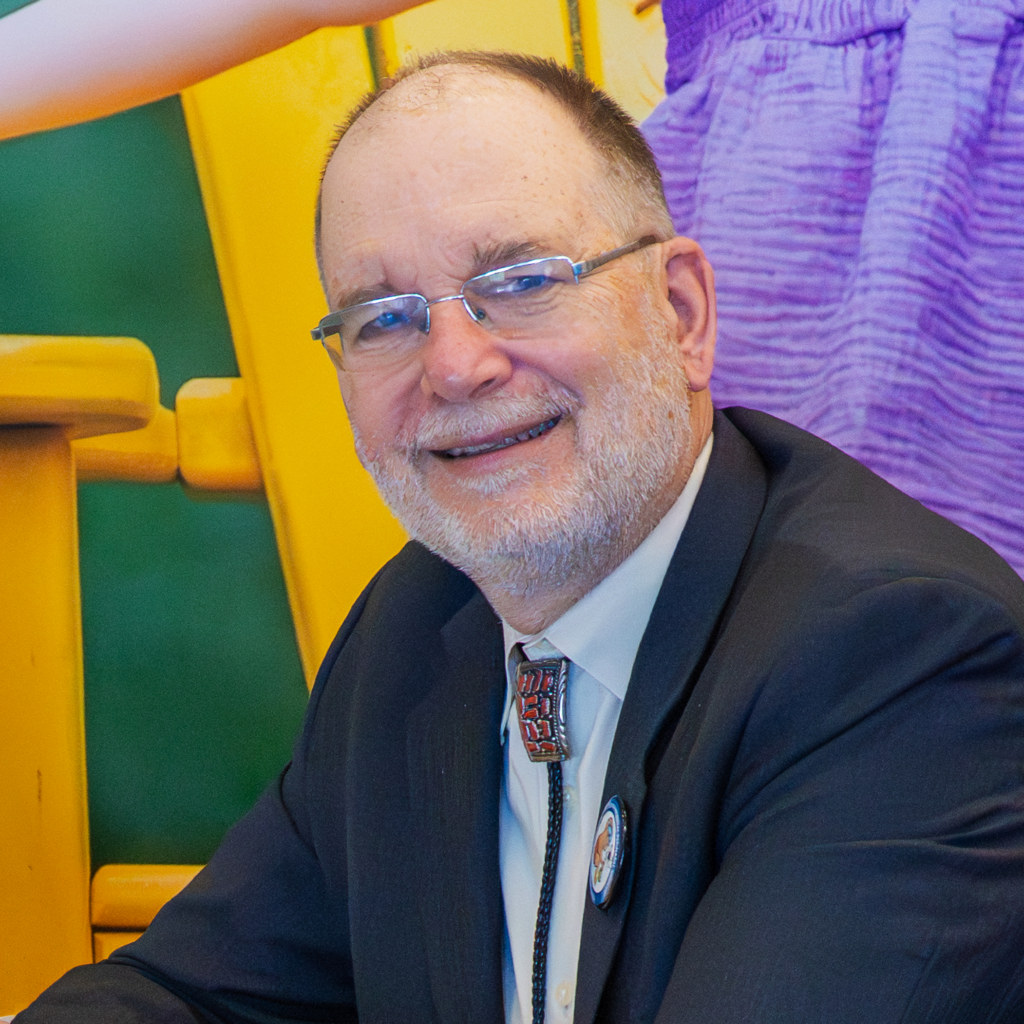
What if the goal of children’s health went beyond treating illness to creating the conditions where every child can thrive? We explore what it means to invest in Whole Child Health and why healthier children require more than what happens in a doctor’s office with guest David Keller, MD, Professor of Pediatrics and Vice Chair for Clinical Strategy and Transformation, Department of Pediatrics, University of Colorado School of Medicine and Children’s Hospital Colorado, and Chair, Pediatric Policy Council. He discusses the role of families, schools and communities, and why the way we define, measure and pay for children’s health must evolve. Together, we explore how shifting from fixing problems to creating health can build a healthier future for children and their communities.
Featuring:
David Keller, MD, Professor of Pediatrics and Vice Chair for Clinical Strategy and Transformation, Department of Pediatrics, University of Colorado School of Medicine and Children’s Hospital Colorado, and Chair, Pediatric Policy Council
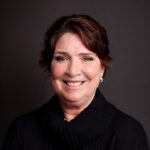
Host/Producer: Carol Vassar
TRANSCRIPT:
Announcer (00:00):
Welcome to Well Beyond Medicine, the world’s top-ranked children’s health podcast, produced by Nemours Children’s Health. Subscribe on any platform at nemourswellbeyond.org or find us on YouTube.
Carol Vassar, podcast host/producer (00:12):
Each week we’ll be joined by innovators and experts from around the world, exploring anything and everything related to the 85% of child health impacts that occur outside the doctor’s office. I’m your host, Carol Vassar. And now that you’re here, let’s go.
MUSIC (00:30):
Let’s go, oh, oh, well beyond medicine.
Carol Vassar, podcast host/producer (00:36):
Hi again, everyone. With me right now is Dr. David Keller. Dr. Keller is a professor and vice chair of pediatrics at the University of Colorado School of Medicine. Actually spent a lot of time in Massachusetts prior to that. You just came from a plenary session here at PAS 2026 in Boston.
David Keller, MD, University of Colorado (00:57):
I did. I am also in a couple of other things. I work at Children’s Hospital Colorado, of course, which is the hospital affiliate of the University of Colorado School of Medicine. And I’m also chair of the Pediatric Policy Council, which is a multi-specialty group from four different smaller pediatric organizations, most of which are here at the Pediatric Academic Societies meeting.
(01:24):
And we had organized this session on investing in children so that children can thrive. And that’s really an effort we’re trying to think ahead, that we need to move from a system where we’re trying to fix the problems of children to a system where we’re trying to prevent the problems of children, because that’s really the fun thing that we get to do in pediatrics is we can actually prevent problems and prevent adult problems. So we invited three speakers to talk about that. One of them was Dr. Kelly Kelleher, who’s at Nationwide Children’s Hospital, where they’ve been working with their state Medicaid agency to establish a really successful ACO that is focused on using Medicaid dollars in novel ways to try and improve the health of children.
Carol Vassar, podcast host/producer (02:23):
ACO of course, is Accountable-
David Keller, MD, University of Colorado (02:24):
Accountable Care Organization.
Carol Vassar, podcast host/producer (02:25):
Yes.
David Keller, MD, University of Colorado (02:26):
I’m sorry. It’s 15 years since the Affordable Care Act, so I figured everybody knew what an ACO is by now.
Carol Vassar, podcast host/producer (02:33):
Well, if they don’t now, they will figure it out listening to us.
David Keller, MD, University of Colorado (02:35):
Yeah, that has been a problem, yes. We have too many jargony terms. So Kelly was talking about a lot of the novel population health work they’ve been doing in the, I always have to think, I think it’s 15 counties that they serve out of Nationwide. And then we had Eric Dearing, a professor of education from the Boston area, talking about what it takes for an education system to work to help children thrive. And then we had Dr. Bob Sege, who’s at Tufts and has developed a collaborative called the Healthy Outcomes and Positive Experiences Collaborative that’s kind of the opposite of ACEs. Do you know about the Adverse Childhood Experiences, the ACEs?
Carol Vassar, podcast host/producer (03:22):
Tell me more.
David Keller, MD, University of Colorado (03:23):
So those are, it turns out, when bad things happen to you as a child, your health suffers over the course of your life. And we can quantify it. They’re called adverse childhood experiences, and they really are setbacks to the health of adults that happen to them often in childhood. And what Bob’s been looking at is the question of resilience. How do people get through that? It turns out there’s a set of positive experiences you can have as a child that not only result in you having a better likelihood of a healthy outcome as an adult, but also can counteract the impact of these adverse experiences. And they’re things like being in a secure home where you are loved, thinking, knowing that your parents have your back and that your parents are willing to back you, things like that. He’s got a questionnaire. Don’t ask me to quote them all. He put them up on the screen.
(04:20):
But I think the thing we heard from all of our speakers was that we need to create an environment to help children thrive where they are sort of constantly reinforced with these positive experiences at different stages of their life and yet are also able to develop the ability to work their way through life, if you will. And you can do that if people have your back. And it needs to be teachers; it needs to be educators; it needs to be pediatricians. One of the challenges is we don’t talk to each other enough. We don’t have a comprehensive network, but we’re all starting to move in that direction.
(05:05):
So anyway, we were talking about what the system should look like and some very practical ways to do it. They all gave great examples of different school systems, different practice organizations around the country that are building systems with these kinds of models. And of course the discussion afterwards was, so how do we take that to scale? How do we actually build a nationwide system that supports that? And I think that’s going to be the great challenge of the next 10 years is how do we do that? Because we should, and children will have better outcomes, and then they will have a more productive adulthood if we are able to do that.
Carol Vassar, podcast host/producer (05:41):
There are so many benefits to having an active, healthy adult population. Talk about that. By investing in children.
David Keller, MD, University of Colorado (05:52):
By investing in children. Well, I’ll speak of the selfish one. I’m getting on up there. I could pull my Medicare card out of my pocket if I wanted to, and I need a healthy adult population that’s working in order to support the country that’s going to support me as I go into my-
Carol Vassar, podcast host/producer (06:10):
Older years.
David Keller, MD, University of Colorado (06:10):
… elder years, as it were. So I think that’s one benefit. I think that the country as a whole becomes much more creative when you’re in that sort of a mode, when people have relational intelligence where they know how to work together, where they are used to solving problems together.
(06:31):
And a lot of that stuff happens in… Certainly a lot of that stuff can happen at your home, it can happen in your school, and a lot of that stuff happens in the community. Speaking as a non-athlete, I certainly have heard from all of my friends and my brother, who is an athlete that sort of working together, teamwork, relational health is a big part of team sports. And so team sports are clearly one way to do that. They don’t work for everybody. So then the question is how do you have enough ways to do that so that the geeky kid who wants to read all the time, say me at age 11, has a place where he can also develop those skills while reading 20 books a week, which I used to take home from the library. And people would say, “Did you really read all those?” I was like, “I read all of those.” Yeah.
Carol Vassar, podcast host/producer (07:27):
He totally did.
David Keller, MD, University of Colorado (07:28):
Yeah, I stayed up late. I like reading. So that’s how I spend my [inaudible 00:07:34].
Carol Vassar, podcast host/producer (07:33):
That’s okay.
David Keller, MD, University of Colorado (07:33):
And that should be fine. And that can be fine. But, there’s so many other ways to do it. I loved camping. Turned out Boy Scouts was a good thing for me and another way to do that.
Carol Vassar, podcast host/producer (07:44):
Are you an Eagle Scout?
David Keller, MD, University of Colorado (07:45):
I am, actually.
Carol Vassar, podcast host/producer (07:46):
I kind of figured.
David Keller, MD, University of Colorado (07:49):
Yeah, you’re always an Eagle Scout once you’ve done that.
Carol Vassar, podcast host/producer (07:52):
Exactly.
David Keller, MD, University of Colorado (07:55):
But there’s theater, there’s music, there’s all of those things. How do we build a society where kids have access to all those things they need, just as much as they need the reading, writing, and arithmetic they get in school? And of course, what Dr. Dearing said in his talk was with those things, if they have those extra supports and feel supported, they will actually do better in all those basic skills. So yes, you should focus on teaching basic skills, but you need to have that other stuff. You need to have a whole child approach to it if you want the child to thrive. And that’s what we don’t do well in this country because we fragment things, and we don’t have systems that talk to each other, and we don’t share data where we can look at it and say, “Oh look, that actually works.”
(08:47):
But that was one of the fun things. Bob Sege presented some of the data that they have that shows that that kind of cross-sector work really does work. It really does result in people, adults, who have fewer of the chronic health problems that really bedevil our country right now.
Carol Vassar, podcast host/producer (09:04):
You used a term I like very much, which is whole child health, which-
David Keller, MD, University of Colorado (09:08):
Whole child health.
Carol Vassar, podcast host/producer (09:08):
… in our organization, we look at this as-
David Keller, MD, University of Colorado (09:12):
Just tell me you didn’t trademark it.
Carol Vassar, podcast host/producer (09:13):
I don’t know, did we trade… We might have. I don’t know.
David Keller, MD, University of Colorado (09:16):
Oh, well, don’t do that, please. Let us use it; it’s a good term.
Carol Vassar, podcast host/producer (09:19):
It’s a great term. Actually, I stand corrected. We did not trademark it. I want to give you what Larry Moss, Dr. Moss’s definition of whole child health is. And that is identifying health, paying for health, and starting with children. What are your thoughts? It sounds very much in line with what you believe and what you were talking about at this session. How do we start it? How do we get there? This is a big ship to turn around.
David Keller, MD, University of Colorado (09:50):
So I think the first part of it is, at the core of it, is having consistent access to the systems that we need to be able to do that. So we need consistent access to the healthcare system. We need consistent access to the educational system. We need support for parents so that parents can be engaged with their kids. One of the biggest things we could do, I’m going to go all Swedish on you now, is that we should have paid family leave for everybody for a substantial amount of time. Some states are doing that now. Both of my kids had jobs where they had paid family leave. They took three months off.
Carol Vassar, podcast host/producer (10:38):
My daughter who’s pregnant has that as well, as does her husband.
David Keller, MD, University of Colorado (10:41):
One of my associates somehow managed to get six months off in our organization, which was challenging for me because I rely on her for a lot of stuff.
Carol Vassar, podcast host/producer (10:51):
But the benefit to her family unit and to her child.
David Keller, MD, University of Colorado (10:54):
And she’s a much happier person coming back to work now that she had the first six months for their kid. But I think that’s a concept that is gradually taking hold in America, but we certainly don’t have universal access to that. That’s probably the single most important thing we could do for early relational health is give parents a chance to be with their kids when they’re little so that they can build those relationships as they’re going forward. The second thing we talked about… I’m going to look at notes.
Carol Vassar, podcast host/producer (11:28):
No problem. And I want to ask you about the… Go ahead.
David Keller, MD, University of Colorado (11:32):
The second thing, I thought this was right, the second thing that we talked about was making sure that we have access to after-school activities.
Carol Vassar, podcast host/producer (11:39):
Thank you.
David Keller, MD, University of Colorado (11:39):
I don’t know if your kids did soccer when they were little…
Carol Vassar, podcast host/producer (11:43):
Oh, absolutely. Soccer, music, everything.
David Keller, MD, University of Colorado (11:45):
All of those things. Soccer costs. And then your kid gets invited to be on the travel team, and that costs. And every time we put a cost on it, we are cutting some people out of the group.
Carol Vassar, podcast host/producer (11:56):
Even scouting costs.
David Keller, MD, University of Colorado (11:57):
Scouting costs. But scouting had a systematic approach to that, at least when I was there. For the folks who didn’t have the, I think it was a quarter a week I used to have to give in as dues. And if you didn’t have it, you talk to the scoutmaster, and you work something out. And it was either that you would have a reduction of your dues, or you would do something for the troop that was equivalent to that, and you paid for it in what you had. And the scoutmaster knew about it; nobody else knew about it. And maybe the treasurer did, speaking as I was the treasurer, so I knew.
Carol Vassar, podcast host/producer (12:32):
So, you might have known.
David Keller, MD, University of Colorado (12:34):
I might have known, but there was very great pains to make sure there was no shame attached to that. And they made a deliberate effort in that direction. So how do we do that? Now we do it with scholarships, but you’re applying for a scholarship because you need the scholarship, as opposed to sort of handling it quietly so that you can minimize stigma and shame that goes along with those things. Creating programs that have access to those kinds of non-school, but really important outside experiences that kids need to be able to grow and thrive is just so important.
Carol Vassar, podcast host/producer (13:10):
What’s the importance of quality childcare, which is hard to find?
David Keller, MD, University of Colorado (13:17):
Yes, it is. Yes, it is. I have grandchildren now-
Carol Vassar, podcast host/producer (13:20):
I do too.
David Keller, MD, University of Colorado (13:20):
… for the record. And the grandchildren have had very high-quality childcare by luck. My son, who lives out in the Bay Area, happens to live next door to the best home daycare in the city.
Carol Vassar, podcast host/producer (13:35):
In the world.
David Keller, MD, University of Colorado (13:38):
And so he goes to daycare next door, and he knows he’s going to daycare, and he cherishes the days he doesn’t: “Michael not go to daycare today?” He says the person’s name; I don’t want to put that on the podcast, but it’s not that he doesn’t love it there. He does; he has a great time, but he really cherishes being home with his parents too. And I think that is so important. That’s the kind of experience. I think quality childcare is really important. How we pay for that, most people can’t afford it, and that’s a challenge, particularly where I am in Colorado, because we have a cap on our state budget in the constitution that really restricts our ability to support childcare the way we need to. It’s a terrible problem.
Carol Vassar, podcast host/producer (14:31):
Let’s talk about some of the barriers that are not getting us to whole child health. Why don’t we have quality daycare? Why don’t we have the afterschool programs that are necessary?
David Keller, MD, University of Colorado (14:41):
I think there’s a couple of reasons, but the biggest one is that in America, the assumption is that the parents are the person who invests in their children. I mean, certainly there was nothing I wouldn’t do for my kid. I don’t think there’s a parent around who would say that they will not invest every penny they possibly can in their children. I actually don’t think there’s a grandparent around who would say that.
Carol Vassar, podcast host/producer (15:05):
That’s true too.
David Keller, MD, University of Colorado (15:06):
When people are talking about the fact that the older people don’t want to pay for increased school amounts or things like that, I’m like, “You’re just asking the question wrong. Say, do you want your grandkids?” And it’s like, “Oh, grandkids. Yeah. Yeah.” We all want kids to do well. I don’t care what your political stripe is. You want your kids to do well. And so there’s two problems that we have. The first is: who are your kids? You have to define who your kids are. I take a really broad view. I believe every child in the universe is my kid. Not everybody does that, and I think that gets in our way sometimes. I think the more people that did that, the better, because I do believe that every kid in the world is our kid.
(15:49):
And I think the second piece is we focus a lot on return on investment in America, and we focus on fairly short-term return on investment. When you’re talking stocks, you’re talking about the quarterly return on investment. When we’re talking kids, we’re talking about the election cycle return on investment. If you’re a congressman in the House of Representatives, you want to know what’s going to happen over the next two years, and particularly what’s going to be on the news two months before my next election. Again, doesn’t matter which party you’re in; that’s just the reality of being a Congressman. Same with senators. They have a little bit of a longer timeline, six years.
Carol Vassar, podcast host/producer (16:32):
Six years, yeah.
David Keller, MD, University of Colorado (16:32):
But it’s the same thing that they’re worrying about. So a lot of the stuff we’re talking about here, particularly with things like the positive childhood experiences, we are looking at what’s happened to that person when they’re 40, related to stuff that happened to them when they were kids.
Carol Vassar, podcast host/producer (16:50):
Right. Retrospective.
David Keller, MD, University of Colorado (16:51):
And it’s a really long timeline, and it’s hard for our political system to manage that. It periodically does with the right leadership, and we have in the past, but a lot of times we don’t. Again, that’s the nature of our political system.
(17:07):
Now, part of the balance to that is we have organizations in our culture that do take a longer view. Churches take a longer view, for example. They’re very much looking at what’s… They’ve been around for a long time. They will be around for a long time. They care about their parishioners, and they care about it. And I think churches often do a really good job of this, frankly. I think philanthropic organizations do a really good job of this. The foundations that were… I mean, the Carnegies invested in libraries, and those libraries are still here. I love the Carnegie libraries. A philanthropic organization can afford to take the long view of how things are going to go. Perhaps some businesses can. I think our hospitals do actually, and I know my hospital certainly projects things out 10 years, and you can get them to think, but they’re worried about the business piece, but they’re also worried about their mission and how that works. So we tend to take a bit of a longer view than political folks do.
(18:12):
And the question is how do we get everybody on the same page? We start at the point that everybody loves their children, certainly loves their children, and everybody understands that it is in their benefit for everybody’s child to do well. I think with that assumption, then we move forward in trying to figure out how are we going to invest in children so that they can all thrive, and that’s where we have to go.
Carol Vassar, podcast host/producer (18:35):
Let’s talk about the concept of paying for health, which I think is the next logical step. Are we doing that now? Is CHIP doing that? Is Medicaid doing that? What do we need to do to kind of shore that up?
David Keller, MD, University of Colorado (18:48):
So we’ve been trying. So the real problem with paying for health is defining what is health.
Carol Vassar, podcast host/producer (18:55):
Right. Which goes back to what Dr. Moss has said. Yes.
David Keller, MD, University of Colorado (18:59):
That is the first problem: how do you define health? It’s interesting, our culture has become very centered on metrics, but if you look at the measures that we’re using to define child health, they’re mostly deficit model measures. They’re, do you get your well-child checks? Do you get your vaccines? Do you avoid the emergency room? Do you have short hospital stays? It’s a deficit measure. It’s the absence of things. What we’ve not focused on is what I would argue is the true definition of health for a child. So are you meeting your developmental milestones to the best of your ability? And if you’re not, are we doing things about that early on in early intervention?
(19:52):
Are you ready for kindergarten? There are places in the country that are trying to make kindergarten readiness actually one of the outcome measures that we look at. It’s got the advantage of being a five-year timeline because we can measure it at age five, and it has pretty good predictive value of how you’re going to do in terms of graduating high school. So that’s another metric you could use.
(20:18):
I’m told by the education folks, and I have no reason to doubt this, that being able to read at grade level by fourth grade is a very good marker of graduating from high school. And the folks who are not reading at grade level at fourth grade are less likely to graduate high school.
Carol Vassar, podcast host/producer (20:35):
That’s the point where they’re not learning to read; they’re reading to learn. To
David Keller, MD, University of Colorado (20:39):
Learn. Exactly. It’s being able to make that transition, and those kids have a really hard time with it. High school graduation strikes me as a reasonably good metric of child health, especially if the children who are…. And we have lots of interventions we know we can do to make sure that kids have graduated high school. So can we move to a system where those things are what we’re measuring? We heard at our meeting from Kelly Kelleher that the state of Ohio is incenting people on stuff like that. They’re going to be starting to do that over the next year. I know that Oregon has done that. I have friends in California who tell me parts of California are starting to move in that kind of a direction.
Carol Vassar, podcast host/producer (21:29):
So some baby steps.
David Keller, MD, University of Colorado (21:31):
We’re taking baby steps. Massachusetts, New Jersey, and Delaware, you guys are doing some interesting stuff that are moving in that direction, although you’re still more moving in the… I think Delaware is still more focused on healthcare and hospital care rather than cross-sector care and always moving ahead.
Carol Vassar, podcast host/producer (21:51):
We’re working on it.
David Keller, MD, University of Colorado (21:52):
Right.
Carol Vassar, podcast host/producer (21:52):
We’re working on it for sure.
David Keller, MD, University of Colorado (21:53):
It’s really hard to do. And there’s all sorts of barriers. So I think there’s experiments, if you will, going on around the country that are really interesting. The question’s going to be, are we going to get to a point where we have a consensus on what we should be doing at scale? What should we be doing nationally to try to move that kind of thinking around the country?
Carol Vassar, podcast host/producer (22:16):
Are we having these conversations? It sounds like yes, here at PAS we are.
David Keller, MD, University of Colorado (22:21):
We are.
Carol Vassar, podcast host/producer (22:22):
But are we having that outside? Are we bringing in the right parties, the right partners, the educators?
David Keller, MD, University of Colorado (22:28):
Funny, you should ask.
Carol Vassar, podcast host/producer (22:29):
Please tell.
David Keller, MD, University of Colorado (22:30):
That was the last conversation we just had. Yeah, no, we’re trying. And I think that’s-
Carol Vassar, podcast host/producer (22:34):
Who needs to be at the table who’s not?
David Keller, MD, University of Colorado (22:37):
At this point, I think we’re still at the trying to figure out who needs to be at the table stage, but certainly educators, certainly I think people in the child welfare community need to be at that table. And it needs to be a really big table, I think. Ideally, I’d love to see some large employers at the table and certainly-
Carol Vassar, podcast host/producer (23:03):
Well, there’s an economic impact. If we have a healthy adult population, we’re better off economically as a nation.
David Keller, MD, University of Colorado (23:09):
Yeah, exactly. And I mean, that’s the Hacker work. Jacob Hacker, who won the Nobel Prize back in 2005 and has done the calculations looking at how investment in early childhood pays off. Everyone focuses on that. I think what we heard about today is it’s not just investment in early childhood, and you invest in the first thousand days and then you’re done. It’s you invest in childhood repeatedly over time to be able to build the systems that kids need to grow up in so that they can safely learn what they need to do to be functioning adults.
Carol Vassar, podcast host/producer (23:47):
What can I do? What can you do today to make a little incremental meaningful change?
David Keller, MD, University of Colorado (23:52):
Yeah. Well, I think at this point, a lot of the things we talked about that, actually, at the meeting and the panel’s consensus was we’re at the point now where we should be thinking local. And so talk to your local school systems, see what kind of coalitions you can build at the local level. Reach out to the librarians. Never underestimate the librarians. They’re amazing.
Carol Vassar, podcast host/producer (24:20):
They’re the keys to a lot.
David Keller, MD, University of Colorado (24:21):
They do hold the key to all knowledge in the universe, and that’s really useful. But figure out who can you pull together a coalition in your community, and you get to decide what your community is. I used to live in Rhode Island, so I could say this with love, but Delaware, Rhode Island, the community’s probably the whole state. I don’t know what it’s like in Delaware, but in Rhode Island, if I went to a play in Providence, I would absolutely run into somebody I knew.
Carol Vassar, podcast host/producer (24:54):
Oh, yeah.
David Keller, MD, University of Colorado (24:55):
And at the grocery store, I’d run into my senator. And certainly we all sat next to him on a plane at one point because there’s very small planes that fly to Providence Airport.
(25:11):
There’s some optimal size that you should work on, but you should work on the size that you’re comfortable with. And at this point, we’re building local models, and what we’re going to have to find out is what works and what doesn’t. We have ideas that what work at small scale; you’re going to see what works in your community, and then you’re going to take it to the state, and then you’re going to take it to the country, and I think that’s how it’s going to grow.
Carol Vassar, podcast host/producer (25:33):
Sometimes though, you might have something that works in one community, but you need to kind of be flexible when you apply it to another community. Talk about that.
David Keller, MD, University of Colorado (25:42):
You do. Well, always things need to respect. You need to understand the culture that you’re working in. You need to understand the history. A big fan of history, and nothing actually makes sense about a community until you understand where it came from.
Carol Vassar, podcast host/producer (25:57):
Exactly.
David Keller, MD, University of Colorado (25:59):
Well, that gets to- we were talking about this before- my love of novels. I love knowing the story, and I think the only thing that’s going to bother me when I die is that the story’s not over yet and I want to know how it ends. And of course it never ends.
Carol Vassar, podcast host/producer (26:14):
Well, we’re coming to the end here. How would you end the story? What would you like to see?
David Keller, MD, University of Colorado (26:18):
What would I like to see? I would like to see a commitment from all communities around the country that we need to build communities that are going to raise good children and that the children are going to be given every opportunity to find what their passion is, to be able to thrive, and to develop the both intellectual and emotional skills to be able to be good members of our society. A democracy depends on this. I mean, you go back to the origins of our country; that was an assumption. Thomas Jefferson wrote about it. Madison wrote about it. We had the great educators of the 19th century trying to figure out: how do we build good citizens? We do it through education, but we also do it through having the infrastructure and having the culture around them so that they develop as whole children.
Carol Vassar, podcast host/producer (27:20):
Dr. David Keller is the vice chair of pediatrics at the University of Colorado School of Medicine. We recorded our interview with him at the 2026 Pediatrics Societies Meeting – PAS – in Boston earlier this year.
MUSIC (27:43):
Well beyond medicine.
Carol Vassar, podcast host/producer:
It’s always an honor to speak with visionaries like Dr. Keller on the podcast, and we are grateful to him for sharing his time and insights with all of us. You know, Dr. Keller mentioned the work that Dr. Robert Sege is doing around adverse childhood events, or ACEs, and the concept of resilience, and our team, as it happens, was already working with Dr. Sege to learn more about that work – and we’ll be sharing that conversation with you on the next episode of the Well Beyond Medicine podcast.
If you haven’t subscribed yet, mosey on over to nemourswellbeyond.org and hit the subscribe button. While you’re there, you can also subscribe to our monthly e-newsletter, make an episode topic suggestion, or leave a review or comment. That’s nemourswellbeyond.org. The podcast is also available on your favorite podcast app, by asking your smart speaker to play the Nemours Well Beyond Medicine podcast, or by visiting the Nemours YouTube Channel.
Our production team for this episode includes Susan Masucci, Lauren Teta, Cheryl Munn, and Alex Wall. Video production by Josh Hansbough. Audio editing and production by Steve Savino and me. I’m Carol Vassar. Thanks for listening. Until next time, remember that we can change children’s health for good – well beyond medicine.