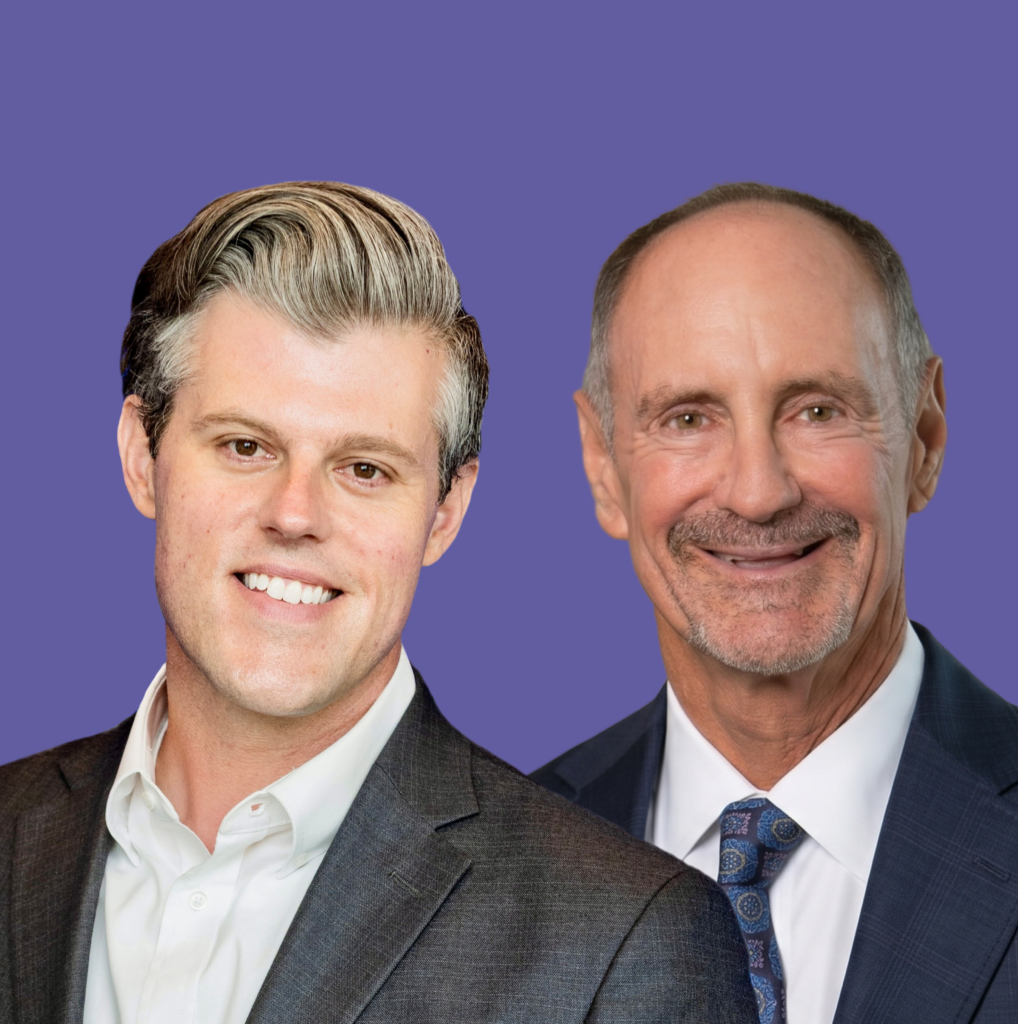
In the second episode of our limited series “Leadership Dialogues,” Dr. Larry Moss and Carol Vassar sit down with Kody Kinsley, former Secretary of Health and Human Services for the State of North Carolina. They discuss Medicaid expansion and how healthcare dollars can address food, housing, transportation and other drivers of health. They also explore lessons from North Carolina’s Healthy Opportunities initiative and how upstream investments can better support families and create healthier futures for children.
Leadership Dialogues is a limited series from Well Beyond Medicine in which Larry Moss, MD, FACS, FAAP, President and CEO of Nemours Children’s Health, joins host Carol Vassar to engage some of today’s most influential voices in child health, policy and community change. Together, they explore the ideas, partnerships and cross-sector solutions shaping healthier futures for children.
Featuring:
Kody Kinsley, former Secretary of Health and Human Services, State of North Carolina
Co-Host: Larry Moss, MD, FACS, FAAP, President and CEO, Nemours Children’s Health
Host/Producer: Carol Vassar
TRANSCRIPT
Announcer:
Welcome to Well Beyond Medicine, the world’s top-ranked children’s health podcast produced by Nemours Children’s Health. Subscribe on any platform at nemourswellbeyond.org or find us on YouTube.
Carol Vassar, podcast host/producer:
Each week we’ll be joined by innovators and experts from around the world, exploring anything and everything related to the 85% of child health impacts that occur outside the doctor’s office. I’m your host, Carol Vassar. And now that you’re here, let’s go.
MUSIC:
Let’s go, well beyond medicine.
Carol Vassar, podcast host/co-producer:
Hi everyone, and welcome to the second installment of Leadership Dialogues with my co-host, Nemours Children’s Health President and CEO, Dr. Larry Moss. Dr. Moss, welcome back to the Well Beyond Medicine Podcast.
Larry Moss, MD, FACS, FAAP, President and CEO, Nemours Children’s Health:
It is fantastic to be back, and I love this series and can’t wait for the next one.
Carol Vassar, podcast host/co-producer:
Well, I can’t wait either. I’m so pleased to help you convene these dialogues as you and your leadership guests talk about bold ideas and innovative policies and cross-sector partnerships that can really help create healthier children and communities. So today we’re going to be looking at how government and public policy can be brought to bear for this purpose. Dr. Moss, who have you brought with you?
Larry Moss, MD, FACS, FAAP, President and CEO, Nemours Children’s Health:
Well, as you know, Carol, this is an all-star series, and we definitely got an all-star today. Kody Kinsley has done a lot of amazing things in his life, but the one we’re going to focus on today is his contributions to human health as the health secretary for the state of North Carolina, where he led one of the largest health and human services agencies in the entire country and led it in a way to do some innovative and remarkable things that have really been a lesson to all of us who care about health in the United States. And we have the opportunity to explore that more deeply today. Kody, welcome. I’m going to just jump right in and say, before we get into any policy or wonky questions, tell us a little bit about yourself personally. Tell us about your childhood and the way you grew up and some of the things that set you on the journey to have these amazing accomplishments.
Kody Kinsley, former Secretary of Health and Human Services, State of North Carolina:
Well, Larry, Carol, it’s wonderful to be here and to be amongst friends. I mean, there’s such an amazing community of people who are working in a mission-oriented way to improve the health and well-being of this country. And it’s an honor for me to know folks like you all who are doing that work and to be a part of this coalition of the willing, if you will. I’m joining you today virtually from North Carolina, the state that I’ve called home for a very long time. I grew up here just down the road in Wilmington. My parents still live in the house that I grew up in. And our childhood was much like others and other people’s stories. But one thing that is a galvanizing fact for many Americans was that when I was growing up, I grew up without health insurance. And I remember as a young kid, the stress and the challenges that that presented for our family.
It often looked like seeing a pediatrician on a sliding scale at an independent practice. It looked like pharmaceuticals when you got sick out of a supply closet or coupons going to the pharmacy and trying to navigate that. And it also looked a lot like me remembering the stress that weighed on my mother. Most often, moms are the ones that carry the weight of improving and trying to support the health of their families. And my mom really carried that burden deep on her. And that experience, along with others through my early years, really left me with a couple of core beliefs. One is that access to the healthcare system is a right and something that we have to improve in this country. And two, that the government does do good things for people and it can do better. And so I’ve really centered my work around those two truisms.
Larry Moss, MD, FACS, FAAP, President and CEO, Nemours Children’s Health:
That’s a powerful story, Kody, about a hardworking family growing up in the wealthiest country on the planet and not having health insurance. So no doubt played into two of your major accomplishments in North Carolina. One, expanding Medicaid, which directly provided coverage to, I would presume, millions more people. But beyond that, to conceptualize health insurance as actually paying for health and not only paying for medical care. At Nemours, we talk about the Well Beyond Medicine concept being rooted in the fact that medical care is a relatively small but important part of health. It’s about 15%, but we call it the other 85% at Nemours: education, housing, food security, all of those other things. Tell us about how you both expanded coverage and expanded the scope of coverage in your state.
Kody Kinsley, former Secretary of Health and Human Services, State of North Carolina:
Sure. So first off, I have to start here, which is that public policy is always a team-based sport. And that’s signified, perhaps, if you can see in my background there at the top of the bookshelf is football that was signed by all of the Republicans in the North Carolina General Assembly and given to me as a gift as a memento on the day that we signed Medicaid expansion into law, as a point of getting it across the line and the team effort that it took to get there. And the fact that my predecessor, Mandy Cohen, also devoted much of her work to this, and perhaps no one worked harder on Medicaid expansion in North Carolina for longer than Roy Cooper. And so it was a huge team effort to get us to what is on the other side behind me: 600,000 people enrolled in healthcare coverage, which again, I always like to remind folks, and you pointed this out, Larry, in your remarks, these people were by and large working already, earning too much money to qualify for Medicaid, but not enough to buy health insurance through the marketplace.
And they were stuck in this hole where they were damned if they did and damned if they didn’t, and needed to try to make a difference there. And so getting Medicaid expansion was a no-brainer, but it took us a long time to get there, and it took working with a broad coalition of people that looked like business community and chambers of commerce and local county commissioners and sheriffs to build this bipartisan strategy that would do the right thing for folks and give people that card.
Part of what we learned in COVID together was that we needed access to coverage. If you didn’t have a way to walk in the door, then navigating the healthcare system was impossible otherwise. And so that was a foundational piece. Also, our work on behavioral health. That was another big reason why a lot of our legislators realized we had to do Medicaid expansion. It was the only tool that we’re going to have to expand access to care. So we can pick apart that story and dive into it in a lot of different ways. But as you alluded to, the second piece of the puzzle is that health coverage is table stakes, but it’s not enough. That the rails of our healthcare system in this country run on a fee-for-service system, and more is not often better. And we have a lot of duplication and a lot of excess and a lot of other challenges.
And as you pointed out, 85% of what really drives health is stuff that happens really outside of the healthcare delivery system. And so how do we change those rails? How do we change those financing rails so they’re not tied to more healthcare delivery and push instead to getting upstream to support the things like healthy food and housing supports and transportation that we know make a difference for people in the short and long term? And I’ll say one last thing here and then pause, which is I started my career after college working in behavioral health, and I was running operations for a behavioral healthcare company in Western North Carolina. This was on the other side of mental health care being privatized in the state. And we had a lot of public mental health service providers who were trying to hang up their shingle and serve people with and without means.
And the concept of social determinants of health to them was a no-brainer. You are not going to tackle someone’s serious mental illness issues unless you could help support their housing. And so I jokingly think about them 20 some years ago, and then someone in an emergency room was treating a kid with asthma and said, “Oh my gosh, if we change the carpet, they’ll stop coming back.” And they’ve discovered that out of nowhere. But this idea of social determinants is not just where the evidence is; it’s also where the common sense is. And getting the financing to do that through our healthy opportunities pilots, which we’ll talk more about, I’m sure, is a big goal for us.
Larry Moss, MD, FACS, FAAP, President and CEO, Nemours Children’s Health:
That’s a really great story and description of how you were able to expand coverage to so many more people. I want to turn in a minute to the scope and the breadth of coverage and the social drivers of health. But before we do that, let’s talk about politics for a minute. So one could look at the political map in North Carolina and say, “Well, those guys are never going to expand Medicaid in a thousand years.” And yet the guy who led getting it done, you’d think that that guy would be some kind of major political power broker. You’re a pretty low-key, humble, unassuming guy. How did you pull that off?
Kody Kinsley, former Secretary of Health and Human Services, State of North Carolina:
Well, I will tell my partner later that you said I was both humble and low-key, and I was like, “It came from Larry, so it must be true.” Again, one, expanding Medicaid, huge team effort, took a lot of folks. I get the joy of being able to tell that story. And I always try to recognize first and foremost Roy Cooper, who tried to expand Medicaid from his very first day in office, if not before, and was willing to take that fight to whoever it needed to be taken to and to build the arguments and the rationale for doing it and persisted every day. What you said, million years, often I think to him felt like a million years, and to all of us felt like a million years. But I think it boiled down to a couple of key things. One, as I’ve alluded to earlier, we were coming out of COVID.
In the middle of COVID, we were trying to give people access to care in North Carolina, because we had a million people without health insurance trying to think about the core things we were communicating during the pandemic. One, if you need a test, go to one of these testing sites; it’s free. Well, if you’ve lived your whole life without health insurance, the last thing you believe is walking into any healthcare facility is free. And so getting that behavior change shifted in the middle of that, we were fighting against that because we had lacked coverage. The second thing is that we were dealing with a disease that disproportionately preyed on people with longstanding illnesses and chronic diseases. So, North Carolina had the cards stacked against us there as well because we had a million people with a chronic disease dead of… And look, we’re the buckle of the barbecue belt.
So we’re dealing with obesity and chronic kidney disease. And I will say this: I will be controversial. We have the best barbecue in the country, and I’m a fan of the vinegar-based. So the Western North Carolina people hate me because of that, whatever. I have nothing to lose. And so we were fighting on chronic disease issues, and we were fighting on behavior change. And the last thing is we were telling people during COVID, “Look, if you get really sick, the last place that I want you to go is the emergency room because, A, we don’t want to spread the disease around COVID, not if you get really sick. If you get COVID, we don’t want you to go to the emergency room. If you get really sick, go to the emergency room.”
But for someone who is uninsured, that’s the only place they do go for care because that’s the only place they know they can get care. And so just exposed through COVID all the challenges of not having health insurance access. The other thing that I think happened during COVID, and we saw this nationally, was that people experienced loneliness leading to depression, fear, and anxiety, leading to more complicated mental health issues. People were having their children look at them and say, “Mom, dad, what’s going on?” And them not being able to explain what’s going on because they had never been through it themselves. And it’s a very scary experience for people. And so people started talking about their mental health challenges in a way that I don’t think we had had before. We kind of broke through stigma in a way that I thought was really powerful. And it also opened up another question for us in North Carolina, which was: if we really want to make a difference in mental health and well-being in this state, how are we going to do that without coverage?
So both of those things pushed us towards a window that brought a broader coalition of people together to talk about Medicaid expansion and why we had to do it then. The other thing that happened is the federal government said, “If you do Medicaid expansion, we will give you $1.8 billion, what I would come to call the signing bonus.” There’s a technical word for this, but essentially, federal dollars into the state to support that growth. And so money to lubricate the wheels of progress from the federal government, good rationale and support among the voters, and strong political leadership in our General Assembly who did perhaps one of the hardest things, which was to change their mind. And Governor Cooper had done the work of building the support among their base so that when they did change their mind, there wasn’t a problem with it.
Carol Vassar, podcast host/co-producer:
Going to take a quick break here. You are listening to Leadership Dialogues on the Well Beyond Medicine Podcast. I’m Carol Vassar. Our guest today is health policy leader Kody Kinsley. Let’s continue the conversation between Kody and today’s co-host, Dr. Larry Moss.
Larry Moss, MD, FACS, FAAP, President and CEO, Nemours Children’s Health:
Welcome back, everybody. I heard a couple of things before the break. One was about barbecue sauce. We’re going to leave that on the shelf and take that argument offline. But the other thing I heard was, Kody, how behavioral health taught you about the importance of the social drivers of health, which are critical in behavioral health and equally critical with respect to physical health. Yet we have a health system in this country that spends over $5 trillion a year almost all on medical care. And you brought something new to the table, which is, “Hey, if we spend some of those dollars in other places that do a better job of creating health, maybe we could change the equation.” So start out with telling me on the physical health side of the fence, what problem were you trying to solve when you started the Healthy Opportunities Agenda?
Kody Kinsley, former Secretary of Health and Human Services, State of North Carolina:
Yeah. Following the arc, you’re all always got to give credit to the team. Again, Dr. Cohen, who really saw this opportunity to seize the moment with a waiver. She had been at CMS. She understood how the 1115 waiver process worked, and this is a bureaucratic term for getting the federal government to agree to use Medicaid money a little differently. Dr. Betsy Tilson, who is our state health director, who was really the heart and soul of getting this program stood up. But the problem that we were trying to solve was the one that I think everybody is dealing with now more than ever, which is that a core driver of why healthcare is so expensive in this country is that people end up going to get very expensive care because they get very sick. And as I learned – maybe it was from Mary Poppins, I’m not sure – an ounce of prevention is worth a pound of cure.
And yet we’re not so good at paying for prevention and getting way upstream, especially when you’re dealing with chronic kidney disease and heart disease, a little bit of good food goes a really long way, and it’s where the evidence base was. And so we were trying to do two things. One was to test how you could get upstream and what the infrastructure needed to do that would look like. And two, what are the things that you could invest in that were going to turn the dial the most, both from a health perspective and a financial perspective? And so North Carolina was the first in the nation to structure a pilot like this. And we designed our pilot to be small in who we were serving, roughly only 30,000 people in three regions in the state, which relative to North Carolina’s population, pretty small group of folks, but really broad in the number of services that would be covered.
And so food, mattresses, transportation, interpersonal safety – I mean, a whole service code of things that we would do. And the goal was to fail forward fast. We wanted to test, okay, we’re seeing our biggest positive turn from food, seeing less from this. How do we adjust and keep going? We also built a heavy infrastructure that leveraged community-based organizations who had trust and connections in local communities and a technology platform that could sync all this together. And so we wanted to really make sure it was high-quality food, and we could measure it and what was going on. And so we designed all of that, and then COVID happened, paused everything, and then we ended up launching. And I’ll just be really frank, I suspected we would see some positive turn in the first two years, but not that much, and it would take longer. These things take long to do. Blown away. First two years in, we see an $85 savings per member per month.
For those of you that understand health insurance and dollars, that’s huge. And folks, we’ve just had this past June the kind of summative, the more fulsome report come out where we’ve had more months of service and more months of data. They’ve gone into our independent researchers at UNC, and they found that even when you account for all the costs- how much the food costs, all the delivery, who’s bringing it, everything- even when you account for all of that, you’re saving $164 per person per month. People are going to the hospital less. They’re stating that their needs are being met more fully, they’re healthier, they’re more connected in their communities, and we are saving money doing it. It is just a win, win, win through and through. And that’s why, after our little budget debacle here in North Carolina, the North Carolina General Assembly, a supermajority of Republicans, just funded Healthy Opportunities and put it back in the budget because it is a bipartisan way forward on the issues of our time around making people healthier and affordability.
Larry Moss, MD, FACS, FAAP, President and CEO, Nemours Children’s Health:
So for somebody sitting outside the healthcare system, you could look and say, “Huh, somebody’s hungry, give them food. Somebody’s homeless. Maybe they need a bed to sleep in, and maybe they’ll be less likely to go in the hospital and cost a whole bunch of money on medical care.” Seems like it’s obvious, yet pretty challenging to execute. So what were some of the unexpected hurdles that you encountered and how did you work your way around them?
Kody Kinsley, former Secretary of Health and Human Services, State of North Carolina:
Well, I mean, one was the social welfare system, the collection of church-based nonprofits and other organizations that already do amazing work in our communities of providing food banks and supporting people with housing needs and running legal clinics to support people that are struggling with interpersonal safety issues and domestic violence shelters. I mean, that segment of the community is not well coordinated or patched together. There’s not a lot of infrastructure. They’re also usually grant-funded, and those grants get renewed every year, and so they don’t build the basis of institutional knowledge. So, big challenge one is just: how do you stitch that together in a more comprehensive way and build a system around it? And our solution to that was by standing up these lead pilot entities, these organizations that would essentially become network managers to build a network of these community-based organizations, which cost some money to build.
One could look at our pilots and be like, “Whoa, you’re really heavy on infrastructure.” And I think that’s an honest critique. I think maybe there are ways to thin that down a little bit, but the problem we were trying to solve was how do we essentially overcompensate for the fact that that part of our social services system is really underfunded historically, and it’s a lot of philanthropic do-gooding and not a lot of stable structure and funding. I think the second big problem that we were trying to solve from an operational perspective was around the data.
My first job in the federal government was working at the US Department of Health and Human Services, and my favorite title was Office of the National Coordinator for Health IT. We were rolling out HIEs and meaningful use and all the things. Nothing gets me nearly murdered by physicians faster than when I talk about rolling out EHRs. And I think that we’re still working on HIEs, and all that data is relatively standardized, in trying to get the health information exchange. The human services information exchange, if I want to prove that one dose of kale lowers my healthcare cost by X, oh my God, how do you measure that? What is the size? What is the standards? What’s the data system it goes into? How do you track? And so we decided in North Carolina, we were going to pick a platform that was going to be bigger than the pilots. We wanted to track social determinants broadly.
And so we built a platform called NCCARE360 that essentially piped into the health systems and EHRs, and people were universally screened on their needs, and then they could be identified to go into the pilot if they were in the right region. And then when food was delivered, it was tracked through that system and all these other things, kind of a QuickBooks for health, if you will. And so that was how we solved it. Again, heavy lift. Some people didn’t like that approach because they didn’t want to use that tool, but lessons learned, and it still worked really well and gave us what we would not have been able to give you the results had we not had the data. And so that is why it was important. And then downstream, of course, how do you build trust? How do you roll out? How do you identify the people to get in and say yes? How do you get them to believe you that actually, no, this food is part of your Medicaid benefit, trust us, it’s okay. And then build out that infrastructure and stabilize it. And those just take time.
Larry Moss, MD, FACS, FAAP, President and CEO, Nemours Children’s Health:
So great description. Thank you for that. Let’s go a level up and talk about the way society and the government is structured. So medical care lives in one cabinet department, housing lives in a different one, education lives in a different one, food lives in a different one, yet we’re talking about health as being all of one thing. How do we reconcile that and how do we as a society address health when it’s so parsed out and spending a little bit of money here to save a big pot of money here, it’s a different pot and the people that live in the save pot don’t care about the spend pot. How do we put all that together?
Kody Kinsley, former Secretary of Health and Human Services, State of North Carolina:
Yeah, I call this the wrong pocket problem. And I will give you two examples of where it reared its head for me to make it a little bit more understandable. One was I cared a lot about behavioral health. We’re doing a lot of work on behavioral health, and we all were working together in the opioid epidemic. Every dollar that we put into trying to save lives and to help manage addiction and get people on the path to recovery would likely help people that were also ending up in the justice system, whether they were going through the courts or going through jails or navigating other complications. And any of the “savings” accrued by that system never made it back to my budget, never came full circle to me. And look, I wasn’t looking for the savings. I don’t want anyone to hear me saying I was trying to take money from the law enforcement folks, but it does show you how they’re disconnected.
There’s another way that these systems are disconnected, which is, so North Carolina leading the way, first in the nation pilot to do this work around Medicaid, we did an analysis of how many people we had on Medicaid and identified them as whether or not they were on SNAP and were eligible. We found that if we had perfect alignment, if everybody in Medicaid who was eligible for SNAP was on SNAP, I would double the size of my SNAP program. And for everybody, SNAP is of course the food benefits program that the government offers, double. So we were leaving a significant amount of food benefits from the government on the table while we were expanding access to food benefits and Medicaid. Now, these two systems don’t work well together for a lot of reasons, but to your point, Larry, the original sin is that one is authorized in the Farm Bill and run through the US Department of Agriculture.
And Medicaid, of course, is authorized in a different part of the congressional budget and runs through the US Department of Health and Human Services. And the eligibility rules of those two programs don’t align; the operational requirements of those two programs don’t align. And until recently, actually, the data sharing between those two programs was federally forbidden. And so you couldn’t even look at the two and understand. And it wasn’t until the public health emergency and the unwinding that we’re able to start to stitch them together a little bit. So I totally agree with you. How do we shift our government to be more individual-centric and build it around them, make it easier? And I think that is a challenge where we’ve had progress, and I think much more to do.
Carol Vassar, podcast host/co-producer:
Hey everyone, you’re listening to and watching Leadership Dialogues on the Well Beyond Medicine Podcast. I’m Carol Vassar. We’re going to continue the conversation right now between health policy expert Kody Kinsley and today’s co-host, Dr. Larry Moss. Dr. Moss.
Larry Moss, MD, FACS, FAAP, President and CEO, Nemours Children’s Health:
Welcome back, everybody. And as we enter the third of three parts of this podcast, we got to get the children. So I’ll start out with the concept that is the underpinning of Nemours’ whole child health strategy, which is that childhood provides the most massive lever of impact to make a difference in improving life trajectory. And we believe- we don’t just believe; there are facts to support it- that spending a little bit of money on health and childhood has a massive impact. And once people reach adulthood and chronic disease is established, spending a whole lot of money makes a little bit of impact. So tell me about your view of the impact of the Healthy Opportunities Pilot on kids and families and overall health trajectory of the population starting in childhood.
Kody Kinsley, former Secretary of Health and Human Services, State of North Carolina:
Yeah. Well, one of our guiding lights in North Carolina was the research-based conceptual framework of adverse childhood experiences. We know that people who have more ACEs are, as you just alluded to, go on to have more chronic disease and other complications. And so if we can intervene early and reduce those ACEs and also support people with healthy coping mechanisms around them, we can blunt the negative impact of that. And so one in five children in North Carolina live in hunger. I mean, it is tragic that in a country as ours, with the breadbasket that we have and the access to food and the amount of food waste that we see, we have so many children who are hungry. And we know that usually if a child’s hungry, it’s also because the parents are starving. I think they are already skipping their meals, and that to support the health and wellbeing of a child, you have to support the health and wellbeing of a family just as much. I shouldn’t be separating one food program and government from another; we cannot separate the health of a child from their family.
And so those guiding lights for us really were baked into our Healthy Opportunities pilots: how do we support the health and wellbeing of the whole family? How do we support access to food? It’s also why, from a more concerted strategy, we worked on our early childhood action plan to support access to early learning and support. It’s why we funded the SUN Bucks program in North Carolina through a partnership with philanthropy to give access to a million kids and have access to healthy food in the summer when they were out of school, because these foundational building blocks are key. One of the challenges that we face in the healthcare delivery system and the healthcare financing system is the actuarial window. A lot of insurers struggle with the justification of funding extra things for kids because that child likely will not be insured by them later in life when that chronic disease doesn’t rear its head. Again, this is the inverse of the penny-wise, pound-foolish problem.
I’d like to appeal to the insurance companies and to hospitals and to everybody to do better. A lot of them do work to do better for kids because of a lot of reasons. But I also think we have to change the rules of the road here. I’ve become more interested in this idea of what a public option for primary care looks like. When we think about preventative services, or what is a reinsurance strategy for kids where we can try to take the risk outside of an individual actuarial window for an insurance company and say, “Look, for these things that you’re investing that are going to have returns in five, 10, 15, 25 years, maybe there’s some sort of shared reinsurance pool across a region-based population that could try to improve.”
I know Larry, the work that you’re doing at Nemours and thinking about, okay, in a region-based investment area, how do we actually do investments in kids that could show benefits in five, 10, 15 years? And then we, as the whole health system responsible for that area, can get those payer incentives and the local population health incentives aligned to improve it. So I think there are different ways to get the financing to work, but we do need smart people to continue to come together on that.
Larry Moss, MD, FACS, FAAP, President and CEO, Nemours Children’s Health:
So as you say, Kody, Nemours does have the viewpoint that children’s health systems should be not just the place where kids go when they get sick, but the overall stewards of child health in our society. With that concept in mind, if I happen to be the CEO of a children’s health system in North Carolina at the time you were rolling out this pilot, what would you have come to me and said you needed for me and my system to make this work?
Kody Kinsley, former Secretary of Health and Human Services, State of North Carolina:
Well, we don’t have a freestanding children’s hospital in North Carolina until more recently announced. But the first thing when we were rolling out our pilot, and to be transparent, is that our pilot focused on adults already with chronic disease. And so I would imagine that you, Larry, if you had a children’s hospital in North Carolina, you would’ve told me, “Why are you forgetting the kids? You could have put a penny on the kids, and it would’ve made a whole lot of difference.” And I would’ve taken that critique and said, “We’re trying to prove this out, and this is why, and I need a shorter return window to prove it out.” And so we have to start there to then grow. But we, of course, didn’t forget the kids. For us, it was important to build them into all the other programming and work that we did because, again, we really believe that the health of the whole family matters and starting across the lifespan works.
But I think childhood hunger is something we should all be focusing on. If we learned something that we can extrapolate from in our data on the Healthy Opportunities pilots, it is the power of food to improve health, and I’ve been credited with saying, and I’ll say it again, I believe Healthy Opportunities was MAHA before MAHA. And the common sense of access to healthy food as being foundational is key. And if at the same time we’re worried about the impact of processed foods on adults, well then, my gosh, what is the impact of both processed foods and outright hunger on kids? And to quote a favorite Republican state senator of mine, Jim Bergen, we are one generation away from completely changing the health situation in this country if we could all double down on doing that work together. And I think focusing on the health and access to food for kids is a no-brainer.
Larry Moss, MD, FACS, FAAP, President and CEO, Nemours Children’s Health:
So on your leadership, Kody, in the Healthy Opportunities pilot, you stated you achieved outcomes that were more rapid and even better than you expected. Why aren’t we doing this in 49 other states next week?
Kody Kinsley, former Secretary of Health and Human Services, State of North Carolina:
Well, the good news is that it is happening in various forms and fits in a lot of other states. North Carolina really trailblazed, and a lot of other states built programs with similar thinking about their own… Now remember the origin story here. We were trying to test a whole lot of different things. So some states leaned really hard into housing, and some states leaned really hard into justice-involved prevention and population work. Some states built it into food and then operationalized it; some states built it more tied to primary care as opposed to building up a network of CBOs. Some people said this really needs to be integrated into your primary care office. Some states went lighter on implementation and said medically tailored meals is sufficient. So we really do have actually a whole lot of states experimenting right now, and I think that’s generally a good thing.
Now, our friends in CMS would tell you right now that actually what we need to do is standardize this, that the purpose of the 1115 waiver and in lieu of services was to test what works and then to take that evidence to Congress and say, “You see, Congress, you need to cover kale. If you cover kale, we can make a difference, or, see, Congress, you need to better align SNAP and Medicaid. And if you did that, it could make a difference.” So look, I don’t work at CMS right now, and I hope that they’re taking that argument to them to build out what we need to do to standardize in this country. But the good news is that actually there are a lot of folks testing this, and we’re still learning exactly what the best way to do it is. And I’m hoping that it will continue to snowball.
Larry Moss, MD, FACS, FAAP, President and CEO, Nemours Children’s Health:
As we wind this down, Kody, I want to talk about us for a minute and leverage your expertise and ask your advice here. So Nemours entered into the country’s first partnership with the state of Delaware to develop a global budget model for children. So the underpinnings of this was the concept very similar to what you did in North Carolina: if we spent some of these health dollars outside of medical care, we could actually save money on medical care, serve the state’s agenda of spending less on medical care, creating a healthier population of kids and a stronger economy for the state, and being able to be a force of change to be able to do that. As we execute that, what are the pitfalls we should be thinking about, or what are the key points of execution we should learn from your experience in North Carolina that will increase the odds that we’ll be successful?
Kody Kinsley, former Secretary of Health and Human Services, State of North Carolina:
First things first, I have to give a shout-out to my good friend, Christen Linke Young, who’s the secretary of Health and Human Services for the state of Delaware and who was in North Carolina, the chief deputy while we were rolling out healthy opportunities or designing healthy opportunities. I think Delaware has got an incredibly good footing with her and you in leadership positions on this project, and that gives me a lot of hope. I think the second thing is I’ll allude back to some of the points I made earlier, which is big questions around how do you stitch together the service provisioning? Are you going to lean heavily into using existing community-based organizations, or are you going to bring in new statewide vendors? One is more expensive than the other, one is more complicated than the other, how are you going to measure that? What is that going to look like? Those aren’t necessarily pitfalls, but I think they are complications that need to be designed and fit for purpose better for Delaware. There are pros and cons. One moves fast; the other moves cheaper and slower. I think that there are different opportunities.
I think similarly, on the data, pushing towards how to get that data, how to track it, what it looks like, how everybody can see it, I think is another challenge. And then last, I’ll say an area of learning is certainly something I’ve hit a bunch already, which is starting with food, that we’ve borne out the importance of that in a tailored-made thing for children. Obviously, that is going to be really key. We also know where the evidence base is on early learning and support, and I think there are opportunities there as well. The last thing I would say, and Christen will have thought about this already, obviously outside of this particular global budget work, is thinking about what all the other things are to bring the strategy together; states will often have an early learning initiative and various public health impacts and other things. So there will still be other health and human services programming and dollars outside of the Medicaid global budget, and making sure that all of those things are aligned to this strategy to really help make sure that it goes is going to be really key.
Carol Vassar, podcast host/co-producer:
Insights from health policy leader Kody Kinsley on the absolutely stellar work that he led in the state of North Carolina during his time serving as the state’s Secretary of Health and Human Services. You heard him in conversation with Nemours’ President and CEO, Dr. Larry Moss, as part of the Well Beyond Medicine podcast series we’re calling Leadership Dialogues.
MUSIC:
Well Beyond Medicine.
Carol Vassar, podcast host/co-producer:
Kody continues working for improved health outcomes and a better health system for all by bringing his vision and his leadership to some of the national health policy organizations he works for, including the Century Foundation, the Milken Institute, and the Johns Hopkins School of Nursing. Leaders talking with leaders about Whole Child Health.
That’s Leadership Dialogues in a nutshell. If you haven’t already done so, please make sure you go over to nemourswellbeyond.org and subscribe to the podcast. That way you’ll never miss an episode of either Leadership Dialogues or Well Beyond Medicine. While you’re there, leave a review, an idea for a future episode, or subscribe to our monthly e-newsletter. That’s nemourswellbeyond.org. You can also subscribe to the podcast on your favorite podcast app on your phone. Listen by asking your smart speaker to play the Nemours Well Beyond Medicine Podcast, or watch it on the Nemours YouTube channel.
Thanks to Kody and to Dr. Moss for this conversation and for their leadership on Whole Child Health. Thanks also to you for listening and to the team behind the scenes that makes the podcast possible: Susan Masucci, Lauren Teta, Cheryl Munn, and Alex Wall. Video production by Sarah Kate Reger and Sebastian Riella. Special thanks to KT Trewin and Erica Lansaw from the office of Dr. Larry Moss for additional production and IT assistance. I’m Carol Vassar. Thanks again for joining us. Remember, until next time, that together, we can change children’s health for good, well beyond medicine.
MUSIC:
Let’s go. Well beyond medicine.