A child’s health journey doesn’t begin at birth — it begins much earlier.
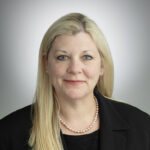
In the first part of our two-part Maternal Fetal Health series, Julie S. Moldenhauer, MD, PMH-C, Executive Director, Institute for Maternal Fetal Health, Elizabeth W. Snyder Endowed Chair in Fetal Therapy and Innovation, Nemours Children’s Health, explores how care before birth can shape lifelong health outcomes.
She shares why a children’s hospital is investing in care for mothers, babies and families together, and how advances in prenatal diagnosis, fetal intervention, genetic testing, and coordinated family support are transforming the future of pediatric care. Discover how maternal-fetal health is redefining when and where whole child health begins.
Featuring:
Julie S. Moldenhauer, MD, PMH-C, FACOG, FACMGG, Executive Director, Institute for Maternal Fetal Health, Elizabeth W. Snyder Endowed Chair in Fetal Therapy and Innovation, Nemours Children’s Health
Host/Producer: Carol Vassar
TRANSCRIPT
Announcer (00:00):
Welcome to Well Beyond Medicine, the world’s top-ranked children’s health podcast produced by Nemours Children’s Health. Subscribe on any platform at nemourswellbeyond.org or find us on YouTube.
Carol Vassar, podcast host/producer (00:12):
Each week, we’ll be joined by innovators and experts from around the world, exploring anything and everything related to the 85% of child health impact that occurs outside the doctor’s office. I’m your host, and now that you’re here, let’s go.
MUSIC (00:30):
Let’s go, oh, oh.
(00:32):
Well beyond medicine.
Carol Vassar, podcast host/producer (00:36):
Maternal health across the nation is under strain. There’s a recent Harris poll on the state of maternal health that found that 41% of women, 41%, face barriers accessing pregnancy care and that families confronting complex fetal diagnoses are frequently forced to travel far from home, far from their family, far from their support systems to find the care and expertise they need. To address this, Nemours has opened its Institute for Maternal-Fetal Health at Nemours Children’s Hospital in Delaware.
(01:10):
Leading this effort is Dr. Julie S. Moldenhauer. She is a triple board-certified maternal-fetal medicine specialist and reproductive geneticist who has devoted her career to caring for women who are facing high-risk pregnancies and complex prenatal diagnoses. She comes to Nemours, not just with deep clinical expertise in fetal intervention, but a philosophy grounded in honesty, humility, and family-centered care. Dr. Moldenhauer, welcome to the Nemours Well Beyond Medicine podcast.
Julie Moldenhauer, MD, Nemours Children’s Health (01:42):
Thank you very much. Thanks for having me.
Carol Vassar, podcast host/producer(01:44):
So, today we’re going to explore the vision behind that institute. This is actually going to be a four-part series over the next several months, and what it means to integrate maternal and pediatric care in one place under one roof and how that expansion that’s happening at Nemours in Delaware reflects the idea that whole child health begins even before a child is born. I want to know what all of this means. Does this mean that Nemours, a children’s hospital, is now delivering babies?
Julie Moldenhauer, MD, Nemours Children’s Health (02:15):
Yes. So, fun fact: we’ve actually been delivering babies in Delaware since 2019, but that looks a little bit different currently. And so, initially, we had a much smaller unit, we had more limited services and now really what the footprint includes is four labor and delivery rooms, eight antepartum-postpartum rooms, we have resuscitation or stabilization rooms next to each of the delivery rooms and operating rooms for the neonates and then we have three dedicated operating rooms one of which is outfitted with the highest level of technology available including the equipment, the monitors, the camera systems so that we can perform high-tech fetal interventions so we’re operating on babies in utero before they’re born.
Carol Vassar, podcast host/producer (03:02):
Tell me more. How would you define the mission here?
Julie Moldenhauer, MD, Nemours Children’s Health (03:06):
I think our mission really is to take that whole child health philosophy at Nemours and bring it prior to birth. And so, in that setting, it’s not just the child we’re taking care of, it’s mom and it’s really the whole family and so that … That is our philosophy is that we want to help these moms who are dealing with very complicated high-risk pregnancies, they’re clearly very worried about their unborn baby and so we want to help make that journey a little bit easier for them. So, when they come to see us, they have everything under one roof that they’re going to need to take care of, not only their baby, but themselves as well.
(03:45):
So, this is where the program has changed drastically is we are able to provide comprehensive prenatal diagnostic and imaging techniques, and so, if a patient gets referred into us with a specific diagnosis, we are able to perform that high-level ultrasonographic assessment of the fetus, or sometimes it’s twins or triplets, so sometimes it’s one baby, sometimes it’s multiples. We can also perform detailed fetal MRI, where we are looking at even a different imaging modality, high-level detail at the baby.
(04:20):
Fetal echocardiogram provided by our very skilled fetal cardiology team. We have a full staff of genetic counselors who are there to really assess family history. If there are any conditions running throughout the family, could this pregnancy be at risk for those, and to provide counseling in the current pregnancy about what we’re worried about, and then they also see maternal-fetal medicine, they see our obstetrical team, they see our neonatology team, they see our obstetrical team from an anesthesia standpoint.
(04:50):
And so, really, everybody is here under one roof, and we have a fantastic team of nurse practitioners, fetal nurse practitioners, and sonographers who are there every step of the way, taking care of the patient as far as full-scope prenatal care for those moms. And so, once they come here and the plan is going to be for them to deliver with us, we can provide soup, literally from the nuts, care for that mom.
(05:16):
And in addition to all of that obstetrical and medical care, we have a pretty robust psychosocial team available to those moms and to the whole family so that they can get through this process in this very vulnerable, sometimes overwhelming, and very scary time with a lot of support. I like to say we’re putting the bumpers in the gutters so that they can get through this full scope, holistically and that’s really what it means to provide this whole child health type of care is that it’s not just for the child or for the baby, it’s for the whole family because that’s really how these kiddos are going to do the best in the long run is if we’re supporting that entire family.
Carol Vassar, podcast host/producer (05:56):
I want to back this up a moment. You have outlined very nicely and very deeply the skillset that all of these teams have; they’re serving the entirety of the family. What happens when families don’t have access to that kind of coordinated care at that level when they’re having perhaps some issues, if the baby is having a need for maybe in utero surgery?
Julie Moldenhauer, MD, Nemours Children’s Health (06:18):
Yeah, it really gets to be a challenge because, A, sometimes some of these families don’t have a fetal center close to them. This is the first fetal care center in Delaware that offers full scope fetal interventions, and so patients in Delaware previously had to travel a distance to get to those places. What this also would mean is that sometimes they would have to relocate, and so, in the process of relocating, that sometimes means that families are separated. So, maybe mom would relocate to a fetal center, and her other children would be home with dad or sometimes grandparents, aunts and uncles, those types of things.
(06:59):
And so, having the ability to have a center closer to home is the most important thing so that families don’t have to leave their support system because, if you don’t have that support system, we try to fill in those gaps as much as possible with social workers, our fetal nurse practitioners, our whole entire care team, the obstetrical team, the nurses on the unit, everybody together really builds that family feel around the patients but, again, there’s nothing better than your own family.
(07:33):
So, the closer we can keep them to home, the closer we can keep them to their support system, but we also want to remove any barriers. So, if families have trouble with transportation, we want to be able to step in and help out with that so that we can take that off their plate and they don’t have to worry about that. If they’re having trouble relocating, if they have to relocate for a while, we want to help address those problems. How, if they need to be here for a while, do we have it so that they can have access for their other children to come visit or their brothers and sisters, aunts and uncles, the grandparents of the babies, all those things, because it truly takes a village and we want to help remove those barriers and keep it all with the family and keep them well-supported.
Carol Vassar, podcast host/producer (08:16):
And you’re fairly new to Nemours. When did you arrive at Nemours?
Julie Moldenhauer, MD, Nemours Children’s Health (08:21):
So, I started at Nemours in December of 2024, and I was predominantly overseeing the Florida operation at that point in time. And so, I’ve been in the Delaware Valley since December of 2025.
Carol Vassar, podcast host/producer (08:36):
Okay. And you’ve practiced even before that at, really, the highest levels of maternal-fetal medicine. Why did this opportunity at Nemours in particular feel like the right place for you at this point in your career to build the next chapter of your work?
Julie Moldenhauer, MD, Nemours Children’s Health (08:51):
Absolutely. So, this opportunity was, you know, I say it was my unicorn opportunity, so to speak, because it just seemed like this was the right place at the right time and building the right team to carry this over the finish line. And so, I really wanted to put a signature, my signature and the signature of the team around me, on a program where we could truly deliver this holistic approach to fetal care, where we would wrap our arms around the patient and their families and provide this whole child health, whole family health, really, perspective on how we were delivering the care. And the Nemours philosophy fit very well into my line of thinking, I think, into our whole team’s line of thinking, and how we could really do this at the next level, looking very holistically at whole family care.
Carol Vassar, podcast host/producer (09:48):
You mentioned now is the right time. Why is now the right time?
Julie Moldenhauer, MD, Nemours Children’s Health (09:52):
Oh, I think it’s a very exciting time as we’re advancing technology on many levels. So, from an imaging standpoint, our ability to perform very high-level ultrasounds, we have advanced that even in the last five to 10 years with the capabilities that we have. We have been able to advance the capabilities with MRIs, potentially the use of fetal CT scans, and really near and dear to my heart is where we at in the world of genetics. And so, our ability to make a genetic diagnosis in utero is really growing rapidly; we have access to non-invasive techniques.
(10:35):
So, what that means is that when we do a lot of the procedures that we do to perform a diagnostic test. So, for example, people have heard about an amniocentesis, where we take some fluid from around the baby, and we perform genetic testing on the pregnancy. To do that, it comes with an inherent risk, and that inherent risk is that, depending on what the gestational age of the pregnancy is, the risk could be losing the pregnancy because the baby would be non-viable, or it could be a very preterm delivery should we have a complication.
(11:09):
Now, technology is shifting so that we can perform a fair number of tests on what’s called cell-free fetal DNA circulating in the maternal bloodstream. And so, that technology, it’s newer in the scope of prenatal diagnosis. It’s been around since the 2000s, but our ability to diagnose more and more and more conditions is growing every day so that we don’t have to impart a risk to the pregnancy.
(11:39):
Now, having said that, the need is there to confirm those diagnoses because we consider that still a screening test but patients now have an option where they don’t have to jump straight to an invasive test and potentially put the pregnancy at risk, we can do this alternative test for many conditions. But still, the gold standard is an amniocentesis or a chorionic villus sampling, and what’s really exciting nowadays is that we have the ability to do what’s called next-generation sequencing.
(12:14):
And so, if you think about the Human Genome Project that took 20-plus years to complete, everybody heard about it, and it was a multicenter, multinational study to just sequence the human genome for the very first time. We have come so far in technology that we are able to sequence the human genome in hours, and then we can take that data and we can look for various genetic metabolic disorders that could impact a fetus, that could impact a child, that could impact an adult, because some of these disorders are adult-onset. but we can now do that on a pregnancy. We can do that on a baby in the NICU, and we can have those results back in hours, if not days. And so it sheds phenomenal light on not only prognosis but treatment options.
(13:03):
So, we call this precision medicine, and so that’s what is so exciting about where we’re at right now in the world of genetics is that we can shift that precision medicine to the prenatal time in life. And, hopefully, if we can impact and change therapeutics that we’re offering, we can impact the whole lifetime of that child.
Carol Vassar, podcast host/producer (13:25):
That’s just-
Julie Moldenhauer, MD, Nemours Children’s Health (13:26):
It’s exciting.
Carol Vassar, podcast host/producer (13:27):
… awe-inspiring stuff, and it just feels like it’s right at the beginning.
Julie Moldenhauer, MD, Nemours Children’s Health (13:32):
Absolutely. We’re just at the tip of the iceberg.
Carol Vassar, podcast host/producer (13:35):
One of the features of the institute that you have created, that Nemours has created is that integration of maternal care, fetal surgery, advanced delivery, the genetics that you just referred to, neonatology, all of that under one roof. What changes when all of that is in one place?
Julie Moldenhauer, MD, Nemours Children’s Health (13:57):
The quick and dirty answer to that is that it allows the patients to hit the easy button, right?
Carol Vassar, podcast host/producer (14:04):
Okay.
Julie Moldenhauer, MD, Nemours Children’s Health (14:04):
And so, when everything is disjointed and you don’t have it all in one place, the patient has to go sometimes to multiple different locations, multiple different clinics, to get these answers, to have the counseling, to know what’s happening in their unborn baby, and so having the diagnosis in the first place is very stressful and overwhelming.
(14:28):
Navigating healthcare is very stressful and overwhelming. And so to be able to make a phone call to one place, talk to a fetal nurse coordinator, talk to our schedulers, hear about what we have to offer, how that initial evaluation is going to look, know that you come to one place, you report to one check-in desk, and we basically maneuver around you.
(14:54):
And, at the end of the day, you know what’s happening with your baby, you know the general outline of what the plan is going to look like for the rest of the pregnancy, for the newborn’s care, you’ve met the specialist and it sheds light, that just takes all that confusion and angst and running around to so many different places out of the picture.
(15:15):
And, again, the whole point is, these poor families. They have enough to worry about. They’re so worried about their baby and how this is going to impact that baby’s life, the whole family’s life, all those sorts of things. This is the least we can do to try to simplify things for them, and that’s really what it’s all about: simplifying this for the family.
Carol Vassar, podcast host/producer (15:34):
And when time is of the essence, that’s another consideration.
Julie Moldenhauer, MD, Nemours Children’s Health (15:36):
Absolutely.
Carol Vassar, podcast host/producer r (15:38):
Talk about how integration works when time is really critical.
Julie Moldenhauer, MD, Nemours Children’s Health (15:42):
Oh, gosh, yeah, especially if there’s a baby that’s really sick. So, for example, today, we’re seeing a set of twins that were referred over late yesterday afternoon, and it looks like they have twin-twin transfusion syndrome. And so, that’s a situation where one baby pumps blood to the co-twin because they share a placenta, and it can make both babies sick, and, if it gets really severe, they have the chance to both pass away in utero and never make it to birth.
(16:14):
And so, if we think they’re really sick, being able to come here, get all the evaluations they need in one place very succinctly, meet with us, potentially go to the operating room all on the same day so that we can treat the twin-twin transfusion syndrome and, hopefully, have two babies be liveborn and do well, at the end of the day, that’s the goal.
(16:41):
And so, again, not having this roadmap where you go to three different places, you see three different specialists, we don’t have the capability to perform the procedures all under one roof, literally, it is one phone call to one place, you come here, we can evaluate you, if we make this diagnosis, we can have you in the operating room literally within hours to save your pregnancy. And that’s really what it’s all about, hitting that easy button.
Carol Vassar, podcast host/producer (17:08):
Easy button and two healthy twins, hopefully, coming home.
Julie Moldenhauer, MD, Nemours Children’s Health (17:11):
You got it.
Carol Vassar, podcast host/producer (17:12):
Talk about the proximity to home and to family support and how they affect both medical outcomes and emotional resilience because you need a lot of emotional support when you are the parents of this child and the mother within this pregnancy, talk about that.
Julie Moldenhauer, MD, Nemours Children’s Health (17:31):
Oh, gosh, yes. So, one, there’s the prenatal aspect of that, just going through the pregnancy with some of those unknowns that are hanging overhead, that can be intimidating in and of itself. And then, when the baby is born, depending on what the diagnosis is for that baby, that newborn could be in the NICU or the cardiac intensive care unit for months on end.
(17:59):
And so, while that’s happening, having been a NICU graduate mom myself, every day there’s ups and downs, so some days are good days, some days are bad days. And especially if those days compound one after another after another after another, sometimes you don’t feel like you can see the light at the end of the tunnel, and when are we going to finally get discharged and go home and get back to some normalcy.
(18:25):
And so, how do we support these families not only through the prenatal period but then after the baby is born and sometimes when they spend this prolonged period of time in the hospital, those are the two sides of things. And so, providing that extra care, that extra psychosocial support, is humongously important to getting these families through this vulnerable period of time. When these kiddos are two and three years old, and this is more in the rearview mirror, and you can finally take that deep breath of relief, it’s nice to have that, but sometimes, when you’re right in the middle of things, it just feels like you can’t get out of the weeds.
(19:05):
And so, having social workers and psychology and music therapy and art therapy and all of those extra supports is so important to helping these families get through this period because some days can be really dark and some days can be really light, and you just have to figure out how to get through it, and sometimes it’s hard when you’re alone.
Carol Vassar, podcast host/producer (19:26):
It’s the parents, it’s the kids that are the older siblings-
Julie Moldenhauer, MD, Nemours Children’s Health (19:30):
Everybody.
Carol Vassar, podcast host/producer (19:30):
… it’s the entirety of the family. Did I hear you say you’re a NICU mom graduate yourself?
Julie Moldenhauer, MD, Nemours Children’s Health (19:36):
Yeah, yeah. Two of our children were NICU babies, yeah.
Carol Vassar, podcast host/producer (19:40):
Oh, my goodness. How does that inform the work you do? Were you already in this work when you had this experience or … How did that come about?
Julie Moldenhauer, MD, Nemours Children’s Health (19:50):
Yeah. I had both of my babies while I was an attending, and yeah, I was doing this every day and thought I was going to have a pretty routine pregnancy that turned into not-so-pretty routine pregnancy. And my babies were just preemies, they didn’t need any surgical intervention right at birth but I do think that it informs … I always say I would not do anything for a family that I wouldn’t want someone to do for my own family and I think that, when you have that as your due north, it’s very important because it’s not easy being a NICU mom, it’s not easy being a NICU dad, it’s not easy being a NICU grandma or grandpa or brother or sister. And so, I think having that lived reality and experience does definitely inform what I do every day and how I care for patients every day.
Carol Vassar, podcast host/producer (20:47):
I want you to expand a little bit more on that. You take this experience, you make it very human, very one-on-one or one-on-the-family. How are you embedding that philosophy, she said, across the entire culture of the institute, maybe people who haven’t had that firsthand experience like you have?
Julie Moldenhauer, MD, Nemours Children’s Health (21:09):
I think that, among all of our staff, I think it’s a very self-selected population who are very dedicated to being here. So, I think that, whether or not you’ve had that lived experience or you have had the fortunate opportunity to not have that experience, everyone who’s part of our team wants nothing more than to have the best possible outcome for mom, baby, and family, and so I do think it takes a special person to do this. Most people who come into obstetrics and into labor and delivery choose to do so because it’s generally a very happy environment. Having a new baby come into this world is very exciting, and cutting the cord is very exciting and all those kinds of things. And when babies are coming into the world that are facing challenges and are going to spend time in the hospital as a newborn, I think it weighs heavily on the staff too.
(22:09):
And so, they’re so dedicated to helping these families, to helping these babies, to helping these moms, the journey is never easy but I think that our team basically is the cream that has risen to the top because they want to be a part of this good days and bad.
Carol Vassar, podcast host/producer(22:29):
Well, that’s the kind of people you want on your team.
Julie Moldenhauer, MD, Nemours Children’s Health (22:31):
Absolutely.
Carol Vassar, podcast host/producer (22:33):
What’s next for the Maternal Fetal Institute at Nemours?
Julie Moldenhauer, MD, Nemours Children’s Health (22:37):
Oh, well, there’s a lot next for us. So, in the near future, we are going to have an expanded outpatient unit and so it’s going to be very beautiful, it’s going to very much mirror the new inpatient unit that we just opened in April and it’s going to have a very sanctuary of calm, as we keep saying, feel about it, spa-like feel, very neutral colors, very warm, inviting for the patients. And, in that, we will be able to increase our volume, so we’ll be able to serve more families, which, of course, makes us all feel good because we want any family who’s going through this to experience it in this fashion, where they’re receiving this holistic approach.
(23:26):
We are really getting ready to kick off our fetal intervention aspect of the program. We have done some fetal interventions already but we are going to continue to build on that and, in the near future, we will be able to offer open maternal fetal surgery, we will be able to offer fetoscopic spina bifida closure, we will be able to offer endotracheal occlusion for severe congenital diaphragmatic hernia. So, these are some of the procedures that are on the horizon for us.
(23:55):
And we are also working on building up our educational series here, and we are working on building up our research opportunities as well. And so, we’re hitting it from all directions at this point, and we’re really growing quickly, we’re expanding our team quickly, and we’re expanding our reach quickly. So, lots to come.
Carol Vassar, podcast host/producer (24:18):
Our thanks to Dr. Moldenhauer for joining us. There is more to come indeed as we continue this occasional series on maternal-fetal health. In the months ahead, we’ll explore the emotional realities of high-risk pregnancy, the remarkable science behind fetal intervention and prenatal diagnosis, and the ways Nemours is reimagining care for mothers, babies, and families from the very beginning – including the space where it happens. We’ll also step back to examine maternal-fetal health from a national perspective, looking at the challenges, opportunities, and innovations shaping care across the country.
There’s a great way to make sure you don’t miss any of the episodes in this series – or any episodes of the Nemours Well Beyond Medicine podcast. Simply head over to our website, nemourswellbeyond.org, and subscribe to the podcast along with our monthly e-newsletter. We encourage you to leave a review or a voicemail with your podcast episode ideas. That’s nemourswellbeyond.org. The podcast is also available on your favorite podcast app or smart speaker, and on the Nemours YouTube Channel.
Our production team for this episode includes Cheryl Munn, Lauren Teta, Susan Masucci, and Alex Wall. Video production by Josh Hansbrough. Audio production by me. On our next episode, pediatric policy expert Dr. James Perrin joins us to discuss Medicaid, a program that provides healthcare insurance for nearly half of America’s children, and why many pediatricians see it not simply as health insurance, but as a long-term investment in children’s health and well-being. I’m Carol Vassar. Until then, remember that together, we can change children’s health for good – well beyond medicine.
MUSIC:
Let’s go, oh, oh. Well beyond medicine.