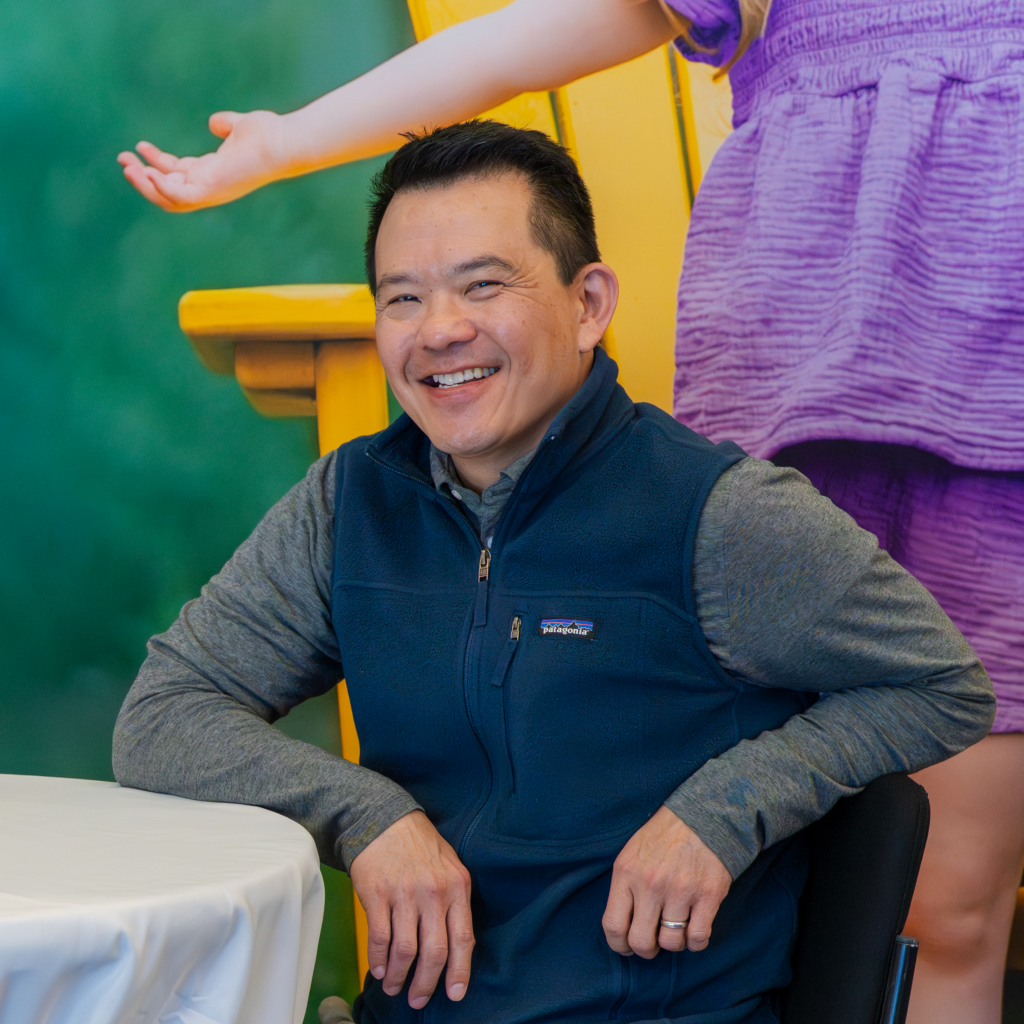
What happens when pediatricians bring their expertise beyond scientific journals and into the public conversation? Weijen W. Chang, MD, FAAP, SFHM, Chief, Division of Hospital Medicine, Nemours Children’s Health, explores how writing can be a powerful tool for advocacy in children’s health. From op-eds and essays to newsletters and personal storytelling, he discusses how clinicians can use their voices to elevate important issues, influence policy and connect with audiences beyond the clinical setting.
Featuring:
Weijen W. Chang, MD, FAAP, SFHM, Chief, Division of Hospital Medicine, Nemours Children’s Health
Host/Producer: Carol Vassar
TRANSCRIPT
Announcer (00:00):
Welcome to Well Beyond Medicine, the world’s top-ranked children’s health podcast, produced by Nemours Children’s Health. Subscribe on any platform at nemourswellbeyond.org, or find us on YouTube.
Carol Vassar, podcast host/producer (00:12):
Each week, we’ll be joined by innovators and experts from around the world, exploring anything and everything related to the 85% of child health impacts that occur outside the doctor’s office. I’m your host, Carol Vassar. And now that you’re here, let’s go.
Music (00:30):
Let’s go. Well Beyond Medicine.
Carol Vassar, podcast host/producer (00:36):
In our last episode, we explored narrative medicine and the power of stories to deepen the connection between clinicians, patients, and families. But narrative storytelling is only one communication tool that pediatricians can use to help shape whole-child health. At the Pediatric Academic Society’s meeting in Boston recently, Dr. Weijen Chang, division chief for hospital medicine at Nemours, led a workshop that encouraged pediatricians to consider writing as a form of public advocacy.
(01:10):
From op-eds and essays to social media and video podcasts, along with other outbound communications, the session challenged clinicians to share their expertise, their perspectives, and their voices with audiences beyond the walls of hospitals and clinics. To Dr. Chang, the question is not whether pediatricians have something to say. They do. But are they willing to write it down and share it? His workshop was designed to give them the tools and the confidence to do just that, as Dr. Chang explained at the start of our conversation.
Weijen Chang, MD, Nemours Children’s Health (01:48):
Our workshop did touch on narrative medicine, but actually, what we were trying to encompass was all sorts of non-scientific writing that physicians and healthcare providers can delve into. So narrative medicine was one of them, but we also were trying to touch on op-ed writing, editorials in scientific publications, which pediatricians are very familiar with, as well as essays and perspectives in non-scientific journals. So I’m the editor, the physician editor, for The Hospitalist, which is the news journal for the Society of Hospital Medicine. And it’s sort of akin to the AAP News, but we have a little bit more content than the AAP News would have. But it allows all sorts of physicians and hospitalists to submit content that is not peer-reviewed. Of course, it’s reviewed by the editorial staff but not any traditional peer-reviewed process.
Carol Vassar, podcast host/producer (02:55):
So it’s a way of getting opinion out there or one side of an issue out there. It’s not peer-reviewed issue noted?
Weijen Chang, MD, Nemours Children’s Health (03:01):
Correct. Yeah. So it’s a much narrower focus in terms of pieces that are in The Hospitalist. Oftentimes, people are trying to talk about some initiatives that they’ve pioneered in their hospital that wouldn’t quite meet a peer review threshold but still would be very interesting, I think, to the readers. And then a lot of them are perspectives. Trying to expound upon something that they’re trying to promote either clinically or non-clinically. So Medicaid reform, better immigration laws or rules for physicians who are coming to the United States. So things that aren’t directly clinical but certainly, I think, affect how healthcare is going in the United States.
Carol Vassar, podcast host/producer (03:50):
Which falls very squarely in the whole child health idea; what’s happening beyond the clinical walls that affects children’s health. What’s the importance of doctors, pediatricians in particular, writing an op ed or putting something in a publication that is also going out to their peers? Why is this important?
Weijen Chang, MD, Nemours Children’s Health (04:14):
It’s critically important. One of the things that I think about is that the American Academy of Pediatrics, the AAP, was founded because there was a group of pediatricians who were part of the AMA who disagreed with the AMA’s stance on funding child health. So, at the time, they were trying to pass a law that would fund child health through the government, and the AMA was against it because it was socialized medicine.
(04:40):
And so a group of pediatricians said, “That’s bunk. And we’re going to break away and form our own professional society.” And they proceeded to actually submit lots of editorials to newspapers, trying to promote this law to be passed. So pediatrics was almost founded on the idea of advocacy and on the idea of physicians promoting child health in the lay press, not the scientific press. And that has continued ever since then. So it’s really important.
(05:14):
I think scientific journals are oftentimes very limited in their readership. Your physicians, scientists, et cetera. And nowadays they’re behind paywalls, so it can be even more difficult to reach. But if you’re really trying to reach a broader audience, getting into the lay press is going to be a lot more effective, and you’re also going to be reaching the people you’re trying to reach. If you’re trying to reach a legislator, or the community, or parents, you have to meet them where they are.
Carol Vassar, podcast host/producer (05:47):
Right.
Weijen Chang, MD, Nemours Children’s Health (05:47):
You can’t just put it in… Pediatrics is a great journal, but your average parent’s not reading Pediatrics.
Carol Vassar, podcast host/producer (05:55):
Right. So you have to also be able to write for the lay reader, and translating that science into something that the lay reader… Or that issue into something that the lay reader can understand, can be difficult. How do physicians do that? How can pediatricians do that?
Weijen Chang, MD, Nemours Children’s Health (06:15):
Yeah.
Carol Vassar, podcast host/producer (06:15):
Are they good at that?
Weijen Chang, MD, Nemours Children’s Health (06:18):
That’s something that we were trying to sort of change the mindset of pediatricians in this workshop. A lot of people think, “Oh, I’m not a writer. I don’t have time to write. But what we’re trying to say is it’s not that hard to write. And I can’t remember the author who wrote this, but the most important thing in terms of writing is to start writing. So you just have to do it.
Carol Vassar, podcast host/producer (06:43):
It’s also the hardest part.
Weijen Chang, MD, Nemours Children’s Health (06:44):
It is the hardest thing, yes. But just getting a couple sentences on a piece of paper is a start. You’re like, “Wow. That wasn’t so bad.” And so, in this workshop that we have, we want them to have a product when they walk out.
Carol Vassar, podcast host/producer (06:58):
Okay.
Weijen Chang, MD, Nemours Children’s Health (06:59):
They were given sheets of paper. My particular section was almost like a Mad Libs approach. Like, “This is just fill in the blanks in terms of the issues you’re trying to talk about here.” And the idea is just to get something on paper, and trying to get that out there. So kind of like breaking the seal in terms of getting your creative thoughts flowing. The other thing I’ll say is that physicians and pediatricians, they create content all the time, and they’re not really thinking about it.
Carol Vassar, podcast host/producer (07:30):
Right.
Weijen Chang, MD, Nemours Children’s Health (07:31):
So they’re making social media posts, they’re complaining to each other, they’re venting to their families or their significant others. These thoughts are out there, and they’re spending time creating them. It’s just a matter of putting those thoughts down on paper or computer or whatever you want to do, and getting that out to the people who they’re trying to reach.
Carol Vassar, podcast host/producer (07:52):
We’ve talked about one of the barriers, and that is getting started. Are there institutional barriers that physicians, pediatricians are afraid of when they try to take a position publicly?,
Weijen Chang, MD, Nemours Children’s Health (08:04):
There is. I think that there is concern about blow-back, so to speak, from the community, because now we know, these days, that we’re living in a polarized age. And whatever you say, someone is going to disagree with you, and perhaps quite strongly, and sometimes even, scarily enough, violently. So there are some concerns about that. There’s also concerns about institutional issues. So whenever you sign a contract, and I just did that at Nemours, I’m sure there was something in there that I kind of skimmed over that said, “You need to clear everything you say with Nemours.”
(08:47):
That being said, I know that there are lots of physicians at Nemours who are writing with permission, but writing a variety of views. And I think that Nemours has a very measured approach to this type of writing. But you do have to be concerned about making sure that what you’re doing is not going to get you fired, so to speak. That being said, there are ways to promote your writing and to write as a private citizen, so to speak, and not necessarily as an employee of the institution, that can get you over some hurdles in terms of getting permission. But at the end of the day, you do need to make sure that you’re not going to lose your job because of what you’re writing.
Carol Vassar, podcast host/producer (09:41):
Exactly. Did I hear you say when we were talking before we began that you were a writing major as an undergrad?
Weijen Chang, MD, Nemours Children’s Health (09:49):
I was.
Carol Vassar, podcast host/producer (09:49):
So it might be a little bit easier for you.
Weijen Chang, MD, Nemours Children’s Health (09:52):
It might be, although it took a little while for me to get back to it, like everything else you do in college.
Carol Vassar, podcast host/producer (09:59):
Yeah.
Weijen Chang, MD, Nemours Children’s Health (10:00):
I went to Hopkins for undergrad, and they have a major called Writing Seminars, which is kind of like a communications major in other institutions. And so I cycled through playwriting, creative writing, video editing.
Carol Vassar, podcast host/producer (10:15):
Really?
Weijen Chang, MD, Nemours Children’s Health (10:16):
Yes. On the old VHS things. And I was actually very close to trying to pursue that after college, because my father was a physician, and so I certainly knew about how physicians work and their influence on people.
Carol Vassar, podcast host/producer (10:34):
Yeah.
Weijen Chang, MD, Nemours Children’s Health (10:34):
But the ability to reach a wide swath of people as opposed to just one patient at a time was very attractive to me. But I think what turned me back to medicine was the fact that writing didn’t seem to me, at the time, to be a way to change things. But I think I’ve changed my tune, so to speak, in that we certainly know that shining a light on important issues can move the needle and actually do things. I said in the workshop, “I’m a failed journalism major,” because I actually didn’t have enough credits to graduate with the journalism major, with the Writing Sems major, and so I ended up being a humanities area major instead.
Carol Vassar, podcast host/producer (11:16):
That’s not a bad thing.
Weijen Chang, MD, Nemours Children’s Health (11:17):
Yes.
Carol Vassar, podcast host/producer (11:18):
It gives you a wide swath of background.
Weijen Chang, MD, Nemours Children’s Health (11:20):
Yes.
Carol Vassar, podcast host/producer (11:21):
I hate to say this, but a liberal arts background, being that liberal arts seems to be a bad word these days, but having that kind of background gives you a wide berth, and it gives you a very great foundation for anything you want to jump into, including medicine. How did your fellow pediatricians react to the writing seminar? Were there some who were skeptical that they could do this?
Weijen Chang, MD, Nemours Children’s Health (11:47):
Of course, it’s a self-selective group.
Carol Vassar, podcast host/producer (11:49):
Right.
Weijen Chang, MD, Nemours Children’s Health (11:51):
But I think there was a range of people, who some people that actually had written books and things like that. But some of them kind of just wandered in, kind of interested but maybe a little skeptical, as you said. But I think that once they saw that getting a couple of words on a piece of paper starts to generate even more ideas, and it’s really not that hard, the words just were flowing. At my table, people were cranking out.They were going on the other side of the piece of paper. It didn’t take much to get things moving. And so I think, as you said, people were a little skeptical and maybe just a little uneasy about content creation, so to speak, but it really started flowing. The other tables were doing great also. So I think it was a success. I guess we’ll see-
Carol Vassar, podcast host/producer (12:42):
I’m sure it was. I’m sure it was. I want to turn this inward, toward the clinical practice. The importance of writing in a narrative way for the clinical practice. Do you do that in any way? And is there, in your estimation, an importance to it?
Weijen Chang, MD, Nemours Children’s Health (12:59):
In terms of like clinical documentation or-
Carol Vassar, podcast host/producer (13:01):
Either documentation or in working with your patients from day to day.
Weijen Chang, MD, Nemours Children’s Health (13:09):
Not so much clinical documentation. I do try to keep that as concise as possible and to the point for … So when other people are reading, they’re getting a very rapid idea of what’s going on. I think where it’s more important is in a reflective sense of things. I know there are a lot of people… I should do this more. I don’t. A lot of people who journal after-
Carol Vassar, podcast host/producer (13:36):
Right.
Weijen Chang, MD, Nemours Children’s Health (13:37):
I don’t want to say, “Emotional,” but experience with patients that really affect them. And I think that ability to reflect on your emotional connection with patients really helps your care because physicians are people. We’re not just little robots. We’re not little AI things. And that is actually what, as AI starts to take a hold of medicine, that’s what’s going to separate the human beings from the AI agents, is that we are people. We’re humans. We have feelings. We connect with people. And it’s really important for physicians and healthcare providers to recognize, is that that’s what makes us better doctors, is the ability to connect with people. So journaling, reflective writing, narrative medicine, it helps you connect with and recognize that you are emotionally connected with your patients. And we can’t deny that’s occurring.
Carol Vassar, podcast host/producer (14:34):
You brought up AI. A lot of people are relying on AI to write for them. What are your thoughts on that?
Weijen Chang, MD, Nemours Children’s Health (14:44):
I’m back and forth on it. The traditionalist in me is saying, “Okay. Just don’t use it at all.” But then there is a side of me that’s the expedient person, who has experimented with it. And I’m like, “Wow. You can crank out some stuff.” I think there has to be a balance. There’s no way that you’re going to avoid using AI these days. I do think that it’s really important to, I don’t want to say… How’s the word? Reference the fact that you’ve used AI any time you do it, because otherwise you’re… It’s like mentioning something in an article without citing it.
Carol Vassar, podcast host/producer (15:30):
You’re losing credibility.
Weijen Chang, MD, Nemours Children’s Health (15:31):
Yeah, exactly. But I do think that it is a way of generating new ideas that you wouldn’t have thought of on your own. So I think there is a balance, but I do think that it’s really important to just… This is why, in the workshop, we just gave people pieces of paper and pens.
Carol Vassar, podcast host/producer (15:51):
Pens.
Weijen Chang, MD, Nemours Children’s Health (15:51):
We wanted for them just to write their own words. And I think that is really important.
Carol Vassar, podcast host/producer (15:57):
For those who attended the session, what did you want them to walk away with? What did you want them to do? Would you like for them to publish an op-ed?
Weijen Chang, MD, Nemours Children’s Health (16:08):
That is what we told them. We said-
Carol Vassar, podcast host/producer (16:11):
“You will do this.”
Weijen Chang, MD, Nemours Children’s Health (16:13):
We treated it a little bit like, there’s… I’m blanking on his name, but there is a pediatric hospital at CHOP who locks all of his fellows and hospitalists into this cabin in, like, rural Pennsylvania. Chris Bonafide.
(16:30):
And he’s like, “We are not leaving here until you create an article that you’re going to publish.” It seems sort of like The Shining, but, anyway, we wanted them to walk out with a product that they could, with a little more editing, submit. So that was the goal. And I think most of the people got there. Most people got something that, I think, they were like, “Oh. I wrote something.” But as a lower-tier goal, we just wanted them to recognize the fact that they can do it. And again, this is a self-selected audience. They came because they have thoughts.
Carol Vassar, podcast host/producer (17:06):
An interest.
Weijen Chang, MD, Nemours Children’s Health(17:06):
They have things they want to put out there. And so trying to make that leap from, I think I can do it, to, yeah, I can do it. That’s what we wanted them to leave with.
Carol Vassar, podcast host/producer (17:18):
And you alluded to this a little bit earlier: Writing isn’t just for the paper or for the newspaper.
Weijen Chang, MD, Nemours Children’s Health (17:26):
Right.
Carol Vassar, podcast host/producer (17:27):
It’s also for social media content; it’s also for video content. Did you cover any of that? What are your thoughts on that and the importance of that, and getting out a pediatric medical message in those ways?
Weijen Chang, MD, Nemours Children’s Health (17:40):
Yeah. We did. One of the areas we covered was social media, which, Patricia Tran from the University of Illinois covered that for us. And she is the digital media fellow, I think, for the Society of Hospital Medicine, but I could be wrong. So she’s had some experience in training, but it’s a huge content field, obviously. When you say, “Social media,” you’re talking about the things we know, but also Substack, other websites that I don’t know the name of. But yeah, it’s a huge… From short form to long form, even longer form. And so she was covering that.
(18:27):
And then Lauren Gamble, who was one of our presenters, also, she covered op-ed, but she produces a lot of content on Substack. And so I think she also touched on that as well. But I think that, actually, that’s going to be how we connect with our patients and families in the future, is social media and the longer form things like Substack.
Carol Vassar, podcast host/producer (18:54):
And it’s already really happening even as we speak.
Weijen Chang, MD, Nemours Children’s Health (18:58):
Totally.
Carol Vassar, podcast host/producer (18:59):
How does this work in terms of combating misinformation? Did you cover that at all?
Weijen Chang, MD, Nemours Children’s Health (19:05):
We didn’t talk about that specifically. I think that was inherent to the workshop in general. I think what we’re trying to say is that you have an opinion, and some of it is combating this information. And I don’t think we wanted to… We didn’t want to take a specific political or ideological stance because we want to recognize a diversity of opinions within our audience and our participants, but I think that was… We’re all pediatricians, so I think that was sort of inherent.
Carol Vassar, podcast host/producer (19:43):
It’s like a given.
Weijen Chang, MD, Nemours Children’s Health (19:44):
Right. Exactly. And actually, we had a common theme for everyone to write on, which was vaccines. And so we didn’t say what you should be saying about vaccines, but I think that was sort of inherent to our discussion. Interestingly, even though we said, “Write about vaccines,” people wrote about all sorts of things. Some people did hear about vaccines, but, as pediatricians want to do, they were like rebels. They’re like, “I’m going to just write about whatever I want to write,” which was great.
Carol Vassar, podcast host/producer (20:14):
You talked earlier about the way that the American Academy of Pediatrics was formed. Kind of breaking away, writing about that particular bill that they were in support of and AMA was against. Sounds like a revolution. Do you think there’s the possibility that a revolution can be happening now, based on some of the topics that you covered, based on some of the information you imparted, that the work that they are doing when they go back to their communities could support that kind of revolution?
Weijen Chang, MD, Nemours Children’s Health (20:49):
Yeah. I think revolution’s kind of a strong word.
Carol Vassar, podcast host/producer (20:53):
Okay.
Weijen Chang, MD, Nemours Children’s Health (20:54):
I wouldn’t say, “A revolution.” I would say, “It’s a reawakening.”
Carol Vassar, podcast host/producer (20:58):
All right.
Weijen Chang, MD, Nemours Children’s Health (21:00):
Pediatrics was founded on the idea that the status quo in medicine was not going to be enough for children, and children deserved something different. And I think, over the years, we’ve sort of been lulled into this sense that the AAP is going to protect us, the government is going to protect us, everything is all well and good. And more recently, we’ve realized that. Not that the AAP isn’t going to protect us, and they’re doing their best, but you can’t just sit back and be confident that the world is going to move in the right direction without you doing something. I think we’re kind of going back to our roots in pediatrics, which is, you are not just a doctor treating patients. You are an advocate for your patients. You’re an advocate for your community. This is what you have to do in order to improve child health. It’s not just treating that individual patient in front of you. Although that is important, it’s also making sure that you’re advocating for your community of patients.
Carol Vassar, podcast host/producer (22:05):
Dr. Weiien Chang is the Division Chief for Hospital Medicine at Nemours Children’s Health.
MUSIC:
Well Beyond Medicine
Carol Vassar, podcast host/produce
Thanks so much to Dr. Weijen Chang for joining us. As he reminds us, pediatricians are more than clinicians. They are advocates for children, families, and communities, and sometimes one of the most powerful tools for that advocacy is simply putting words on a page – or having those important conversations.
Which is exactly what the Nemours Well Beyond Medicine podcast is all about: vital conversations centered on whole-child health. Get the full complement of podcast episodes by visiting nemourswellbeyond.org, where you can join over 50,000 podcast followers by hitting the subscribe button and subscribing to our monthly e-newsletter. That’s nemourswellbeyond.org. All episodes are also available wherever you find your favorite podcasts and the Nemours YouTube Channel.
Our production team for this episode includes Lauren Teta, Susan Masucci, Cheryl Munn, and Alex Wall. Video production by Britt Moore. Audio production by me. Join us next time as we begin a monthly series on maternal-fetal health. I’m Carol Vassar. Until then, remember that together, we can change children’s health for good – well beyond medicine.