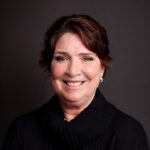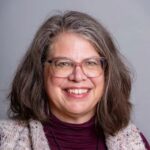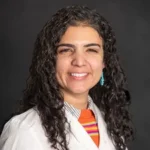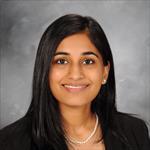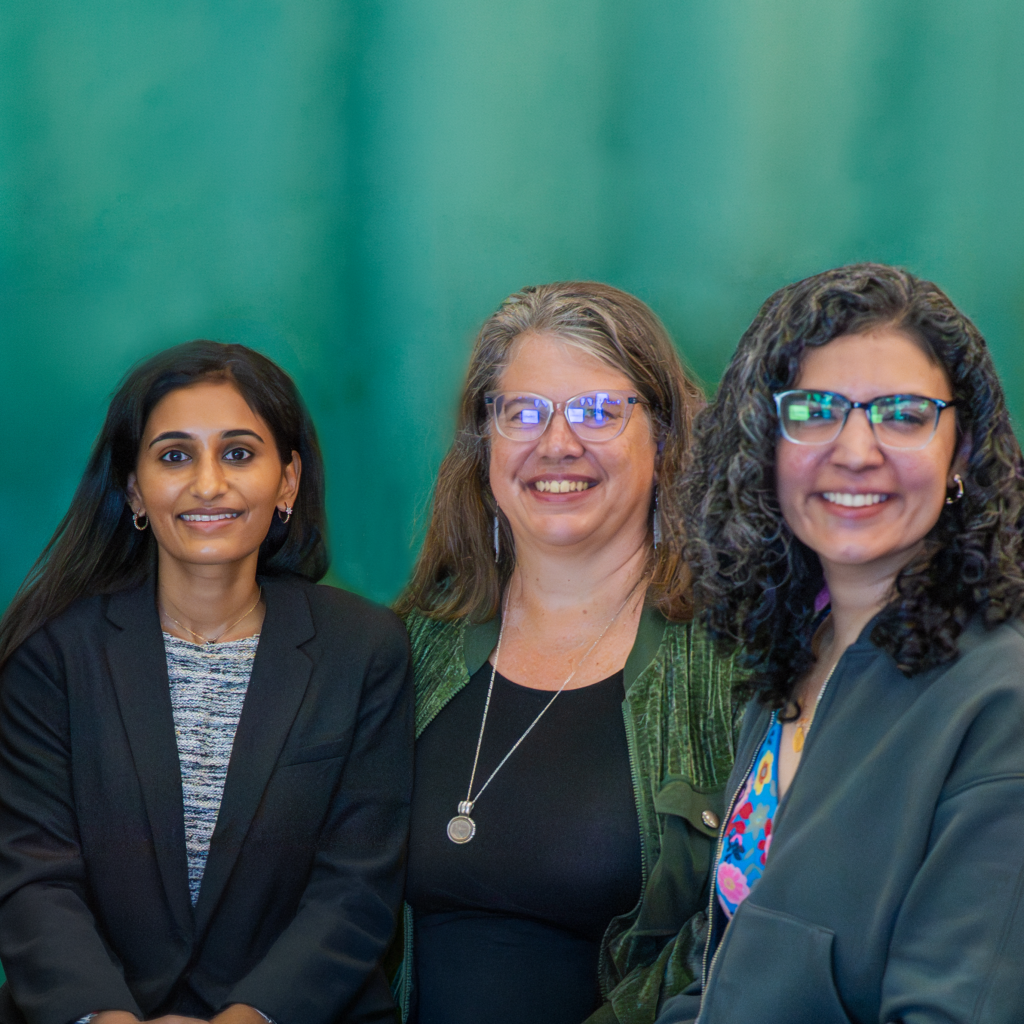
Narrative medicine invites clinicians into a simple yet profound practice: listening differently. Kristen Copeland, MD, Professor of Pediatrics, Cincinnati Children’s Medical Center, Nimisha Bajaj, MD, Palliative Care Specialist, Children’s National Hospital, and Anoushka Sinha, MD, Adolescent Medicine Specialist, UCSF Benioff Children’s Hospitals, explore how storytelling, reflective writing, close listening and the humanities can deepen understanding of children and families navigating illness, trauma, grief and uncertainty. Grounded in the pioneering work of Dr. Rita Charon and the narrative medicine program at Columbia University, the conversation highlights how these practices can strengthen trust, cultivate empathy and bring greater humanity into pediatric care.
Featuring:
Kristen Copeland, MD, Professor of Pediatrics, Cincinnati Children’s Medical Center
Nimisha Bajaj, MD, Palliative Care Specialist, Children’s National Hospital
Anoushka Sinha, MD, Adolescent Medicine Specialist, UCSF Benioff Children’s Hospitals
Host/Producer: Carol Vassar
TRANSCRIPT
Announcer (00:00):
Welcome to Well Beyond Medicine, the world’s top-ranked children’s health podcast, produced by Nemours Children’s Health. Subscribe on any platform at nemourswellbeyond.org or find us on YouTube.
Carol Vassar, podcast host/producer (00:12):
Each week, we’ll be joined by innovators and experts from around the world, exploring anything and everything related to the 85% of child health impacts that occur outside the doctor’s office. I’m your host, Carol Vassar. And now that you’re here, let’s go.
MUSIC (00:30):
Let’s go, oh, oh. Well Beyond Medicine.
Carol Vassar, podcast host/producer (00:36):
At Columbia University, where physician and literary scholar Dr. Rita Charon established the world’s first formal program in narrative medicine. The field is often described as medicine practiced with the ability to recognize, absorb, interpret, and be moved by stories of illness.
(00:56):
It’s an approach that draws from literature, philosophy, the arts, and clinical practice to help clinicians listen more deeply, reflect more intentionally, and better understand patients not simply as their diagnoses, but as human beings, living with families, communities, and complicated life stories.
(01:19):
That philosophy is now finding its way into pediatric practice. Several early and mid-career pediatricians stopped by our booth at the Pediatric Academic Society’s meeting, PIS in Boston, recently, to discuss narrative medicine and the workshops that they lead that help their fellow clinicians explore how narrative medicine can deepen connection, strengthen listening, and bring greater humanity into pediatric care.
(01:48):
They are Dr. Kristen Copeland, a professor of pediatrics at Cincinnati Children’s Hospital Medical Center.
(01:55):
Dr. Nimisha Bajaj, a palliative care specialist at Children’s National Hospital, and Dr. Anoushka Sinha, an adolescent medicine specialist at the University of California at San Francisco Benioff Children’s Hospital. Each of them came to the practice of narrative medicine in very different ways and have slightly different definitions of it. Let’s hear all of that from them themselves. Let’s start with Dr. Kristen Copeland.
Kristen Copeland, MD, Cincinnati Children’s (02:26):
Narrative medicine recognizes that we as humans see the world and understand the world through stories. And when we’ve been through a crisis or an illness, we make sense of it when we figure out where we are in space through stories. So it honors stories. It has principles of close reading, close listening, representation, or some sort of self-reflection writing, and affiliation with the person in front of you, whether that be a fellow staff member at a hospital or a patient, or whomever.
Carol Vassar, podcast host/producer (03:08):
Dr. Sinha, continue.
Anoushka Sinha, MD, UCSF/Benioff Children’s (03:10):
Yeah. Rita Charon originally had defined narrative medicine. She founded the field as medicine practiced with the narrative competence to recognize, absorb, interpret, and be moved by stories of illness. So her idea was that a medical practice informed by the humanities would allow us to better listen to ourselves, to our patients, and to each other. And so that’s the main thrust of a lot of narrative medicine work.
Carol Vassar, podcast host/producer (03:39):
Now in pediatrics, we’re not just treating the child. We’re treating the family. Sometimes we’re even going out and extending that to treating the community and the caregivers as well, as Dr. Copeland mentioned. When you think about narrative medicine and the definitions that we just laid out, how does that fuller picture… how do those stories really shape the child and family in the way you approach care, each of you? Dr. Bajaj, I haven’t heard from you yet.
Nimisha Bajaj, MD, Children’s National Hospital (04:12):
I think narrative medicine, with the definition shared by my colleagues, is inherently relational, and you’ve mentioned, Carol, many relationships between the patient and the healthcare system, the caregivers, the physician, and the community, especially.
(04:30):
And so narrative medicine, in harnessing those stories and really paying attention to those stories, helps us understand the context and how the isolated patient, in many ways, is not actually isolated and fits into the context of the world. In my work in palliative care, the whole concept of that is to provide holistic care to a patient in the context of a serious illness because the patients are not their illnesses, they are not their medical status alone or their clinical status alone. And so narrative medicine helps us kind of go back to that grounding.
Carol Vassar, podcast host/producer (05:03):
I’m wondering how each of you came to narrative medicine, incorporating that into your practice, Dr. Copeland.
Kristen Copeland, MD, Cincinnati Children’s (05:13):
Yeah, I think it’s been – I might say I backed into it. I’ve been practicing medicine and doing research for 20 years, really focusing on the science of medicine. And then, as my comfort level in general pediatrics has grown and I’ve gotten to know my patients, I felt more comfortable asking them more about their lives. One of my standard questions for an infant in the first six months, or asked parents of infants, is, “What are your hopes and dreams for this child?”
(05:51):
And then also a question about social support, like who could you lean on for a favor or for a hug if you needed it? So just getting at that, because that’s so important as we know. I was asking those questions before, and I was looking for a way that I could build on finding a way to put the humanity back into the practice of medicine, and I sort of just Googled it and found Rita Charon and the program at Columbia. And so have just recently finished my certificate in that program. It’s more of a newer thing after practicing for a while.
Carol Vassar, podcast host/producer (06:33):
So this program at Columbia is really pretty inspiring to all of you. How did you come to it?
Anoushka Sinha, MD, UCSF/Benioff Children’s (06:39):
Yeah, so I was a literature major and biology minor in college, and I was always drawn to the places where those two worlds intersect, so where the stories inform the science and when science informs story, and I assumed I’d eventually have to choose between one or the other, as I was coming towards the end of college.
(07:01):
And then I discovered this field called narrative medicine that kind of obviated the need to make a choice. So then I went on to do the master’s program at Columbia, which was one of the most enriching experiences of my life. It was a gathering of scholars, artists, physicians, people of all ages and stages of their careers, just coming together to focus on that intersection of medicine and story, from the intimacy of the clinical encounter to the social and structural forces that scaffold experiences of illness. And then I stayed on at Columbia for med school and residency, and so narrative medicine was very much embedded in the culture there, which made it a natural next step for me to start bringing narrative medicine to trainees.
Carol Vassar, podcast host/producer (07:46):
So it sounds like Columbia is ground zero for this narrative medicine kind of concept.
Anoushka Sinha, MD, UCSF/Benioff Children’s (07:51):
Yeah.
Carol Vassar, podcast host/producer (07:51):
Dr. Bajaj, I would be remiss if I didn’t ask you how you came to it.
Nimisha Bajaj, MD, Children’s National Hospital (07:54):
My route is actually much more circuitous. I did an MD PhD with my PhD in computational biology or biomedical engineering, thinking that I was going to do bench or translational research for the rest of my life. I experienced a lot of grief for reasons we don’t have to get into in grad school. And when I returned to my third year of medical school, I was dealing with a lot of complicated grief and burnout, and I really struggled with that. And then in my fourth year, I serendipitously happened upon a fourth-year elective that would allow me to take time off for residency interviews.
(08:30):
It was like my fourth or fifth choice. I was like, “I guess I’ll try this. It’s fine.” And it was a one-month elective, and I found a space where I finally felt seen, and I wrote my first poem in my life, and I found a way to like… I found healing for the first time since grad school when I had experienced so much loss.
(08:51):
And that, to me, was the point at which I was like, “I have to incorporate this into my life and my practice somehow.” And in residency, I was lucky enough to do the integrated research pathway, which gives you a year of those three years of pediatric residency time to do research. And I chose to do research and use narrative medicine to promote resident well-being because so many of us are struggling in that way.
(09:15):
I learned in the way that we learn in a grad school program. It was kind of like a research grad school program where I had mentors who were narrative theory experts at Ohio State in the English department, with practitioners of narrative medicine at Ohio State and the adult side, who are my research mentors. And that’s how I learned without going to a formalized program.
Carol Vassar, podcast host/producer (09:40):
I’m hearing a lot about the arts… literature. How does this marry? I’m trying to conceptualize how this all gets married into the practice of pediatrics. Dr. Copeland.
Kristen Copeland, MD, Cincinnati Children’s (09:58):
I think we’re doing this well in a clinical encounter where we’ve really connected with the parent, usually. So when the parent feels seen and heard, sometimes for the first time, maybe especially coming from a medical system, many of the patients that I interact with, they’re covered by Medicaid, so publicly insured, and about 80% Black. So they’ve dealt with a fair amount of structural racism and barriers and disinvestment in their communities.
(10:36):
So they’re used to… It’s interesting when we’ve started asking these hopes and dreams questions, they’re used to us asking about problems, “What’s your diagnosis? What are your problems? What are the barriers to care, whatever?” But they’re not asking about what are the strengths your family has and like, what are your hopes? Where are you headed? And so it takes people aback a little bit when I start asking questions, but when there’s been some sort of connection that it’s like… Or if they mention a problem and I just sort of listen and we sort of explore, not with a bunch of my list of questions, which is sort of how I used to practice, they’ll be like, “Thank you for listening. I feel like this is the first time someone’s really heard me, and I really appreciate that.”
Carol Vassar, podcast host/producer (11:26):
It sounds like active listening is really a big part of that, which goes with the nodding of the head.
Kristen Copeland, MD, Cincinnati Children’s (11:30):
Yes.
Carol Vassar, podcast host/producer (11:31):
Dr. Sinha.
Anoushka Sinha, MD, UCSF/Benioff Children’s (11:32):
Yeah. I’m really glad that you mentioned starting with strengths because that really is a deep and core part of my work in adolescent medicine and adolescent practice in general, asking a patient what they’re good at, what they’re proud of, before moving into anything else. And I think that kind of orientation sets a completely different tone than what most patients expect from a clinic visit, and it also gives you something to return to, like a reminder of what they can draw on as they navigate whatever challenges brought them into the clinic.
(12:05):
I think it can be a really valuable tool for clinical interactions, aside from the workshops that we do for clinicians.
Carol Vassar, podcast host/producer (12:13):
Dr. Bajaj, you talked about how you had written your first poem as part of the training for this. How do you see the marriage of pediatric medicine and the arts, literature, that sort of thing?
Nimisha Bajaj, MD, Children’s National Hospital (12:27):
So my clinical practice is in palliative care, and palliative care is innately about we take care of patients with life-threatening or life-limiting illnesses. So they fundamentally do not have a life trajectory that we expect for a typical life.
(12:46):
And so they have to write their own story. That is just what they have to do. And so I approach my whole practice with “You have been thrown a curveball.” Tell me what your life has been like so far. I help them figure out what they want their life to be like in the future, which is a hard story to write because they probably have disparate hopes and dreams and wishes, but within the constraints that they’ve… Sorry, the engineer is coming out, within the curveball that they’ve been through, within the diagnosis that they’ve been given, and within the limitations that they have, what story can they even write, what’s even possible to write?
(13:25):
And then we use our medical tools, our literature, or our arts. We use a lot of child life, music therapy, art therapy work, and work with them to help create stories, but we also use physical therapy and medication. It’s holistic care that helps them write the story that they want to for the rest of their lives. So that’s how I integrate it. That’s how I practice palliative care.
Carol Vassar, podcast host/producer (13:46):
So it’s all very different whether it’s adolescent, palliative, or general pediatrics. Listening seems to be one indicator that this is being done well. What are some other indicators that parents or even children might notice when talking with a clinician to know that narrative medicine is working for them and working on their behalf? Dr. Bajaj, I’m going to go to you first.
Nimisha Bajaj, MD, Children’s National Hospital (14:15):
I work with patients and parents who have been given unexpected and often challenging news to receive. And so there’s often a sense not of disenfranchisement but of anger and strong negative emotions, and understanding who they are as people helps them feel seen and more connected to the healthcare team.
(14:41):
I think if we do this correctly, there’s just more of like am not a collegial work environment, but we talk about how patients are families, and we can get into a lot of theory about boundaries and crossing those and all of that. But to say it in another way, we connect better with our patients, and the care that we provide them is better if we connect better with them.
(15:04):
And so there is a feeling that you get from knowing that you connect and work. There’s a trust there that is palpable as well. So I think all of that comes from really the patients feeling seen.
Carol Vassar, podcast host/producer (15:17):
Dr. Sinha, anything to add to that?
Anoushka Sinha, MD, UCSF/Benioff Children’s (15:19):
Yeah, I think that was really well said. I would say that people often say there isn’t time for narrative medicine, and I push back on that because, first, there should be time in training for curricula and to incorporate it through the workshops, and it is a clinical skill. And second, narrative medicine isn’t only what you do in a workshop; it’s how you attend with the time that you have.
(15:46):
It’s noticing how something is said, not just what is said. So what traditional medical training often doesn’t offer is comfort with patients that I often see whose stories don’t fit neatly together, whose symptoms resist a clean diagnosis.
(16:01):
I think those patients often get lost in the healthcare system precisely because we aren’t trained to accompany them when we can’t resolve them. And so I think part of our task is to chart the course together even when we don’t have a clear destination.
Carol Vassar, podcast host/producer (16:15):
Dr. Copeland.
Kristen Copeland, MD, Cincinnati Children’s (16:16):
These have both been great answers. I think my experience in the workshops that I’ve done with other staff and in the interviewing with patients about their story is that people feel like, “I don’t have a story. I can’t write. I’m not a poet or whatever.” And yet all the time in clinic people will say the poetry, like what kids will say it, the parent will say it. It will just come out and then you just reflect back to them, “Wow, I love how you said that.” I’m going to write that down, how you said that. And it’s actually all as human beings have a need to create and a need to write your story, and we are so rarely given that opportunity. It’s a skill that we all have, and I think it’s just giving a platform to patients.
Carol Vassar, podcast host/producer (17:14):
To bringing it out in everybody because humans are just natural storytellers. It’s how we communicate our history, our feelings, and that kind of thing.
Anoushka Sinha, MD, UCSF/Benioff Children’s (17:21):
You just reminded me too. We were talking about how we define narrative medicine, and one definition that I always really appreciated that one of my colleagues once said is it’s just reading a patient the way you read a poem. And I think that kind of orientation and attention is really at the core of what narrative medicine aspires to do.
Carol Vassar, podcast host/producer (17:42):
Now you did a panel, an instructive panel, a very participatory panel session, expecting that people would go home and hopefully implement some of what they learned in your panel session, in your session here. What are some of the barriers that people who left your session are going to be coming up against within their institutions, within their communities, maybe even from their fellow caregivers or from the families and children that they work with, Dr. Sinha?
Anoushka Sinha, MD, UCSF/Benioff Children’s (18:13):
Yeah. I think the biggest challenge is almost always the same: protected time and institutional buy-in, and those things are deeply connected. If leadership doesn’t visibly support the work, protected time doesn’t happen. I was fortunate at Columbia, where narrative medicine is woven into the med school curriculum and culture.
(18:34):
When I moved into residency, my chief residents and program director welcomed my launching a narrative medicine series even as an intern, and in subsequent years, the chiefs came and participated in the lecture and demonstrated that sponsorship of the work. And I think that visibility from leadership made all of the difference.
Carol Vassar, podcast host/producer (18:53):
Dr. Copeland, any additional barriers that you have seen institutionally?
Kristen Copeland, MD, Cincinnati Children’s (19:00):
For an institution that hasn’t done this before, it is a hard thing to explain. And I know you asked the three of us what our definitions are, and you will find on the internet many more definitions. It’s hard to explain what it is, but when you’ve experienced it, you know what it is. And so for the people making decisions about protected time and how many patients you need to see, it’s hard to see what the buy-in is.
(19:32):
I want to share a little story, though, about something we’ve learned in a project that we’ve done. So in this project, we were collecting the stories from parents of kids, zero to five. In one of the stories we had collected, this infant had recently been given the diagnosis of at risk for cerebral palsy or CP.
(19:54):
It just so happened that this infant came in to our clinic and I had the doctor who was going to see her, I had her read the story first before going in to see her. And in this case, the diagnosis was sort of recent, and the story talks about how she has some ambivalence about it, and we could see in the record that there were some recommendations for occupational therapy and other therapies that had not followed through.
(20:27):
And my colleague said reading the story where it talked about her ambivalence, but talked about like how she was very kind of aware and she’s doing a lot of thought about, completely changed the conversation that she had with that patient when she walked in.
(20:40):
Instead of going in saying, “I see that you were referred to such and such and such and such, you haven’t gone, are you having transportation barriers? Are you having time barriers?
Carol Vassar, podcast host/producer (20:50):
Going down the whole list.
Kristen Copeland, MD, Cincinnati Children’s (20:51):
… what kind of barriers?” It was like she said, I walked in, I said, “You went to this clinic and heard some hard information. How is that sitting with you?” And it was a completely different conversation. It was much more collaborative. She found out things, the questions that the mom had had, that actually the clinic had sort of responded to a MyChart message that she wasn’t aware of, because she wasn’t familiar with the system. So my colleague could just say, “Would you like me to read what their response was to your very good question of why this was needed?”
Carol Vassar, podcast host/producer (21:26):
It’s all about presentation, isn’t it?
Kristen Copeland, MD, Cincinnati Children’s (21:27):
Yeah. And so the whole conversation changed. And we would have never known that had we not done that work, that had done that story, and done that little test.
Carol Vassar, podcast host/producer (21:40):
Dr. Bajaj, do you have any similar stories from your practice about how narrative medicine has maybe improved an outcome or improved communication?
Nimisha Bajaj, MD, Children’s National Hospital (21:51):
I think one thing that I’ve found is kind of going off the barriers question and tying into how it’s been improved, is a barrier is not only time but also people, like Dr. Copeland said earlier, they say, “I’m not a poet. I don’t engage with the arts. I don’t write.”
Carol Vassar, podcast host/producer (22:09):
Self-imposed.
Nimisha Bajaj, MD, Children’s National Hospital (22:09):
It’s self-imposed, and especially with medical trainees who didn’t grow up like Dr. Sinha, really, really engaging with both sides of their brain. I mean, I do sessions with our medical students, the rotating medical students in our peds clerkship every month, and they say, “I don’t read poetry.” We read a simple poem about being a medical trainee that’s very accessible, and they say, “What do I do with this? I don’t read poetry.” Many of them are very engaged, and it’s usually a lovely session, but we get people who just… They self-impose their ability-
Carol Vassar, podcast host/producer (22:44):
Analytical comes in.
Nimisha Bajaj, MD, Children’s National Hospital (22:46):
Exactly. And we have patients who we try to connect with their stories, but I found I had a patient who was a young adult, and he had a very limited prognosis, guaranteed terminal, and he did not want to talk about what the end of his life could look like, even though legally he had the right to make all of his decisions. He had his mother make all the decisions. And we know that we never want to impose the coping and the discussions on people who are not ready for them, but we do know that not facing your mortality can… It leads to higher risk of complicated grief for our families and just more difficult death at the end of life.
(23:32):
And so we like to engage with that, and we can kind of find sneaky ways into it. So that patient loved Avatar: The Last Airbender, which is an excellent cartoon, if anyone… It’s like 100% on Raw Tomatoes.
Carol Vassar, podcast host/producer (23:46):
It gets totally into it.
Nimisha Bajaj, MD, Children’s National Hospital (23:47):
Oh my goodness. 10 out of 10, 1,000 out of 10. It’s so good. I’m going to spoil it, but it’s 20 years old. So there is a scene where General Iroh, who my husband and I lovingly call Uncle. He left the military, and he just wants to drink tea all day because his son died in battle. And he goes, and he sings at the grave of his son, and that patient and I bonded over the grief experienced in that scene, and we bonded over this show and we talked about grief in our discussions of this show, and it was a way to connect and discuss those things, and the fear of leaving his mother and all of those things without directly discussing it.
Carol Vassar, podcast host/producer (24:34):
That’s an amazing, amazing example. Let me ask the crazy question. We’re talking about kind of the soft sciences, the arts, English, literature, that kind of thing. I come from a medical system background; it’s all about measurement. How do you measure if this is working? Dr. Sinha.
Anoushka Sinha, MD, UCSF/Benioff Children’s (25:01):
So it’s a really good question and a really important part of being able to grow the work by demonstrating that it’s doing something. And so I would say it’s a very easy thing to measure from a qualitative standpoint, because the work is inherently about… It’s qualitative work, thinking about how people are responding to this kind of work, how it’s impacting their sense of self, their sense of connection to others, to their patients, and that kind of evidence has been generated pretty substantively.
(25:36):
I think the challenge is the quantitative because that tends to be what leadership wants to see to demonstrate that this is worthwhile, and there are like every number of Likert scales that can get at that, but it doesn’t truly capture the richness of what this work is. It almost feels like inherently it should… To us at least inherently it should be something that everyone values, but I think that that melding of the qualitative and quantitative is still a balance that I myself am trying to hone.
(26:14):
I have done this kind of work and led workshops with trainees and clinicians, as well as most recently a pilot study for patients where they did a workshop together. And for that workshop we had measured, as a pilotlike feasibility, acceptability, those kinds of measures, but also like how it influenced clinical markers, like depression, anxiety, eating disorder severity.
(26:38):
And of course there was a much richer qualitative part to that study too, but these are the kinds of things that we’re starting with that we… In that study, we had a statistically significant improvement in depression. So these are the kinds of things that we’re trying to show that this work does have an influence that we can measure, but the beauty of it is pretty immeasurable, I think.
Carol Vassar, podcast host/producer (27:00):
Baby steps in terms of getting that really, data that leadership will kind of pay attention to. Any other thoughts from the team here about that?
Kristen Copeland, MD, Cincinnati Children’s (27:09):
One of the key pieces in the narrative medicine is this sort of a self-reflection and reflective writing. And again, people think like, “I can’t write, I don’t want to do this writing,” but the writing is very brief, and you’ve had a discussion, you have three minutes to write, you don’t have a lot of time, you’re encouraged to just write what comes to your mind, don’t worry if you make grammatical mistakes or anything like that.
(27:30):
And you think it’s just nonsense that you write, but something comes out of your brain and then you share it with this other person thinking, “Look, this is nonsense.” And then that person reflects back to you the meaning that they see in it, and then you realize, “Wait, I do know, I do have wisdom,” like inner wisdom that I… But this writing piece is really key and one of the additional things I think that can be added to the qualitative research is a self-reflection kind of before doing an intervention and then after.
Carol Vassar, podcast host/producer (28:06):
Pre-test, post-test.
Kristen Copeland, MD, Cincinnati Children’s (28:07):
Yes, exactly. For each person, including like a writing, like what’s going on in your head right now? With some sort of prompt, what are you feeling, what are you thinking? And then how did that change after you do this activity.
Carol Vassar, podcast host/producer (28:20):
Somebody listening today, a physician wants to maybe incorporate one step toward narrative medicine right now, immediately after hearing this, what would you suggest, Dr. Bajaj?
Nimisha Bajaj, MD, Children’s National Hospital (28:35):
I would say, I mean, it starts with you. It’s so much easier to advocate for this work, promote it, and bring it back if you are comfortable with it and you practice it. And I think learning about it, we have the seminal books for Rita Charon. Participants who leave our workshop get a resource sheet that has kind of the basic information.
(29:00):
So obviously learning about it is very important, and learning the basics of it, but practicing is so important. Practicing reading, reflecting, discussing, writing, and just doing that over and over is really what helps you… That’s the first step, because you can’t do with anyone else unless you do it with yourself.
Carol Vassar, podcast host/producer (29:20):
It reminds me of the practice of the art of medicine. Dr. Copeland, any thoughts?
Kristen Copeland, MD, Cincinnati Children’s (29:25):
Yeah, I think in one of the practices in narrative medicine is like a shadow chart. So we’re keeping, in the electronic medical record, there’s the story that you put in that chart, which is for billing purposes and for diagnostic purposes. And so one thing that a clinician could do after potentially a difficult encounter is to write that encounter from the perspective of the patient and then to, again, write it from their perspective with their emotions, not that it’s going anywhere but almost writing it from the perspective of, if this was your daughter or son who had just conducted this encounter, what was she or he going through and what was she feeling and thinking?
(30:15):
Just to tap into some of the emotions that we’re feeling that we need to manage during the clinical encounter, but just to sort of access those.
Carol Vassar, podcast host/producer (30:24):
It also taps into the empathy.
Kristen Copeland, MD, Cincinnati Children’s (30:26):
Yeah.
Carol Vassar, podcast host/producer (30:27):
Any final thoughts from you, Dr. Sinha?
Anoushka Sinha, MD, UCSF/Benioff Children’s (30:29):
Yeah, I think this conversation, what I hope has imparted is that narrative medicine is a shift in orientation. It’s not necessarily something you have to add to a visit. And so that same close attention that we bring to a work of art, noticing the arc of a story, the words someone reaches for, their metaphors, their silences, what isn’t said as much as what is, that attention is available to us if we choose to bring it. So I would say start there.
(30:58):
Listen for the expression and the shape of what someone is telling you and how they describe and relate to their illness. That distinction can change everything about how you then respond. And if you want something more concrete, I really liked this idea of our own writing. One little thing that I do is, in our EMR, there’s a little yellow sticky that is only visible to the person who uses it.
(31:24):
And what I use that for is a small running document of my patients’ passions, quirks, and any little details that bring them to life. That’s a small practice that alone can shift the way I pay attention and how I remember them in their art.
Carol Vassar, podcast host/producer (31:41):
Dr. Nimisha Bajaj is a palliative care specialist at Children’s National Hospital. We also heard about narrative medicine from Dr. Kristin Copeland, a professor of pediatrics at Cincinnati Children’s Hospital Medical Center, and Dr. Anushka Sinha, an adolescent medicine specialist at the University of California, San Francisco/Benioff Children’s Hospital
MUSIC:
Well Beyond Medicine
Carol Vassar, podcast host/producer
Thanks to our guests today who offered us a good reminder: that listening closely to patients’ stories may be one of the most essential and human skills in pediatric care. To that end, I want to thank you for listening to this episode of Well Beyond Medicine.
Don’t forget: you can listen to any episode of the podcast on your favorite podcast app or smart speaker and on the Nemours YouTube Channel, or by visiting our website: nemourswellbeyond.org. There you can subscribe to the podcast and to our monthly e-newsletter (if you haven’t already). Again, that’s nemourswellbeyond.org.
Our production team for this episode includes Susan Masucci, Lauren Teta, Cheryl Munn, and Alex Wall. Video production by SarahKate Reger. Audio production by me. Join us next time as we continue the discussion of narrative medicine, even turning it outward as a pediatric physician advocate seeks to get their colleagues to advocate for children publicly using social media, video, and yes, podcasts. I’m Carol Vassar. Until then, remember, we can change children’s health for good – well beyond medicine.