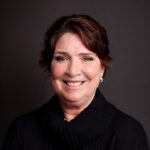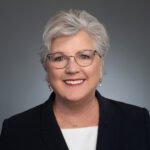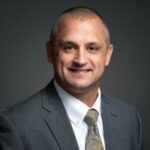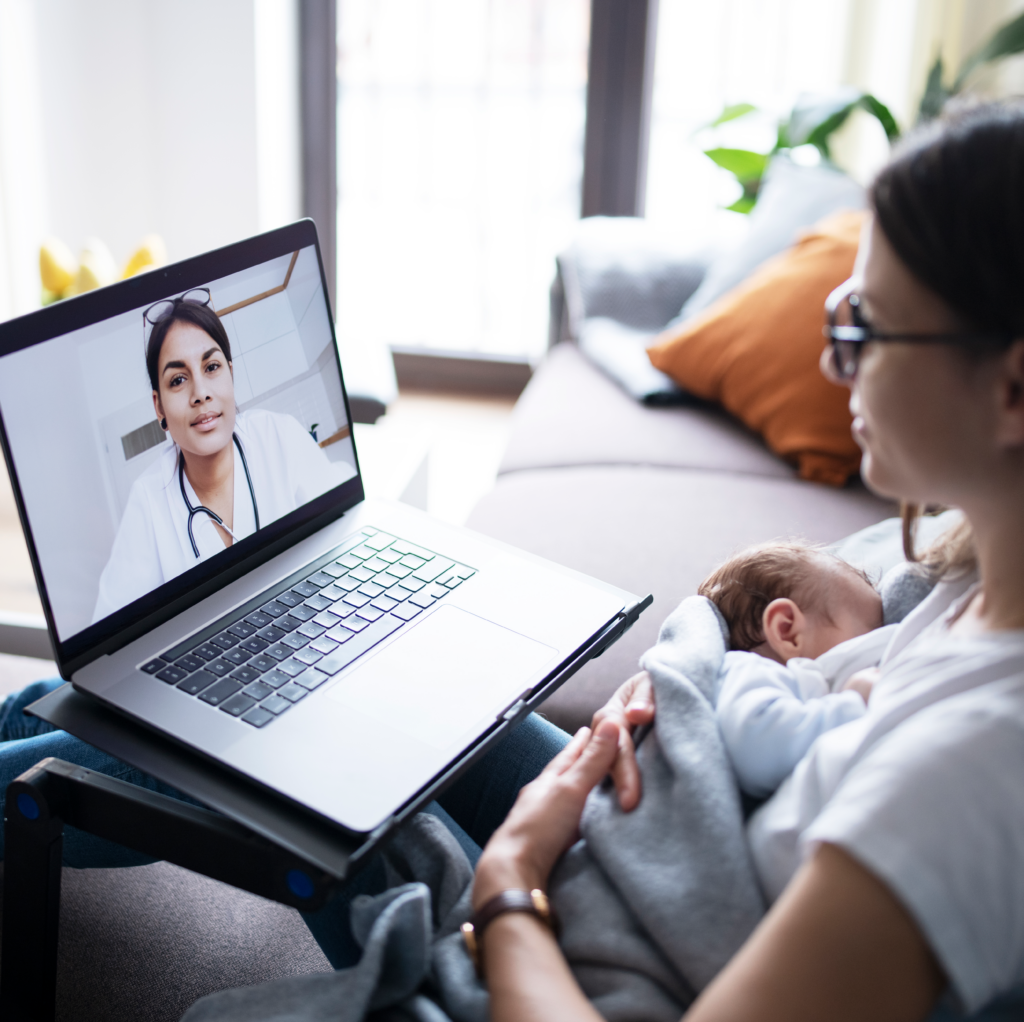
What if hospital-level pediatric care didn’t require staying in the hospital? Jane Mericle, DNP, MHS-CL, BSN, RN, CENP, Executive Vice President, Enterprise Chief Nursing Executive and Chief Patient Operations Officer, Nemours Children’s Health, and Christopher Beaty, MSN, NE-BC, Vice President, Operational Innovation, Nemours Children’s Health, discuss Nemours Children’s Advanced Care at Home program, a 24/7, virtually supported model that helps medically stable children recover at home sooner.
They share how this technology-enabled approach reduces emergency visits and readmissions, supports families, and redefines pediatric hospitalization by delivering the right care, in the right place, at the right time.
Featuring:
Jane Mericle, DNP, MHS-CL, BSN, RN, CENP, Executive Vice President, Enterprise Chief Nursing Executive and Chief Patient Operations Officer, Nemours Children’s Health
Christopher Beaty, MSN, NE-BC, Vice President, Operational Innovation, Nemours Children’s Health
Host/Producer: Carol Vassar
TRANSCRIPT
Announcer (00:00):
Welcome to Well Beyond Medicine, the world’s top-ranked children’s health podcast, produced by Nemours Children’s Health. Subscribe on any platform at nemourswellbeyond.org or find us on YouTube.
Carol Vassar, podcast host/producer (00:12):
Each week we’ll be joined by innovators and experts from around the world, exploring anything and everything related to the 85% of child health impacts that occur outside the doctor’s office. I’m your host, Carol Vassar. And now that you’re here, let’s go.
Music (00:30):
Let’s go. Well Beyond Medicine.
Carol Vassar, podcast host/producer (00:36):
For generations, pediatric hospitalization has meant just one thing: a child in a hospital bed, surrounded by monitors and providers in a very clinical environment, usually in an inpatient unit. But what if hospital-level care didn’t have to happen inside hospital walls? Nemours Children’s Health has just launched the nation’s first pediatric Advanced Care at Home program, delivering clinical services to eligible children in the comfort of their own homes. It’s really a bold rethinking of what hospitalization can look like for families. Joining us today to talk about that are two leaders behind this innovation. Friend of the podcast, Jane Mericle, Executive Vice President, Enterprise Chief Nursing Executive and Chief Patient Operations Officer at Nemours, and Christopher Beaty, Chris, Vice President of Operational Innovation. Welcome to both of you. I’m wondering, Chris, I’m going to go to you first. At its highest level, what are we talking about when we’re talking about pediatric Advanced Care at Home? What is it?
Christopher Beaty, MSN, Nemours Children’s Health (01:44):
Thanks for the question, Carol. First and foremost, thank you so much for the invite. Looking forward to sharing an overview of what we’re doing today from an innovative perspective. But even getting back even before I get into Advanced Care At Home, as you know, kind of Nemours has this longstanding history of pioneering certain aspects of pediatric care from early children’s hospitals to now our whole child health vision. And Advanced Care At Home, we look at it as just that next chapter in that whole child health evolution, ultimately keeping families together, helping kids to safely and quickly get out of our health system so that they can heal where they heal best, and that’s at home.
(02:30):
So how are we doing that with Advanced Care At Home? So Advanced Care At Home at the highest level is a virtually based technology enabled program that operates currently out of what we designed as our twenty-four seven clinical operation center that is located in our Nemours Jacksonville home office, staffed by nurses, where they can triage calls that come in from families and escalate them based on very specific workflows to the area where patients might need our assistance. And this program can be offered to any patient within our hospital system who we are deeming medically stable, but continues to require some level of continued clinical support that’s holding them back from either being discharged from our hospital or having to utilize our services unnecessarily that would keep them kind of connected to the model.
(03:39):
So with this program, we have the ability to customize not only the technology needed to support patients and families at home, but also customize the level of virtual support with our nurses and providers, need it to match the clinical needs of the patient with their needs in the home setting. Carol, ultimately what we know, kids do better at home for various different reasons. It could be things like they’re eating their own food, they are interacting with their siblings, they are sleeping in their own bed, they’re able to become more mobile, and all of these things matter from a physical and kind of mental health perspective. And Jane can attest to this as well from a parent perspective, that there’s nothing more kind of stressful for a family than having a patient in the hospital setting. And we know that. That stress can be pretty extreme at times. And we think with the use of this program, we’re starting to offload some of that or remove some of that burden on the families and the patient, which has been pretty remarkable to see.
Carol Vassar, podcast host/producer (04:59):
I was interested to hear you have this center in Jacksonville, but this is for eligible patients available no matter what facility of Nemours they are at, including, I’m assuming, Orlando, Pensacola, the greater Wilmington, Delaware area, including Philly. This is really a revolution in terms of being able to reach and get in the home, but still have that centralized clinical place where people can get information. When you were looking at the problem, what problem were you trying to solve? Why rethink hospitalization for children at all? I think part of it is the ability to go virtual, but I don’t want to put words in your mouth. Jay and Chris, what were you trying to do? What were you trying to solve?
Jane Mericle, DNP, Nemours Children’s Health (05:53):
It solved several things. And I think that’s the exciting thing about the program. So we utilize virtual nurses so that the parents, they connect with the family, and I see you like I see you right now. We can visualize if we need to direct and help with putting a feeding tube in or reinforcing some of the instructions that they had. I think what we’re really trying to do, Carol, is to optimize the family experience, decrease the burden of the care when there is a hospitalization, and really bridge that really vulnerable time where you’re leaving the hospital, and you’re being at home to make sure that it’s the safest and the best experience. Now what’s interesting is we’re finding, and this is the exciting part, is we’re not only bridging that time at home, we’re able to send children home sooner because they have resources that they didn’t have before, whether it’s that virtual nurse visit, whether it’s a provider visit.
(07:08):
And so we’re not only able to send them home sooner, but we’re seeing that we’re preventing unnecessary ED visits, and we’re also preventing readmissions. So, from a family perspective, I think we’re decreasing the burden of care and giving support. From the healthcare system, we’re decreasing unnecessary hospital utilization and costs. And from a provider perspective, we’re making it easy for them to be able to connect right back in with those families and provide the care or the assistance that they need.
Christopher Beaty, MSN, Nemours Children’s Health (07:48):
Carol, one other thing that I will just note to that is we weren’t trying to rethink hospitalization because hospitals aren’t necessary. They absolutely are. What we were trying to solve was what happens around hospitalization, as Jane mentioned. We saw kids who were clinically ready to go home, but stayed longer because families needed more support, as Jane mentioned. And we saw kids come back to the emergency department because small issues escalated before anyone could intervene. And this has helped bridge that gap. And that gap between discharge and stability is where families struggle the most. And that’s what we hear loud and clear. Our Advanced Care At Home program was designed to close that gap, truly to support earlier in a proactive approach, get patients out of the hospital sooner, and prevent them from coming back to the ED and readmitted for reasons that we could have taken a proactive approach in accomplishing as a team.
Carol Vassar, podcast host/producer (08:51):
And I would think that would also take stress off parents who are already overburdened, having a possibly medically complicated child moving from the inpatient to home. So that’s a great win for parents. Jane, I want to back up a little bit. You were on the podcast last. Last time you were here, you talked about technology use, reducing burden, improving family engagement. We’ve covered that a little bit. How do you see the innovations that we talked about earlier in the last podcast you were on, laying the groundwork for bringing this kind of hospital-level care into people’s homes?
Jane Mericle, DNP, Nemours Children’s Health (09:32):
Well, the last time we talked, Carol, we were talking about virtual nursing using AI cameras into the hospital. And so it was connecting a team of nurses that could do some of the administrative and educational work with our families, and do it virtually as a part of the team. And so it was really pointed inside that. When you think about that, we already had a logistics center. We already have technology. We already have a culture of knowing that we can connect effectively with our families into the hospital. When we started imagining then this journey of pointing those cameras and the technology outside of the hospital, there were already experiences that we had learned from in a virtual model, in having our logistics team involved, tying in telehealth, which was also mature. So it was really connecting those dots. And I have to say, I call it innovation begetting innovation.
(10:45):
It was really just starting to put those pieces together, utilize them in a different way. And Carol, we were going to start quite slowly, that’s what you do when you do proof of concept and do pilots and making sure that we are safe. And we have absolutely found that it’s an effective model that meets so many needs that we’ve gone very quickly. And to your point, regionally, this is something that can serve a child, whether they’re in the middle of the city or if they’re in a rural area.
Carol Vassar, podcast host/producer (11:25):
So access is… We’re breaking down access barriers-
Jane Mericle, DNP, Nemours Children’s Health (11:28):
Absolutely.
Carol Vassar, podcast host/producer (11:29):
As we move this forward with this program. Now, hospital at home is not new. It’s new in the pediatric space, Nemours being the leader in this. Hospital at home programs have been innovated by Mayo Clinic, at Mass General. This is a program that’s probably different because it is in the pediatric space. What made making this platform different and what kind of challenges did you face? Chris?
Jane Mericle, DNP, Nemours Children’s Health (11:58):
Yeah, I think the biggest difference here, Carol, is that this isn’t a hospital-at-home program. And generally speaking, how I think most of the world would identify what we would describe as a hospital-at-home program would be shifting the inpatient level support into the home setting. So that is not necessarily discharging a patient home. This would be transferring a patient to the home setting following all of our inpatient standards and guidelines.
Carol Vassar, podcast host/producer (12:36):
So at that point, they’re outpatient?
Christopher Beaty, MSN, Nemours Children’s Health (12:38):
Correct.
Carol Vassar, podcast host/producer (12:39):
Got it.
Christopher Beaty, MSN, Nemours Children’s Health (12:39):
In this program, and because standalone pediatric hospitals don’t qualify for that CMS conditions or participation waiver, we intentionally designed our Advanced Care At Home program as an outpatient-based model to… And that forced us to rethink the problem from the ground up, as Jane has already alluded to. Pediatrics is also different because you’re caring for a family unit. It’s not just the child and the patient. And parents are the constant in this, and the model had to support them clinically and emotionally, not just deliver the services. So we focused that effort when we built the model, and our goal is still to capitalize on getting patients home sooner that are medically stable. Now, a hospital-at-home program also has very similar targeted goals, but the populations are very different because, as I mentioned, we want to be able to safely provide this care in a home setting. And if you are not medically stable enough to get discharged from our hospital, we wouldn’t want to transfer that service from an outpatient perspective in the home setting.
Jane Mericle, DNP, Nemours Children’s Health (14:01):
As we’re talking about this, this model even shows that our terminology needs to catch up because currently we describe things as inpatient and outpatient, and inpatient does have very specific regulatory type of conditions, and we certainly respect that. But because this virtual model is a new one and can intervene at probably an earlier continuum of care for the children, that’s where we’re moving some of that, and hopefully moving the standard of care for our kids.
Carol Vassar, podcast host/producer (14:43):
I’m wondering, you are both nurses, and I’m wondering, you’re in a leadership position, each of you, what needs to be true clinically before you felt confident delivering hospital-level care in a child’s home?
Christopher Beaty, MSN, Nemours Children’s Health (15:00):
Jane, are you okay if I take that?
Jane Mericle, DNP, Nemours Children’s Health (15:02):
Sure, please.
Christopher Beaty, MSN, Nemours Children’s Health (15:02):
Okay, perfect. So I’m a nurse by trade, as you shared early on. And I, like all of our nurses, needed to feel confident that they could see what mattered, act quickly, and stay connected with our patients and families. Our 24/7 command center and our really clear escalation pathways that were built upon our already mature clinical pathway infrastructure made this so much easier to get buy-in from the people that are doing the work. Nurses aren’t working in isolation. They’re part of a team that’s watching trends over time and stepping in early and collaborating with patients, collaborating with family members, collaborating with subspecialists, collaborating with our provider that’s on 24/7. But to be clear, if nurses didn’t trust the model, families wouldn’t either. So I think that was a really important guiding principle for us to follow as we were building out the model.
Carol Vassar, podcast host/producer (16:10):
I’m wondering to extend on that a little bit, let’s talk about clinical staff, particularly nurses, and maybe even families. How much input did they have on the development of this platform?
Christopher Beaty, MSN, Nemours Children’s Health (16:25):
A lot.
Carol Vassar, podcast host/producer (16:26):
A lot? Tell me more.
Christopher Beaty, MSN, Nemours Children’s Health (16:27):
Yeah, right. So nurses help define what support families actually needed at-home because let’s be honest, as a nurse, we know the work, we know the needs on the frontline. We are spending countless hours on the frontline understanding the demands that are put on these patients and families. Providers also helped identify which patients truly benefit from this level of care. So this was a collaborative effort to ensure that we were aligned on our vision and our mission. We were doing this safely, following very specific guidelines to ensure that the patient was safe in the comfort of their homes, and patients and families knew exactly what to do when there was a problem. Families were also just as influential. They told us what made them nervous. They told us what felt reassuring and what usually pushed them through the emergency department unnecessarily.
(17:29):
They are now using our 24/7 infrastructure to escalate what they would have considered to be, or I should say what we would have considered to be simple questions following a discharge that in the past, patients would have to come to the emergency department to get answered because families didn’t feel equipped with the tools or the resources to get the answers to what they believe to be simple questions after they left our system. And we’ve proven that it’s working.
Jane Mericle, DNP, Nemours Children’s Health (18:02):
I think the other thing, Carol, that I think about is that when you think about these families, most of these families have a medical home and they have their primary care or their specialty care, but it’s not 24/7. And so many times, it’s after the kids get home from school or after parents get home from work. And so it really allows us to be able to respond 24/7. And Chris, I remember when we started the program very specifically, we asked several families, it is time for you to be discharged. And so there was no change at all. But we have this new program. Would you allow us to be with you and test this program, set it up, have some of the visits just to see what it feels like, you give us your feedback?
(18:57):
And so from the very first visit, we had families involved. From the very beginning conceptually, we had nurses, physicians, and others, IT people at the table designing all of this. So it has been a great opportunity to once again work as a team to really build this out, and families are a part of our team.
Carol Vassar, podcast host/producer (19:24):
I’m wondering, you mentioned the medical home, you mentioned other clinicians who might be on the team who are not part of the inpatient team. What’s been their reaction to this kind of platform?
Christopher Beaty, MSN, Nemours Children’s Health (19:39):
I think the answer to that is we’re bridging a gap that was evident to all of our team members across the system. So that means developing kind of a conduit for the families to immediately access the care they need regardless of the specialty service line, regardless of the ancillary support they might need from let’s say a social worker, a nutritionist, a dietician and so on and so forth. We are their constant. They’re feeling like they have someone to depend on to get them what they need when they need it, while being in the comfort of their own living room.
Carol Vassar, podcast host/producer (20:25):
Now I’m curious, and we haven’t really covered this, but when we talk about advanced, what types of pediatric conditions are we talking about? What would qualify for somebody to say, as you’re anticipating discharge, ” Hey, this program might be for you? Jane.
Jane Mericle, DNP, Nemours Children’s Health (20:45):
We were, in the beginning, very specific around maybe one condition or one diagnosis. What we learned very quickly is there were so many applications that would work that we were able to expand. So, for example, we really knew that there were sometimes babies that are in the NICU that have needed to be there, but now they’re on the tail end of their visit, and we just need to see them feed and grow. Well, that was a great opportunity to say, we can send a scale home, we can send some other monitoring equipment home, and we can continue that feed and growing journey.
(21:29):
We’ve had adolescents who’ve had spinal surgery, and they have had that surgery, but their physician said, ” You know what? You’re going to recover better at home. And because I have a nurse that can virtually go into your home every day and check your wound and make sure that you’re getting pain management and you’re doing the activity that you need to do, I’m going to send you home sooner. And then we found really the children that had complex medical needs, they might even be on home ventilation, requiring oxygen or feeding tubes, that those children really benefited from having this connection as well. The beauty of this is we are able to adapt the program to the needs of the child and the family.
Carol Vassar, podcast host/producer (22:20):
Chris, you’re nodding your head. Anything to add to that?
Christopher Beaty, MSN, Nemours Children’s Health (22:23):
No, it was incredibly well said. I think Jane said it perfectly. I think what’s interesting is, to Jane’s point early on, is that we were very use case specific and diagnosis specific at the very beginning. And what we’ve realized is we had the capabilities, we’re matching our capabilities of our model to meet almost all of the patient needs that they could be cared for safely in the home. And I’ll say it again, we’re the constant. So even as Jane mentioned, when we’re talking about the most complex of children in the home setting that are technology dependent and also rely on in home support from nursing agencies and so on and so forth, even those external resources are seeing the Advanced Care At Home program as a constant to connect to our system, to get the answers they need to the questions that care for our partner patient in the home setting.
Carol Vassar, podcast host/producer (23:26):
I’m wondering, as you present this to parents, they may have had their child inpatient for a very long time, or what feels like an eternity if you’re that parent. One of the questions that I would ask would be, is this safe? Is this as safe as being in the hospital? How do you make sure that there is equivalent oversight and rapid response if something changes, if the child goes and gets really, really sick?
Christopher Beaty, MSN, Nemours Children’s Health (23:57):
It’s a great question, Carol. I think we’re very clear from the onset. Advanced Care At Home is only safe for patients who are safe to go home. So once their child meets the very specific clinical milestones set forth by the primary care team, from an inpatient or an outpatient perspective, that’s when a consult is made to our program where our team could do a thorough evaluation to ensure that the patient and the family are going to be safe in the home environment. And we clearly communicate that with the family. And what makes it effective is proximity, not walls. Families have 24/7 access to our providers; they’re getting regular nursing visits, and that’s customized based on their clinical needs. We get, as I mentioned, provider oversight. And as we shared earlier, these clear escalation pathways that we clearly communicate with the families so they know exactly what to do if and when they have a concern.
(25:05):
And concerns are addressed quicker because we are there. We are their constant. And so when families feel like they have a question, they’re immediately accessing our team, and we’re seeing our nurses are making these intimate connections with families and really getting to know people, specifically those that are frequent kind of admitters to our system that require the highest level of care. Bridging that or maintaining that intimate connection has been an interesting relationship-building that we’ve seen as well with our patients, families, and our care team.
Jane Mericle, DNP, Nemours Children’s Health (25:42):
And Carol, what we’ve seen is families, as you said, they certainly have a choice of this program, and so that is something that we go through with them, but we’ve had very few families say, oh, that’s not a good idea. I want to stay here. I think that when there’s an opportunity, and they see a path forward with this really extra level of support that we can give, it’s become greatly appreciated.
Carol Vassar, podcast host/producer (26:13):
I want to pick up that theme, Jane. How do families react? We’ve kind of alluded to it throughout our conversation. I want to know: how does it change their daily routines? How do the siblings react to this? The patient is with their siblings, their pets, whether cat, dog, gerbil, whatever they have. What’s the experience been like for those around the child?
Jane Mericle, DNP, Nemours Children’s Health (26:38):
We have gotten some amazing testimonials and notes from our families. I have to say, the one that really moved me was, there are several, but one of them talking about a child who we know uses our system frequently and they wrote us a note and said, “Wow, you’ve got this new program and we used it and our child responded so well to being with siblings, having the dog back in his bed. We were able to wean the oxygen faster than we ever have before. This is a fabulous program, and thank you for being willing to think of new ways to provide excellent care.” And we’ve also had some families that have done some video testimonials for us as well. So I think the response that we have gotten is very specific to what we were hoping for, but hearing it out of their mouths and their stories is just powerful.
Christopher Beaty, MSN, Nemours Children’s Health (27:46):
Carol, I think to build on that, I mean, it lowers the temperature, and we’re seeing and hearing that loud and clear. And we mentioned this early on, kids are sleeping in their own beds. Their parents feel supported instead of being on edge. As you mentioned, siblings are feeling connected. So ultimately, the care becomes part of daily life instead of an interruption in daily life. And that in itself has helped kind of build confidence for families in this program.
Carol Vassar, podcast host/producer (28:20):
Now, as we close out today, I have a curious question. Are we witnessing the beginning of the end of hospitalization? I think Chris mentioned that hospitals will always be needed, but maybe we are defining it differently than we have traditionally. What are your thoughts on that?
Christopher Beaty, MSN, Nemours Children’s Health (28:39):
I think we are, and not necessarily the end of hospitals, but the evolution of what we might be defining as outpatient care at this point in time in pediatric care delivery. The Advanced Care at Home program has shown that we extend expertise into the home really thoughtfully, and we can improve outcomes. We can reduce burden and create capacity without compromising safety. And for many families, this is what modern pediatric care should feel like.
Jane Mericle, DNP, Nemours Children’s Health (29:12):
Okay. I would add to that and say that children’s hospitals across the country do see capacity issues at times. And what we want to provide is the right care in the right place at the right time. And there are definitely children that need the brick and mortar to be in the walls to have that hospital level of care, but then we can also be able to not use that brick and mortar if it’s not necessary.
Carol Vassar, podcast host/producer (29:44):
This is a new program newly launched within the past several weeks or months. Where do you see it in a year, five years, 10 years?
Christopher Beaty, MSN, Nemours Children’s Health (29:54):
Well, I think we’re already expanding this. We think from the beginning, it was proof of concept. To Jane’s point, we tested the model on patients that were already deemed ready for discharge, and we proved pretty quickly that we had a model that we could build, grow, and scale, and that we were bridging a gap that we didn’t even recognize as a care delivery system. We’re out there. And we launched our program early in 2025 in the Florida region. We’ve now expanded quickly all across Florida and launched our program in our Delaware Valley Hospital in December of 2025. And now we are reaching patients all throughout the Delaware Valley, and that’s defined by Pennsylvania, New Jersey, Maryland, Delaware, Florida, and extensions outside of Florida as well. So I think we’ve proven that we can scale. We are looking to continue to innovate, learn, and touch as many patients as we can to ensure that, to Jane’s point, we’re reaching the right patient at the right time and the right place. And if that means in the comfort of their own homes, that’s our plan.
Jane Mericle, DNP, Nemours Children’s Health (31:10):
I would just say we have audacious goals, and we’re hoping that we are already working with other children’s hospitals to have a collaboration around this. And we really would like that every child has the opportunity when needed to be able to use a program such as this. So we are very excited to be doing this work, to have rigor around the research and the data, and then be able to scale these programs nationally.
MUSIC:
Well Beyond Medicine
Carol Vassar, podcast host/producer (31:47):
Audacious goals, scaling nationally, and leadership in the pediatric space in the area of advanced care at home – a prime example of whole child health in action. Thanks so much to Jane and Chris for sharing their time and insights on this innovative program – and thank you for listening.
Whole child health and all that happens outside the doctor’s office, affecting children’s health, is up for discussion on the Nemours Well Beyond Medicine podcast. Have an episode idea? Send an email to [email protected], or visit our website, nemourswellbeyond.org, and leave us a voicemail. While you’re there, take a moment to leave us a review, subscribe to the podcast and our monthly e-newsletter, or listen to episodes you may have missed. That’s nemourswellbeyond.org. You can also find the podcast on your favorite podcast app, the Nemours YouTube channel, or by asking your smart speaker to play the Nemours Well Beyond Medicine podcast.
Our production team for this episode includes Cheryl Munn, Lauren Teta, Susan Masucci, and Alex Wall. Video production by Britt Moore. Audio production by yours truly. Join us next time as we look for ways to keep the human element in digital health.
I’m Carol Vassar. Until then, remember, we can change children’s health for good well beyond medicine.