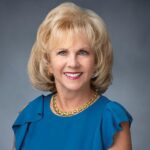
Improving maternal health starts long before pregnancy. Dr. Julie Moldenhauer, Dr. Katherine Deans and Sharon Mills Higgins explore how investing in girls’ and women’s health throughout life can improve outcomes for mothers, babies and families. From maternity care deserts and gaps in mental health support to the role of research, technology, policy, and stronger health systems, we examine opportunities to close care gaps, advance health equity, and build healthier futures for generations to come.
Watch the episode on YouTube.
Featuring:
Julie S. Moldenhauer, MD, PMH-C, Executive Director, Institute for Maternal Fetal Health, Nemours Children’s Health
Katherine Deans, MD, MHSc, Senior Vice President, Enterprise Surgeon-in-Chief, Nemours Children’s Health
Sharon Mills Higgins, Chair, Board of Managers, Nemours Children’s Health, and Chair Emeritus, National Board of Trustees, March of Dimes
Host/Producer: Carol Vassar
TRANSCRIPT
Announcer (00:00):
Welcome to Well Beyond Medicine, the world’s top-ranked children’s health podcast produced by Nemours Children’s Health. Subscribe on any platform at nemourswellbeyond.org or find us on YouTube.
Carol Vassar, podcast host/co-producer (00:12):
Each week we’ll be joined by innovators and experts from around the world, exploring anything and everything related to the 85% of child health impacts that occur outside the doctor’s office. I’m your host, Carol Vassar. And now that you are here, let’s go.
MUSIC (00:30):
Let’s go-o-o, well beyond medicine.
Carol Vassar, podcast host/co-producer (00:36):
The Harris Polls Annual State of Maternal Health in America report really gives us a clear picture of what women are experiencing during pregnancy, childbirth, and that postpartum period. But the data can only take us so far. I can’t really explain why these gaps persist, how they’re compounded by a high-risk pregnancy or a complex fetal diagnosis, and what can be done to address them. Joining me now to help us move from the findings to potential solutions are Dr. Julie Moldenhauer, executive director of the Institute for Maternal Fetal Health at Nemours Children’s Health, Dr. Katherine Deans, Senior Vice President and Enterprise Surgeon in Chief at Nemours, and Sharon Mills Higgins, Chair of the Board of Managers at Nemours and Chair Emeritus of the National Board of Trustees at the March of Dimes. Thank you all for joining us to talk about this important issue.
(01:31):
Dr. Moldenhauer, I’m going to start with you. The Harris Report describes a maternal health system in which many women lack access to care. They don’t feel they’re heard. They don’t feel they’re informed. They receive less support as they move from pregnancy to that postpartum period, and they feel as though they encounter real gaps in mental health services. How close are these findings to what you and your colleagues are actually experiencing in the clinical setting?
Julie Moldenhauer, MD, Nemours (02:06):
Yeah, that’s a great question, Carol, and thanks for that one. We know that in the United States, we have a lot of maternal healthcare deserts, essentially. So women are traveling three to six hours by car on average in some areas of the states to just receive high-risk pregnancy care. On top of that, we also have low-risk OB and labor and delivery units that are closing. All of this limits access for our patients to receive, in general, a higher level obstetrical care and prenatal care, not to mention anybody that needs a higher level of acuity type of care during their pregnancy and immediate postpartum. And this is really causing this increase in maternal morbidity and mortality that we’re seeing in our country, despite the fact that we’re a first-world country, so to speak, on some levels, but obviously in maternal care, we’re lagging behind a lot of our counterparts.
(03:01):
And so I think that we all feel it. I think that OB providers in general, we are forced to see more patients in a day because of lack of access and fewer providers. Those appointments, probably by perception from a patient, might be that they’re feeling that they’re getting to spend less and less time with their providers because they have to be seen quicker and move through. I think that the patients that we tend to see that have a prenatal diagnosis in particular feel that sentiment because sometimes they’re given a diagnosis that’s very devastating, that could be life-limiting for their pregnancy, whether it’s in utero or after they are born. And then what happens is they have to process that information very quickly because the provider in the office needs to move on to the next patient. And so that is an area you can imagine: if you’re dealing with that very delicate information, very stressful information, very life-altering information, you need time to process that and the psychological impact of that.
(04:01):
And so how do we provide time for providers? How do we provide time for patients? How do we provide the psychological care that needs to go along with this? And although I’m focused on the high-risk pregnancy, this is true for even lower-risk pregnancies or intrapartum events with potential traumatic events that happen. Somebody’s planning a vaginal delivery, and they need to have an emergency C-section. That can be a very traumatic event in and of itself that can last for subsequent pregnancies. And so there are a lot of aspects of care that we need to be building on to emphasize and support these patients, not just during their pregnancy, but that whole postpartum, which is the whole year after you have your baby. And so it’s not just those first few weeks; it’s a long time.
Carol Vassar, podcast host/co-producer (04:51):
So you’re seeing it in your practice, and it’s probably magnified for women who are having those maybe complex conditions or perhaps a fetal abnormality that needs to be addressed. Dr. Deans, I want to ask you: let’s talk about some of the operational changes that healthcare systems should be making, can be making, will be making to provide more coordinated, patient-centered care accessible across the entirety of the maternal health journey from that prenatal period, which is a very educational period through delivery and postpartum care, mental health services and the child’s early care. What are health systems doing?
Katherine Deans, MD, Nemours (05:40):
Carol, I’m going to say something a little controversial, which is that prenatal care doesn’t start when a mom is pregnant.
Carol Vassar, podcast host/co-producer (05:48):
Bingo.
Katherine Deans, MD, Nemours (05:49):
It starts with the health of women and the health of girls. And as a pediatric healthcare system, not only do we need to support pregnant moms and babies throughout the period of care that Julie is referencing, and that is really her area of specialty, but we need to be thinking about what we are doing for girls before they even get to reproductive age. So, for example, do they have good nutrition? Are we setting up their biology to be successful in the prenatal period? How about the mental health of girls? Are we focusing on the mental health of girls so when they get to that period of life, they have the resilience to be able to handle the trauma that can occur during these types of events?
(06:34):
And I would say there’s a piece of this on the mental health side. We need to teach girls to be able to take up space and to have a voice and to advocate for themselves and to do good self-care. And I think we’re lacking in that in the pediatric healthcare space in general. And so I think we need to have a bit of a charge towards how do we operationalize the better care of girls and really focusing on girls as a unique population. And I think it’s overdue, Carol.
Carol Vassar, podcast host/co-producer (07:05):
Dr. Deans, I couldn’t agree more, and what you’re talking about really is whole child health. How do we start and make certain that young girls, adolescent girls, are ready to have children when they choose to? What’s missing in that continuum, do you think, Dr. Deans?
Katherine Deans, MD, Nemours (07:26):
I think so much. So when we think about whole child health, we also need to think of each child as an individual, and their needs are very individualized. And so not every girl has a safe place in their home. Not every girl has food security. Not every girl is able to engage with the educational opportunities that are in front of her. And so I think we need to look at that holistically. So I think that it’s so widespread in terms of the types of things we need to be doing. It’s broad, and it’s deep, I guess, is what I’m trying to say. And it starts with primary care, frankly. And I’m a surgeon, so I’m well outside my expertise when I talk about primary care, but I will tell you it starts with primary care, and it starts with identifying the unique issues that girls face based on their biology, based on sociology, based on family dynamics. We’re 50% of the population. So I think there needs to be some additional attention there across the spectrum.
(08:31):
And that actually also, Carol, impacts how children, girls, do in quaternary care as well. So for example, if you do an operation on a young boy versus a young girl, there are very different things you need to be thinking about in the course of an operation even in order to preserve the reproductive health. So I think it’s multifactorial, and it extends from primary care all the way through quaternary care and what we need to be thinking about.
Carol Vassar, podcast host/co-producer (08:58):
Sharon, I want to bring you into the conversation here. You have some very extensive national leadership experience with both Nemours and March of Dimes. As you hear Dr. Deans and Dr. Moldenhauer talk, let’s bring up some of the solutions that you think or have seen or know are ready to be implemented or expanded now to address not just prenatal health as a woman is thinking about getting pregnant, but also expanding that down to whole child health and making sure that girls and young women are well served so that they can have a family and do it safely.
Sharon Mills Higgins, March of Dimes (09:38):
Thank you for that, Carol. It’s great to be here. I’m so happy to hear Dr. Deans go down the road of the health of a woman before pregnancy because we have reams of data that show how significant that is to a healthy pregnancy and a healthy outcome for both mom and baby. We like to say women are 50% of the population, but 100% of the future. And you really got to start early, and that’s where the whole child health mentality, starting with young women, young girls, really makes a difference.
(10:16):
Things like high blood pressure and diabetes, the seeds of those chronic diseases start early in a woman’s life. And we absolutely know that women going into the pregnancy journey with those morbidities, if you will, already are at a much higher risk of having problems. So I really appreciate the conversation around access to care because that is absolutely the number one biggest barrier to women having healthy pregnancies and healthy babies.
(10:54):
And so March of Dimes, for example, each year publishes a report called Nowhere to Go: Maternity Care Deserts. And those deserts are one in three counties in the United States. And that basically means that for the women living in those counties, their access to prenatal care is really limited or non-existent. And so we’re talking six million women of childbearing age live in those counties. And so at March of Dimes, for example, one of the things that we’ve really leaned into is, okay, these hospitals are closing, these clinics are closing. How do we get care to the women? And there’s a myriad of solutions. There’s mobile clinics, there’s partnerships with some of the big pharmacy chains to provide at least at a minimum, some type of doula care, some type of basic prenatal care. And of course, then there’s the gold standard, which is our institute at Nemours, which couldn’t do more to help that woman on their journey physically, emotionally, mentally.
(12:00):
And so it really does matter. And I think from an advocacy perspective, things like postpartum coverage: 40% of women who give birth are on Medicaid. And it used to be that after 60 days, that coverage ended. And now we have 45 states, and we’re hoping to get the other five where that Medicaid coverage is extended for another 10 months. So they have full coverage for the first year of life. So with that coverage, those women can access the mental health resources they need. They can access their own physicians to get care. And there’s all kinds of statistics that show if a woman has insurance, they’re more likely to take their child to the doctor for their basic pediatric visits. And the whole cycle just keeps starting again for women. Young girls that don’t get early childcare, just off they go, and it’s not going to wind up where we want it to.
(12:58):
So there’s a lot of work that has to happen. I really appreciated Dr. Moldenhauer’s comment about how poor the maternal health landscape is in this country, based on all the other resources and successes that we have in medicine. And I think there’s no lack of evidence. We just need to continue to get the messaging out there so that we can get more women better coverage and make pregnant women healthier before they’re pregnant. The things that Dr. Dean was describing, I like to call them the social determinants of health: housing, food security, safety- all of those pieces that are part of the landscape when a child is growing up, and her health is being determined in many cases.
Carol Vassar, podcast host/co-producer (13:51):
Sharon, you talked about the lack of maternal healthcare, and I think in the news we hear so, so much about rural hospitals closing. And often the major issue that we hear about is that the maternal-fetal health provision and providers are leaving these rural areas. Obviously it is an issue, but I’m thinking, is it a growing issue from where you sit? Because if hospitals are closing and we’re unable to deliver, you have to go 12 miles this way or 50 miles that way to have your baby, that’s huge.
Sharon Mills Higgins, March of Dimes (14:29):
It is huge.
Carol Vassar, podcast host/co-producer (14:31):
Are we seeing any work that’s moving this back towards where it needs to be?
Sharon Mills Higgins, March of Dimes (14:36):
It is huge. Well, I feel like places like the Institute at Nemours are a step that we’re taking in the right direction. But from 2024 to 2026, 96 rural hospitals with maternity care closed, most of them in rural places in the United States. So that’s where the nowhere to go comes from because these women do have nowhere to go. And some of it is because there is a lack of providers, but some of it is also the finances around medicine. And so that’s where leaning into alternative solutions, where mobile clinics can go in and provide basic maternity, prenatal testing, blood pressure, that type of thing.
(15:22):
I think technology is also a big part of the solution as we get into being able to monitor pregnant women’s blood pressure, pregnant women’s glucose, et cetera, in a virtual way. And I know we’re doing some of that in Nemours also, but that’s something that can happen anywhere that the technology exists, which is pretty much across the country at this point.
(15:45):
So for example, in Texas, we have a huge collaboration; March of Dimes is a huge collaboration with some of the hospitals in Houston, and they’re providing care across the state in a virtual way for pregnant women because there are very few rural hospitals left open in the state of Texas. And there’s no doubt that having that prenatal care, I think the data is something like 60%. If you have prenatal care, you’re 60% less likely to have a negative outcome. Now, if there’s already some issues going on with the fetus, getting to a place like Nemours, for example, could save that woman’s life, could save the child’s life. But in lieu of just providing basic care, the technology is going to open a lot of solutions, I think, for getting more women that basic prenatal care.
Carol Vassar, podcast host/co-producer (16:39):
Now, Dr. Moldenhauer, Sharon mentioned research, and I want to talk about research. You are a researcher yourself. Dr. Deans, I believe, is also a researcher. What are some of the most consequential research gaps related to pregnancy in general, but specifically to your specialty, high-risk pregnancy and perinatal mental health, and what evidence do clinicians need to provide better support and improve outcomes for mothers, babies, and families throughout the life continuum of a young woman or a young girl?
Julie Moldenhauer, MD, Nemours (17:19):
Yeah, absolutely. We have some major gaps in this area. So things we know, right? Basically, we know that women today are at much higher risk for peripartum mood and anxiety disorders. The stakes are higher; the population is shifting. We’re a little bit older when we’re having our first baby. We have a lot more women who are coming into it with chronic medical conditions or requiring the use of assisted reproductive technologies, all these types of things. So that compounds and complicates the pregnancy.
(17:50):
When you add on top of that, as Sharon mentioned, the social determinants of health, if I have housing insecurity or food insecurities, I have domestic violence, any of those things add another layer of complexity or risk to the pregnancy. If I have mental health disorders, another risk factor. What we know is in pregnancy in general, and particularly in my world where the women I’m seeing have problems with the fetus in particular, so something is wrong with the baby, the risk for mood and anxiety disorders, so for perinatal depression is double plus what the baseline risk is. That’s also true for the partner. They are significantly increased risk, probably close to double also for traumatic risk and anxiety risk related to those pregnancies.
(18:38):
Knowing this across the continuum, we have this data, we know the risk is higher. What we’re really lacking on is how do we intervene. What helps to take that risk down? Because what we know long-term is that if we have moms, dads, partners who have untreated mental health disorders, that then impacts the child. That impacts right away, things like bonding, those sorts of things for newborns and even in the first few years of life. But long-term for those kids, they also are at higher risk for developing chronic medical conditions. They themselves can also develop mental health disorders, adjustment disorders, forming normal relationships, all those things. And so then it becomes this vicious cycle that just continues and continues and spirals. So what we really don’t know how to do, instead of just identifying the problem, is how do we intervene? At what point do we intervene? How do we meet the patient where they’re at? How do we break this cycle and improve the overall health of moms, babies, and families long-term?
Carol Vassar, podcast host/co-producer (19:43):
Any suggestions as to how to break that cycle? I was thinking of that term earlier as you were describing some of the issues and laying them on the table. Any ideas on how we can break that cycle, or is it just going to take hard work and really good research?
Julie Moldenhauer, MD, Nemours (19:59):
It is going to really take some hard work and good research because, particularly with mental health disorders, stress, anxiety, depression, all those things, what works for one patient may not work for the next patient. And so we really haven’t studied it as far as looking at it widespread on a whole population, what techniques work better than others, type of thing.
(20:23):
And so we really need to start to do the work and identify, oh, you know what? Music therapy might work pretty well. We might be able to teach very low-cost meditation, low-cost yoga, breathing skills, even if you think about that, but how do we take that? How do we actually implement? How do we study it to know how to make that more of a widespread use? Because maybe it doesn’t necessarily mean that what people think of as therapy to sit in a room on a sofa with a therapist. It might not be that. It might be looking very different from patient to patient. And so how do we really start to explore this, apply it, and determine what are potentially best-utilized and low-cost interventions to help patients and long-term families?
Carol Vassar, podcast host/co-producer (21:13):
Dr. Deans, you’re nodding your head. Anything to add to that with regard to either breaking the cycle or where the research gaps might be from your perspective?
Katherine Deans, MD, Nemours (21:23):
I think a couple of thoughts on that. I was nodding my head because I was hearing Julie allude to earlier diagnosis, and I think there’s a point to be made that earlier diagnosis gives us a longer runway to intervene. And so coming up with those models of therapy that are titrated to the individual, that are specific and also studied to be effective, I think will become more impactful.
(21:50):
I would say other areas where I think we can do better research, and by the way, which doesn’t cost a lot of money to do this kind of research, is in health services research. So one of the things that we don’t do well as a pediatric healthcare system, and I’m not just talking about Nemours; I’m talking about across the board children’s hospitals in general, is we tend to look at girls, and again, I’m going back to earlier in the reproductive cycle, but we tend to look at girls, tweens, and teens as children as opposed to young women of reproductive age.
(22:25):
Menses is happening earlier in the life course. Kids are becoming sexually active earlier in the life course. We have pretty poor rates of PID detection, which we know impacts fertility. Up until about five years ago, we didn’t value the need for ovary-sparing procedures in pediatric healthcare. Now we know that if you remove an ovary in a girl for lesions and things like that, that maybe at one point we thought was the appropriate procedure to do, it no longer is; we thought it was okay that a girl had a second ovary. That is such a strange way to think because we know that that impacts a woman’s fertility long-term; it impacts their neurologic health; it impacts their cardiovascular risk. And so there are things that we should be thinking about and considering and studying earlier in childhood in girls, and it doesn’t cost money to do that. It just takes attention, time, and commitment.
Carol Vassar, podcast host/co-producer (23:25):
PID, by the way, is pelvic inflammatory disease, if I’m not mistaken.
Katherine Deans, MD, Nemours (23:28):
Yes.
Carol Vassar, podcast host/co-producer (23:29):
As we finish up today, and this has been a fascinating conversation, I could go on and on with all of you; I want to do a quick round robin. We’ve talked about the importance of that connection between maternal health, fetal development, birth outcomes, a child’s long-term health, both before and as they become young women of reproductive age and into adolescence and into adulthood. Talk about these connections and give me some hope because it sounds pretty grim when you think about the maternal-fetal health situation in the United States right now. Give me something that’s going to help me to say, yes, there’s a great future for my granddaughter when she comes of age to have children. Sharon, I’m going to start with you.
Sharon Mills Higgins, March of Dimes (24:17):
Great. Well, that’s a great question, and I thank you for that. And I have four granddaughters, so I think about this a lot. I think one thing that’s hopeful is that we’re having this conversation because that’s where it starts: the education about these issues for the mass population. And I would say that I think of that as progress because I wouldn’t say that that’s always been happening in my lifetime, for sure. And I think the education of the masses, the amount of media coverage that these issues are getting right now, the amount of attention, even at the governmental levels, I would say despite the times that we’re living through, there is a lot of bipartisan support for programs that support infant and maternal health. And so it’s just getting the right data in front of the right people that can scale some of the change, and that’s how we got the postpartum Medicaid coverage passed.
(25:17):
I also think the role that men are now playing in raising children; there’s so many dual- career couples; there are so many dads on paternity leave. All of those policies, they chip away at these issues, and there’s no one solution. This is such a multifactorial problem, and it is going to take partnership after partnership after partnership to get to a better place. But I look at the conversations that are starting and are happening as progress, as a sign of where we can get to.
Carol Vassar, podcast host/co-producer (25:55):
I was jealous. My son-in-law just finished six weeks of paternity leave, so that was something that my generation and my daughter’s father didn’t have, so progress has been made. Dr. Deans, your thoughts. Give me some hope here. What are we looking forward to?
Katherine Deans, MD, Nemours (26:12):
Well, my hope lies in the resilience of women. I mean, over world history, women are resilient. And is there anyone more tenacious than a mother?
Carol Vassar, podcast host/co-producer (26:22):
No.
Katherine Deans, MD, Nemours (26:24):
Right.
Sharon Mills Higgins, March of Dimes (26:24):
[laughter].
Katherine Deans, MD, Nemours (26:24):
A woman protecting her child, born or unborn.
Carol Vassar, podcast host/co-producer (26:27):
Absolutely.
Katherine Deans, MD, Nemours (26:28):
So I have hope because we are strong, we are caregivers, we are tenacious and resilient. And I think that women are starting to move into more and more positions of authority and power and responsibility across the spectrum in our society. And I think that it’s our voice. So we need to keep our voice amplified through all those people and all those positions, and I think our resilience and our tenacity will win the day.
Carol Vassar, podcast host/co-producer (26:59):
Dr. Moldenhauer, final word. Give me hope.
Julie Moldenhauer, MD, Nemours (27:02):
Oh, there is nothing stronger than a mama bear. And so the more mama bears that we have in positions of authority, we’re moving that needle forward. And so I could not echo Sharon and Kate’s comments more. The fact that we’re having these conversations is huge. My baby is 16, and I remember literally pumping in a bathroom or a closet because there weren’t lactation rooms; you weren’t legally obligated to provide lactation breaks to your employees. I mean, just that little piece alone shows how far we’ve come.
Katherine Deans, MD, Nemours (27:42):
Yeah.
Julie Moldenhauer, MD, Nemours (27:42):
It’s a tiny piece, but it’s a big piece at the same time.
Carol Vassar, podcast host/co-producer (27:45):
Indeed, a long way to go for sure, but still so much more work to be done in the area of maternal fetal health. Thank you, Dr. Julie Moldenhauer, executive director of the Institute for Maternal Fetal Health at Nemours, along with Dr. Katherine Deans, Senior Vice President and Enterprise Surgeon in Chief for Nemours, and Sharon Mills Higgins, Chair of the Nemours Board of Managers and Chair Emeritus for the National Board of Trustees of the March of Dimes, for being with us today. And as always, thank you for watching.
(28:17):
Have you clicked the subscribe button for the podcast yet right here on YouTube? It’s right there, and it’s also on our podcast website, nemourswellbeyond.org. Our website is also the place where you can leave us a review, an episode idea, and subscribe to our monthly e-newsletter. Again, that’s nemourswellbeyond.org. You can also, as always, watch the video podcast on YouTube and subscribe there or listen by asking your favorite smart speaker to play the Nemours Well Beyond Medicine Podcast.
(28:53):
Our production team for this episode includes Lauren Teta, Alex Wall, Cheryl Munn, and Susan Masucci. Video production by Josh Hansbrough, audio editing and production by me. Join us next time as we get the latest on kids and food allergies from one of the nation’s leading pediatric allergists, Dr. David Stukus. Please join us. I’m Carol Vassar. Until then, remember that together we can change children’s health for good – Well Beyond Medicine.
MUSIC (29:26):
Let’s go-o-o, well beyond medicine.