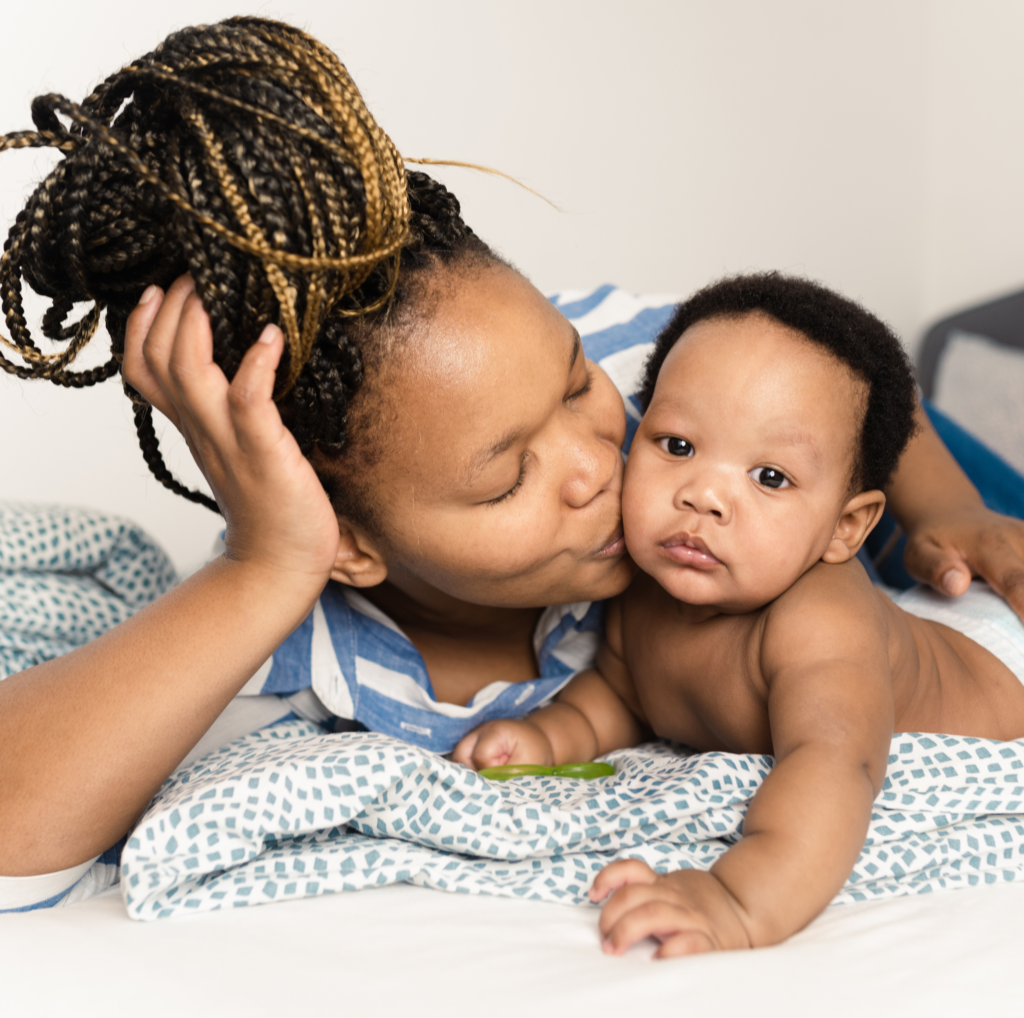
What does the latest research reveal about the state of maternal health in the United States, and what can be done to improve it? Christina Lojek, Senior Research Manager, The Harris Poll, shares findings from the 2026 State of Maternal Health survey, highlighting persistent gaps in insurance coverage, patient education, postpartum support and paid leave. Then, KJ Hertz, Senior Director, Federal Affairs, March of Dimes, and Daniella Gratale, MA, Associate Vice President, Federal Affairs, Nemours Children’s Health, explore federal policy efforts to address maternal-fetal health challenges and advance systemic changes that make pregnancy, childbirth and postpartum care safer and more supportive.
State of Maternal Health In America Study
Featuring:
Christina Lojek, Senior Research Manager, The Harris Poll
KJ Hertz, Senior Director, Federal Affairs, March of Dimes
Daniella Gratale, MA, Associate Vice President, Federal Affairs, Nemours Children’s Health
Host/Producer: Carol Vassar
TRANSCRIPT
Announcer (00:00):
Welcome to Well Beyond Medicine, the world’s top-ranked children’s health podcast produced by Nemours Children’s Health. Subscribe on any platform at nemourswellbeyond.org or find us on YouTube.
Carol Vassar, podcast host/producer (00:12):
Each week we’ll be joined by innovators and experts from around the world, exploring anything and everything related to the 85% of child health impacts that occur outside the doctor’s office. I’m your host, Carol Vassar. And now that you are here, let’s go.
MUSIC (00:30):
Let’s go, oh, oh.
(00:32):
Well beyond medicine.
Carol Vassar, podcast host/producer (00:36):
What does maternal healthcare look and feel like for women in America today? Well, the Harris Poll’s annual State of Maternal Health in America study is out now, and it helps lay out the issues by examining women’s experiences across the pregnancy spectrum from prenatal care and childbirth through that postpartum period. In the first of two parts, we’re going to take a high-level look at data from that Harris survey, followed by discussions in this part and the next that broaden the discourse to maternal-fetal health, bringing in clinical, scientific, and national perspectives to consider what the findings do mean for women and babies and families and communities. We’ll also talk about what we still need to know and what can be done right now, including an update on what’s happening on the national policy level. Joining me first is Christina Lojek. She is a Senior Research Manager at The Harris Poll, and she’s going to walk us through some of those high-level findings from that 2026 survey. Christina, welcome to the podcast.
Christina Lojek, The Harris Poll (01:44):
Thanks so much for having me, Carol.
Carol Vassar, podcast host/producer (01:45):
Before we get started with individual findings, what was the 2026 State of Maternal Health in America study designed to explore? Who took part? What does it tell us at the highest level? And I want to start: you have a personal story about this. Can we start there? I’m hoping we can.
Christina Lojek, The Harris Poll (02:04):
Yeah, absolutely. So this is the fourth year that I’ve been involved in this study, and it really came to life after I had my first pregnancy and childbirth, and I really struggled getting education from providers. I kind of felt like I had to educate myself on a lot of different areas. And then the postpartum support just really felt lacking. Now, mind you, I was kind of just post-COVID in 2021, but it still is really difficult. It felt really isolating, and I just imagined I couldn’t be the only person to feel this way, and something needs to be done. So that really inspired me to push forward on this initiative. And the main goal of the report each year is really to identify the key gaps in education, in care, advocacy, and support. So this past year we surveyed more than 4,000 US adults, over 2,300 women, and I believe around 1,500 were women who have been pregnant or are currently pregnant.
(03:12):
I think the clearest message is that maternal health challenges aren’t isolated. There’s complications, mental health concerns, information gaps, access barriers that are affecting substantial shares of women. And too often, the system is reactive rather than proactive. Support drops after delivery, even though mothers’ physical and mental health needs really continue throughout. And I think the big thing is that so many people forget that it’s not just those first kind of six weeks that you’re postpartum; it’s that first year and sometimes beyond. So it’s just really clear. Women want more information; they want personalized care and greater continuity throughout the entire journey.
Carol Vassar, podcast host/producer (03:58):
Well, you get this baby, you come home, and as the saying goes, you have no instruction manual, and that baby doesn’t know how to sleep, that baby is constantly needing to eat, constantly needing to be changed. You kind of get in this isolation mode, which, when you start with any postpartum issues, you begin to feel: I’m the only person in the world experiencing this.” But clearly you’re not. If you’re listening to this right now and you’ve just had a baby, you’re in that first year after having the baby; you are not alone. Many, many women have that kind of feeling. Now, 60% of women in the poll say, like them, they have to fight for the medical care they need. 12% of the women who are or have been pregnant report that they have insurance-related barriers, high deductibles, limited provider networks, lack of coverage, and all of that prevented them from receiving the care they needed during pregnancy or during childbirth. What does the survey tell us about how insurance, first barrier right here, continues to shape access to maternal-child health?
Christina Lojek, The Harris Poll (05:08):
Yeah, so insurance, you mentioned 12%, cited that as a barrier to care, and that’s been consistent over the course of this survey. So it seems like not much is really changing in terms of improving that barrier. And we’ve definitely seen that women want more. They talk about the types of coverage that they want to see provided fully by insurance that’s not always happening. Things like specialized mental health counseling, home visits postpartum, stuff like that, that can really make a difference to women who may be struggling and don’t feel like they have the means to get the help they need.
Carol Vassar, podcast host/producer (05:57):
Often in the provider’s office, the office manager knows where to go in terms of the insurance company. So that’s one tip I’m going to give everybody, no matter what the ailment or the condition, or if you’re having a baby or whatever. Let’s get back into that survey. More than a third of those surveys said that their prenatal appointments were not particularly informative, and a third felt that interventions were being pushed on them. What do you think this tells us about gaps in that patient-provider communication and patient education, and a woman’s ability to participate in the decision-making process? Because if you don’t have the information, it’s hard to make decisions.
Christina Lojek, The Harris Poll (06:42):
Yeah. I think in terms of this, it kind of feels like the providers are going through the motions in a sense where they do this day in and day out, and the patient coming in, this is sometimes completely new to them. They may not know the questions to ask; they may not know they can ask a lot of questions. And the prenatal visits are just very fast-paced, almost mechanical sometimes, where you go in, they check for the fetal heart rate, they measure the fundal height. They may say, “Do you have any questions?” But sometimes in that moment you don’t think of anything, or you’re worried about asking questions. So unless the provider is being proactive with that information, it leaves it up to the patient to go out and seek it. And that’s kind of been my experience, where I’m very much an overthinker, overplanner. So I would try to go in with lists and lists of questions, and it just felt very rushed when I was trying to ask them and almost like, “Well, yeah, no, obviously that’s not what you would do.” So I think it-
Carol Vassar, podcast host/producer (07:56):
To them it’s obvious.
Christina Lojek, The Harris Poll (07:58):
Yeah, exactly. Like I said, they do this every day, so the information to them may not seem important enough to bring up at every single visit with every single patient, but I think it is. And I think it needs to be built into that standard of care to provide that information at each visit instead of just pushing patients along. I know some hospitals do birthing courses and stuff, but again, it just feels very mechanical. There’s a very set list of things they’re going to discuss. And the one I attended I think probably hadn’t changed in a good 30 years. Definitely updating our materials would be helpful too.
Carol Vassar, podcast host/producer (08:43):
And then baby arrives and baby seems to take the center of attention. That support seems to, at least in the women’s eyes that you’ve surveyed, seems to decline after childbirth. Even the women report postpartum challenges involving breastfeeding, mental health, pelvic floor health, sexual health. Sixty-eight percent say mothers are forgotten once the baby is born. 86% believe additional postpartum follow-up should be standard care. From your own personal experience, I’m guessing you would agree with that. What does the data tell us about this so-called postpartum care cliff?
Christina Lojek, The Harris Poll (09:24):
Yeah, I think the findings really show there’s a real discontinuity in care. During pregnancy, you’ve got all of your regular prenatal visits, all of the screening and the monitoring, and then you give birth, and they’re like, “Here you go. We’ll see you in six weeks.” And it just seems kind of wild because one, you’ve just gone through this very, I would say, physically traumatic experience and sometimes emotionally and mentally traumatic experience, and now you’re just handed another life to go take care of while recovering. And it kind of just feels like the mother’s needs mostly go to the wayside at that point. It’s just like, “Please make sure you keep the baby alive.”
Carol Vassar, podcast host/producer(10:11):
You’re doing the best you can. We all know that you’re doing the best you can.
Christina Lojek, The Harris Poll (10:14):
Yeah. And there’s not just one single challenge during this time. Some are breastfeeding; you’re dealing with all of the postpartum drops and fluctuations with hormones, mental health, pelvic floor, or sexual health. All of those things are happening at the same time. So in addition to focusing on keeping another human being alive, you’re dealing with so many layers of other issues, and as you said, more than half of those affected didn’t get enough or any support for those issues.
Carol Vassar, podcast host/producer (10:52):
Let me ask this. When you ask in the survey, The Harris Poll on maternal health in America, about improving maternal health, what forms of information or insurance coverage or care or support or public policy received the strongest response from the people you talked to?
Christina Lojek, The Harris Poll (11:15):
Yeah, I mean, I think one of the biggest things we’ve already mentioned is that postpartum visit, that there needs to be far more care as standard for postpartum recovery. It should be ongoing and not just that single standalone visit.
Carol Vassar, podcast host/producer (11:33):
Is that the finding you would say is the clearest call to action that came out in this particular edition of the survey?
Christina Lojek, The Harris Poll (11:39):
I think so. I think that it’s huge. If we have 86% saying that that visit is not enough, I think that that is a massive call to take some action there.
Carol Vassar, podcast host/producer (11:52):
Now, the people that you surveyed were not all women. I’m assuming some were men. Talk about partner support and the importance of partner support. Did you pull any data from your survey in that regard?
Christina Lojek, The Harris Poll (12:05):
Yeah, so we obviously have the data for every single question that was applicable to them, but I think one of the big things that I saw was related to mental health in terms of partner support and partner education. Both men and women overwhelmingly felt that they could identify all of the signs of postpartum depression. And then when we actually gave them a list of symptoms, they neglected to select a lot of them. And there was a lot of misconceptions in terms of when postpartum depression can start and how it can resolve. And if people aren’t properly educated on these things, they could be missing those symptoms, missing diagnosis, and not getting the correct treatment.
Carol Vassar, podcast host/producer (12:54):
What other results from this survey, Christina, really popped out for you and your team?
Christina Lojek, The Harris Poll (13:00):
Yeah, I think in addition to the lack of postpartum support, another big thing was the leave – sorry, the maternity leave policies. I think we had nearly a third of women saying that the current leave policies in the US are insufficient, and I would have to wholeheartedly agree with that. And I was very lucky enough to have a company that gave me above-average maternity leave, but I know that there are some companies that don’t provide that much or provide any, and sometimes women run into the barrier of they’ve started a new position and they weren’t there long enough to get the full extent of leave, as well as not all states having a mandatory state paid leave. So I think that improving that would be huge for mothers as well to, again, support their postpartum recovery.
Carol Vassar, podcast host/producer (14:03):
I had my first 35 years ago, over 35 years ago, and it was just the beginning of unpaid leave from companies. It had to be guaranteed if the company was a certain size. We’ve made some progress, but more progress needs to certainly be made in that area. Any other data that came out of that study that your survey, in fact, that popped for you and your team?
Christina Lojek, The Harris Poll (14:29):
So one of the other data points that I kind of felt, I guess, passionate about in terms of we really need to make a change was that about one in five women who’ve been pregnant experienced a form of obstetric abuse. So that would be things like feeling like they were forced into an intervention or a provider did something without their consent, stuff like that. I think that while 20% doesn’t sound like a very big number, it is far bigger than it should be at this point.
Carol Vassar, podcast host/producer (15:07):
To me, it sounds like a big number that anyone has to do something, go through an intervention that they don’t feel is quite right for them. It’s also a matter of making sure you have your facts as the patient and speaking up. Anything else, Christina?
Christina Lojek, The Harris Poll (15:25):
Yeah, I think just to piggyback off that in terms of the advocacy and support, I think that that is something that partners, not alone, but partners in addition to providing coverage for doulas would be huge. My first pregnancy, it was just me and my partner. It was our first time. We didn’t know what we didn’t know. And in the moment, so many things are happening that it’s so hard to remember exactly what you want and how to advocate for yourself or your partner. So I think in terms of combating the issues of traumatic experiences and obstetric abuse, having a second support person in there, like a doula, would be huge in terms of women having more positive outcomes and experiences.
Carol Vassar, podcast host/producer (16:16):
And having that covered by insurance if at all possible. Christina Lojek is a Senior Research Manager at The Harris Poll. She’s been walking us through this year’s Harris Poll annual State of Maternal Health in America. Thank you so much for being here. If people want to see the report, take a look at it themselves. Christina, what’s the website where people can get that?
Christina Lojek, The Harris Poll (16:39):
Yeah, they can find the full report at our website at theharrispoll.com.
Carol Vassar, podcast host/producer(16:44):
Theharrispoll.com, and we’ll make sure we put that in our show notes. Coming up next, we’re going to talk about policy on the federal level. What can be done to overcome some of these barriers, maybe make the insurance just a tad better for you and any women who are having babies in your life. We’ll be right back. It’s the Well Beyond Medicine Podcast Day right there. We’ve just heard what women are reporting regarding their experiences surrounding the prenatal and perinatal periods. Now let’s take a moment to determine whether there are effective approaches to reach families with consistent maternal fetal health programming, no matter where they live, which is really heavily dependent upon public policy.
(17:32):
Joining me now to examine the federal maternal fetal health policy landscape are Daniella Gratale, friend of the podcast, good friend of the podcast. She’s Associate Vice President for Federal Affairs at Nemours Children’s Health, and KJ Hertz, Senior Director of Federal Affairs at March of Dimes. KJ, I’m going to start with you. What is the current state of federal maternal fetal health policy, and where have we seen meaningful public policy progress or setbacks even over the past several years?
KJ Hertz, March of Dimes (18:10):
Well, first of all, Carol, thanks for having me on the podcast today. When we look back on the past few years, there’s real progress in the area of maternal-infant health, but also some serious setbacks that we can’t ignore. Nearly every state now has extended postpartum coverage to a full year, and that’s a huge step forward. We know this because more than 80% of pregnancy-related and postpartum deaths are preventable. We also have national standards for hospital obstetric care, quality improvement programs to staff and train, and to use evidence-based practices. And we also have the reauthorization of the Preventing Maternal Deaths Act with federal support for maternity mortality review committees, which has strengthened our ability to understand why mothers are dying during pregnancy and how we can prevent those tragedies in the future. But at the same time, there are some negative effects that we’re seeing from H.R. 1’s severe Medicaid cuts that are becoming clear now, and they’re deeply concerning to us.
(19:33):
We’re still facing a maternal and infant health crisis, even though the US spends more on healthcare than any other developed nation in the world. Every year, one in 10 babies is born preterm and 20,000 infants don’t even reach their first birthday, and that’s really a tragedy. But with the reauthorized PREEMIE Act, we will see continued research on preventing preterm birth, and there are several programs at the federal level that support maternal mental health, research, and data collection that have been sustained through hard advocacy efforts. Still, many of these have experienced major disruptions because of funding lapses and staffing losses, unfortunately.
(20:26):
And we know now that much more has to be done. For example, postpartum coverage is still optional for states. Our latest Nowhere to Go: Maternity Care Deserts Across the U.S. shows that one-third of US counties are maternity care deserts. So restrictions on coverage and funding could make it even harder for families to get the care that they need. At March of Dimes, we really see these challenges as a way to push us forward to even work even harder in the years to come to make things better for mothers and babies.
Carol Vassar, podcast host/producer (21:08):
You’ve laid out a heartbreaking scenario, KJ. I want to pull on one of the strings that you talked about, and that was workforce development. Daniella, I’m wondering what kinds of federal investments are necessary to really strengthen the maternal health workforce and also the research infrastructure, especially around high-risk pregnancy. I know Nemours has really made some strides with high-risk pregnancy and making sure that the new Institute for Maternal Fetal Health at Nemours has been a leader in that, and also disparities in care and the longer-term connections among maternal, fetal, and child health. What is happening with all of that?
Daniella Gratale, Nemours (21:57):
Well, first of all, hi Carol, great to see you. Same with you, KJ. I really want to thank you for doing a policy segment for this issue because I do think there are a lot of solutions that can be rooted in policy and research, and I think a lot of the workforce piece does relate to research as well. I want to repeat one of the first things that KJ said: more than 80% of pregnancy-related deaths are preventable, and I think that’s an astounding figure. We also know that there’s about 20,000 babies that are born still each year, and that means that there is lots of opportunity for us to really focus on these areas. I think there are a few things we have to think about. Understanding that there are many factors that can contribute to maternal mortality and stillbirth, but better understanding what risk factors are, understanding how those underlying causes can interact, understanding what interventions are most effective- all of that is critical to better clinical treatment and better workforce training.
(23:00):
I think that’s where we’ve seen some positivity on the policy landscape because we have seen some attention from Congress. March of Dimes in particular, but other groups as well have done a fantastic job, I think, raising awareness in Congress on the importance of focusing on these issues. And there are two bills in particular that I think could make or continue to make a difference. The NIH IMPROVE Act would authorize consistent funding for an existing program that started at the National Institutes of Health in 2019, and it’s focused on improving maternal health outcomes and reducing maternal mortality. And it gets at some of what you talked about: targeting health disparities, identifying risk factors, implementing and evaluating those community-based interventions, and that’s really where we need to focus. The good news is it actually passed the House in July, thanks to a lot of advocacy. On the Senate side, right now it’s in the Senate version of the National Defense Authorization Act, which has not yet passed the Senate, but the fact that it’s in two different vehicles in the House and the Senate, I think, is encouraging.
(24:09):
So certainly something that we hope to get over the finish line in the lame duck session this year. And then in terms of stillbirth, the SHINE for Autumn Act is a bipartisan, bicameral bill. We’ve advocated for it in the past with many other groups. Again, March of Dimes has done a great job on this one, and it would enhance some of that data collection, the research, awareness, education; all of those pieces are so important. So we’re hoping to see movement on that bill in a future Congress. But I think for all of these issues, just improving the research is the first step, and the fact that Congress is paying attention is really positive.
Carol Vassar, podcast host/producer (24:50):
I want to refer back, KJ, to the Harris findings that we talked about in the first segment. The identified gaps, tremendous gaps in things like access to care, postpartum follow-up, insurance coverage, patient education, mental health support, paid leave – the list just goes on and on. Which of these do you think the federal government can address through existing programs or administrative action, and do any of these look to be resolved through congressional action? Do you think Congress can act on any of those?
KJ Hertz, March of Dimes (25:31):
Yeah, great question. The Harris findings really are a stark reminder that we have a lot more work to do to support moms and families in this country. According to the polling, nearly 90% of women say that more needs to be done to make childbirth safer in the US, and that number has only gone up from 83% just two years ago. That’s just purely unacceptable for a country as wealthy as ours. The good news is we have a solid foundation that we can build upon. We need to work closely with states to strengthen the Affordable Care Act and Medicaid enrollment to ensure coverage is continuous while supporting programs that improve outcomes for moms and babies. Agencies like HRSA can expand on existing efforts that they’re already doing around patient education, rural access, and maternal mental health. Programs, for example, like the Maternal Mental Health and Substance Use Disorder grants that HRSA administers currently only go out and reach 16 states, and we would like to build upon that some more states have the advantage of those same resources.
(26:51):
At the same time, we want to continue to support the National Maternal Mental Health Hotline, which is an important piece of that in addressing the maternal mental health issues that are so prevalent. But states can only do so much on their own. Congress really has to step in and take a stronger role if you want lasting meaningful change to happen. This includes making 12 months of postpartum Medicaid coverage mandatory nationwide, not just optional, but mandatory. Investing in the healthcare workforce, like you’ve talked about, getting hospitals the resources that they need to keep labor and delivery units open and to prevent them from closing. We also need to expand on the Family and Medical Leave Act so that new parents, especially those with babies in the NICU, have the paid time to care for their families. At March of Dimes, we believe families need both coverage and services they can reach, plus the time and the support to use them. Women are calling for better education, clearer communication, stronger postpartum support, and continuous coverage. Meeting this need will require a coordinated effort across states, the federal government, providers, payers, and employers alike.
Carol Vassar, podcast host/producer (28:18):
Well, it sounds like March of Dimes is working on this. Nemours is clearly working on this. Daniella, I’m wondering who else needs to be at the table? How do we engage others in the federal advocacy to address these issues, including individuals, listeners who might be hearing all of this today?
Daniella Gratale, Nemours (28:39):
Yeah, it’s really a great question, and I think it’s an area where since there is so much bipartisan support, it’s just the more voices that can continue to raise the drumbeat, the better. So I’d say if you work for an organization that has a government relations team that is active in issues, absolutely reach out to them if these are issues on your policy agenda and see where you might be able to fit in. I know at Nemours, we have a lot of different ways. We do letters with our clinicians. They help advise us on which bills to advocate for and endorse. Sometimes we work with them in the communications team on op-eds or other types of communication forums. We’ve done tours with members of Congress. You had mentioned the Maternal Fetal Health Center. We were able to feature that with the tour with one of our senators.
(29:31):
So I think all of those ways, if you’re part of an organization that has a government relations and communications team, I would definitely encourage you to weigh in. If you are part of a professional organization that does lobby days, that’s another avenue. Each year we do an advocacy day with March of Dimes and Lurie Children’s Hospital. It’s one of our favorites each year. It’s called the Cindy Pellegrini Maternal and Infant Health Advocacy Day, and it’s an honor of an advocate who was an amazing presence that KJ and I both knew personally. And we do that to honor her each year, but also to continue to carry the work forward. And we rely on our nurses, our doctors, the March of Dimes advocates, our three organizations, to bring them with us to either DC or sometimes it’s virtual meetings, but those advocates and clinicians give direct stories.
(30:25):
So I think if you have the opportunity to come to DC and to talk to your member of Congress or their staff, that’s really powerful. And they remember those stories. Year to year, they will literally remember some of our nurses and docs because those stories are so powerful. And if you are just an individual at home who’s interested in maternal health or you have a story, absolutely you can do something similar. Reach out to your member of Congress, let them know what issues are important to you. And certainly you can look to organizations like March of Dimes to help identify which bills are important. But I think this is a great question, so I also want to turn it over to KJ in case you have any more to add as well.
Carol Vassar, podcast host/producer(31:05):
KJ.
KJ Hertz, March of Dimes (31:06):
Yeah, thanks, Carol and Daniella. I’d just like to say right off the bat how much March of Dimes values our partnership with Nemours Children’s Health. And just take a moment to thank Daniella for her collaboration over the years, especially in co-hosting the Cindy Pellegrini and Maternal and Infant Health Advocacy Day. We’ve done that over the past seven years, and it’s truly been a pleasure to work with your organization as well, Lurie’s Children’s Health of Chicago, on it. As we look ahead to the rest of this Congress, though, it’s going to be a tight agenda with limited time, really. And I want to highlight just two pieces of legislation quickly that have gained real momentum. First, the Rural Obstetrics Readiness Act. This is a bill that’s about making sure pregnant women have equitable access to maternity care no matter what their zip code is. We all know that the system has faltered here and that it won’t solve the broader systemic problem of the loss of labor and delivery units and hospital closures, but it will make a meaningful difference for communities that are already facing shortages of maternity care professionals.
(32:28):
Second, the NIH IMPROVE Act, which Daniella has already talked about, is part of the broader omnibus package and ensures that research goes beyond what any one organization can do alone. So that’s really important, and I think it has significant legs to it. We’re heading into an uncertain post-election session, but there is still a window to advance bipartisan policies like these before the end of the year.
Carol Vassar, podcast host/producer:
KJ Hertz is the Senior Director of Federal Affairs at March of Dimes. He was talking federal maternal-fetal health policy along with Daniella Gratale, Associate Vice President for Federal Affairs at Nemours.
MUSIC:
Well Beyond Medicine
Carol Vassar, podcast host/producer:
Thanks to both KJ and Daniella, along with Christina Lojek, who is a senior research manager at the Harris Poll, for joining me on this episode to talk about some of the data and policy surrounding maternal-fetal health. You can check out the full 2026 State of Maternal Health Survey from Harris by visiting theharrispoll.com, or clicking the link in our show notes. You may also sign up for regular maternal fetal health policy initiatives delivered to your phone via text from the March of Dime by texting the word ADVOCATE to 3-5-6-5-0-2. That’s 3-5-6-5-0-2 – and we’ll put that in the show notes, too.
And of course everything you ever wanted or needed about this podcast is available on our website: nemourswellbeyond.org. Be sure to subscribe if you haven’t already, either at nemourswellbeyond.org, on the Nemours YouTube Channel, or on your favorite podcast app. You can also listen by telling your favorite smart speaker to play the Nemours Well Beyond Medicine Podcast.
Today’s episode was produced by Cheryl Munn, Susan Masucci, Lauren Teta, Alex Wall, and me. Video Production by Josh Hansborough. Audio Editing and production by me. I’m Carol Vassar. Join us next time as we close out our maternal-fetal health series and discuss the importance of whole child health in the area of maternal-fetal health and the need to care for girls and women across the lifespan. Please join us. I’m Carol Vassar. Thank you for watching. Thank you for listening. Until then, remember that together we can change children’s health for good, well beyond medicine.
MUSIC:
Let’s go, oh, oh. Well beyond medicine.