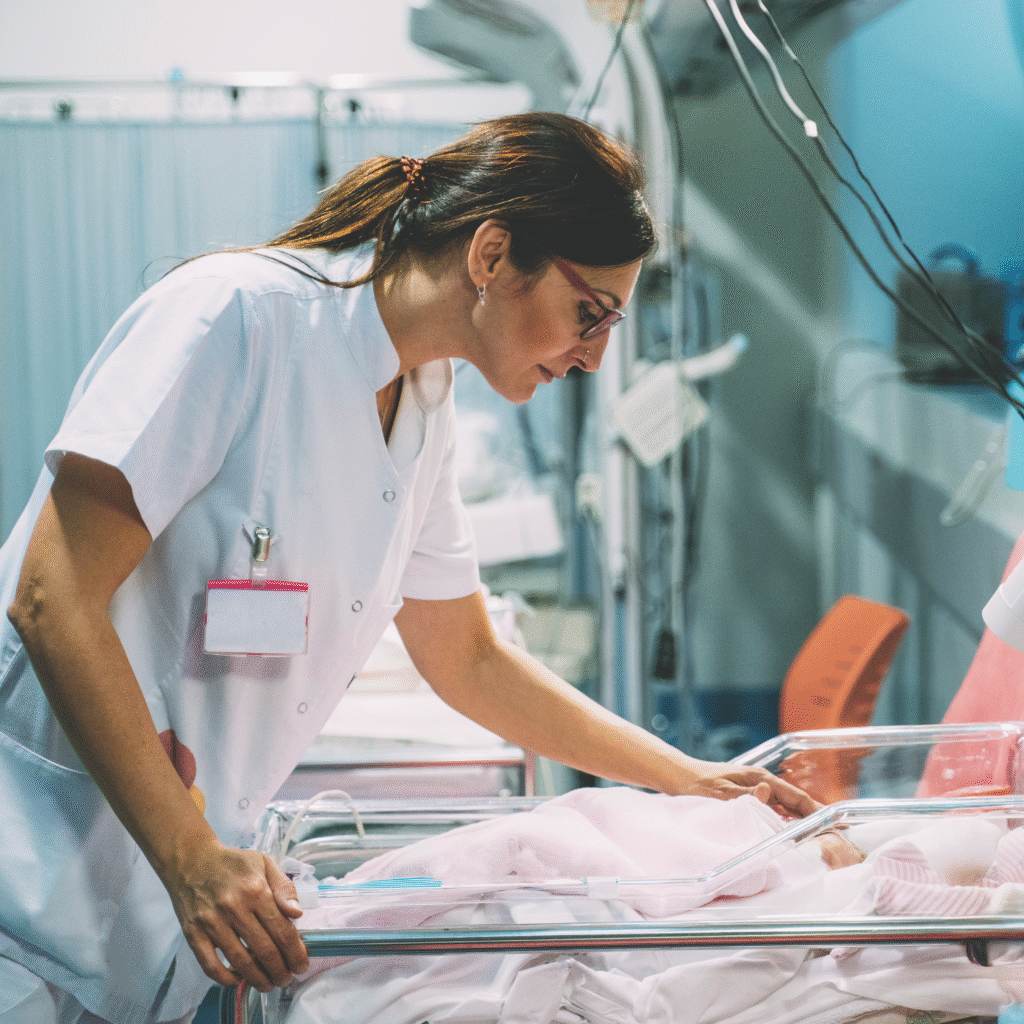
In neonatal intensive care units across the country, critically ill newborns are in a race against time, while families often wait weeks — or even months — for answers. New research from Tufts Medical Center shows there’s a better way.
We explore how rapid whole genome sequencing nearly doubles diagnostic rates in critically ill infants compared to standard testing — and can save the health care system hundreds of thousands of dollars per baby when used early. It’s a powerful example of whole child health in action: faster answers reduce suffering, guide care, shorten NICU stays, and challenge how we think about value in pediatric medicine.
Featuring:
Tara Lavelle, PhD, Investigator, Center for the Evaluation of Value and Risk in Health, Tufts Medical Center
Jonathan Davis, MD, Vice Chair, Pediatrics, Tufts Medical Center
Host/Producer: Carol Vassar
TRANSCRIPT:
Announcer (00:00):
Welcome to Well Beyond Medicine, the world’s top-ranked children’s health podcast produced by Nemours Children’s Health. Subscribe on any platform at nemourswellbeyond.org, or find us on YouTube.
Carol Vassar, podcast host/producer (00:12):
Each week, we’ll be joined by innovators and experts from around the world, exploring anything and everything related to the 85% of child health impacts that occur outside the doctor’s office. I’m your host, Carol Vassar, and now that you are here, let’s go.
Music (00:30):
Let’s go, oh, oh, well beyond medicine.
Carol Vassar, podcast host/producer (00:35):
Hi, everyone. In the neonatal intensive care units all across our country, there are critically ill newborns, often undergoing a race against time to find out the cause of their illnesses. Traditionally, that search could take weeks and might not even yield answers. But new research led by Tufts Medical Center reveals something truly extraordinary. Rapid genome sequencing can pinpoint life-altering diagnoses in nearly twice as many infants as standard testing. And that can bring some relief to families. It can spare them months of uncertainty, their children, months of unnecessary procedures, and certainly, overwhelming costs. This, ladies and gentlemen, is truly a whole child health moment. Earlier answers can guide treatment, connect families with specialists, and community supports. It can inform long-term developmental planning, and even reshape coverage decisions at the policy level.
(01:39):
A lot to dig into today, so joining me to tell us all about this amazing finding are the leaders of this study. Dr. Tara Lavelle is an investigator at the Center for the Evaluation of Value and Risk in Health at Tufts Medical Center and is the lead author of this study. And we’re also joined by Dr. Jonathan Davis. He’s a neonatologist and Vice Chair of Pediatrics at Tufts Medical Center. He’s a senior author on the study we’re going to be talking about. So, welcome to both of you.
(02:11):
Dr. Lavelle, I’m going to start with you. This can be big; let’s talk about that big picture. For those who are listening, walk us through what your team wanted to study and what you found out about using rapid genome sequencing in these very sick newborns.
Tara Lavelle, PhD, Tufts Medical Center (02:29):
Sure. Well, thanks, Carol, for having us, and it’s really exciting to have people hear more about this study. So, I’m a health economist, so I typically work with clinicians and other stakeholders to evaluate the cost and value of healthcare services. And in this case, Dr. Davis and his team were evaluating the value of, well, they were evaluating the effectiveness of rapid whole genome sequencing compared to another test, newborn DX, which is a tested panel of genes that you can look for conditions in newborns, about 1,700 genes. And the idea was to see what the effect was, how the diagnostic rate for rapid genome sequencing compared to this panel of genes that they were testing for. And they found that the rapid genome sequencing actually diagnosed close to half the… Sorry, had double the number of diagnoses compared to the panel. And so, it was very clear that it was very effective.
(03:39):
And we were then tasked, the health economists, with figuring out, well, what is the cost of this? And is this something that will save money for the healthcare system, or is this an added cost? So, we went ahead and did an economic evaluation where we looked at the cost of doing rapid genome sequencing early in a hospitalization, compared to using other standard tests that would be done early, and then only using rapid genome sequencing later in the hospitalization if necessary. And what we found was pretty amazing, that doing rapid genome sequencing early in the hospitalization actually saved about $160,000 per baby.
Carol Vassar, podcast host/producer (04:30):
Wow.
Tara Lavelle, PhD, Tufts Medical Center (04:30):
Yeah. Compared to doing it later in the hospitalization. And I actually have to say that I was really shocked to hear, to see, not hear, but see these results when they were coming up in our analysis. And we asked one of our collaborators, Dr. Stephen Kingsmore, who’s out at Rady Children’s Hospital, if this was actually if he thought these were real numbers coming out. And he is the one who had been running the rapid genome sequencing and really believe that, yes, this is something that could result in this type of cost savings.
(05:07):
So, I have to say, in all of the years that I’ve been doing these types of analyses, I’ve never seen anything that could save so much money. So, it was really an astounding result that we got from the study.
Carol Vassar, podcast host/producer (05:20):
That is an amazing finding. I’m going to turn to the neonatologist with us today. Aside from this amazing savings, what stood out to you with regard to the findings that emerged with regard to this study? What did these results mean about how we diagnose and support these critically ill newborns as we move forward with this information?
Jonathan Davis, MD, Tufts Medical Center (05:45):
Yeah, thank you very much, Carol. It was quite astounding to all of us. It was the first multi-site trial, and what we did is we focused on babies who were sick in the NICU primarily, but we could also enroll babies up to a year of age if they were in the hospital. So, if they were in the pediatric ICU or the pediatric floor. And the only entry criteria, the inclusion criteria for the trial, is that you had to be sick. That was pretty much it. And we wanted to focus on babies, and they could have a blood problem, bleeding, they could have respiratory disorders, they could have seizures, they could have anything, but they had to be sick from it. And we got a lot of pushback from people who said, “Oh, that’s way too broad.” And we said, “Well, we don’t really know what we don’t know.”
(06:40):
And what was staggering about it is when we did the whole genome sequencing in the panel, we made a genetic diagnosis for babies who had a genetic variant that we thought was related to the sickness and the illness, over 50% of the time. So, that to us was quite staggering. And when you think about it, if you make that diagnosis, then we’re not doing all those MRIs. We’re not doing all those blood tests, or spinal taps, or skin biopsies; we’re trying to figure out what’s wrong. We had done many other genetic tests in some of these babies that kept coming back negative. And with the genetics people even saying, “See, I told you, there’s nothing genetic here.” And then we would get the whole genome sequencing test back.
(07:35):
So, initially, we got lots of pushback from the genetics people who thought this was not a good idea, and by the end of the study, they were saying, “Gee, let’s enroll more kids, because we’re shocked to see how many kids that we didn’t think had a genetic diagnosis who actually did.”
Carol Vassar, podcast host/producer (07:53):
And is that where the savings comes in, from not having to do additional testing, not having to do additional treatments, or getting to the right treatment earlier? I guess the question is, what happens when a family receives an earlier diagnosis? What changes for them?
Tara Lavelle, PhD, Tufts Medical Center (08:13):
Well, I mean, from an economic standpoint, what we really saw was that having the test early really got these babies home faster. And what was shocking to me, and I know a lot of other people question this, but it really didn’t matter if they got a diagnosis or they didn’t, in our analysis. What really mattered is that they got a test, they got rapid genome sequencing, and they got a result, either they got a diagnosis or they didn’t. And these babies went home much earlier than the babies that didn’t get a test early. And so that savings, I mean, the NICU is incredibly expensive. So, getting these babies home earlier, like you said, without the additional testing, is really what saved the money. So really, that short length of stay was really driving these cost savings.
Jonathan Davis, MD, Tufts Medical Center (09:07):
Yeah. We could only make specific medical changes to about 20% of the babies, and sometimes that was miraculous.
(09:17):
We had one case where a baby was having terrible seizures, and we were trying every medication that we knew to stop them and couldn’t. And so we enrolled the baby in the study, we made the diagnosis, it was a vitamin deficiency, a simple vitamin B6, pyridoxine; the enzyme that activated that vitamin, so the brain could use it, was missing. And we had the baby in a coma, and it turned out, the mother said to us, “Oh my God, this is happening to us again. Four years ago, we had a baby who died at nine days of age with seizures, and they never made a diagnosis.” So, we gave the baby the activated vitamin, and literally within two hours, all the seizures stopped. We stopped all the medications, the baby woke up, started drinking a bottle, and went home a few days later like nothing had ever happened. So, it can be that powerful. But there aren’t always cures available for some of these rare genetic diseases in children.
(10:30):
And what I’m proudest about for Tara and her study, and really thank the NIH and NCATS for funding this, because we were received $8 million to do this trial, was understanding that you can really make a change if you identify these babies earlier. Tara’s right, that there’s much less testing that’s done. If there is a trial or a treatment, you can start it right away way. But then sometimes it’s a lethal disorder, and nothing’s going to cure this, and so you’re sending the baby home earlier without any more testing because you know what the problem is, and you send the baby home for comfort care with the families. So, it has the opportunity to save many babies and also has the opportunity to withdraw care that isn’t going to be helpful and not curative in any way.
(11:35):
What’s most important is it gives the family some understanding of what they’re dealing with. And in many cases, the most astounding thing is that we made diagnoses in the parents of a genetic disorder that they never knew they had. And in one particular case, I sat with a mother, and I said to her, “Do your legs ever swell?” And she looked at m,e and her mouth dropped open. She looked at her mother sitting next to her. She said, “How did you know that?” She said, “We’ve been going to doctors for 30 years, my sister, my mother, and I, and they have never… We’ve had so many tests done, they can’t make a diagnosis.” But it was that diagnosis, so we answered the question for them.
(12:20):
So, it’s been a very powerful tool that can really make a lot of difference for the family, and yet save a tremendous amount of money at the same time.
Carol Vassar, podcast host/producer (12:31):
A powerful tool in a very stressful moment, an emotional moment for parents. Your child is sick, your child is in the NICU. How do you work to communicate this complex genomic information in a way that families are going to understand, honors what families are going through, and builds that trust on what could be some of the hardest days of their lives?
Jonathan Davis, MD, Tufts Medical Center (12:57):
Yeah. We try to do some counseling and genetic counseling, either with the genetic counselors or geneticists, if they’re available. Some units are using the neonatologists to do this, because we’re the ones seeing these patients first and bonding with the families early on to talk to them. We really try to reassure them that we may not find a diagnosis. If we do, we can talk to them about what’s going to be necessary.
(13:30):
Many times, it’s directing them to other families whose children have a similar problem. And yet in our study, over 130 of these genetic variants were novel; they had never been reported before. So that was the challenge, as more and more people are doing this genetic testing and uploading the data to databases, when the computers search these databases to try to say, “Is this diagnosis real? Are the symptoms and signs that this baby have consistent with this?” Then now that they can see it, before it wasn’t there. Now they can see it and say, “Okay, yes, there’s another baby in Boston or another baby in Pittsburgh who had this, so now we think this is the correct diagnosis.”
(14:22):
And then the geneticists sit with them afterwards. We think it’s important before, because we ask them if they want to know about any secondary findings for themselves. So, do they want to know if we identify a genetic problem? And Tara, I don’t think your analyses looked to what money could we even save with the mothers that we made or fathers the diagnosis who then they can get proper treatment for the first time in their lives. And I’ll let you comment on that. But certain mothers, for instance, we found the BRCA gene, which gives them an increased risk of breast cancer or ovarian cancer, and then they got specific genetic counseling.
(15:09):
And one time, we had a baby at one of our centers who was bleeding significantly. We sent the test off, and they were going to the operating room because the baby was bleeding into the abdomen, and they wanted to try to stop the bleeding. And we made it a diagnosis of a specific bleeding disorder. So, before they went to the operating room, they were able to give the baby a specific transfusion of bleeding coagulation factors that would help the baby and prevent complications during surgery. But then, as we were looking, as they were literally taking the baby to the operating room, we found the gene just by accident for malignant hypothermia. And that’s a condition where if a baby gets traditional anesthesia, that their temperatures can elevate to over 105, and they can die from this. So, they canceled the surgery, returned to the NICU, met with anesthesia, came up with a new plan with all different treatments, and then successfully operated on the baby the next day.
Carol Vassar, podcast host/producer (16:25):
So, you saved the baby not once, but twice.
Jonathan Davis, MD, Tufts Medical Center (16:25):
Correct, and the Associated Press did a big story on that family as part of this. We’ll have to send you the link for that.
Carol Vassar, podcast host/producer (16:32):
I would love to put that in the show notes for our listeners.
(16:35):
Dr. Lavelle, talk about, I don’t know if you’ve studied some of the secondary savings by diagnosing some of the parents or maybe even the grandparents of these children. Speak to that.
Tara Lavelle, PhD, Tufts Medical Center (16:46):
Yeah, we have not studied that directly. I know that other groups have studied this, and it is an area of a lot of interest, this idea of cascade testing. So, if you know that the child that was tested has a certain disorder, like Dr. Davis said, testing the siblings and the parents and grandparents can often really help those other family members. And parents do really talk about this, in terms of one of the benefits they see in the test. And so like Dr. Davis said, we didn’t study that, but there are a lot of other benefits parents talk about, in terms of how they have perceived the benefit of this, that cascade testing is one of them.
(17:32):
The other thing that they talk about in other work that I’ve been a part of or worked on is the ability for their family planning to be able to understand the risk for genetic diagnosis and be able to plan with that in mind. So there is a lot here, a lot of benefits that we didn’t study, and I think it just adds to the story of really what the value is to families and society.
Jonathan Davis, MD, Tufts Medical Center (18:02):
And Tara, maybe can you can just… I just wanted Tara to comment on the fact that, actually, the testing was more expensive initially with whole genome sequencing, yet you still had these tremendous advantages. So, I thought you may want to just address that briefly, Tara.
Carol Vassar, podcast host/producer (18:21):
Dr. Lavelle.
Tara Lavelle, PhD, Tufts Medical Center (18:22):
Right. So, thanks for bringing that up. The tests, the whole genome sequencing, is about $10,000 upfront cost. And the tests that we were comparing it to do an upfront panel, panel gene or gene panel, is about $2,500. And I think that is what is really becoming an issue for insurers, that they’re just looking at an upfront cost and they’re saying, “Well, this whole genome sequencing costs $10,000. You can do this other cheaper test, even this panel test, for $2,500. Why should we pay for this additional test?” And what we were really able to show is that by following these children and their families for a year, we were really able to capture not just the fact that they went home early in that initial hospitalization, but that we continued to see cost savings for them throughout the year.
(19:24):
And that is really important, that year timeframe, because that’s really how a lot of insurers and Medicaid programs make their decisions. They really want to know, what are going to be my costs for next year? That can drive a lot of health economists crazy because we really want to look at, what is this long-term. I did another study before that said, well, what is the cost savings over 10 years? What’s the cost savings over a lifetime? And actually, what I found out is that Medicaid didn’t really want to know about 10 years or a lifetime. They really just wanted to know about next year. And so, we were able to say, “Well, this is going to cost you more upfront, but this is what the savings is going to be for you over the year.” And we’re continuing to have those conversations because these results were just published recently. We actually haven’t been able to talk to a lot of Medicaid departments about this result specifically. And I think it will go a long way to getting this covered in more states and by more insurance groups.
Jonathan Davis, MD, Tufts Medical Center (20:27):
And that’s the real frustration for us as clinicians. We have a test that we know can get us a diagnosis, not in every case, but much more frequently. And many times, we’re forced to send other tests like blood tests or these panel tests or other genetic testing, and it sometimes takes weeks where we’re keeping the baby in an intensive care unit and caring for them full out, trying to make a diagnosis, trying to care for them. They were on ventilators, they’re receiving maximal levels of care, and then the panels come back negative. And then now we have to say, “Okay, well, let’s send this whole genome sequencing.”
(21:11):
And study after study is showing that this is the best test. And we’re really frustrated that insurers still are saying, “We don’t want to pay for this. We’ll pay for six MRIs, we’ll pay for $100,000 worth of testing, but we won’t pay for this one $10,000 test.” And that’s really short-sighted, because we think it can make such a difference. So, these are really important concepts to bring to your listeners.
Carol Vassar, podcast host/producer (21:43):
At the policy level. What do you think needs to change or even at the payer level, to ensure that each infant who needs this test, which brings about a cost savings, which brings about better outcomes, is actually getting it?
Tara Lavelle, PhD, Tufts Medical Center (21:58):
I will say that really, payers need to understand what are the total costs. And when I say total costs, I mean not just the, well, the upfront costs, which is going to be $10,000 for this test, but the savings that they’re going to see over the year, and they really need to see those numbers. And one of the benefits of this study is that we actually collected data from every single infant that was enrolled, 400 infants over the course of a year. And we surveyed the parents every single month, we asked them about their doctor’s visits, their emergency room visits, their medications. I mean, we really collected very, very detailed data, and we did this for an entire year, so that we really now have very detailed information about what those long-term, well, one-year costs are, which is something that I think will go a long way to changing policy.
(22:56):
But I will say that it’s also very frustrating in the United States that every single Medicaid department makes their own decision about this test. So, when you think about the conversations that I’ve had, I’ve talked to people in Connecticut, New York, Florida, Massachusetts, and I think New Jersey. And every single one of those tests, we do a presentation, and we say, “Here’s the upfront cost. Here’s the cost that you can save.” Talk to them, answer their questions. But it’s an extremely time-consuming effort that goes beyond our research, and I think it’s very worthwhile because I have learned a lot about how they’re making decisions.
(23:38):
I also understand their frustrations, that they have a limited budget and they’re really trying to do the best they can. They often see the benefit here, but they really need this data that we’re giving them, truly make the case that this should be covered. So, I don’t think the state Medicaid departments have it easy either, but I think that we really need to inform them and inform them about what they can save over a year if they use this test.
Carol Vassar, podcast host/producer (24:06):
Money seems to be, and coverage seems to be, one major obstacle for using this. A lot of promise with this particular test, a lot of questions around it. Let’s talk about consent, privacy, long-term implications for individual patients and families. What are the concerns there?
Jonathan Davis, MD, Tufts Medical Center (24:28):
Yeah, we go through a very detailed consent process with them first, because we want them to know that when the genetic sequencing is done, we upload it to NIH and other databases, so that computers looking for other patients’ data and searching their genome can say, “Oh, okay, here’s this variant. Here’s a patient in New Mexico that has that. We see their data.” So yes, this is what you have, and we can make that diagnosis.
(25:00):
The problem is, even though we de-identify it, is genetic data truly de-identified? And as we know, there’s real ethical concerns as for instance, law enforcement is using these datasets to search for people who have done things that they shouldn’t have. We want people to know that there’s even a possibility if insurance companies find out that you’re carrying a specific gene that puts you at risk, what does that do to your future insurability? Do you want to know secondary findings? And for the children, why should we release any information about what happens to them when they get older? Shouldn’t we wait until they’re old enough to consent for themselves when they hit 18? Right now, parents and we are making the decisions for those babies, but if we’re going to say to them, “Well, you have the gene for Huntington’s chorea or for ALS,” or some other really bad disease, and an insurance company says, “Oh, I don’t want to touch that,” So, it is complicated. We’re hoping that the laws will change to keep up with the technology, but it is complicated.
(26:18):
You’re right, the ethical issues need to be addressed. There are some that feel that we should be sequencing every baby born in the United States, instead of doing newborn screening, which gives us a very limited number of diagnoses to act on. Sequencing might give us thousands and identify these children very early, and there’s some people who feel that that’s the next area to attack, because then we can really identify babies early, treat them early if the treatments are available, and improve their outcomes. Because many of these diagnoses, the earlier you treat them, the better the long-term outcomes are, but that’s only if you identify them early. If we didn’t do this test, many of these babies could go four or five years without getting a diagnosis. And when they do, maybe it’s too late to really make a difference.
(27:19):
So, it’s very complicated. The ethics, we’re still thinking and learning about, and trying to decide the safest way to move forward. Taking into consideration the well-being for those families, and specifically, that child who isn’t able to give consent.
Carol Vassar, podcast host/producer (27:40):
Dr. Davis, that brings up the question of, what are hospitals facing who are considering using this test or maybe are already using this test from either a clinical perspective or an operational standpoint? It sounds like some of the challenges you’ve laid out are at the hospital level. Are there others that hospitals are facing in making this available, this rapid genome sequencing standard practice in the NICU?
Jonathan Davis, MD, Tufts Medical Center (28:07):
Yes. And I’m going to then let Tara add to that. There are some states where it’s mandated that you have to cover this, so that makes it easy, because then Medicaid and the insurance companies are covering it. But for my hospital, for instance, we have to get approval every time we want to do this. And hospitals with tighter margins, let’s say, who aren’t quite as wealthy, are much more reticent to spend that $10,000 up front. It’s studies like Tara’s that are saying, “Well, you really can save a lot of money if you do this, so be smart. You might have to eat some of those costs up front, but you’re going to save in the long run.”
(28:50):
One of our investigators from our GEMINI study moved to Indiana, and she’s in Indianapolis at Riley Children’s, and she set up a study where they sequenced every baby admitted to the NICU over a one-year time period who was sick, and they found that they saved over $17 million in the first year along by doing this. So I think it’s, we’re just starting to really look at the tip of the iceberg. And I think as these systems change, we find it very frustrating to have to contact individual insurance companies. And I spoke to a medical director of one of the larger insurance companies, who told me he wasn’t willing to pay for it after I described the patient, and we went ahead and did it anyway; the hospital decided that it was worthwhile. There was a lethal form of muscular dystrophy that was diagnosed, and we were able to stop treatment and send the baby home with the family.
(30:04):
And I contacted that same medical director afterwards and said, “Okay, well, we made the diagnosis. We’ve just saved the family, tremendous strife, and you millions and millions of dollars in costs because that baby might’ve received long-term treatment in a facility, not knowing what the diagnosis truly was.” And the person said, “Thank you very much for doing this, but no, we’re still not willing to pay for it.”
Carol Vassar, podcast host/producer (30:35):
Still a lot of people to convince, it seems.
Jonathan Davis, MD, Tufts Medical Center (30:36):
Correct.
Carol Vassar, podcast host/producer (30:38):
As we close out here today, I want to ask each of you a two-part question. I’m going to start with Dr. Lavelle. As we look ahead, where do you see the most significant opportunities to integrate genomics into broader child health, and where does the research go next?
Tara Lavelle, PhD, Tufts Medical Center (30:59):
That’s a great question. I think first of all, in terms of implementation, I think there has been a lot of research on doing genomic sequencing for sick babies in the NICU. And what we really need to do, as Dr. Davis said, is really convince payers and hospital administrators that this needs to be done, both from a health perspective and also from a cost perspective. That this is really just a win-win situation that you really very rarely see in healthcare. I mean, there’s very few things that save money and improve health. So, I think from that perspective, looking at genetic sequencing in the NICU, we really needed to start thinking about implementation.
(31:44):
And then, as Dr. Davis alluded to, there is a lot of work going on now in the US and in other countries, as he said, about integrating genomic sequencing as part of a newborn screening program. But as Dr. Davis also alluded to, there’s a lot of unanswered questions there. And there’s a study that I’m trying to get funded from the NIH, along with collaborators from several other institutions, to look at these ethical, legal, economic as my part, and clinical implications of doing genomic sequencing as part of newborn screening.
(32:23):
So, I think we have to remember, and I always think about this, that we’re still in the very, very, very early stages of this field, where we’re really trying to get answers to a lot of important questions. And we need to understand that a lot of this will evolve; it’ll probably evolve slowly with laws that come into place. But for now, I think we have identified a really important group of children that really need this test and can really benefit from it. And my first goal would, I’d love to just see every baby who can benefit from this test to get in.
Carol Vassar, podcast host/producer (32:59):
Dr. Davis. Final word, essentially, what does the future hold here?
Jonathan Davis, MD, Tufts Medical Center (33:03):
Yeah, I think the technology is changing so quickly. In our study, 51% of the babies, we were able to find a genetic variant, many of them with what we call variants of uncertain significance. The computers thought they were in genes that responded to what that child’s findings were, the phenotype, but they weren’t certain, because maybe it had never been seen before. So, I think as we get more and more data, the diagnostic rates are going to get better.
(33:41):
The technology, when you think about Francis Collins, the former director of the NIH, who led the Human Genome Project, and I think it took $30 million and three years to sequence the first genome. Now we have it down to about three or four hours to sequence the genome. We’re using artificial intelligence and machine learning to search the genome better. People are looking at the downstream from the genes, the proteins, or the omics associated with that. So, the technology is changing so quickly. We hope to be able to make many more diagnoses, but we also have to recognize that we have to look at the costs, which are coming down very quickly as well, which is terrific.
(34:33):
But how are we going to keep up with all the ethical issues and the consent issues so families understand? And how are we going to develop more rare treatments? If we can make these diagnoses, I think the opportunities, because when you put one gene in, some people have said, “Oh, it’s easy. We’ll just take that gene out and put another one in.” It’s not quite that simple, but I think the opportunities once we develop these treatments there that we can make a significant impact and improve the outcomes for many, many thousands and thousands of babies each year born with rare diseases and help their families. But we have to be cautious on how we proceed.
Carol Vassar, podcast host/producer:
Neonatologist Dr. Jonathan Davis. He’s Vice Chair of Pediatrics at Tufts Medical Center. He’s also the senior author of a new study on the value of rapid genomic sequencing for NICU babies. We also heard from Dr. Davis’s colleague and the study’s lead author, Dr. Tara Lavell. She’s an investigator at the Center for the Evaluation of Value and Risk in Health at Tufts.
Music:
Well beyond medicine.
Carol Vassar, podcast host/producer:
Thanks so much to both Dr. Davis and Dr. Lavell for sharing the incredible results of this study. Links to the study and to the Associated Press article mentioned in our conversation are available in the show notes for this episode. And as always, we appreciate you for listening. As I said in my introduction, this study is truly a whole child health moment.
There is so much happening in this space, and our goal is to learn as much as we can about these advances and report back to you by featuring leading experts in pediatric health, especially anything that happens outside the clinical setting that affects kids’ health. If you know of such a story or such a guest, let us know. Email us at [email protected] or visit our website: nemourswellbeyond.org, and leave us a voicemail while you’re there. Catch up on previous episodes. Subscribe to the podcast. Subscribe to our monthly e-newsletter and leave a review. That’s nemourswellbeyond.org. You can also catch the podcast by subscribing on your favorite podcast app or by visiting the Nemours YouTube channel.
Our production team this time around includes Lauren Teat, Susan Masucci, Cheryl Munn, and Alex Wall; video production by Britt Moore; audio production by Steve Savino; and yours truly. Join us next time as we learn what GE Health is doing to enhance maternal and fetal monitoring. It’s amazing stuff. I’m Carol Vassar.
Until then, remember. We can change children’s health for good, well beyond medicine.
Music:
Let’s go, oh, oh, well beyond medicine.