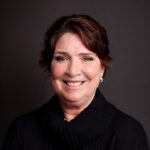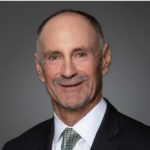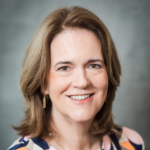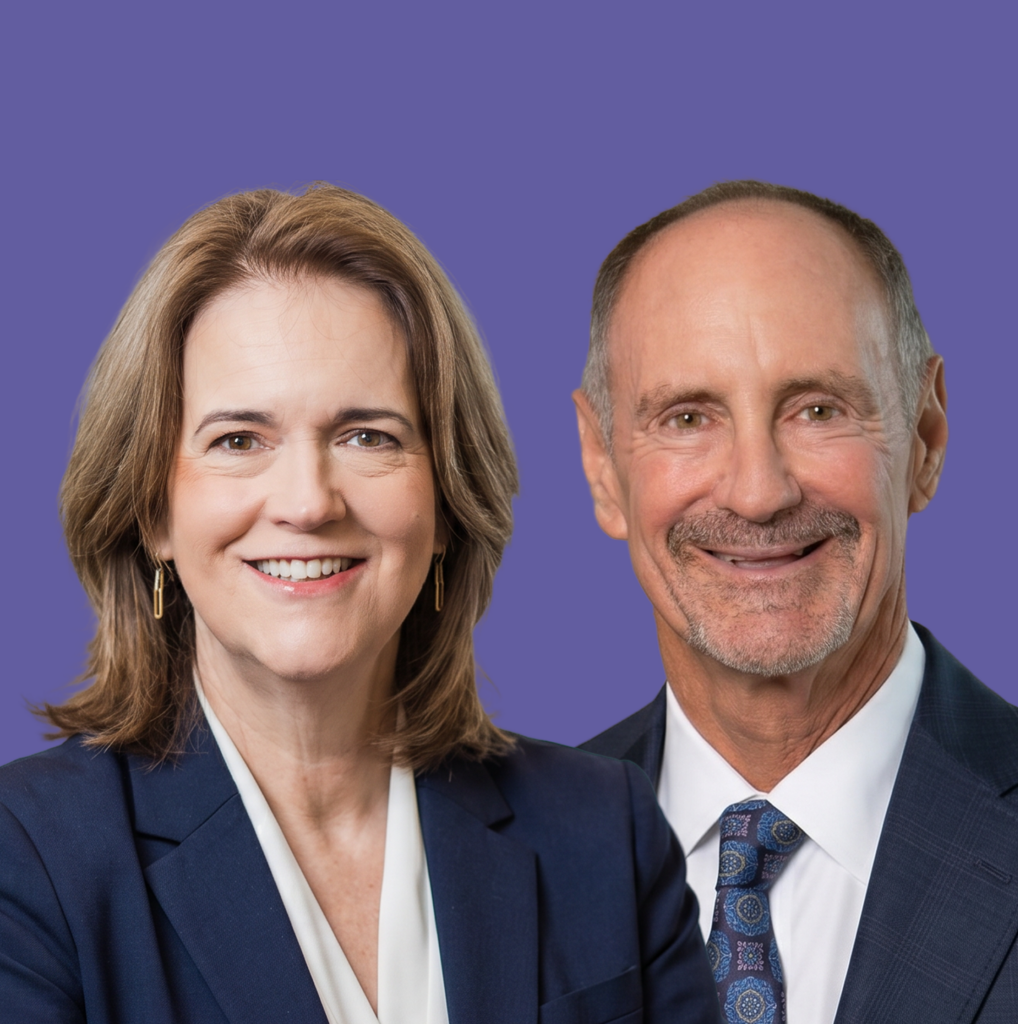
Leadership Dialogues is a limited series from Well Beyond Medicine in which Larry Moss, MD, FACS, FAAP, President and CEO of Nemours Children’s Health, joins host Carol Vassar to engage some of today’s most influential voices in child health, policy and community change. Together, they explore the ideas, partnerships and cross-sector solutions shaping healthier futures for children.
In the opening episode, Dr. Moss and Carol Vassar sit down with Carol Naughton, CEO of Purpose Built Communities — a national leader in holistic neighborhood revitalization — for a conversation that goes well beyond the clinic. They explore how housing, education, economic opportunity and deep community investment work together to transform the environments where children live, learn and grow, and why that transformation is essential to advancing Whole Child Health.
Featuring:
Larry Moss, MD, FACS, FAAP, President and CEO, Nemours Children’s Health
Carol Naughton, CEO, Purpose Built Communities
Host/Producer: Carol Vassar
TRANSCRIPT
Carol Naughton, CEO, Purpose Built Communities (00:00):
When they look at what the data shows us about broadening prosperity and opportunities for people in neighborhoods that were intentionally disadvantaged, everybody wins. Everybody wins.
Carol Vassar, podcast host/producer (00:23):
Hey everyone. If you’re a regular listener, you know we aim to explore all the people, the programs, the partnerships, and ideas addressing the 85% of child health impacts that happen outside of the clinical setting, outside of a doctor’s office. Today, we’re doing something just a little bit different. We’re excited to introduce a new series under the Well Beyond Medicine Podcast umbrella. We’re calling it Leadership Dialogues, and I’m pleased to welcome a very special co-host for these episodes, Nemours Children’s Health president and CEO, Dr. Larry Moss.
(00:58):
Together we’ll be talking with national leaders to explore some of the bold ideas and innovative partnerships that are helping create healthier children and healthier communities. Dr. Moss, welcome back to the Well Beyond Medicine Podcast and welcome to the co-host chair for Leadership Dialogues.
Larry Moss, MD, President and CEO, Nemours Children’s Health (01:18):
Thank you, Carol. Thank you for letting me into your house. I guess you’re actually giving me the keys to your house temporarily, so it’s a privilege to be here. And this series is a unique opportunity to engage in dialogue with some of the country’s most innovative leaders in child health.
Carol Vassar, podcast host/producer (01:34):
Well, I look at it as our house. It is a house where we invite our listeners and our viewers to come in and hear some very special guests, including one we’ll get to momentarily. Dr. Moss, you joined me on the podcast before, but this time you are driving the conversation. Before we get started, I want you to remind our listeners, our viewers, of the philosophy behind whole child health and why it calls for leadership and partnerships beyond healthcare.
Larry Moss, MD, President and CEO, Nemours Children’s Health (02:00):
If there’s one thing I want everybody to remember about Nemours is that we are in the business of creating health, not just the business of treating disease. And that is fundamental and paramount to our concept of what we like to call whole child health, which has three important underlying principles. Understand what health is, pay for health, start with children.
(02:26):
By understanding what health is, we mean 85% of health is not medical care. It’s housing, food security, education, freedom from violence, and all of those other things. Pay for health means we shouldn’t have a system that’s economically driven by delivering as much medical care and as complicated a medical care as we can and get paid for that. We should get paid for creating health, and it should cost us when people are sicker.
(02:56):
And finally, start with children. We think of the major drains on our economy and our society: cancer, diabetes, heart disease, Alzheimer’s. We think of those as adult diseases, but we can spend trillions, and we do, trying to change the trajectory of those diseases in adults, where we can spend pennies in childhood and have a way greater impact. So, we have to start with children.
Carol Vassar, podcast host/producer (03:24):
And this whole series is about talking to leaders whose work is helping to create the conditions and ultimately the healthier futures that create whole child health and ultimately become healthier adults. And our first guest is someone who’s doing exactly that, has been for years, starting at the neighborhood level with an impact really nationally – that ripple effect. And she has a great first name, which is Carol, of course. So, for clarity purposes, I’ll make sure that I say my full name anytime you hear from me. Dr. Moss, I’ll let you do the honors.
Larry Moss, MD, President and CEO, Nemours Children’s Health (04:00):
Thank you, Carol Vassar. And joining us today is Carol Naughton, who is CEO of Purpose Built Communities, which is a national nonprofit that has helped establish and support over 30 neighborhood transformation initiatives. And when I say transformation, that’s with a capital T. They’ve made some enormous differences. Through long-term investment in housing, education, economic opportunity, and overall wellness of the community. Purpose Built Communities has become one of the nation’s leading organizations demonstrating how place shapes opportunity and ultimately creates health.
(04:40):
I recently had the privilege of spending some time with Carol at their National Purpose Built Communities Conference, where I learned a great deal. If we want to have healthier children, we must have healthier neighborhoods. That’s what I came away from the conference learning. Welcome, Carol.
Carol Naughton, CEO, Purpose Built Communities (04:56):
Thank you, Larry. I’m so glad to be here.
Larry Moss, MD, President and CEO, Nemours Children’s Health (04:59):
So, Carol, I got to start out. You started your career as a commercial real estate attorney, and here you are leading a tremendous transformation organization like Purpose Built Communities that cannot have been a linear path. I know we could talk for the whole hour about that, but spend a little bit of time explaining to us why you did that.
Carol Naughton, CEO, Purpose Built Communities (05:21):
Well, thank you. Everybody’s got their own pathway into this work, and mine was through law. I went to law school at Emory Law School here in Atlanta, where I’m based, and it was a great place to go to school, a great place to practice law when I graduated. In fact, when I graduated, the economy was so strong, it was almost like if you could walk and chew gum, people were throwing job offers at you. And I took advantage of that and went to work at a couple of really good firms and learned how to be, I think, a great commercial real estate lawyer over about 10 years of private practice.
(06:02):
But honestly, it was not what floated my boat. I’d look at my colleagues, and I could see how they’d get excited about different kinds of deals they were working on, and I didn’t feel that same way. And I actually had an epiphany during my pregnancy with my second child. In fact, I found out I was pregnant with my second child the night of the O.J. Simpson’s Bronco chase. And I mentioned that because that was important to me in my own journey around equity and what I wanted to do with my life.
(06:38):
And in that process, when I was so sick in bed for those many weeks, I had the morning sickness that used to kill people, but it forced me to slow down. And the only thing I could do was listen to TV. And I listened to CNN almost exclusively, and it was 24/7 O.J. And for me, it was a wake-up call to think about what was I going to do really to help create an America where there were more opportunity for more people? And I really came across that really appreciating the difference between how Black folks felt about how that case should turn out versus how white folks turned out. And it got me going down deeper to understand what might happen, what I might be able to do.
(07:25):
And so, I found out about a job at the Atlanta Housing Authority, which was not the expected path that someone with my background would take, but it was an opportunity to work with some amazing leaders to really reinvent how we delivered the public housing resource and to do it in a way that would no longer isolate and warehouse and marginalize people, which is what had happened to public housing residents in the Atlanta public housing communities. And frankly, it happened in many places across the country. And so, I could take my skills as a commercial real estate lawyer to work with real estate developers, HUD, financial institutions to really create what we now call mixed-income housing.
Larry Moss, MD, President and CEO, Nemours Children’s Health (08:10):
So, that’s a great story. And we’ll get to your organization in a minute, but another personal question is: we all see these neighborhoods that have suffered from decades of poverty and disinvestment, and there’s a stereotypical response, and we typically think we see what’s going on, but you see something different going on. Tell us about that difference.
Carol Naughton, CEO, Purpose Built Communities (08:37):
Well, I have to say, I learned this firsthand up close and personal, and I think I had a lot of the same preconceptions that many people do, that somehow the families were living in poverty because of their own behaviors or their own choices. And I came to realize over the early years of my career in this work that the conditions that people were up against were not really individual; they were environmental in nature: substandard housing, schools that didn’t perform well, conditions that made life really hard, high crime, low income. And I also came to understand that those conditions had largely been intentionally created.
(09:26):
And when you understand that, you really understand that we got exactly what we planned for, and that was making life harder for people who lived in traditional public housing in communities across the country. And I should be really clear, I think we were trying, we being our country, we’re trying to make life harder for Black and brown people. And you can go back to the 1930s and look at the redlining, and all of those policies are sticky. They have long sticky tails. And even though those behaviors and those policies are no longer legal, they have those long sticky tails that continue to influence families and neighborhoods today.
(10:07):
And so, I really came to appreciate that the families that I was getting to know and getting to work with were frankly extraordinary in many ways, extraordinary at figuring out how to survive under very difficult circumstances. And I began to appreciate that they wanted exactly the same thing for their children that I wanted for mine. And we were able to really work together in a series of communities to really understand what that looks like, to build trust, and to be able to really plan for some pretty dramatic transformation.
Larry Moss, MD, President and CEO, Nemours Children’s Health (10:42):
So, with that philosophical underpinning, let’s turn to the organization of Purpose Built Communities and tell us a little bit about the model, the overall execution, what happens out there?
Carol Naughton, CEO, Purpose Built Communities (10:56):
So, as I said, we know what surrounds us, shapes us, and there’s all kinds of data and evidence that backs that up from lots of different social sciences, from medical doctors and other kinds of folks that demonstrate to us that your neighborhood is incredibly influential in what your life outcomes are likely to be. Neighborhoods influence your educational attainment, influence the kind of housing you live in, what kind of crime you might be subjected to, your likely outcomes in terms of income, and even down the road, your life expectancy.
(11:31):
And so, as we started to understand those things and we wanted to figure out, well, what could we do as an organization to put people on a pathway to economic mobility and better health outcomes, we determined that the way we could help was to strengthen neighborhoods in the totality in order to be able to create the kinds of economically diverse, socially connected, amenity-rich neighborhoods that would serve everyone really well and were likely to put the lowest income people and their children on a pathway to upward economic mobility and better health outcomes. So, we actually had to come up with a way to do that.
Larry Moss, MD, President and CEO, Nemours Children’s Health (12:12):
So, as a society, we talk about housing, education, food and nutrition, healthcare, economic opportunity as separate things. In fact, we even organize our government into separate cabinet departments around those things. At Nemours, we call all those things health. What do you call them at Purpose Built Communities? And how did we, coming from such a different perspective, arrive at the same place?
Carol Naughton, CEO, Purpose Built Communities (12:41):
Larry, you were so spot on here. Sometimes we think of those things in the same language that you do, the social determinants of health, right? We also sometimes think about them as the social determinants of wealth. And I would argue you can’t have health without wealth, and these things are incredibly connected.
(13:01):
And so, for us, we wanted to think about, well, if we know what surrounds us, shapes us, how do we improve the conditions, the foundational conditions that people are living in where they live, work, play, learn? How do we improve those conditions so that neighborhoods become springboards, if you will, to prosperity rather than places that throw up obstacle after obstacle? And we developed a really specific model around this.
(13:29):
So, you mentioned some of the elements of our model, but first I want to start with the idea that we are resident-centered in this work, and we know that residents who live in the neighborhoods where we are invited to work. They know what they want to see happen in their community. Oftentimes, no one has asked them, or no one has asked them and then been willing to stick around and try to figure out, well, how could we achieve that?
(13:53):
And so, we center resident voice and power in all of the work that we do and, in our work, when we execute with local leaders and residents, of course, this model, you will see high quality mixed income housing, which serves people really beautifully across a broad range of income. So, we’re no longer warehousing or marginalizing or isolating people based on their income.
(14:20):
We create a neighborhood serving cradle-through-college education pipeline that starts with really high-quality early learning opportunities for every little genius and gets them all ready for elementary school, middle school, high school, and we expect everyone to graduate from high school with a financiable, actionable plan for post-secondary education. We think about economic vitality at the neighborhood level. How does money flow? How are families doing financially? All those kinds of things.
(14:53):
And we think about community health and wellness. And I want to come back to this because it’s not merely access to healthcare, which is critically important, but it’s all the other things that contribute to our sense of well-being and health. And we have a secret sauce that makes all this work, and you’re very familiar with it because you know our friends at REACH Riverside, and that’s the idea of a community quarterback organization that I think about as the neighborhood strategist. It’s the organization that’s not in the direct service business, but it’s thinking about how do we bring all of the partners together to be able to implement this long-term cross-sectoral, really disruptive model to put people on a pathway to a better life?
Carol Vassar, podcast host/producer (15:38):
You are listening to Leadership Dialogues, a special edition of the Well Beyond Medicine Podcast featuring Nemours Children’s Health President and CEO, Dr. Larry Moss, in conversation with Carol Naughton, CEO of Purpose Built Communities. I’m Carol Vassar. So far, we’ve explored why neighborhoods matter. We’ve talked a little bit about the research that shows that communities and neighborhoods matter. Next, we’re going to take a closer look at some of the things Carol just talked about that relate to the purpose-built model itself and what it takes to create lasting change. Dr. Moss, back to you.
Larry Moss, MD, President and CEO, Nemours Children’s Health (16:17):
Carol, as we finished our conversation in the last segment, you said a magic word, quarterback, that really caught my attention. We at Nemours continually contend that children’s healthcare organizations can and should be the quarterback of child health in communities. In many, many ways, Purpose Built Communities is a quarterback. Let’s talk about that concept of quarterback. And in your opinion, what authority must the quarterback have and what authority must the quarterback deliberately give away to be effective in this realm?
Carol Naughton, CEO, Purpose Built Communities (16:54):
Yeah. Well, thank you. I just want to make one small clarification. I would describe, in our model, REACH Riverside, for example, is the community quarterback in REACH Riverside, and we coach the community quarterback. So, I think of us more as a coach and a thought partner and an advocate with our network members than as a quarterback ourselves.
(17:18):
But having run a community quarterback and coaching them, I have some very strong opinions on the question that you just asked. How do you first develop the relationships and create an authentic opportunity to be that quarterback in the community? Because nobody’s really inviting you over and saying, “Hey Larry, come be my quarterback.” So, you really have to build some authentic relationships where residents and their partners understand the value proposition that you might be able to bring. What can you do? And just as important as what you can do, how do you do it? Do you do it in an authentic relationship with the community, or do you think you have all the answers in the whole world and you’re going to do it to them?
(18:09):
And we’ve really worked hard to recognize that so many of the answers are held by people who live in the neighborhoods where we’re invited to work, and we want to hear from them. We want them to inform us and help us become better servant leaders, if you will, in helping to create the opportunities that will put more people on a pathway to a happy, choice-filled life.
Larry Moss, MD, President and CEO, Nemours Children’s Health (18:34):
So, from my perspective, Purpose Built Communities is really a dream turned into a reality, and you started with this dream that we actually can make a difference and change these communities. Tell me about the instant when you first realized, “Hey, this could actually work and we got something here.”
Carol Naughton, CEO, Purpose Built Communities (18:54):
Yeah. I guess I became the CEO of the East Lake Foundation in 2001, and at that point, the revitalization was about in year six. And so, a lot of the capital projects were built, the new housing was built, there was a new elementary school then been built, the YMCA, the Early Learning Center, the Publix grocery store, all of those things were there. And my job was, well, how do you help all of these folks work together with residents to drive great outcomes for everybody?
(19:33):
And over the years, I was there for seven years, our data got better and better, and people kept coming to see us, and they’d say, “Oh man, this is really cool. We want to do it too.” And the East Lake Foundation, where I worked, did not have the bandwidth to do that itself. And so, with support from the Cousins Family Foundation led by Tom Cousins, who had started the East Lake Foundation, we did some exploration to see whether or not we could start a new organization that could take what we had learned in East Lake and help other people do the same.
(20:09):
And so, as part of that process, I had been invited by these wonderful leaders in New Orleans after Hurricane Katrina to help them think about whether the work that we were doing in East Lake could be a model for the rebuild of part of New Orleans after Hurricane Katrina. And the East Lake Foundation board freed up about 30% of my time to be able to work very closely with these leaders to really see if that was possible.
(20:38):
And that was our aha moment that if we rolled up our sleeves and worked alongside local leaders, really walked side by side with them, helped understand the challenges and problems, understood what the range of solutions might be, and allowed them to make the decisions about what would happen in their community because they will always know their community better than anybody from the outside will. That was really our aha. And so, we took that experience, and really, between East Lake and then the Bayou District Foundation’s work in New Orleans, that really was the impetus to start Purpose Built Communities back in 2009.
Larry Moss, MD, President and CEO, Nemours Children’s Health (21:20):
So, Carol, Purpose Based (Built) Communities focuses on overall community development and decades of success with that. What has that experience taught you specifically about child health?
Carol Naughton, CEO, Purpose Built Communities (21:35):
Oh yeah, yeah. Oh, that’s such an interesting and appropriate question. I think when we first started the work, we were really thinking about wanting to overinvest in support for children, but we didn’t appreciate all of the conditions that impact kids until we started working with some pediatricians in different places. And there’s something special about you guys who treat children and who care for children. You see the impact of conditions that kids live in as being impactful for their health, I think in a way that is faster than many other doctors.
(22:14):
And so, when I look around the world at the medical professionals who have influenced me, they’re all pediatricians. And from Doug Jutte, who’s been my mentor, who was a pediatrician who is based out in California and now is in New York, and Jack Shonkoff, and you, Larry, and others, you are the folks who are really thinking about the connection between the environment that kids live in and their health outcomes. And so, I look to all of you as my mentors in understanding this.
(22:45):
I’ll tell you a funny story if you don’t mind. Our former CEO and board chair was Shirley Franklin, who is the former mayor of Atlanta, and Shirley is truly one of my heroes. And Shirley had been asked to serve on the Robert Wood Johnson Foundation Commission on Building a Healthier America. It was probably, what, 10 years ago, maybe 15 years ago, when that work was being done.
(23:11):
And I was of the opinion that we were not in the health outcomes business, that we were doing housing and we were doing education and we were doing YMCAs and all those things. And we were thinking about what we used to call breaking the cycle of intergenerational poverty. And Shirley would come back, and she’d say, “Carol, you are totally in that health outcomes business.”
(23:32):
And then she’d start throwing down books on my desk from the Robert Wood Johnson Foundation Commission to Build a Healthier America. And that was part of my moment of going, oh my god, just because we haven’t centered access to medical care in every community where we work, we are totally in the health outcomes business.
Larry Moss, MD, President and CEO, Nemours Children’s Health (23:52):
So, everybody loves the language community partnership. It’s mom and apple pie and puppies and what’s not to like. But then when you try to execute it, you find that institutions still protect their own priorities, their own funding streams, their own infrastructure. Where does collaboration actually break down, and what do you do when it breaks down?
Carol Naughton, CEO, Purpose Built Communities (24:15):
I think in our world at Purpose Built, when we’re working and supporting a neighborhood revitalization, what we often see are really well-meaning partners who come to the table, most of whom are doing things as part of a bigger organization. Let’s say a YMCA, for example, and there may be a big YMCA function in a metro area. And we would ask that YMCA maybe to do things differently in connection with a purpose-built initiative because of the richness of all the partners there.
(24:49):
Oftentimes the Y has to do it all themselves, and we can say, “No, you’ve got partners here, and let’s all find our roles, and then let’s all figure out how we work together in order to create better outcomes for kids.” And that’s a really foundational role for the community quarterback organization in order to be able to keep people aligned around data and common and shared goals.
(25:13):
What we found out early on is that even these well-meaning partners. There’s an institutional inertia, if you will, that pulls a partner back into wanting to do things the way they ordinarily do it. And we’re saying, “Yes, we understand why that makes sense in 99% of the places where you work, but it doesn’t make sense here. Can you stay committed?” And so, we have worked intentionally in order to help keep those partners at a neighborhood level doing things differently in connection with purpose-built revitalizations, again, because of the richness of the partners and the ability for people to figure out what their lane is, where they really add the most value.
Larry Moss, MD, President and CEO, Nemours Children’s Health (25:55):
And when you’re doing this successfully in multiple locations, roughly what proportion of your effort falls into these are principles and they work nationally and everywhere versus we got to rewrite the book for this particular community?
Carol Naughton, CEO, Purpose Built Communities (26:12):
Yeah. When we first started, we were bespoke, if you will. And what we have learned over time is that we really needed to become more consistent in our model and our coaching. And we’ve done a lot of both evolution and refinement of our model and our approach. For example, I mentioned when I was describing our model, I included economic vitality. We didn’t use to have that as a pillar of our work when we first started; that was embedded in community health and wellness, but it was really important to our network members to really elevate that body of work. And so, we’ve done that.
(26:52):
And so, we’re able to offer support to all of our network members across the entire model and in a much more consistent way than we could when we first started. And we think that consistency is important. At the same time, every neighborhood’s a little bit different, and we’ve got to help people figure out where to start and where the entry point is in a particular body of work.
(27:16):
So, sometimes if you want to figure out what your education strategy, sometimes it might be, there’s a real opportunity to work in close partnership with a local elementary school, and sometimes that place to start in education is around high-quality early learning. So, we will help our network members ascertain where that entry point is and help them develop a strategy to be able to do it. Eventually, we want to get to the whole thing, but it may not be able to start at the same way everywhere.
Carol Vassar, podcast host/producer (27:47):
Now we’ve explored why neighborhoods matter and how Purpose Built Communities approaches transformation. In our final section, we’re going to look more at how communities across the nation can apply these ideas and what success ultimately looks like. Here’s Dr. Moss.
Larry Moss, MD, President and CEO, Nemours Children’s Health (28:04):
So, as a healthcare CEO, success is typically defined as building more hospitals, buying more MRI scanners, doing more operations, and not so much about health. In your organization, you’ve been very strong in your leadership to say, “We’re not trying to create the maximum number of Purpose Built Communities; we’re trying to create excellence in every single one we do.” Tell us about that agenda.
Carol Naughton, CEO, Purpose Built Communities (28:31):
Yeah, thank you for that question. I think there’s always a tension between excellence and scale. And while Tom Cousins, who started Purpose Built Communities, would say, “Carol, I want to see one of these in every community before I die and I’m 90 years old.” So, he was pushing for scale and growth, and he always assumed everyone would be excellent. And what we found is excellence requires a little deeper relationship. It requires a more robust partnership.
(29:04):
And so, we made a decision to become what we call ourselves an impact network, that even though Purpose Built Communities is really two degrees removed, if you will, from the neighborhoods where we’re invited to work, we take responsibility for the outcomes of people in those neighborhoods. So, we measure our success not by how many Purpose Built Community Network members we have, and we want to see that number grow, of course, but how are people doing in the neighborhoods where we’re invited to work? Are kids showing up at kindergarten ready to learn? How are we doing on third grade reading? Can eighth graders pass the math test? Are kids graduating from high school? What does college and career readiness look like? What are family incomes doing?
(29:53):
Housing stability is a huge issue and a metric that we really look at. So, we look at all the things that are indicators, both short, medium, and long term, that give us confidence that families who live in the neighborhoods where we’ve been invited to work are on a pathway to better outcomes. And our big north stars are economic mobility and better health outcomes.
(30:17):
So, it’s all designed to lead up to great economic mobility and better health outcomes. And we measure every year now, and we’re frankly really excited about this. We’ve been working on a new data and evidence strategy the last couple of years and have been rolling it out with our network members and collecting data with their partners. And later this year, we’ll have our first really good assessment of how things are going across the network.
Larry Moss, MD, President and CEO, Nemours Children’s Health (30:44):
Can you talk about the distinction between short-term outcome measures and the long-term outcome measures, which are the long-term are the exciting ones, but they’re outside of the political election cycle; they’re outside of the budget cycle. It’s hard to get traction with those. So, we all have to get enough short-term wins to keep the train running, to get the opportunity to get the long-term win. What are the short-term outcomes that you can focus on and point to real, tangible, this quarter, next year result?
Carol Naughton, CEO, Purpose Built Communities (31:14):
Yeah. Well, I’m not sure I would say this quarter, next year, but I would say things like kindergarten readiness. That’s short-term in terms of, we’ll know that by the time a kid is four or five years old. Well, we know how kids are doing after a year in great early childhood programs. We look at housing stability. We look at teacher retention. These are things that we know you can measure year after year. And if we can reduce transiency, both in the student population and in the teacher population, kids have a much better shot at performing academically.
(31:55):
So, we try to look at the mixture of those things that give us a sense of, yeah, we can say, “Oh, we’ve reduced teacher transiency in the neighborhood elementary school from 75% to 40% over a year.” That’s a huge impact. So, we’re looking at those kinds of things that we can demonstrate to neighbors most importantly and others who care about this work, that there are those short-term measures that can give them confidence that those short-term measures and hitting those targets will lead us towards those big, beautiful outcomes that we want to achieve at the end of the day.
Larry Moss, MD, President and CEO, Nemours Children’s Health (32:32):
And what is the long-term decade or decades from now goal? Is it ultimately to put yourself out of business?
Carol Naughton, CEO, Purpose Built Communities (32:42):
We think there are about 5,000 neighborhoods in cities across this country that need this kind of intervention. And while not everybody is ready for this, we’re working now in 60 neighborhoods. About half of them have become what we call network members, but that means we’re touching just 1% or so of the neighborhoods that need this intervention. And so, this is part of our work coming up over the next year or so is really identifying what are the ways that we might be able to reach more places in an excellent and equitable way.
(33:20):
And so, we’re exploring some of those things that might give us ways to do this with a one-on-many as opposed to the one-on-one that we have done over the last 15 years. I’m curious about what we will decide to test over the next couple of years, and I’m both excited and cautious about that. Again, our model can be disruptive. It is disruptive. I want it to be disruptive. And that means we need to have confidence in the people executing that they are guided by a commitment to residents.
(33:55):
And we can see that when we’re close up in personal relationship, it’s harder to see when we’re doing it one-on-many. So, those are some of the things that we’re going to have to wrestle through to get to the scale that we think is necessary in order to really create a country where prosperity is more broadly shared.
Carol Vassar, podcast host/producer (34:14):
Carol, before we let you go, I’d love the opportunity to ask you if there’s a single message or a couple of messages you’d like leaders across, not just healthcare, but in education, in business, philanthropy, government, policymakers, to take away from the conversation you’ve just had with Dr. Moss, what do you want it to be?
Carol Naughton, CEO, Purpose Built Communities (34:35):
Oh, excellent. Thank you for that. My call to action, if you will, is for funders and other partners to look more holistically about the conditions where children live and to think about what could we do together to strengthen all the aspects that surround a child and that child’s family, whether we’re talking in a rural setting or whether we’re talking in an urban setting where Purpose Built works, in order to create that … I’m just holding my hands up like this, but it’s holding a family and a child gently and loosely and safely in their neighborhood so they have all the access to all of the supports and opportunities that they need.
(35:20):
All the things, frankly, that I’ve taken for granted for my children. I want everybody to have access to great schools, great housing, neighborhood serving retail, and a real sense of hope and possibility about what can happen during my lifetime. That’s what I wish for everybody. Fund that kind of work.
Larry Moss, MD, President and CEO, Nemours Children’s Health (35:40):
So, I got to ask one more question before we do our close. Carol Naughton, you articulated so clearly the deep, pervasive, intentional societal choices we over decades made to create the challenges we have in these communities. Is anything about the work you’re doing going to help stop or reverse those intentions or is it a tide that we’re always going to be fighting?
Carol Naughton, CEO, Purpose Built Communities (36:15):
Boy, that’s a deep question, Larry. I am very hopeful. I think that most people are good people and they don’t want to live and be part of a society that is based on oppression. And so, I think as people learn about some of these activities that took place many, many years ago that none of us actually put in place, but all of us have the opportunity to help remedy and create an opportunity for all people to be able to thrive, I think people want to do that.
(36:51):
I think also when they look at what the data shows us about broadening prosperity and opportunities for people in neighborhoods that were intentionally disadvantaged, everybody wins. Everybody wins whether or not you live in that neighborhood or you live across town. And if we can make both the moral argument and the economic argument about why we should be doing this, that’s going to carry the day.
Larry Moss, MD, President and CEO, Nemours Children’s Health (37:15):
Thank you. So, what I’m taking away from this conversation is that geography doesn’t have to be destiny, nor is opportunity accidental. It can create it through deliberate choices, and that’s what we need to do.
Carol Vassar, podcast host/producer (37:30):
Hear, hear. Today’s conversation is just a reminder that the future of children’s health is not shaped by healthcare alone. It’s shaped by the neighborhoods we build, the partnerships we forge, and the opportunities we create for every child to thrive.
(37:46):
Thank you so much to Carol Naughton, CEO of Purpose Built Communities, for joining Dr. Larry Moss and me, and thank you, Dr. Moss. I’m Carol Vassar. This is the inaugural edition of Leadership Dialogues on Well Beyond Medicine. Now, Dr. Moss, you’re going to be back next month. Another leadership conversation to look forward to. Who’s going to be joining us?
Larry Moss, MD, President and CEO, Nemours Children’s Health (38:08):
So, next time in this great series, we’ll be talking to Kody Kinsley, who is North Carolina’s former Secretary of Health and Human Services and now a distinguished policy leader with the Century Foundation, the Milken Institute, and the Johns Hopkins School of Nursing. I hope that all of you will join us for another great conversation.
Carol Vassar, podcast host/producer (38:28):
And thank you so much to Carol Naughton. Thank you, Dr. Moss, for taking that co-host chair today. I’m Carol Vassar, and remember, together we can change children’s health for good, Well Beyond Medicine.
MUSIC (38:41):
Let’s go, oh, oh.
(38:44):
Well Beyond Medicine.