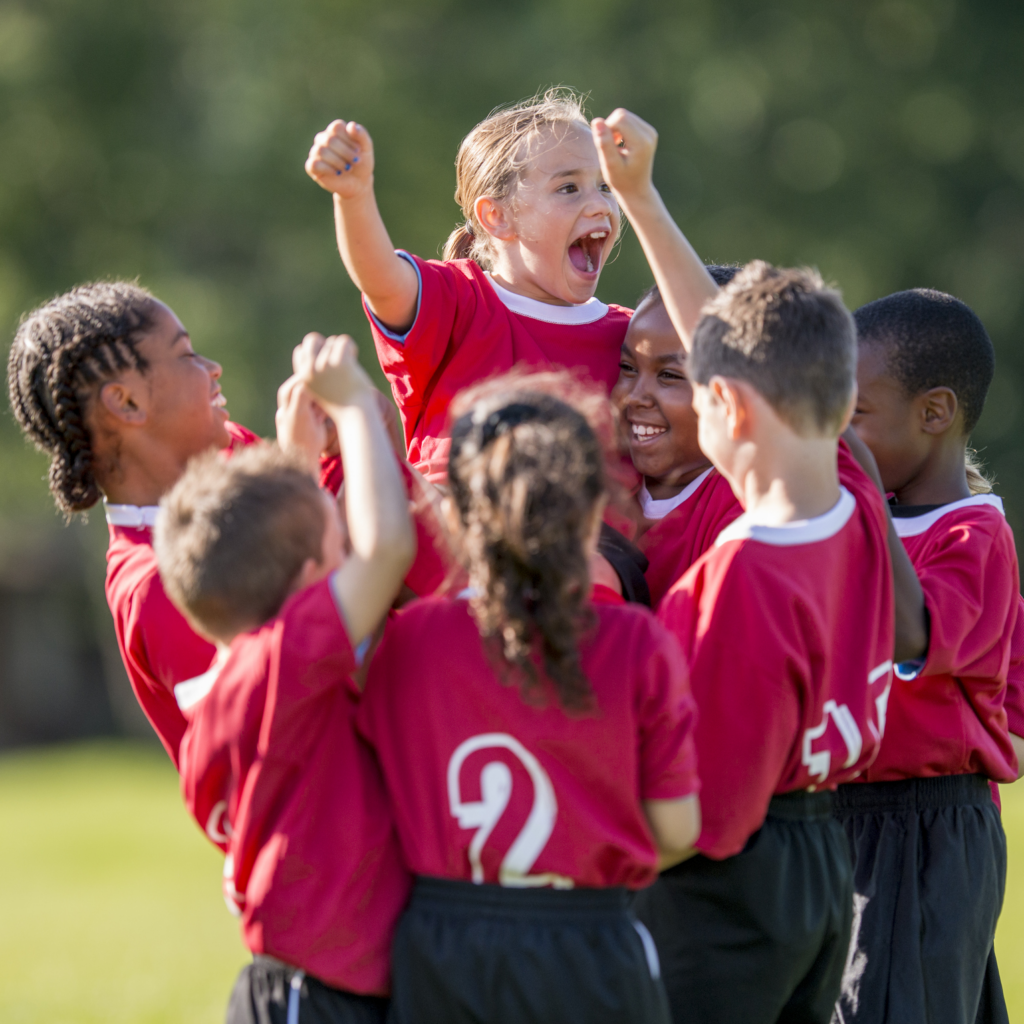
A sports injury can affect much more than a young athlete’s body. In this episode, Stephanie Pearce, MD, explores the emotional side of being sidelined, including the grief, frustration and loss of identity that can follow an injury. Dr. Pearce is a former Director of Sports Medicine at Nemours Children’s Health and a team physician for the U.S. Olympic Ski and Snowboarding Team. She shares how families, coaches and care teams can support young athletes through recovery, build resilience and help them return to the sports they love.
Featuring:
Stephanie Pearce, MD, former Director of Sports Medicine, Orthopedic Surgery & Sports Medicine, Nemours Children’s Health, team physician, U.S. Olympic Ski and Snowboarding Team
Host/Producer: Carol Vassar
TRANSCRIPT:
Announcer (00:00):
Welcome to Well Beyond Medicine, the world’s top-ranked children’s health podcast produced by Nemours Children’s Health. Subscribe on any platform at nemourswellbeyond.org or find us on YouTube.
Carol Vassar, podcast host/producer (00:12):
Each week we’ll be joined by innovators and experts from around the world, exploring anything and everything related to the 85% of child health impacts that occur outside the doctor’s office. I’m your host, Carol Vassar. And now that you’re here, let’s go.
MUSIC (00:28):
Let’s go, well beyond medicine.
Carol Vassar, podcast host/producer (00:36):
We’re at Hot Topics in Pediatrics in Orlando, Florida. I’m Carol Vassar. With me right now is Dr. Stephanie Pearce. Dr. Pearce is a sports medicine specialist and a team physician to the US Olympic ski team. Your specialty is halfpipe, right?
Stephanie Pearce, MD, Team Physician, U.S. Olympic Ski and Snowboarding Team (00:51):
Yep. Snowboard halfpipe.
Carol Vassar, podcast host/producer (00:52):
Well, welcome to the podcast today, Dr. Pearce. I want to talk about, we talk often about the injuries that kids involved with sports will experience. I want to talk more about the mental health side of that and talk about the injuries with regard to how it affects kids and the way they think, the way they think about themselves. And you’ve talked about that emotional impact before. It can be just as significant. What happens psychologically to a young athlete when they have a serious injury, an ACL or a shoulder injury or something else that might affect them for the rest of their lives?
Stephanie Pearce, MD, Team Physician, U.S. Olympic Ski and Snowboarding Team (01:31):
Carol, that’s a great question. So certainly there is the physical aspect of having the injury and kind of getting over the pain. And we’ll take ACL for an example. It’s a beautiful kind of situation and look on the whole perspective. So an ACL injury usually hurts in the first few days, and it starts to feel better, but they don’t have a functional knee. And that adds to some of the mental component, adds to some of the confusion. So usually when you have a knee injury or any kind of injury, you expect that once it starts to feel better that it’s getting better. And that’s not the case for a ligamentous injury. And so once you recover from the acute period, then you start having some continued significant instability anytime you’re kind of turning and pivoting, even with walking, doing normal activities of daily living. And so that starts adding into the beginning part of this mental piece, which is very frustrating.
(02:26):
The other piece of the mental component, especially with ACL, is everyone knows that, “Oh, an ACL injury, it’s something bad. I may not know exactly what that means, but I know that it’s bad and I know it’s significant and it’s usually about a year of recovery.” And so a year recovery, especially for our adolescent athletes, seems like an eternity. And so having that black hole or that black futuristic perspective of not being able to see the light at the end of the tunnel is very, very difficult. So many of these athletes, as they’re coming through this, they come in, we kind of go through the full DABDA, the depression, the anger, the bargaining, the denial, and then finally the acceptance.
Carol Vassar, podcast host/producer (03:05):
It’s grief.
Stephanie Pearce, MD, Team Physician, U.S. Olympic Ski and Snowboarding Team (03:07):
It’s grief. Exactly. And so as they’re going through a difficult diagnosis, you have to kind of pass with them through those grief stages. And with that, having a team around you really helps to do that. But ultimately, I like to help let them know I come along with them; we show empathy, we show that we can gain trust, things like that. And, then, as we’re moving through, I start showing these are the steps. We have actual steps through this process and this protocol that have worked time and time again; it will work for them. And then that way we can move forward to get them back to the field. And I like to give them a little bit more of the focus, as we’re not just getting back to the field, or we’re not just getting back to the court, or back to the snow, or whatever it may be. We’re actually going to try and get them back to better than where they were so that way we don’t end up here again.
Carol Vassar, podcast host/producer (04:00):
Yet in the moment, we’re talking about adolescents mostly in this instance right now; they’re thinking, “Oh my goodness, my future has disappeared.” And that is the denial, the anger, that’s the grief that they’re dealing with. What is the role of the sports physician in that, in all of that and bringing that team together?
Stephanie Pearce, MD, Team Physician, U.S. Olympic Ski and Snowboarding Team (04:22):
Absolutely. So I think I think about it almost kind of like a quarterback. So we’re the quarterback of this athlete’s treatment. We’re the quarterback of this new adventure, if you will, to get from beginning to end into a better happy ending. And so with that, I recruit some of my great friends and some of my colleagues in other specialties. So sports psychology is really, really important.
(04:49):
I think sports dietetics is a really important piece of that too. So bringing in a nutritionist or ideally a dietician that can help go into the whole aspect of what fuel sources are we going to need in these various stages as we get through that. The sports psychology piece is critical. So the ACLs is actually where we piloted our first program, and that’s with the initial diagnosis. We get an initial evaluation with our sports psychologist. We do this a lot with the US ski and snowboard team as well. So really critical to see that even our Olympic athletes are utilizing these resources and being able to create great outcomes and getting back on the snow, back on the field to be able to earn gold medals again.
(05:30):
And so as they’re doing this, and we’ve seen this, it’s in publicity throughout America and throughout the world of seeing many Olympic athletes using the expertise of our sports psychologist to come through that. As a sports medicine surgeon, obviously my main goal is to fix the problem. And that’s one thing that we try and grasp when we’re in a grieving situation. This one’s actually fixable. Many times they’re not. And so obviously there’s always exceptions to that. There’s always difficulties once you have an injury, a devastating injury like an ACL tear or a surgery, something that needs surgery the limb may never feel quite the same again. You might always notice a little difference, but the goal is to get back and get back stronger to where they’re not thinking about their knee again when they’re back playing, or they’re not thinking about their shoulder with that; it may be the injury, et cetera.
(06:22):
So it is a fixable problem. So that happens in the OR, but it also happens in the clinic. It happens coaching through with the PTs, making sure we have a really strong sports physical therapy team around us, critical to make sure that we can get these athletes back. When we have our sports psychology team, the physical therapists tend to see the athlete the most – more than me, more than the therapist, more than the dietician. And so the sports physical therapist tends to have a lot of one-on-one coaching through this process and there’s phases. So with ACL, the first three months they talk about recovering from surgery; they’re getting over the initial pain, the initial swelling, getting their motion back. And usually when they come back at the three-month visit, they’re like, “Doc, you did amazing. I feel great. I’m ready to go. Let’s get back in this.” And then that’s when the graft is the weakest. So I always say, “No, no, no, no, no-
Carol Vassar, podcast host/producer (07:11):
Exactly.
Stephanie Pearce, MD, Team Physician, U.S. Olympic Ski and Snowboarding Team (07:12):
… this is when we hold tight. Okay?” And that’s where the first, I would say, the second phase of frustration comes in. They say, “Well, I’ve already been fixed. I’ve recovered from the pain. I feel ready. Why can’t I go back to my sport? Why can’t I start practicing? Why can’t I start doing things with the team? These are my friends. This is my identity. How do I get back into that? Why am I under so much restrictions?”
(07:34):
And so having another time point there to really have them understand this is when an early tear may happen. This is the time point where the graft is the weakest, and our quad strength is the weakest. And so we have to lay in the foundation of our strength to be able to build that up to protect that new ligament so that when the ligament is matured, our strength is now back and now we’re adding in sport-specific movements, plyometrics, we’re adding in perturbations, we’re adding in all kinds of things to really get them ready back to return to the field, to the sport without having them have a second guess or not trust their knee or things like that.
Carol Vassar, podcast host/producer (08:10):
Or a re-injury.
Stephanie Pearce, MD, Team Physician, U.S. Olympic Ski and Snowboarding Team (08:11):
Or a re-injury or an injury on the opposite side, which in ACL is very common.
Carol Vassar, podcast host/producer (08:16):
Really?
Stephanie Pearce, MD, Team Physician, U.S. Olympic Ski and Snowboarding Team (08:17):
Yes. So contralateral ACL tears can happen in about 30% of athletes.
Carol Vassar, podcast host/producer (08:22):
I did not know that.
Stephanie Pearce, MD, Team Physician, U.S. Olympic Ski and Snowboarding Team (08:22):
And re-tear rates on average in America are about 12 to 25% depending on a couple different situations. Female soccer players are upwards of 33 to 35%.
Carol Vassar, podcast host/producer (08:35):
Oh, wow.
Stephanie Pearce, MD, Team Physician, U.S. Olympic Ski and Snowboarding Team (08:36):
So certainly we need to do everything we can to be able to find a way to minimize a re-tear. I always say nobody wants to go through this the first time. Nobody ever wants to go through this again.
Carol Vassar, podcast host/producer (08:45):
Not a second time.
Stephanie Pearce, MD, Team Physician, U.S. Olympic Ski and Snowboarding Team (08:46):
No.
Carol Vassar, podcast host/producer (08:47):
It sounds like, would you say, is it fair to say that the vast majority of ACLs, for example, are fixable? And what happens for the young athlete for whom the ACL is unfortunately not fixable physically?
Stephanie Pearce, MD, Team Physician, U.S. Olympic Ski and Snowboarding Team (09:02):
Really, really good question. So the majority of the time we can do some sort of fixing of the ACL, whether that’s a repair; if it’s a very small percentage of ACLs, most of them are going to be reconstructed. The beautiful thing about ACL reconstruction surgery and what we’ve been able to do in the sports medicine field over the last several decades is really understanding how to do that in a skeletally immature athlete. So even downwards, the youngest ACL injury actually happened in about an 18-month-old.
Carol Vassar, podcast host/producer (09:34):
What?
Stephanie Pearce, MD, Team Physician, U.S. Olympic Ski and Snowboarding Team (09:34):
An 18-month-old.
Carol Vassar, podcast host/producer (09:36):
Not in the athletic field, was it?
Stephanie Pearce, MD, Team Physician, U.S. Olympic Ski and Snowboarding Team (09:38):
They were skiing.
Carol Vassar, podcast host/producer (09:39):
Okay.
Stephanie Pearce, MD, Team Physician, U.S. Olympic Ski and Snowboarding Team (09:40):
Yes. To bring that full circle.
Carol Vassar, podcast host/producer (09:43):
All right.
Stephanie Pearce, MD, Team Physician, U.S. Olympic Ski and Snowboarding Team (09:44):
So that’s the youngest on the notable docket, if you will. And so we can reconstruct ACLs from any age, but it takes a different graft. It takes a different approach, a different reconstruction style, so that we can allow the graft to grow with the athlete in some situations. So anyone usually 12 and under that tends to grow with the athlete, certainly 10 and under for sure. And then in the kind of mid-range group, we have different surgical procedures that allow respect of the growth. So the graft doesn’t necessarily grow with the athlete; it doesn’t need to because it’s full mature adult size, but it still allows the athlete to grow around the graft. And so that part’s really important, especially when we’re still talking about two years of growth remaining, which can vary by age for a variety of different patients.
(10:37):
And then as they start to near skeletal maturity, that’s when we start looking more towards an adult style, but still physio-respecting. So we still want to let the last little bit of that growth plate grow, get every inch that the athlete can obtain in terms of height, not develop an angular deformity, not develop any kind of leg length discrepancy. And then once they’re skeletally mature, then we’ll do an adult approach to do a full ACL reconstruction. And so having that full gamut really helps be able to take care of any athlete that walks in so that hopefully we’re not getting to a point where we have an athlete that can’t have a fixable ACL injury.
Carol Vassar, podcast host/producer (11:13):
In an age where there’s a lot of pressure on adolescent athletes, in particular those who are talented, to say the least, name, image, and likeness, there’s money involved. They’re looking forward to that, possibly maybe not going the college route, maybe going right into a professional sport, like it happens a lot in basketball. What does it do to their self-image and their sense of self when suddenly they’re laid up for a year?
Stephanie Pearce, MD, Team Physician, U.S. Olympic Ski and Snowboarding Team (11:41):
A lot can happen, and there is a lot of pressure, and it’s just coming more and more. Every year I see more and more athletes who are involved with NIL, they’re involved in getting into professional sports from a very young age, whether that be Olympic based, whether that be professional based. And so it is very stressful, and it’s even more stressful on those families at times. Some families are very good about being incredibly supportive and coaching them alongside, too. They’re there every day with them and saying, “We’re going to get this back. We know the steps. We’re going to do the steps.” And that’s what we kind of talk about. We have a proven plan. Let’s follow these steps. Things may vary based on what their specific needs are, but overarchingly we have our recipe for success. So if we follow that recipe, we should be able to clue back in.
(12:28):
We have our markers at the end of the return-to-sport testing timeframe, so we know when they are safe to return, and we know we can lean on that. And because of that, that gives some relief, but certainly there’s a lot more risk of going into depression because they feel like they’ve lost a lot more. There is a lot more loss of identity because the athletes who are usually at that level truly, truly identify themselves with only that. In order to get that good that quickly, there’s a lot of other hobbies that may not have been explored or maybe were explored and now unfortunately had to be put on the wayside because of the time needed for the practices and the competitions and things like that. And so they start thinking, “Well, if I can’t do basketball, if I can’t do football, if I can’t do baseball, softball, gymnastics, then what can I do? I can’t do anything.”
(13:25):
And so we go through a lot of emotional growth with that and really making sure that we develop more of who they are. So I think it’s a really great time. I always talk about having… We’re giving them the emotional resiliency tool belt. We want to give them the tools and the resources that they need as they’re going through this phase to go from childhood, adolescence, into young adulthood, into adulthood, that a lot of their peers aren’t going to have. They’re going to be able to understand how to take on difficult situations and situations that are unplanned, unpredicted, and be able to overcome that and come on the other side. And so when we coach them through that in that kind of light and manner, it tends to make a really positive difference where they can grasp onto whichever motivator helps them the most so that we can get to that other side.
Carol Vassar, podcast host/producer (14:17):
Let’s talk about resilience a little bit. What have you learned from the resilience of the Olympic athletes that you work with that could possibly be applicable to coaches who are listening right now when they’re coaching their kids’ soccer games when they’re eight, nine, 10 years old? That child might not end up on the Olympic team or skiing with the halfpipes or whatever and… And that’s snowboarding, isn’t it?
Stephanie Pearce, MD, Team Physician, U.S. Olympic Ski and Snowboarding Team (14:42):
Snowboarding, yeah.
Carol Vassar, podcast host/producer r (14:42):
I don’t know ski sports all that well. What advice would you give to, say, the average parent who’s coaching the average athletic child?
Stephanie Pearce, MD, Team Physician, U.S. Olympic Ski and Snowboarding Team (14:53):
Yeah, absolutely. Well, I think resiliency is important, and that’s one thing that we absolutely see at the forefront of our Olympic athletes. They have the resiliency. It doesn’t necessarily mean pushing through when it’s not wise for you, even though that does happen sometimes, but it’s also understanding that they’re going to face challenges. It’s kind of saying… I love one of the quotes, “You miss every shot you don’t take,” from Wayne Gretzky. And so you have to keep trying. You know that there will always be failures. Every time there’s going to be… You can’t get to success without failures first. And so, understanding that piece, you’re going to miss the goal before you do it. So that’s why we keep trying, trying again. And if we get one out of the 30 shots we made, guess what? We made a goal.
(15:37):
And so we keep trying that, we keep trying that, and coaching them through that to learn that without having the practice shots, without having those missed ones, we lose an opportunity to learn how to avoid that in the future. And so we see that with our Olympic athletes. It’s something that we can tell… I have an eight-year-old and a four-year-old. We work through resiliency training all the time and still working at it because it takes time. It takes maturity. It takes the time points of seeing it.
(16:05):
And so same when we’re out on the field, when we’re in rec league, when we’re in club league, when we’re in any kind of travel sports, any kind of pickup sports, as we’re trying to coach these kids to learn some more resiliency about it, “Hey, that’s a great effort.” The effort part is really important and it’s a key. They don’t always have to succeed, but they know that we’re trying to aim for the specific goal, but making sure that we have the effort behind it and know that we’re going to go through failures in order to reach successes; that’s the pathway to get there. That’s what helps aid in some of that resilience.
Carol Vassar, podcast host/producer (16:40):
Let’s talk about how we coach… Do we coach boys differently than the way we coach girls?
Stephanie Pearce, MD, Team Physician, U.S. Olympic Ski and Snowboarding Team (16:46):
Oh, that’s a great question. That’s a really great point. I’m going to deviate from that question in just a little bit, is also do we treat medically boys and girls differently?
Carol Vassar, podcast host/producer (16:57):
Yes.
Stephanie Pearce, MD, Team Physician, U.S. Olympic Ski and Snowboarding Team (16:57):
I remember I told you that quote about women’s soccer players having a retear rate-
Carol Vassar, podcast host/producer (17:01):
Yes, that stuck out.
Stephanie Pearce, MD, Team Physician, U.S. Olympic Ski and Snowboarding Team (17:02):
Yeah, about 33 to 35%. And in my opinion, I think one part of that data and part of the fault… We’re trying to learn everything we can from every study. You always want to look deep into studies. And so when you look deeper into those studies, you can see that there’s different graft choices chosen and certainly different ones chosen compared to maybe what we use in the NFL or what we use in some of our elite men athletes. And so we have a tendency to choose what’s called a BTB graft, or bone-patellar tendon-bone, for those higher-level players.
(17:33):
And for a long time in history, female athletes were always given a hamstring graft. Well, with the new MOON and MARS data, we’ve learned a lot comparing hamstring and BTB; hamstring is certainly not as strong of a graft. It has a much higher re-tear rate. There is certain other complications that can happen with that, but it seemed to be less of a hit, and it’s just an easier pathway. Let’s just have the females use that graft.
(18:01):
And I would say that that probably has led to some of the higher re-tear rates that we see in our female athletes. Certainly, there’s a combination of increased valgus due to wider pelvic width and things like that. We always talk about neuromuscular training in different pieces, along with even hormonal cycles based on the menstrual cycle; there may be a hormonal change too, but certainly there’s a significant difference if we’re using graft A versus graft B for one group of athletes versus another. And the group A graphs are failing at a higher rate than group B, especially when we talk about soccer. Soccer’s quad-dominant, and so we need to have a… Jumping straight to a quad graph, maybe that may not be a great idea because we’ll take out that main quad dominant sport and support to help protect the ACL.
(18:48):
The same thing goes with coaching. I don’t know. So I played both on men’s teams and women’s teams, and I would say that there are a lot of different focus points for those student-athletes. I would say in our men’s team, we worked a lot more on speed, a lot more on creativity. In terms of the women’s side, we actually worked a lot more on kind of team organization as well as kind of finesse or some technique. And so I think both of them are really helpful, but I do think that they’re different. And so I’m curious if that does lay into a difference in tear rates, injury patterns, recovery rates, resiliency, ability, mental stamina, things like that.
Carol Vassar, podcast host/producer (19:29):
We’ve given you a new research project.
Stephanie Pearce, MD, Team Physician, U.S. Olympic Ski and Snowboarding Team (19:31):
Hey, it should be fun.
Carol Vassar, podcast host/producer (19:33):
As we close out here today, I want to ask you about maybe some advice that you can give to community coaches in particular to not only encourage resilience, but to prevent injury moving forward. You’re working with 8, 9, 10-year-old kids, maybe younger, maybe older, but nobody wants an injury. What’s the best prevention advice that you would have for say a community coach, or parents who are coaching their kids?
Stephanie Pearce, MD, Team Physician, U.S. Olympic Ski and Snowboarding Team (20:01):
Yeah, I think… I’ve got a whole slew that comes to my mind and just to really think, so I think making sure that we do a warm-up, I think that gets missed a lot, especially in that age group. They’re young, they’re avid, they’re ready to rock and roll. They want to jump right in. And so making sure that we certainly do doing a warmup, doing the stretches, even if they don’t need it that day, they need to learn that routine so as they get older, they will need it. Certainly, they’re also all about to go through large growth spurts, if not already in one.
(20:31):
And so the amount of flexibility of their joints is more, so we kind of talk about it being a poppy stage in the younger age groups because their ligaments are more lax, because they’re about to obtain a huge growth spurt through their skeletal system. Their muscular and tendonous systems have to figure out how to keep up. So they need more strength; they need more flexibility to handle a longer lever arm that’s now trying to produce the same amount.
(20:59):
So in order to truly… It minimizes injury; it improves performance. It also increases a little bit of team camaraderie as they’re working through getting through their stretches and who’s gaining some more flexibility, who’s doing what. It’s a time to get to have some good colloquial socializing, which is really important as the 8, 9, and 10 year olds are constantly trying to figure out who their identity is. And are they the strong one? Are they the fast one? Are they the good one? Are they the one that pushes boundaries? Are they the lead hitter? All of these stressors keep coming through, and at the end of the day, they’re all kids having fun, and they should be friends. And that can really do so much mentally and physically to help prevent injuries and help prevent a lot of difficult times.
Carol Vassar, podcast host/producer (21:47):
It also helps with the loneliness epidemic that we’re seeing. It’s getting kids off their phones. The phones are off by the sideline.
Stephanie Pearce, MD, Team Physician, U.S. Olympic Ski and Snowboarding Team (21:54):
Yes.
Carol Vassar, podcast host/producer (21:54):
You’re out on the field having a little bit of fun for 45 minutes to an hour when you’re eight, nine years old, and you’re with your friends.
Stephanie Pearce, MD, Team Physician, U.S. Olympic Ski and Snowboarding Team (22:00):
Absolutely. And then whether it’s baseball this week and then soccer the next week, maybe they’re rock climbing the next, ice skating, who knows? But getting that variety in is so critical. The cross-training is another really important way to be able to help minimize injury, give them exposure, help them socialize, help them prevent the loneliness. Oh, I have friends not just in this sport; I have friends everywhere I go, and in any kind of chapter I want to explore, and then that really allows them to find their true inner strengths and passion so that they can really make positive contributions.
Carol Vassar, podcast host/producer (22:33):
Dr. Stephanie Pearce is a sports medicine specialist and team physician to the US Olympic Ski and Snowboard Team, specializing in the snowboard half pipe.
MUSIC:
Well Beyond Medicine
Carol Vassar, podcast host/producer:
We had more than a few great conversations during our time in Orlando at Hot Topics in Pediatrics 2026 – and over the next weeks and months we’ll be sharing them with you here on the podcast. Be sure not to miss any of them by heading over to nemourswellbeyond.org and subscribing to the podcast to receive notification of it each and every Monday morning. Our website is also the place to leave podcast episode ideas, reviews, or subscribe to our monthly e-newsletter. Again, that’s nemourswellbeyond.org. You can also subscribe to the podcast on the Nemours YouTube Channel and your favorite podcast app, or listen by asking your smart speaker to play the Nemours Well Beyond Medicine Podcast.
Today’s episode was produced by Cheryl Munn, Susan Masucci, Lauren Teta, and Alex Wall. Video production by Josh Hansborough. Audio editing and production by me. Join us next time as we launch a new series within a series. We’re calling it Leadership Dialogues, and I’ll be welcoming Nemours President and CEO Dr. Larry Moss as my co-host, along with Carol Naughton from Purpose Built Communities as our special guest. Don’t miss it. I’m Carol Vassar. Until then, remember that together, we can change children’s health for good – well beyond medicine.