Children’s health in America is at a critical crossroads. From Medicaid uncertainty and workforce shortages and burnout to rising mental health needs, misinformation and the growing impact of social media and AI, pediatric care is facing unprecedented pressure. Mark Del Monte, JD, CEO, Executive Vice President, American Academy of Pediatrics, explores the current state of pediatrics, why advocacy is central to the practice of medicine for children, and what continues to give him hope for the future of children’s health.
Featuring:
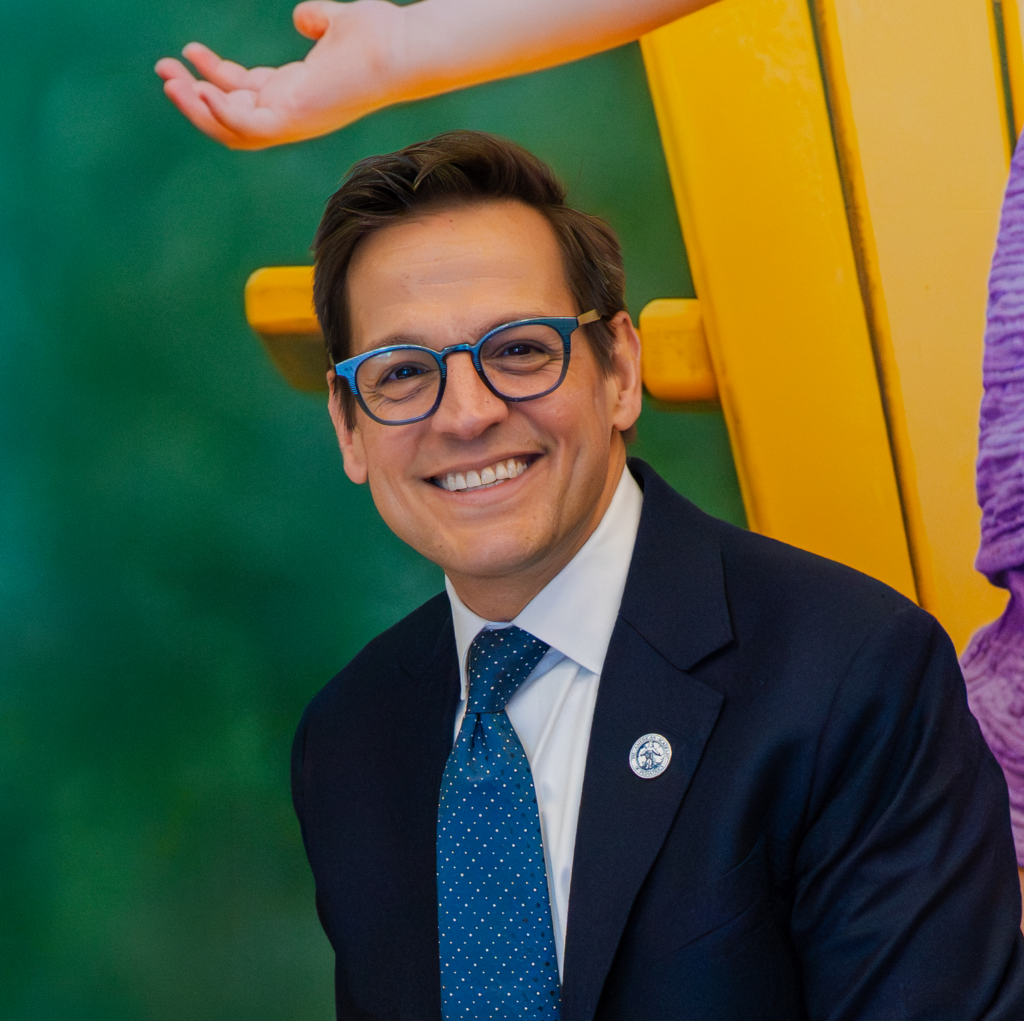
Mark Del Monte, JD, CEO, Executive Vice President, American Academy of Pediatrics
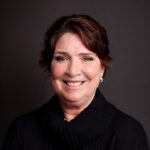
Host/Producer: Carol Vassar
TRANSCRIPT
Announcer (00:00):
Welcome to Well Beyond Medicine, the world’s top-ranked children’s health podcast, produced by Nemours Children’s Health. Subscribe on any platform at nemourswellbeyond.org or find us on YouTube.
Carol Vassar, podcast host/producer (00:12):
Each week, we’ll be joined by innovators and experts from around the world, exploring anything and everything related to the 85% of child health impacts that occur outside the doctor’s office. I’m your host, Carol Vassar. And now that you’re here, let’s go.
MUSIC (00:30):
Let’s go.
(00:32):
Well Beyond Medicine.
Carol Vassar, podcast host/producer(00:36):
Hi everyone. I’m Carol Vassar. I’m with the Nemours Well Beyond Medicine podcast, and we are in Boston, and I am honored to have somebody who’s been really central to the child health conversation for the last 21 years, since he’s been at the American Academy of Pediatrics, but more recently in the past year or so in the world of pediatrics as things are changing so rapidly. Mark Del Monte, welcome back to the Nemours Well Beyond Medicine podcast. It’s such a pleasure.
Mark Del Monte, CEO & EVP, American Academy of Pediatrics (01:06):
Hello. Nice to see you.
Carol Vassar, podcast host/producer (01:07):
Good to see you.
Mark Del Monte, CEO & EVP, American Academy of Pediatrics (01:07):
Good to be here.
Carol Vassar, podcast host/producer (01:08):
As we were talking before, the mics were rolling, and I said, “Hold it. I want to get this on camera and on mic.” It’s been a very interesting year for you, and you brought up the idea that you’re worried about your membership, who are pediatricians across the nation, some 67,000 of them.
Mark Del Monte, CEO & EVP, American Academy of Pediatrics (01:25):
Right. Yeah.
Carol Vassar, podcast host/producer (01:26):
Tell me more.
Mark Del Monte, CEO & EVP, American Academy of Pediatrics (01:28):
Yeah. I have had just such a pleasure and gift of being at the academy for 21 years, and so I’ve seen this for a while, and I can just say that there’s a sense of worry these days. We worry a lot about children, first of all. I mean all the things that are happening to children, which I’m sure we can talk about. We’re worried about the financing of their healthcare system and cuts to Medicaid and cuts to SNAP and all of those things. But we also are worried about the workforce. Our members… Being a pediatrician is a wonderful thing. I’m a lawyer, and I’m a close watcher of pediatricians. Being around children and families is a wonderful way to practice medicine, at least in my observation of it. But today the challenges for our members are extraordinary, really tough.
(02:16):
They’re asked evermore to be doing more with less in taking care of children who are living in challenging circumstances and they’re doing so in an environment where many forces are telling them that they’re not doing what they need to be doing for kids or that they’re recommending medical interventions like vaccines for the wrong reasons and not because they’re doing it because they know that it’s the best for children.
(02:42):
And so we hear stories of these exam room conversations that are not just about what’s best for children, but really hard and adversarial and people are bringing in from the outside from what they heard on social media or from what they heard from political figures, mis and disinformation that makes the visits really challenging and questions that basic set of shared values that is the cornerstone of the relationship between a pediatrician and family, that we share values in taking good care of your children, taking the best care of your children. And when that is under threat, it really is exhausting for our members, and I worry about that. I worry about that in new ways.
Carol Vassar, podcast host/producer (03:22):
You talked last year about rational optimism. Is that even manifesting in the population you represent, which are those pediatricians?
Mark Del Monte, CEO & EVP, American Academy of Pediatrics (03:34):
Sure. Our members, primary care pediatricians, subspecialists, surgeons, they still are some of the most inspiring people in the world, and they are in this for the right reasons to do the right thing for children. And so we are buoyed by that. We are energized by that. We are inspired by that. And what we’ve been thinking about, at least what I’ve been thinking about a lot in the last 12 or 15 months or so, is that AAP has been in the lead on many of the kind of hard conversations, pushing back on some of the things that this administration is doing. And I look back at the history of the Academy of Pediatrics and the history of the creation of the profession of pediatrics, and it’s always been about fighting the good fight for children. It’s always been about running toward controversy because that’s what kids need.
(04:26):
The founding story of AAP is about a dispute between pediatricians and the AMA over a piece of federal legislation designed to reduce infant mortality. The AMA opposed it as socialized medicine. The pediatricians endorsed it as good for children, and the AMA was so angry about that they punished the pediatrician members of the AMA in 1920, and the pediatricians left and founded the American Academy of Pediatrics. And so AAP was born in advocacy. And so the idea that it’s somehow surprising or inconsistent with our field that we’re leading edge right now just means people haven’t been paying attention to pediatricians for the last hundred years.
Carol Vassar, podcast host/producer (05:04):
It’s really in your DNA, if you will.
Mark Del Monte, CEO & EVP, American Academy of Pediatrics (05:07):
100%. Just literally in founding of the institution.
Carol Vassar, podcast host/producer (05:10):
There’s both urgency and that rational optimism as you referred to it. Is that manifesting at all for you and for the organization? If so, how?
Mark Del Monte, CEO & EVP, American Academy of Pediatrics (05:21):
Yeah. I think one of the advantages of being around for 95 years is that we have every intention of being around for 95 more, and that this is a moment in time, and that the future trajectory for children is upward and onward, and we’re going to keep fighting for that until we make it happen. If you look at our history, children are doing better than they have done before in many indicators. We have a lot of work to do, and we have a lot of worries to worry about, but I think we can lean on that trajectory that the future gets better, and that is the optimism. It’s going to take a lot of work. It’s going to be really hard.
(06:00):
We’re going to lose sometimes. We’re going to lose big sometimes, but we’re going to keep moving step by step, piece by piece. We’re also going to use every tool in our toolbox that begins in the clinical setting between those conversations, those powerful healing conversations in the exam room, but also litigation at the other end of the spectrum. We’re going to use every tool we have in order to do what we think is right for children and make the world a better place for them and their future.
Carol Vassar, podcast host/producer (06:26):
Right now, where are the biggest gaps between what kids are getting and what they need in terms of their healthcare?
Mark Del Monte, CEO & EVP, American Academy of Pediatrics (06:34):
Yeah. This underfunded healthcare system that we have for children is really a challenge. Half of children in the United States are on Medicaid and CHIP. Half. And I am surprised at how many places I’m in where people are surprised by that.
Carol Vassar, podcast host/producer (06:52):
Really?
Mark Del Monte, CEO & EVP, American Academy of Pediatrics (06:53):
People don’t realize that half of kids in this country are living in poor families that qualify for Medicaid and SNAP, and housing supports, and transportation supports. The idea that half of the children of the United States are poor is a shocking thing to people. And I don’t think people know that very much. And if they did, I have to believe they’d be doing a lot more about it. These are things that can be solved if we work on them. So we have this Medicaid-based system, and it was underfunded before HR1, and now, with the looming Medicaid cuts, things that are already taking effect, we’re seeing it in state budgets after state budgets after state budgets. We’re going to be doing pediatrics in a really tough environment for a while, and that is a worry. So that’s number one, I think, is the financing of the healthcare system.
(07:42):
Secondly, we continue to worry about the mental health of children and social media and all of the aspects of that. We worry deeply about immigrant children and children in immigrant families and what they’re going through under this period of immigration enforcement. Lots of things to be focused on right now.
Carol Vassar, podcast host/producer (08:01):
We talk about, especially at Nemours, but it’s a statistic that you’re probably very familiar with. 85% of children’s health happens outside of that clinical setting. How should that concept change the way that we’re all thinking about children’s health? I think you and I and the AAP are all bought into this. How can we make sure that the world is bought into this?
Mark Del Monte, CEO & EVP, American Academy of Pediatrics (08:26):
Yeah. It’s so important, actually. If everybody who cares about children could sit down and imagine a system of what it would be to take good care of kids and give them the best chance for their best future, I think we would design a very different system than we have right now. We would not have a healthcare silo, an education silo, a social services silo, where families are expected to negotiate all that and navigate all that and make all that work in the midst of everything else that is going on. The first and most basic part of it is we just need more money. There’s an old saying. I was a lobbyist for a long time, and there’s a saying in Washington that if it can be solved with money, it’s not a problem; it’s an expense.
Carol Vassar, podcast host/producer (09:16):
It’s true.
Mark Del Monte, CEO & EVP, American Academy of Pediatrics (09:17):
It’s very true. And we just need more money in the system. We need more money in the system for schools. We need more money in the system for healthcare. We need more money in the system for all the social safety net things that we know kids… childcare, we could go down the list. We underfund these systems and then are surprised that they don’t perform in the way that we want them to. And so we need to just think about investing in all of the things that children need. I think that’s really crucial, and what we should absolutely not be doing is cutting those programs. I mean, it’s just to kick the legs out from under families who are already vulnerable and we know that simple things like the child tax credit lifts half of kids out of poverty. There are mechanisms that are straightforward and easy that we can do to make things better. We just need to do nothing.
(10:07):
Once we get sort of more resources into the system, then we can start by system redesign. Is this system that we use for children now working, and what will we do to make it better? And we got lots of ideas about that. There’s lots of chances for innovation, and that’s exciting. That’s exciting to think about. But if we are constantly operating in this kind of scarcity mode of trying to cut and do less and caught and do less, well, it just means that kids don’t get what they need.
Carol Vassar, podcast host/producer (10:33):
Does that make it more difficult to turn the ship toward paying for health over just paying for illness or treating illness?
Mark Del Monte, CEO & EVP, American Academy of Pediatrics (10:42):
Yeah, it’s a great question. One of the things I think that is an advantage of pediatrics just kind of as a definitional part of it is that it’s by definitions focused on prevention.
Carol Vassar, podcast host/producer (10:54):
Correct.
Mark Del Monte, CEO & EVP, American Academy of Pediatrics (10:55):
The adult system could learn a lot from what pediatricians do every day, which is focus on healthy development and wellness and checking in on those things and intervening when the trajectory is not right, that much of pediatrics is about the health and wellbeing of kids and making sure that that works. And that is something that is uniquely for the US to be proud of. There are not a lot of countries in the world where well childcare is provided by physicians.
Carol Vassar, podcast host/producer (11:24):
Oh.
Mark Del Monte, CEO & EVP, American Academy of Pediatrics (11:25):
That is an uncommon thing. I think it’s like the United States and Italy or something like that. Both two countries I like a lot where the value of healthy development of children, mental and emotional and physical development is so important that we want it to be supervised by doctors. That is not how it goes in the rest of the world. And so I think that social good is something for us to be building upon and we have a lot to teach adult medicine about how that can work and how that can benefit adults too.
Carol Vassar, podcast host/producer (11:52):
Ultimately, if we can get the pediatric system moving in the right direction, the adult system will also turn around because we’ll have adults who are healthier, don’t you think?
Mark Del Monte, CEO & EVP, American Academy of Pediatrics (12:03):
Oh, I think the data is quite clear that if you want to reduce Medicare costs, you should be investing in childhood. I think that’s quite… The antecedents of adult disease are all in childhood. So whether you think it’s the right thing to do for children because it’s the right thing to do for children, or you want to reduce expenses in the Medicare program, making strong investments in childhood health and wellbeing has all kinds of individual benefits for those kids, but also for society, for our culture, for our community, our future.
Carol Vassar, podcast host/producer (12:32):
I want to go back to the idea of the health of your population, the 67,000 pediatricians you represent. Burnout is a concern. Are there enough people coming into the field? Comment on those two things.
Mark Del Monte, CEO & EVP, American Academy of Pediatrics (12:46):
Yeah. We have more residency programs, lots than ever before. I think there is still a strong interest in pediatrics. I think people who are interested in the field, whether it’s primary care or across the subspecialties, come at this with a heart for kids, and they know that their work is mission-driven, but the barriers to entry are high. There is a kind of structural inequity in pediatrics. Pediatricians get paid less for doing the same thing that adult medicine does, whether it’s primary care or across the spectrum. We got to fix that.
(13:25):
We got to fix that. I mean, that’s inexplicable. There’s no reason for that. We understand why; it’s Medicaid, it’s those kinds of things, but there are barriers, and I think people overcome those because they care about kids and they want to make this a satisfying and wonderful profession, but we do need to think about the constellation of the workforce. And so our workforce is increasingly DOs and IMGs as well as USM medical school graduates. And so figuring out how to build the systems around those trainees and so that they can get into practice in the best way that they can for children, I think, is something that we need to think about.
(14:08):
We also need to be a little bit forward-thinking about where the future population of children is and building a workforce design towards them. Who children are today is going to be very different than who children are going to be in the future.
Carol Vassar, podcast host/producer (14:24):
Absolutely.
Mark Del Monte, CEO & EVP, American Academy of Pediatrics (14:25):
And so how do we think about workforce design in pediatrics now so that we have the workforce that those children are going to need? And those are very interesting questions to think about.
Carol Vassar, podcast host/producer (14:36):
From a very high view, because I know you are so all over the world working on policy, what are the policy priorities for the American Academy of Pediatrics right now?
Mark Del Monte, CEO & EVP, American Academy of Pediatrics (14:49):
Thanks. Our overwhelming focus at the moment is protecting the existing healthcare system as it stands, especially in areas of settled science. We cannot continue to debate whether vaccines are safe and effective. Vaccines are safe and effective. They save millions of children’s lives. They reduce sickness and death. Those are facts that we don’t need to continue to debate.
(15:18):
I also think that the debate about vaccines is almost the front line of a larger set of debates about the legitimacy of science, the legitimacy of medical advice, and the role of the physician in society. Those are big questions that we have to talk about. There’s data now that 25% of 18-to 34-year-olds have disregarded the advice of a physician in favor of something that they learned from an influencer. That’s a quarter right now-
Carol Vassar, podcast host/producer (15:51):
It’s a big number.
Mark Del Monte, CEO & EVP, American Academy of Pediatrics (15:52):
… and that’s growing. So how people get health information is changing, and we have two choices about that. We can wish it were different, which is part of it.
Carol Vassar, podcast host/producer (16:05):
We can wish upon a star.
Mark Del Monte, CEO & EVP, American Academy of Pediatrics (16:07):
Or we can engage this deeply.
Carol Vassar, podcast host/producer (16:09):
Yes.
Mark Del Monte, CEO & EVP, American Academy of Pediatrics (16:10):
And so while we’ve been thinking about defending vaccines, we’ve also been thinking about re-engineering our entire communication structure. How do we communicate with families? How do we communicate with our members in modern ways? And so we are on social media like never before. AAP is on TikTok. AAP is on Instagram.
Carol Vassar, podcast host/producer (16:27):
Yay.
Mark Del Monte, CEO & EVP, American Academy of Pediatrics (16:29):
AAP is all the places where people get their information these days. We are working very closely with a community of influencers. These are people who have huge followings across social media and getting our messages out through those platforms. So this is exciting. It’s hard work. It’s really intense work. It’s resource-intensive, but you can feel what happens when you show up in the conversation. It’s got a one-sided conversation on social media by people who are telling them stuff that we don’t agree with. We’re here, and we’re pushing back, and that works, and that is really exciting today.
Carol Vassar, podcast host/producer (17:04):
Which is also in your DNA.
Mark Del Monte, CEO & EVP, American Academy of Pediatrics (17:05):
Absolutely.
Carol Vassar, podcast host/producer (17:06):
I want to ask about AI, not just in the AI slop, as they say, that gets put out there that might be inaccurate in terms of medical information, but how AI is changing the way the practice really of pediatrics these days. Where does the AAP stand on that?
Mark Del Monte, CEO & EVP, American Academy of Pediatrics (17:23):
Yeah, really interesting. What a dynamic time. I’m surprised that AI is so late in the questioning. Usually AI is the first part of any question I’m asked, in the first 30 seconds.
Carol Vassar, podcast host/producer (17:33):
We got there.
Mark Del Monte, CEO & EVP, American Academy of Pediatrics (17:34):
Yeah. So really exciting. I think we have to believe that there’s opportunity here and it’s really important. And so we’re thinking about this in three different ways at AAP. The first is opportunities in the clinical setting. There has been really rapid scale adoption of kind of ambient listening in the clinical setting, which is this is a sort of Alexa or something doing your charting, doing your coding, doing all the things, and that has been really good. By and large, it allows the clinician to look at the family and not the laptop. Which is what’s something we’ve been so worried about for so long. So while that’s happening in the background, that clinical relationship is strengthened.
Carol Vassar, podcast host/producer (18:19):
Yes. Absolutely.
Mark Del Monte, CEO & EVP, American Academy of Pediatrics (18:20):
I think that’s a really big opportunity, really good. We have to worry about all the things associated with it, but I think there are opportunities in the clinical setting to enrich clinical care through the use of these tools.
(18:32):
Secondly, we have opportunities to think about large language models in how we educate physicians, how AAP does its work, how we produce policy and guidelines, how we do education, how we think about scholarship, and our journal publishing. And so how it affects our core business; how does it affect how we do what we do? And there’s a lot of worry about those pieces, but we’re going to sort our way through the worries and figure out how to make this training better, and update guidelines faster and with the latest science quicker. I think there’s real opportunities there. And then the third lane is the one that’s most worrisome. And for us, it’s the child health and safety piece of this.
Carol Vassar, podcast host/producer (19:16):
Okay.
Mark Del Monte, CEO & EVP, American Academy of Pediatrics (19:17):
This is the Wild West. There are AI tools that children can access that speak in their parents’ voice. There are no guardrails right now around children and their rapid-scale adoption of these technologies, and that needs to change. We need to really think about children first in this. A young child doesn’t know the difference between what’s a bot and what isn’t. And so the risks are very high, and so we are eager to engage in some dialogue about that so that we can build some bumper lanes so that there’s places that can’t hurt kids.
Carol Vassar, podcast host/producer (19:59):
Absolutely. I’m glad that you are as an organization looking at these kinds of things. I have a new grandchild on the way.
Mark Del Monte, CEO & EVP, American Academy of Pediatrics (20:06):
Oh, congratulations.
Carol Vassar, podcast host/producer (20:06):
You’re looking out for his health, and it’s much appreciated. Before we go today, Mark, we’ve talked about a lot of things that are not going well, things that are going well. What gives you hope that we can move everything forward, ultimately benefiting the children of the US and the world?
Mark Del Monte, CEO & EVP, American Academy of Pediatrics (20:25):
Oh, thanks for ending on that question. I think there’s a lot to talk about that’s worrisome these days. There’s no doubt about that. And we’re doing things we’ve never done before. We’re in federal courts more often than we have ever been in the history of the American Academy of Pediatrics. And so there’s a lot to sort through at this moment and worry about. But at the end of the day, being a part of the care of children is an exercise and hope. Thinking about the future of children is by itself a hopeful thing to do. And so I come at this not with pessimism, but with optimism, that we can overcome all of these challenges that we have.
(21:07):
We need to take medium and long-term views sometimes, but that we are going to continue to work hard and build the profession of pediatrics, take good care of children and to create a policy environment that puts scaffolding around families and helps them have a brighter future. I believe that we’re going to get there. I know that the ingenuity and relentlessness of our 67,000 members, they’re not going anywhere. They’re going to keep at it in every state legislature, in every state capital, in every community, in every clinical visit. And we have an incredible workforce in that regard, and that is the construction of optimism. And so I’m not pessimistic. We’re working hard. We’re working hard in new ways and different ways, but the children need us, and we’re not going anywhere.
Carol Vassar, podcast host/producer (21:54):
Mark Del Monte is the CEO and Executive Vice President of the American Academy of Pediatrics
MUSIC:
Well Beyond Medicine
Thanks to Mark for stopping by our podcast booth at the Pediatric Academic Societies Meeting in Boston recently to give us an honest and, ultimately, optimistic view on pediatric healthcare today in the U.S. And thank you for listening and viewing.
What’s happening in pediatric healthcare today? That’s what we love talking about on the Nemours Well Beyond Medicine podcast, especially those aspects that happen outside the doctor’s office and affect our children’s health. Listen to any (or all) of our previous episodes by visiting nemourswellbeyond.org, where you can also subscribe to the podcast and our monthly e-newsletter, leave a comment or a review. That address again is nemourswellbeyond.org. The podcast is available on your favorite podcast app or smart speaker as well as YouTube.
Our production team for this episode includes Cheryl Munn, Susan Masucci, Lauren Teta, and Alex Wall. Video production by SarahKate Reger and Britt Moore. Join us next time as we explore the concept of narrative health and how it can be applied by pediatricians. I’m Carol Vassar. Remember, we can change children’s health for good – well beyond medicine.
MUSIC (22:18):
Let’s go. Well Beyond Medicine.