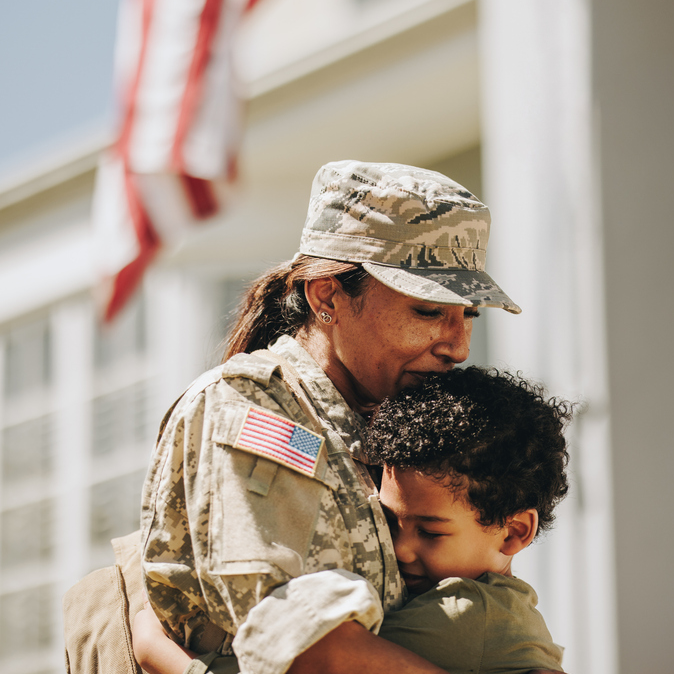
Military-connected children and teens face unique behavioral health challenges, from frequent moves and disruptions in care to parental deployments, long wait times and navigating health care systems that don’t always move with them.
In part two of this series, tied to the release of two policy papers from Nemours Children’s Health and the Elizabeth Dole Foundation, the conversation shifts to the clinicians and program leaders working to improve access to behavioral health care for military-connected youth. They explore the barriers families face when seeking mental health care for their children, the potential of telehealth and interstate licensure compacts to expand access, and why military-informed care, cross-sector collaboration and a whole-family approach are essential to improving outcomes.
Featuring:
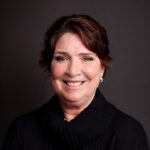
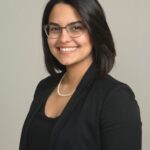
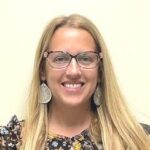
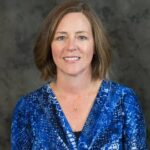
Monica Barreto, PhD, Clinical Director, Primary Care Integrated Behavioral Health, Nemours Children’s Health
Jeanine Hoff, MSW, MAS, LCSW, Mental Health Provider, Pediatric Acute Telemental Health (PATH) Program, Nemours Children’s Health
Jennifer Crockett, PhD, Director of Telehealth, Director of Behavioral Health Services for Military Families, The Kennedy-Krieger Institute
Host/Producer: Carol Vassar
Resources Mentioned in This Series:
- Serving Military-Connected Children: Access to Care (PDF)
- Serving Military-Connected Children: Mental Health and Well-Being (PDF)
- Free, online course: Caring for Children and Teens in Military Caregiving Families
- Initiatives at Nemours Children’s to support military-connected youth
- Military Child and Family Collaboratory
- One Op
- Star Behavioral Health Providers
- Kennedy Krieger Behavioral Health Program for Military Families
Military-focused programs:
- FOCUS UCLA
- Clearinghouse for Military Family Readiness Penn State
- Military REACH Auburn University
- Hidden Helpers Coalition
- To inquire about joining the Hidden Helpers Coalition, email [email protected]
Past Well Beyond Medicine episodes with related topics:
- Ep. 70: Hidden Helpers, Hidden No More (Part 1 of 2)
- Ep. 71: Hidden Helpers Heard (Part 2 of 2)
- Ep. 90: Forum – Supporting Our Military Families and Hidden Helpers (Part 1 of 2)
- Ep. 91: Forum – Supporting Our Military Families and Hidden Helpers (Part 2 of 2)
- Ep. 167: Accessing Pediatric Mental Health Services (PATH) (Part 1 of 2)
- Ep. 168: Accessing Pediatric Mental Health Services (PATH) (Part 2 of 2)
General questions related to the content addressed during the podcast: [email protected]
TRANSCRIPT
Announcer (00:00):
Welcome to Well Beyond Medicine, the world’s top-ranked children’s health podcast produced by Nemours Children’s Health. Subscribe on any platform at nemourswellbeyond.org or find us on YouTube.
Carol Vassar, podcast host/producer (00:12):
Each week we’ll be joined by innovators and experts from around the world, exploring anything and everything related to the 85% of child health impacts that occur outside the doctor’s office. I’m your host, Carol Vassar. And now that you are here, let’s go.
Music (00:30):
Let’s go, oh, oh, oh.
(00:33):
Well Beyond Medicine.
Carol Vassar, podcast host/producer (00:36):
Hi everyone. Welcome to the Nemours Well Beyond Medicine Podcast. This is the second of two parts, and we’re talking about behavioral health for military-connected kids.
(00:47):
Today, we’re going to turn to the providers on the front lines, the clinicians and program leaders working every day to meet those needs, often within a system that we know is complex and fragmented and constantly changing. Because for military-connected youth, as we learned in our last episode, access, that is, to behavioral healthcare isn’t just about finding a provider. It’s about navigating disruptions in care, long wait times, and systems that don’t always move with them or necessarily understand them.
(01:21):
I’m joined by Dr. Monica Barreto. She is clinical director for primary care integrated behavioral health at Nemours Children’s Health, along with her colleague Jeanine Hoff, who is a mental health provider for the Nemours Pediatric Acute Telemental Health, or PATH, Team. And they’re joined by Dr. Jennifer Crockett, who heads up the telehealth department for the Kennedy Krieger Institute in the greater Baltimore, Washington, DC area.
(01:49):
Welcome to each of you. I want to start with just a general question. When you think about what’s happening right now in the world, including the uncertainty, the potential for deployments, and really the broader global climate, what are you seeing in terms of behavioral health needs among military-connected youth and their families? Dr. Barreto, I’m going to go to you first.
Monica Barreto, PhD, Nemours Children’s Health (02:16):
Well, thank you, Carol. And one of the things that we’re seeing, especially with everything going on, is a lot of uncertainty, and how that shows up in children sometimes can be a lot of anxieties and lots of questionings. And there are many children who may voice those concerns or talk about those things. Other children may keep those inside, and the ways that we may see them is possibly some sleep disruptions, school avoidance, or some increase in behavioral difficulties that may have not been there prior.
Carol Vassar, podcast host/producer (02:40):
Now Jen, you’re in the Washington, DC-Baltimore area, a lot of federal employees, a lot of people in the military. Are you seeing the same thing? Are you seeing anything different?
Jennifer Crockett, PhD, Kennedy-Krieger Institute (02:49):
Definitely the same thing. I think in addition, maybe because, as you say, where we are located, it’s not always those who just wear the uniform. There are a lot of, as you say, federal employees and contractors who are also right alongside our uniform service members and their families may be having additional struggles that may not be as apparent to us.
(03:15):
I think another thing is for our, particularly our military-connected adolescents, it’s very difficult right now to share with your friends what’s going on in your family without that very quickly becoming a much bigger political discussion. And that is not what our adolescents are seeking when they first are trying to share with their friends.
Carol Vassar, podcast host/producer (03:38):
There’s a need there. It doesn’t need to be politicized in absolutely any way. Mental health is mental health no matter what you believe in politically. Jeanine, anything to add?
Jeanine Hoff, MSW, MAS, LCSW, Nemours Children’s Health (03:49):
Yeah, I think a lot of what we’re seeing right now, especially where we’re located here in Jacksonville, Florida, is we have two military bases. So we do have families who their family members are getting ready to be deployed and stuff, and that can be very disruptive to the family unit structure, organization, day-to-day activities and stuff. So even that alone is – we’re just not seeing it with one individual child. We’re seeing it in all the children and the families, including the parent, and having to really help them work through that process as they prepare to send their loved one overseas or wherever they may be going.
Carol Vassar, podcast host/producer (04:27):
Which is stressful to the entire family and ultimately stressful to the school community and the community at large. Monica, I want to turn to you. What are some of the obstacles that you’re seeing that ensure military connected youth get the behavioral health services their families are seeking? There are definitely barriers.
Monica Barreto, PhD, Nemours Children’s Health (04:50):
One big barrier that we do see, and I would say across the board, is many times, even just insurance coverage or getting medical coverage for these services. Many times, even what we do see in primary care is that our families are covered to see our medical providers. But once it comes to behavioral health, we may not be in network.
(05:08):
Also, some changes as families, which not just even the political climate or what’s happening right now, but even with just deployment, most kids within military families move a lot. And sometimes it may be in services and then they will be disrupted as they now need to be reconnected, maybe on a wait list, maybe now struggle within the new area that they’re living in, minimizes their access to care due to insurance or even provider availability or provider training to be able to support them in the needs that the family does have and specific needs that military families may come with.
Carol Vassar, podcast host/producer (05:40):
And moving a lot is a big issue, and we’re going to talk about that in a moment. Dr. Barreto, I’m going to stay with you. We hear a lot about provider shortages. How does that show up specifically for families using insurances provided either by the Department of Defense or the Department of Veterans Affairs, TRICARE or CHAMPVA?
Monica Barreto, PhD, Nemours Children’s Health (06:01):
I can speak specifically even to here in Nemours in our primary care program. Of all the insurances, we are able to accept three. So we may see a family that is coming in and does need services, and we either may have providers in that clinic, but we don’t take that family’s insurance. Or we may have the options that they do have; they may be either really far away from a family. They may be a two- or three-month wait list. So there is the insurance barrier, or sometimes not having enough of that specialty in that service area, because if they’re in a rural area or if they’re in a space where there is limited options for psychiatrists, psychologists, or even master’s level clinicians as well.
Carol Vassar, podcast host/producer (06:40):
And what happens at that moment? You find out that an institution or a healthcare provider doesn’t take that insurance, but the child is clearly in need of behavioral health services. Where do you send them?
Monica Barreto, PhD, Nemours Children’s Health (06:52):
And that’s kind of sometimes where we all have to work together. Thankfully, for instance, in our Nemours system, our wonderful PATH program, that’s an option. Oftentimes, if we have programs that are federally funded or programs that have some philanthropy funding that can provide those services, either, for instance, our PATH program, we can provide services in rural areas and urban areas through our telehealth program and options where we don’t have to bill insurance or have to go through that network.
(07:18):
But if we have a luxury as we do here in Nemours to have that option, some places don’t. And it does depend on if you’re near a university, if you’re near a hospital setting. So those options can be limited sometimes too, but we try our best to work together or connect them with foundational support too.
Carol Vassar, podcast host/producer (07:35):
Jeanine, I’m going to turn to you, and I’m going to have you explain PATH from that 20,000-foot view. Some of our listeners may not have heard our episode on PATH. We’ll put a link to that in the show notes. Give us that overview of what PATH is and who it serves.
Jeanine Hoff, MSW, MAS, LCSW, Nemours Children’s Health (07:51):
So PATH is a newer program at Nemours, and it stands for Pediatric Acute Telemental Health. And what we do is we are a short-term intervention program in which we can assess a child, and we assess all children from ages two to 17, to really understand what’s been going on and what the needs may be. And we see them short-term for one to three follow-ups, but more if needed, if we have difficulty connecting them with a provider. And the goal is to connect them with a long-term outpatient provider.
(08:22):
Right now, we are only throughout all of Florida. We originally started in the five northeast counties of Florida and expanded pretty quickly because the need was so great. So we have the ability to connect children throughout Florida with whatever they need. And a lot of times it’s not just therapy or psychiatry, but also in testing, psychological testing, psychoeducational testing, things like that.
(08:48):
Sometimes we evaluate, and we notice, hey, they might need a speech evaluation, or maybe they have some fine motor skills or some executive functioning concerns. They may need to see OOTs. So we look at the whole picture, and then we present to them, here are some of the things that you may need.
(09:08):
Now, with us, one of the challenges we do face is that in Northeast Florida, there are a lot of providers that do accept TRICARE because of our location and such, the proximity to the bases. But once we go outside of here, we do have a lot of military families where we do have a shortage of providers that do accept TRICARE. Some take Prime, some take Select. It depends what type of product they have. And then CHAMPVA is the one that’s a bigger challenge because it’s not one that you see often that children have.
(09:41):
So not a lot of pediatric providers accept it. You see more in the adult space and such. So sometimes we do have to see these patients a little bit longer than planned, or we have to connect them with a telehealth provider somewhere far away from where they’re located.
(09:59):
And one of the things we try our best to do is also connect them with a provider that understands military culture, that understands military lifestyle, because the changes can be so quick. And sometimes when they get their orders, and they have to move, it’s almost moving in the middle of treatment. Or I have an example where I see patients get testing done, and they only get part of the testing completed because the wait is so long for the next part that they don’t have the results. And we have to then help them start the process all over again. And sometimes it could be two, three years before they actually get the testing completed and the results that they need to get the child whatever services that they need within schools like IEPs or 504s, things like that.
Carol Vassar, podcast host/producer (10:45):
And part of the CHAMPVA concern is it’s more for people who have parents specifically who’ve retired from the military. Their children, generally speaking, are older, but there are still a few who are 18 or maybe even 26 and younger. Am I characterizing that correctly?
Jeanine Hoff, MSW, MAS, LCSW, Nemours Children’s Health (11:04):
I do have some younger children because we stop services at 17 once and then transition them to adult care. But I have had some younger children between eight and 15 years old, 10 and 15 years old. And to get them a provider, I’ve had to have them drive a few hours out of their county to get sometimes the services that they need.
Carol Vassar, podcast host/producer (11:28):
Which is a huge barrier. Let’s talk about where the systems break down. We heard a little bit about referrals and getting to the providers who can give you the services you need. Sometimes you have to start it, go again. And as you mentioned, Jeanine, it takes sometimes years. So where are the biggest breakdowns? Referrals, approvals, getting connected to care. Jen?
Jennifer Crockett, PhD, Kennedy-Krieger Institute (11:52):
Yes. All of this.
Carol Vassar, podcast host/producer (11:52):
All of the above.
Jennifer Crockett, PhD, Kennedy-Krieger Institute (11:54):
All of the above. I think the things already mentioned, we certainly see as well, not to repeat everything, but having civilian providers, and we all know that more military-connected children receive their care through civilian providers as opposed to military providers, both primary care and behavioral health. But finding those civilian providers who have received that training and military-informed care is challenging.
(12:26):
So you may find a provider who doesn’t have an incredibly long wait list, but maybe the family isn’t really able to connect well with them because they don’t speak their language. They don’t understand any aspects of military culture. So I think that’s another breakdown for us.
(12:42):
I did want to just add, although we see all of these barriers where things break down, we also need to continue to lift up those services that are available that may not be the direct service that we’re talking about, but amazing services that can be provided on a short-term basis by military and family life counselors that exist on installations, chaplain services, supports that may be available at school. So I know we are sometimes working with families to make sure they’re also utilizing those services as well.
Carol Vassar, podcast host/producer (13:17):
You raise a really good point, Jen, in that not every provider is either trained or knows military culture. That seems to keep people who need these services, youth in particular, in limbo. What can be done to overcome that? Do we need to train more providers in the culture? What can we do?
Jennifer Crockett, PhD, Kennedy-Krieger Institute (13:42):
So we never want to indicate that we’ve walked in someone’s shoes or we know what it’s like to live in their family or within their community. But there are things that civilian providers are able to do. So at Kennedy Krieger, we have the behavioral health program for military families.
(13:59):
And when we first started that, it was I, whose spouse had just retired from 24 years of service in the Army. Our intake coordinator, whose spouse was a retired Marine Corps member. And then we had a couple of really eager-to-learn psychologists who had no military training, but man, they were ready to jump in with us. And we built a curriculum.
(14:24):
We brought in other psychologists, eventually brought in our postdoctoral fellows to train them in military-informed care. We did this through developing trainings ourselves, through bringing speakers in from our local military installation, from the Exceptional Family Member Program, from the FAP program, etc. We used some trainings that were created both by the VA as well as the Center for Deployment Psychology at USU.
(14:53):
And we created this curriculum that still exists now 13 years later. So that’s something that we did as a start from the ground up, but there are so many other amazing training resources available. I can certainly list those, or we can maybe provide them in materials that are shared.
Carol Vassar, podcast host/producer (15:14):
I would love to have those as links in our show notes. So if you can email me those when we’re done.
Jennifer Crockett, PhD, Kennedy-Krieger Institute (15:19):
We’ll do that for sure.
Carol Vassar, podcast host/producer (15:20):
We’ll make sure our listeners have access to those. Monica, Jeanine, how are Nemours clinicians trained? Are they trained in that kind of military culture?
Monica Barreto, PhD, Nemours Children’s Health (15:34):
And I would say both for psychologists and training as well as master’s level clinicians, whether it’s social work, mental health counselors, it does become kind of a subspecialty that people do find themselves, if it is a specific interest or pulls their heart, or even like myself, oftentimes we have to go out of our way to get the education and be similar to how Jen had noted finding that educational piece. Things that we have started to do a little bit more of is similar, having those conversations with our fellows, starting to educate one, just even providers, as you had mentioned, with referrals.
(16:04):
Sometimes families can be provided with many referrals. And oftentimes when providers see so many, they often then don’t get calls from most because so many services are needed. So a lot of our job too has been supporting families and filtering through what are the needs, how to get connected, build that bridge to families. And I think it is important to meet families where there are.
(16:26):
And if it is an area of their family that you’re not aware of, being able to being open to learn and be part of that journey with them and understanding what is their day-to-day and taking those steps and educating our residents, our fellows, our students, our practicum students as we continue to evolve and building training pipelines, being able for that to be part of our normal conversation. Versus letting it be just that subspecialty of military because we’re going to encounter them whether we’re in an area like Jacksonville, where there are bases, or a little bit further out like Orlando. These families are part of our community, whether it’s our specialty or not. So being able to open our minds to learning about them and being a part of understanding the military culture, I think, is going to be important from start to finish in clinicians’ careers.
Carol Vassar, podcast host/producer (17:12):
Jeanine, any thoughts?
Jeanine Hoff, MSW, MAS, LCSW, Nemours Children’s Health (17:14):
Yeah, when we first started developing PATH, and before we launched the program, this was one of the discussions; the key points that we had were that we have a large military population here. We’re going to see a lot of families, a lot of families in transition. And as we have gone through the program, and it’s been almost three years now, we’ve also seen a lot of kids who not only have the mental-behavioral health side, but also have physical conditions with it too.
(17:41):
So we’re seeing a lot of the medical and behavioral health side together and such. And one of the things that we see often is, in particular with referrals, is sometimes the referrals come from a PCM that they have to get the referral set, and sometimes they send it to the entirely wrong place. And so we have to then educate the family.
(18:06):
The family will say to me, “Oh, well, I got a referral for neurology.” And then I look at the referral, and I see, “Oh, it’s for behavior. So neurology then transferred it to us, and that’s how you are here.” And sometimes they don’t know why they’re here.
(18:19):
And it just depends. Sometimes it just comes from an office where someone, they just write referrals and that’s not their specialty, and they don’t really understand what the right place is. So a lot of it is us educating the family, educating them, “Okay, this is why you’re here, and this is where you need to go next,” if anything.
(18:38):
And so we’ve been very cognizant of it the whole way and such. And even we included even in our intakes, if there’s any deployment information and such, we will include that in so that we have it in our notes for future sessions and such that Dad has gone until June and things like that so we can check in on the family and make sure things are going well.
Carol Vassar, podcast host/producer (19:04):
PCM, fill me in on what that acronym is.
Jeanine Hoff, MSW, MAS, LCSW, Nemours Children’s Health (19:08):
Oh, that is their PCP, their primary care provider, as such. And so usually with TRICARE, they require a PCM referral for services. And usually if they go to the hospital, because a lot of the active duty families, like retired military families, go to a military-based hospital or such for their services, a lot of them don’t treat children. So they just say, “Okay, we can write the referral,” but they need it for TRICARE approval.
(19:41):
And so sometimes it just gets sent to wherever. And like Dr. Barreto pointed out, sometimes they will refer to all the concerns involved, and you’ll see all these referrals come in for GI and for neurology and for cardiology. And it turns out the child just has anxiety and such.
(20:01):
And so once we get them, then we say, “Okay, this sounds more physical. Make sure you get to the cardiologist and such.” And we always want to rule out the physical stuff first, but we work in conjunction with the medical providers as well to make sure that every piece is being seen and assessed.
Carol Vassar, podcast host/producer (20:18):
Got it. Thank you so much for filling us in on that. One of the things I’m hearing in all of what everyone here today has said, in my own experience tackling the civilian mental health system for my own adolescent children when they were adolescents, is continuity. Continuity is so important in behavioral health. What actually happens when a child moves in the middle of treatment?
(20:43):
And I’m wondering how often does that mean starting over? I can’t even imagine how hard that is and what that disruption looks like for families. Jen, I’m going to go to you for this one.
Jennifer Crockett, PhD, Kennedy-Krieger Institute (20:54):
Absolutely. I think the stats vary depending on the active duty service members’ area, but I think for the most part, every two to four years is what we hear in terms of how often military families move. So it’s certainly reestablishing behavioral healthcare, but it’s also reestablishing your other medical care. We’ve talked about how that is so complex.
(21:18):
It’s reestablishing your school, your afterschool, your recreation, your sports, your friend group, your spiritual practices, and typically also the non-service member spouse’s employment. So there’s so much change. It’s not just finding another behavioral health provider.
(21:39):
I think there are some really great trends that have happened over the past several years. We have compacts that are available across many of the behavioral health professions or that will soon be available that will allow someone like myself who is licensed in Maryland to practice in a different state, and so that I could potentially, and we do, follow our patients via telehealth when they PCS to other states.
(22:06):
We also have providers who just obtained licensure in several states that is very expensive, and it requires a lot of time as well. But those are some of the things I think that providers can do to try to allow the patient, the client, to carry their behavioral healthcare with them, at least until they’re better established in their new community.
Carol Vassar, podcast host/producer (22:30):
I love hearing that. Jeanine, are you experiencing that with PATH as well? Those compacts sound amazing.
Jeanine Hoff, MSW, MAS, LCSW, Nemours Children’s Health (22:35):
Yeah. So the compact doesn’t apply to my licensure and stuff. There is some kind of legislation out there trying to establish national licensure for LCSWs and LMHCs because it is so important. One of the things that we have seen recently, especially when we expanded throughout Florida, is we have families who are stationed outside of Florida, and they will drive to Pensacola to Nemours there for services.
(23:07):
And so then they get referred to us, and they have to be because of the way our licenses work; they have to be within the state of Florida. So they will actually drive to Nemours Pensacola from Alabama or wherever, and just so that they can access our services so that they can have some support. And then we will help find them a provider outside and such.
(23:28):
We do have a provider on our staff that’s licensed in Georgia as well, which has helped because there is a station there as well in Georgia. So that has helped those families as well, but it’s not enough. And we do have families who do get their PCS and we’re like, “Okay, we have to go,” or they just moved here.
(23:48):
And, like Dr. Crockett said, it is reestablishing every single piece of care. And for these families, especially if there’s any trauma involved, them having to relive their situation for a brand new provider can be very daunting. Sometimes to the point that we say, “Okay, we don’t need to hear all of it. Just tell us where you’re at right now,” because it’s too traumatic for them and such.
(24:17):
So we have to meet them where they’re at no matter what. And if they do get stationed out of state, then we will help them find a provider in that state. We do get a lot of families from the Virginia area, the Maryland area as well, coming down to Florida and such, and they’re like, “We had a great provider there, and now we can’t see them.” And that’s hard too because now they have to establish a rapport with some person that is brand new to them when they had been working with someone for quite some time. So it can be very, very daunting.
(24:50):
And at the same time, these families tend to be very resilient. They’re so used to it that it’s kind of matter of fact. And it’s like, “All right, now we’re starting with you, your provider number five or six that we’ve seen over the last few years.” So they’re also used to it, which is unfortunate, but fortunate at the same time.
Carol Vassar, podcast host/producer (25:09):
But fortunate, yeah. We’ve talked a lot about challenges today. What’s working well? What’s actually making a difference for these families? Dr. Barreto.
Monica Barreto, PhD, Nemours Children’s Health (25:21):
And I do think similar as we are in this group together in working in multidisciplinary teams and being able to, and I think more and more bringing services to where it is easier to families for access them, whether it’s via telehealth, in their medical home and primary care, within the schools, and being able to work as a whole child, not just in these separate silos. And I think across the board from residency training and psychology programs, there’s starting to be more and more integration of all of these services because we can’t separate the mind from the body.
(25:53):
Even if a child is having headaches or stomach aches for having stress or anxiety or changes, it’s all going to affect one another, and being able to collaborate as providers to be servicing families and providing services where they feel the most comfortable. Because also in working with military families, an important and part of is for many, there are still stigmas in receiving mental health care, but with these families as well, many of them also want to pursue these careers. And there is some difficulties too where that can be a barrier for them because as we do provide services, we do have to diagnose.
(26:27):
And sometimes that can be a barrier for maybe their goals when they want to be 18, and they’re just 12. And that can also keep families from receiving services or holding back and trying to figure things out on their own because of those potential barriers that it may come up. So we do provide them support, but sometimes we do see that as a little bit of a barrier of if we get help, what could happen in the future?
Carol Vassar, podcast host/producer (26:51):
We’re talking about generations of families who have served in the military, and if a child gets a particular diagnosis in their adolescent years, that could preclude them. And so as you said, Monica, there are some stigmas surrounding that. Jen, your thoughts. What can we do differently right now? What’s working well?
Jennifer Crockett, PhD, Kennedy-Krieger Institute (27:11):
Well, I think we talked about telehealth a little bit. I think that’s working really well. The ability to carry care if possible. I think there has been a lot of growth in the compacts. The psychology compact is called PSYPACT.
(27:28):
There is a counseling compact where states are actually issuing that privilege. And then the social work licensure compact, it is coming. I know we’ve been waiting on it for a long time, but it is coming. And we have to really give a bit of a shout-out to DOD because they were part of the big initiators for that.
(27:48):
The reason is they were doing it more from a spouse employment opportunity. So as a military spouse, if you are in the behavioral health profession, when you move, you’re having to reestablish care all the time as well. So DOD really stepped up and said, “Let us help.”
(28:06):
And so when the social work licensure compact actually gets to the point where they’re issuing privileges, we’ll have to remember that DOD was greatly behind that. We’re definitely seeing some reduced stigma with this generation in terms of raising their hand and saying, “I need help.” So I think that that’s really nice to see as well.
Carol Vassar, podcast host/producer (28:33):
Jeanine, what are you seeing in terms of positives in the system?
Jeanine Hoff, MSW, MAS, LCSW, Nemours Children’s Health (28:38):
It’s much more relatable for children now to speak up and for families to understand and parents to be much more open and understanding. And one of the things that I do really appreciate is that we’ve paid attention to the rural areas because they often get under-served, and they don’t have many providers and such. And that’s very, very important because families, as they move on and they want to live more quiet life, they forego that accessibility sometimes to medical care if they have to travel a long time. And so we’re able to now reach them.
(29:19):
Another thing that I really think that is really positive is we just don’t pay attention to the actual child. We do look at the whole family. We do what we assess them. We say, “How are your other children doing? Do they need any help? Any services?”
(29:32):
The amount of families, entire families that I see is pretty impressive. It’s just they start with one child, and I’m like, “Well, I can see all your children.” And so we add them, we assess them, and then we talk to the parents, and we see how the parent is doing.
(29:46):
Whoever’s the caregiver that’s currently living with the child, if the other parent is deployed. “And how are you doing?” And we will refer the parent to their own therapy and such if needed, or psychiatry, or even sometimes classes or parenting skills or ways for them to cope; we make a full recommendation. So we’re treating the whole family versus the child, because as we say with a medical diagnosis, such as diabetes, when a child comes in with a new diabetes diagnosis, it’s almost like a family diagnosis. The whole family will adjust what they’re eating and things like that.
(30:23):
And the same thing with mental health. When one child is in distress, it will end up sometimes distressing the whole family, parents, siblings and such, and you start to see different-
Carol Vassar, podcast host/producer (30:33):
Absolutely.
Jeanine Hoff, MSW, MAS, LCSW, Nemours Children’s Health (30:33):
… behaviors within the family. And so we have to look at it from that perspective. We are a whole health, whole family provider versus just the individual child for the individual thing that they came in for.
Carol Vassar, podcast host/producer (30:50):
Whole child health at its best. As we conclude here, I want to do a quick round-robin and ask each of you if there’s some real-world advice that you would share with providers who are listening. Maybe they haven’t had a lot of experience with military involved families and they want to get better at supporting them, especially the youth and their families, what would you tell them? Jen, I’m going to start with you.
Jennifer Crockett, PhD, Kennedy-Krieger Institute (31:14):
Absolutely, great. I think I’m just going to go back to the resources that I think are already out there for providers to be able to take advantage of. There are on-demand resources that are typically no cost to the participant. The Star Behavioral Health Program is amazing. There’s one op through the Department of War.
(31:39):
The Center for Deployment Psychology has the Military Child and Family Collaboratory, which is bringing providers across the country in different branches and civilian and within the military together to focus on the needs of the military child and family. That’s actually what brought me here today is just connections that have been established there. So I think those are some of the amazing strengths that we have right now where we’re understanding better who else is out there and forming this collaboratory to make sure that I know what’s happening in South Dakota for military families, etc.
Carol Vassar, podcast host/producer (32:25):
Jeanine, any thoughts?
Jeanine Hoff, MSW, MAS, LCSW, Nemours Children’s Health (32:26):
Like I said, we are such a military community that sometimes it’s hard for us to think outside that box. We’re just so used to it. It’s part of who we are here.
(32:35):
And so for a new provider or a new family or whatever, NAMI has a program that has been very helpful called NAMI Home Front. And that’s a military-based program where people can actually learn about it or meet families in such that might be helpful to people. I would say just go out there, listen to how families learn about the military, learn that it’s not about politics or anything, because that can cloud anyone’s judgment.
(33:06):
And this is for families; really, for most of them, it’s their living, it’s their job. And this is what they do. And just like anyone has a stressful job, the same way we look at first responders, firefighters, and things like that, they have their own expertise in services and such, where sometimes they have providers that specialize in working with people who see constant crisis, constant emergencies. It’s very similar in that sense.
(33:36):
So I would definitely recommend just kind of listening and seeing what’s out there. And if a family comes to you, listen to their experience. It’s going to be very different in a lot of ways. And their stories tend to be wonderful most of the time.
(33:51):
A lot of them have lived overseas, and they’re like, “Oh, I lived in Japan, and then I lived in Italy.” And just to hear even that, that’s a positive to bring to the practice. “Wow, what a great experience you got to experience living in another culture and going to school in another country,” and using that to kind of help support them.
Carol Vassar, podcast host/producer(34:13):
Last word, Dr. Barreto.
Monica Barreto, PhD, Nemours Children’s Health (34:15):
And I would say coming to an open mind and curiosity. The same way if a family was coming to us from a different culture or from a different location, we would be curious and wanting to get to know them, getting to understand them. If we don’t know about a new diagnosis, reading up on it.
(34:28):
And I would say this is no different than military family. These are people just like all of us, and they come in with different experiences and leaning into the community, even myself, just getting more involved with Nemours and finding the opportunities to learn more about the hidden helpers. I found myself getting, this wasn’t my background and more and more learning and getting that experience. And oftentimes just coming to it with an open mind and ready to learn.
(34:50):
And even within our own specialties, for instance, with a psychologist, we have a division within our American Psychological Association that is for military psychologists. And those are meetings and things that we can join or listservs. So there’s so much to learn, and coming into it, just ready to be able to service families with what they come to us with every day, and meeting them where they’re at.
Carol Vassar, podcast host/producer (35:12):
Well, I want to thank each of you for the wonderful discussion today and also for your support of our military-connected youth. Jen, I want to thank your husband for his service to our nation. Dr. Monica Barreto has been here with us. She’s the clinical director of Primary Care Integrated Behavioral Health at Nemours Children’s Health. Her colleague, Jeanine Hoff, who heads up the PATH Program, and Dr. Jennifer Crockett, who heads up the telehealth department for the Kennedy Krieger Institute in the greater Baltimore, Washington area. Thank you to each of you.
(35:43):
I’m Carol Vassar. I want to thank you for listening. Thank you for viewing. And remember, together we can change children’s health for good, well beyond medicine.
Music (35:53):
Let’s go, oh, oh, oh.
(35:56):
Well Beyond Medicine.