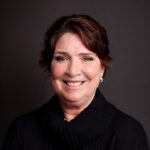
What does the future of pediatric care look like when research, collaboration and evidence come together? Recorded in Boston at the 2026 Pediatric Academic Societies Meeting, Matthew M. Davis, MD, MAPP, Executive Vice President, Enterprise Physician-in-Chief and Chief Scientific Officer, Nemours Children’s Health, joins us to explore the studies shaping what’s next in children’s health. From advances in sepsis treatment and newborn nutrition to the potential of precision population health and fetal interventions, this conversation shows how simple, evidence-based changes paired with strong partnerships can improve outcomes for generations of children.
Featuring:
Matthew M. Davis, MD, MAPP, Executive Vice President, Enterprise Physician-in-Chief and Chief Scientific Officer, Nemours Children’s Health
Host/Producer: Carol Vassar
TRANSCRIPT
Announcer (00:00):
Welcome to Well Beyond Medicine, the world’s top-ranked children’s health podcast, produced by Nemours Children’s Health. Subscribe on any platform at nemourswellbeyond.org or find us on YouTube.
Carol Vassar, podcast host/producer (00:12):
Each week, we’ll be joined by innovators and experts from around the world, exploring anything and everything related to the 85% of child health impacts that occur outside the doctor’s office. I’m your host, Carol Vassar. And now that you’re here, let’s go.
MUSIC (00:30):
Let’s go. Well Beyond Medicine.
Carol Vassar, podcast host/producer (00:36):
Hey everyone. We are at the Pediatric Academic Societies Meeting, 2026. It’s happening in Boston. With me right now is Dr. Matthew Davis. He is the Executive Vice President, Enterprise Physician in Chief, and Chief Scientific Officer at Nemours Children’s Health. Dr. Davis, welcome.
Matthew Davis, MD, Executive Vice President, Enterprise Physician in Chief and Chief Scientific Officer, Nemours Children’s Health (00:55):
Thank you.
Carol Vassar, podcast host/producer (00:56):
Welcome back, I should say.
Matthew Davis, MD, Executive Vice President, Enterprise Physician in Chief and Chief Scientific Officer, Nemours Children’s Health (00:57):
Great to be with you, Carol.
Carol Vassar, podcast host/producer(00:57):
I think the last time we were together was at PAS two years ago over in Toronto. So thank you so much. Now, by the time this airs, PAS will have concluded. We are wondering, I, in particular, am wondering, what are the big takeaways from PAS for you, especially in terms of research and the Nemours research that’s been presented here?
Matthew Davis, MD, Executive Vice President, Enterprise Physician in Chief and Chief Scientific Officer, Nemours Children’s Health (01:19):
This has been an extraordinary meeting here in 2026, and for me, this has reached a high watermark for the impact of Nemours as it’s showing up at the Pediatric Academic Society’s Meeting.
(01:31):
For example, I believe you had another guest on the podcast, Dr. Scott Weiss, talking about the importance of rescuing children who are about to be in a very vulnerable position regarding something called sepsis, which is a serious bacterial infection. He and other investigators around the country have released at this meeting some extraordinarily important findings about how best to save children’s lives in the emergency department and in the pediatric intensive care unit.
(01:58):
Beyond that, we have other NIH-supported researchers, like Dr. Sreekanth Viswanathan, who’s a neonatologist specializing in newborn intensive care, who’s looking at how to do precision nutrition for these babies who are extremely vulnerable. We have typically followed how well a child has responded to nutrition by measuring their weight.
(02:20):
After all, we expect kids to grow, but it turns out that the overall weight on a scale is not the most important aspect of tracking a child’s growth over time. Instead, what Dr. Viswanathan is looking at is something called fat-free mass, which is a calculation derived from weight and other measurements of the child that really shows us how a child is growing in terms of their bones and the other aspects of the body, especially related to proteins and carbohydrates.
(02:52):
So the fat-free mass aspect is really about the most healthy growth that a newborn can have. So he’s here to talk about the early findings of his work, supported by the NIH, and that we expect is going to turn into a multi-site trial over the next couple of years here.
Carol Vassar, podcast host/producer (03:09):
So it’s progressing to the trial stage.
Matthew Davis, MD, Executive Vice President, Enterprise Physician in Chief and Chief Scientific Officer, Nemours Children’s Health (03:12):
Absolutely progressing. And progressing to a stage where it’s going to take insights and translate them into clinical impact.
Carol Vassar, podcast host/producer (03:18):
Are there, aside from the one you just mentioned, other studies, other research that Nemours is doing that are going to go into that long-term, similar, either trial or additional research?
Matthew Davis, MD, Executive Vice President, Enterprise Physician in Chief and Chief Scientific Officer, Nemours Children’s Health (03:33):
Well, we also at this meeting heard about the work of Dr. Zubairul Aghai, who just completed a seven-site trial in India with seven different sites. So it’s an international clinical trial looking at newborns and how the umbilical cord is managed at the time of birth.
(03:51):
Now, for many people, you might wonder, managing the umbilical cord, what are you talking about? You have the umbilical cord, and you clamp it, and you cut it, and we’re good. But it turns out that those few seconds of managing, if you do what’s called milk the cord and you move the blood in the cord toward the baby, you transfer more blood from the umbilical cord into that newborn. That can be helpful in terms of protecting that child against a low blood count in the days to come, and in terms of providing extra protection in other ways for that child.
(04:27):
And so Dr. Aghai reported the different outcomes for umbilical cord milking versus what’s called early cord clamping. This may sound simple, but a difference of a few seconds and taking those few seconds to milk the cord can make all the difference in the world for these newborns.
Carol Vassar, podcast host/producer (04:46):
What I’m hearing in a lot of the research is simple changes that are going to bring about, hopefully, positive results.
Matthew Davis, MD, Executive Vice President, Enterprise Physician in Chief and Chief Scientific Officer, Nemours Children’s Health (04:57):
That’s a great insight, Carol. And you’re right. Sometimes it’s an insight that is clear and simple, that’s the most easy to apply and practice. Imagine taking weight, and instead we measure fat-free mass. Imagine we have the newborn and we milk the umbilical cord rather than early cord clamping. We will have affected the outcomes for so many children.
Carol Vassar, podcast host/producer (05:19):
We’re really raising the profile of the research that Nemours is doing here at PAS. I’ve seen any number of posters. Talk about other research that we are doing, Dr. Davis.
Matthew Davis, MD, Executive Vice President, Enterprise Physician in Chief and Chief Scientific Officer, Nemours Children’s Health (05:31):
Absolutely. So another aspect of work that’s being brought here by Dr. Abby Nerlinger, who’s in our Delaware Valley campus, is the idea of precision environmental health or precision population health. And this is the idea that when we’re talking about populations, we think of tens, hundreds, thousands, even hundreds of thousands of children in a particular geographic area.
(05:53):
Thanks to big data sources around air quality, water quality, housing quality, and whether there may have been, let’s say, complaints about a particular apartment building, we can overlay that information with child health information in the electronic medical record and our clinical teams can anticipate why a child might be coming in with breathing problems related to asthma, or might be coming in with a gastrointestinal illness related to a water quality problem.
(06:22):
This is taking the computational improvements that we were able to make at a population level and translate them into what’s going on for a specific child.
Carol Vassar, podcast host/producer (06:33):
Tell me more. I mean, you keep coming up with great examples. There have to be more.
Matthew Davis, MD, Executive Vice President, Enterprise Physician in Chief and Chief Scientific Officer, Nemours Children’s Health (06:38):
Precision population health, I’ll add one more around asthma. I just mentioned it as part of the population health approach. There’s also the opportunity to engage with families of kids with asthma, especially for their parents or caregivers in those families, for example, an auntie or a grandparent. And to use an app can be a great way for parents and caregivers to report symptoms that a child is having that may be an impending sign of an asthma attack.
(07:08):
Well, one of the challenges we’ve had over the past decade or so is what’s called the digital divide, where families with fewer means are less likely to be able to use mobile devices in this way that require some data, say a big part of data storage and data exchange. That may be more expensive. But with decreasing expenses for mobile plans that include data, we are crossing the digital divide.
(07:36):
And so Dr. Kandia Lewis, in our Delaware Valley campus, has been looking at how those digital apps can be a great way to help advance children’s health and help reduce the symptoms that kids with asthma are having.
Carol Vassar, podcast host/producer (07:49):
As you look at the totality of what Nemours is presenting, what Nemours is researching, what are the priorities, and do you see any trends emerging?
Matthew Davis, MD, Executive Vice President, Enterprise Physician in Chief and Chief Scientific Officer, Nemours Children’s Health (08:00):
Our priorities are to address the major threats to child health. So, for example, the work I just described about newborn focus addresses the fact that the perinatal period, right after a child is born, is one of the most vulnerable times in a child’s entire life.
(08:17):
We need to concentrate our attention on doing the things that matter in those first few minutes, hours, days, and weeks of a child’s life, especially if a child is in the newborn intensive care unit. In addition, we have major threats, such as asthma, such as congenital heart disease, such as cancer. And our researchers are concentrating on these major threats because that’s where we can have the greatest difference over time.
Carol Vassar, podcast host/producer (08:43):
As you look at the research, especially what’s been presented here at PAS, what’s it going to take to move it from the research stage, from the bench to the body, to actually changing kids’ lives?
Matthew Davis, MD, Executive Vice President, Enterprise Physician in Chief and Chief Scientific Officer, Nemours Children’s Health (08:57):
Well, Carol, as you know, being here at a conference, we’re seeing some early work in some cases, which is essentially the first time that an idea and some early research about that idea is coming to the eyes of others in our fields through a process of what we call peer review. The researchers at Nemours are hearing critiques, suggestions, and curious questions from many other researchers from around the world, and that’s an important part of advancing the ideas further to the next phase.
Carol Vassar, podcast host/producer (09:26):
And that’s part of the scientific process.
Matthew Davis, MD, Executive Vice President, Enterprise Physician in Chief and Chief Scientific Officer, Nemours Children’s Health (09:27):
It’s part of the scientific process. This is where we get the rigor and the expectation that any idea that has the merit to move forward has that merit because it’s been subjected to that peer critique.
(09:38):
So this conference really serves that purpose. It also serves as a launching pad for the studies that have now been completed and are ready to impact children’s health directly. It can take years to go from a conference like this out to that clinic or the community where a child sits, but the process is important. We can’t just come up with an idea and try to do it tomorrow.
(10:00):
We have to come up with the idea and thoroughly test it. We say interrogate it, to make sure that this idea has the worth to move forward and the merit to save a lot of lives.
Carol Vassar, podcast host/producer (10:12):
Connect all of this for us to the idea of whole child health. It sounds to me like it does fall squarely in that whole child health definition. Talk about that.
Matthew Davis, MD, Executive Vice President, Enterprise Physician in Chief and Chief Scientific Officer, Nemours Children’s Health (10:24):
Sure. Well, whole child health is this idea that what constitutes a child’s health and wellbeing can be affected by healthcare in very important ways. And at the same time, there are many other factors.
(10:37):
For example, where a child lives, the family the child’s growing up in, the support that a child has from peers and schools and community, and other factors, such as the local environment in terms of air quality and water quality and opportunities for physical activity, nutrition, et cetera.
(10:54):
Many hospitals and health systems concentrate on the 15% or so of impact that you can accomplish through healthcare. That leaves 85% that we need to also bring into the world of research to help advance what we can do. A couple of ideas I’ve mentioned today, for example, the precision population health idea of taking a look at air quality, water quality, housing quality, et cetera, are connecting to the overall question of what are called social or environmental drivers of health.
(11:24):
That is an area where Nemours has been working for years, and we’re really bringing even more energy and momentum to those questions of asking a few questions at the point of care, whether it’s in the emergency department or a primary care visit, and then taking steps to respond, if a parent says, “We’re having trouble putting food on the table. We have difficulties paying our utility bill for air conditioning during the summer months, et cetera.” That’s where our clinical teams can help under the umbrella of whole child health.
Carol Vassar, podcast host/producer (11:52):
One of the things I’ve noticed about PAS is the conversations that happen on the side, the conversations that happen in front of the posters, the conversations that happen in the rooms where research is being presented. Talk about the importance of PAS overall to moving children’s health forward.
Matthew Davis, MD, Executive Vice President, Enterprise Physician in Chief and Chief Scientific Officer, Nemours Children’s Health (12:12):
I love that you emphasize the conversations that is pivotal to advancing ideas. It’s part of what I talked about earlier in terms of the scientific process and the merit of ideas that come forward. What’s also part of that process is the formation of better ideas over time, and importantly, the formation of partnerships that are critically important to advancing ideas because you can get to scale.
(12:39):
One of the common things you’ll hear early on around a scientific idea is, well, we’ve only tried it in one system so far, only one emergency department, only one clinic, et cetera. So while that’s important as a proof of concept, it is not enough to carry an idea forward to the next phase.
(12:55):
We have to have collaborations with multiple institutions involved, oftentimes multiple communities involved, that are going to be the ultimate proving ground for the best ideas to then become the standard of the future.
Carol Vassar, podcast host/producer (13:08):
As we emerge from PAS, I want to ask you the top five ideas that you’re taking back to Nemours from this particular conference in 2026.
Matthew Davis, MD, Executive Vice President, Enterprise Physician in Chief and Chief Scientific Officer, Nemours Children’s Health (13:22):
All right, let me go with the top five here, Carol. One is this idea I’ve mentioned of the precision population health. We are getting to a point now with our data sources and data systems, and also the cleverness and the skills of the analysts on our teams, to help us really leverage big data to help even just one child at a time, not to mention populations.
(13:44):
So I believe that over the next 10 years, we’re going to see really a profound expansion of what we’re able to do with precision population health. That’s number one. Number two, it’s critically important as we improve our ways of communicating with families and them communicating with us that we cross the digital divide.
(14:04):
A lot of the expansion, for example, of high-speed internet over the last 10 years left a lot of populations behind. We cannot do that. We’ve got to cross the digital divide, and fortunately, because of the more ready access to high-speed internet and the falling prices of high-speed data plans, we’re now able to reach across that digital divide in ways that will help us communicate with families in ways that they find most helpful.
(14:30):
Number three, fresh ideas about attacking the major threats to child health. So I would be remiss if I didn’t mention that Nemours is very excited on our Central Florida campus to have some extraordinarily exciting work about the Zika virus, ways that we can address multiple different hard-to-treat cancers.
(14:50):
And our team of Dr. Joe Mazar and Dr. Tammy Westmoreland are presenting their work here at PAS as the latest work against some very difficult-to-treat cancers, including one called DIPG or Diffuse Interstitial Pontine Glioma. And that is a particularly difficult-to-treat cancer, showing promising results with the Zika virus as the treatment modality. That’s number three.
(15:13):
Number four, we need to think about the workforce of the future in pediatrics. And Dr. Bob Vinci from Boston University, who’s really a legend in pediatrics, this year received the Joseph St. Geme Jr Award for lifetime impact. Extraordinary achievement for Dr. Vinci, but he used his acceptance speech as an opportunity to remind us about what’s important for all of us who are trying to follow in his footsteps to keep in mind.
(15:41):
And we need to keep in mind the fact that a decreasing proportion of US medical students are choosing to enter pediatrics year over year over year. What are we going to do in terms of making sure we have enough pediatric generalists, meaning hospitalists and primary care physicians, not to mention pediatric subspecialists and pediatric scientists, to take care of the children of the future?
(16:09):
We need to look for other groups, for example, international medical graduates who are actually choosing pediatrics at a higher rate than they have in the past. So we need to make sure that our residency training programs are welcoming a more diverse group of individuals than they have in the past, and that’s got to be an important mindset that our academic health institutions have.
(16:33):
Number five, collaborations. Yesterday, when Dr. Weiss presented his work, there was a standing ovation for the importance of the work that he and his colleagues have done over the last several years, and he made sure to point out that he was the messenger.
(16:50):
Of course, he’s an extraordinary scientist himself, but he was the messenger of a much larger collaboration. What’s going on now nationally is an intense downward pressure on funding for child health research, and we’re working on that from the advocacy point of view to try to increase that support again in the future. But in the meantime, collaborations across systems are more important than ever before because we have to be able to get to scale in order to get to impact.
Carol Vassar, podcast host/producer (17:19):
You are clearly excited about the research that has been presented here. I want to give you the opportunity to talk about Nemours writ large. What’s exciting you about the work that’s being done by Nemours as a healthcare system, and I will bring up one that I think is very interesting, and that’s the new Maternal Fetal Health Institute.
Matthew Davis, MD, Executive Vice President, Enterprise Physician in Chief and Chief Scientific Officer, Nemours Children’s Health (17:39):
Thanks, Carol. And you’re right. At Nemours, we have a lot of reasons to be excited about our maternal fetal program, Fetal Health Institute, and all the opportunities to intervene in a period of a child’s development that typically has been a time where we can monitor but we can’t manage.
(17:58):
What fetal surgery is allowing us to do, and also fetal imaging through advanced MRI techniques, is that we’re able to see what we previously could not, and to do what we previously only dreamed about.
(18:12):
So our Fetal Care Institute in Delaware, which has recently been expanded, and for which we’ve recruited some just truly international star talent, is a place where we’re going to be able to serve the needs of moms and their to be born babies earlier than delivery by doing surgical procedures while the child is in the womb, either through, what’s called fetoscopic procedures, which is essentially through using a camera that goes through the mom’s belly and into the uterus, and then different instruments that we can use to manage-
Carol Vassar, podcast host/producer (18:48):
That’s so amazing.
Matthew Davis, MD, Executive Vice President, Enterprise Physician in Chief and Chief Scientific Officer, Nemours Children’s Health (18:50):
Or, depending on the need that we have, sometimes doing an incision in the mom’s belly and an incision in the uterus, doing a procedure for the fetus, and then sewing everything up, and then delivering the child several weeks later. It’s as close to magic as I’ve seen as a pediatrician in my 25 years, and we’re very excited for what’s to come.
(19:10):
Importantly, I’ve described the clinical care; there’s also some very rigorous research that’s going on in terms of the risk factors that a mom and the baby to be born may be carrying with them genetically or in terms of environmental risks, and also the importance of supporting that mom through the process in terms of her own emotional well-being. That’s very important to how she’s carrying the pregnancy and all that comes after the delivery of a child who may have some health challenges.
Carol Vassar, podcast host/producer (19:38):
Dr. Matthew Davis is the Executive Vice President, Enterprise Physician in Chief, and Chief Scientific Officer for Nemours Children’s Health.
MUSIC:
Well beyond medicine
Carol Vassar, podcast host/producer:
So much exciting and forward-thinking science and research is being done by Nemours Children’s Health. Thanks so much to Dr. Davis for sharing it with us, and thank you for listening.
When it comes to children’s health, the annual Pediatric Academic Societies Meeting is the place to see and to be seen, and we were so honored to be part of it in Boston in 2026. You’ll hear those episodes in the coming weeks and months, during which we highlight early research on adolescent digital partner violence, the ways tobacco and nicotine are creeping back into the lives of our nation’s children, and how a parent’s use of their devices can impact the health of their children. Plus, a conversation with Mark Del Monte, Executive Director and Senior Vice President of the American Academy of Pediatrics, on the state of children’s health today.
Our production team for this episode includes Lauren Teta, Susan Masucci, Cheryl Munn, and Alex Wall. Video production by SarahKate Reger and Britt Moore. Audio production by me! I’m Carol Vassar. Join us next time as we celebrate June as Caribbean American Heritage Awareness Month with Dr. Myron Rolle: a Rhodes Scholar, a retired NFL player, and a pediatric neurosurgeon at Nemours. He’ll talk about his remarkable career – so far – and the culture of family, service, and education instilled by his Bahamian parents and extended family that put him on this high-achieving trajectory. Until then, remember, together, we can change children’s health for good – well beyond medicine.
MUSIC:
Well Beyond Medicine