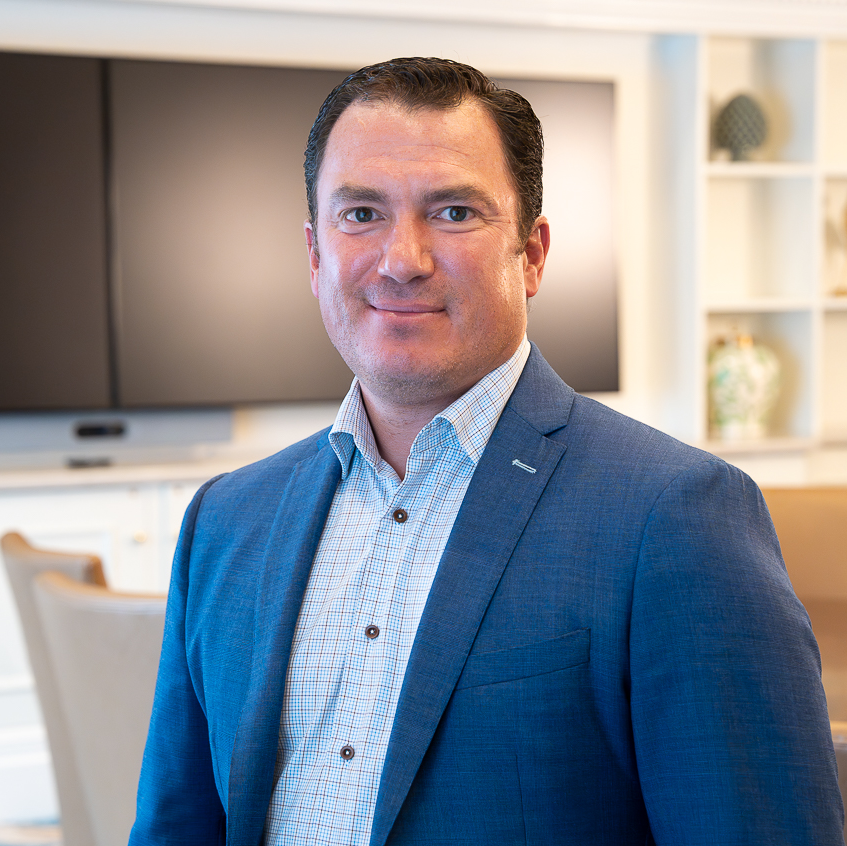
Food allergies can affect nearly every part of a child’s life, but they don’t have to limit what’s possible. David Stukus, MD, FAAP, Pediatric Allergist & Director, Division of Allergy and Immunology, Nationwide Children’s, separates fact from fear and explores the latest in food allergy care, from diagnosis and prevention to emerging treatments. He also shares practical ways families can help children navigate everyday activities with confidence and prepare for the transition to managing food allergies independently as they grow into adulthood.
Featuring:
David Stukus, MD, FAAP, Pediatric Allergist & Director, Division of Allergy and Immunology, Nationwide Children’s
Host/Producer: Carol Vassar
TRANSCRIPT
Announcer (00:00):
Welcome to Well Beyond Medicine, the world’s top-ranked children’s health podcast, produced by Nemours Children’s Health. Subscribe on any platform at nemourswellbeyond.org, or find us on YouTube.
Carol Vassar, podcast host/producer (00:12):
Each week we’ll be joined by innovators and experts from around the world, exploring anything and everything related to the 85% of child health impacts that occur outside the doctor’s office. I’m your host, Carol Vassar. And now that you’re here, let’s go.
(00:36):
Welcome to the podcast. We are at Hot Topics in Pediatrics in Orlando, Florida, at the Grand Floridian. I’m joined right now by Dr. David Stukus, a friend of the podcast he’s been on previously. He’s the director of the Food Allergy Treatment Center at Nationwide Children’s Hospital. He is one of the country’s leading pediatric allergists. And in November, you’re going to be leading one of the major organizations having to do with pediatric allergies. Is that correct?
David Stukus, MD, Nationwide Children’s (01:04):
Well, yeah. I’ll become president of the American College of Allergy, Asthma and Immunology in November, for a one-year term.
Carol Vassar, podcast host/producer (01:09):
So we’ve got the real deal here. We did speak with you a couple of years back about misinformation, medical misinformation, and that kind of thing, but today we’re really going to hone in on your specialty, which is food allergies. And millions of kids are living with food allergies. We hear about peanut allergies. I want to talk about, if we can, how healthcare providers, schools, families, can help children and make sure that they’re not exposed to the things that are going to get them to react when it comes to food. So, we look at this as a medical condition. How do food allergies influence childhood overall, if we look beyond that clinical diagnosis?
David Stukus, MD, Nationwide Children’s (01:57):
Well, I mean, all of us eat all day every day. So when a child has a food allergy, one, we need to identify exactly what they’re allergic to help guide avoidance. So that’s where I come into play, and I can help families often understand, oh, you don’t need to avoid every tree nut. Let’s focus on cashews or pistachios, for instance.
(02:14):
And then, because meals and snacks and food are such an important part of our daily life as part of the human condition, we need to help families understand how to avoid what their child’s allergic to. So it impacts them throughout their day, just basically every time they eat.
(02:28):
And then when they leave the home, so there’s a lot of trust involved in communication. So with the schools or daycare, things like that. When they go to restaurants, when you order food, when you buy food from the grocery store, every single time it has to come down to reading labels to make sure it’s safe, communicating with the food handlers, letting school personnel know exactly what they’re allergic to, what to watch for in regards to an allergic reaction.
(02:49):
So there’s a lot of education. Parents are advocates for their children. They’re amazing. Oftentimes they’re the ones charged with educating others when their children are under their care.
Carol Vassar, podcast host/producer (02:58):
Are there things we can do as community members? For example, I fly a lot. I travel a lot for the podcast. I don’t bring peanut butter sandwiches with me anymore. I’ve consciously stopped doing that. Are there things that individuals can do, communities can do, especially in the pediatric realm, to make sure that kids are not exposed to these things?
David Stukus, MD, Nationwide Children’s (03:20):
Yeah, that’s a great question. The good news is, not really. So if we do this the right way, and that’s very nice of you to do, but if we think about this, and there’s a lot of peanut-free schools and tree nut-free schools and things like that, but we have to worry about kids that have milk allergy, egg allergy. They have the same risks of having a severe reaction. So that’s where the families come into play, really focusing on making sure the child doesn’t ingest the food.
(03:43):
Thankfully, being near a food allergen rarely causes a reaction, especially a severe reaction. So we’re moving away with all the current evidence-based approaches towards, we don’t necessarily need to have nut-free schools. We need to have allergy-aware schools. We need to make sure teachers and nurses and school personnel understand why it’s important that those children don’t eat what they’re allergic to, how to recognize an allergic reaction, and treat it if it occurs.
(04:06):
But as far as abolishing peanuts from your snack bag, I think you can put it back in, and you’ll be fine.
Carol Vassar, podcast host/producer (04:12):
Well, let me ask this. First, how are these allergies discovered? What are the diagnostic kind of ways of going about making that diagnosis? And also, what is it that we overlook and misdiagnose when it comes to pediatric allergies, specifically food?
David Stukus, MD, Nationwide Children’s (04:31):
Yeah. I mean, I just gave a 30-minute presentation on this to our amazing attendees here. It always starts with a history. So, when we diagnose food allergies, I need to know what happens when that child eats the food. Because if you’re allergic to a food, your body forms an immune response to it. So, therefore, every single time you eat the food, you should have some sort of allergic reaction.
(04:50):
Typically, it’s going to occur within minutes of eating it, rarely longer than an hour or two later. We can see combinations of symptoms. Sometimes, there’s big red itchy hives on the skin, swelling of the face or other parts of the body, vomiting, what we call anaphylaxis, which is more than one part of the body system.
(05:04):
So if a child is eating a food and not experiencing those symptoms, that’s the best test. We know they’re not allergic to it. If they are experiencing those symptoms, then that’s where allergy testing can be very helpful.
(05:14):
So in the office setting, I can do something called a skin prick or scratch test, where we put drops of water on the skin, but it’s different allergens, gently scratch through the top part, wait 15 minutes. If they get a big bump or hive to that allergen and they have a good history for food allergy, that tells me they’re allergic. We can also do blood testing, which measures levels of this allergy antibody called IgE. The higher the level, the more likely they’re allergic.
(05:36):
The downside is, you mentioned misdiagnosis. So food allergies are often misdiagnosed because people rely on testing alone. And these are not… They don’t give us a yes-no answer. So we really have to be cautious how we interpret them. A lot of times these large food allergy panels are done for the best intentions. “Oh, let’s just make sure we’re not missing anything.” But then we get a ton of false positive results, and then children are told to avoid things that they’ve been eating without any issues. So it kind of goes both ways, but that’s where I come into play.
Carol Vassar, podcast host/producer (06:03):
Is it a matter of taking the food out for a little while, seeing if the child improves, or adding the food and seeing if there’s any kind of reaction, in combination perhaps with the testing?
David Stukus, MD, Nationwide Children’s (06:15):
Yeah. So usually with food allergies, parents are pretty good at identifying it. And if their child’s getting sick after eating a food, they’re not going to keep giving it to them.
Carol Vassar, podcast host/producer (06:21):
Right.
David Stukus, MD, Nationwide Children’s (06:22):
So that’s, I think, a key point: these typically aren’t very subtle. Now, there’s a lot of symptoms that occur from eating foods that are much more subtle, but aren’t due to a true food allergy, say like reflux or heartburn. So we know that people who have reflux, certain foods may make it worse, but it’s not because you’re allergic to it, and the testing won’t help. So for things like that, that’s where it may be trial introduction or avoidance and things like that.
Carol Vassar, podcast host/producer (06:45):
A lot of families here at Disney, I’ve seen many groups of families on their way to the parks, on their way to the pools. For a family that’s affected by a food allergy, and I’m thinking the more severe food allergies, like a peanut allergy, like a nut allergy, not to dismiss the milk or other allergies, but how does that change the way they simply go on vacation? They go to Disney, they go anywhere.
David Stukus, MD, Nationwide Children’s (07:11):
Yeah. Well, thankfully Disney is one of the better allergy-friendly places for families to go. They list everything on their menus. They are very receptive when families approach them and have great conversations.
(07:22):
That being said, accidents can happen. So for families, when you’re trying to go to Disney and have a great day, these families, when their children have a food allergy, they have to make sure that when they leave the house, they have safe snacks for the child. They can’t always, depending upon where they are, rely on having something available for them that’s safe to eat, especially when you’re traveling on airplanes and stuff. Do they have their medication with them? So we always want them to have their epinephrine autoinjector, or now we have nasal sprays that have epinephrine. So make sure they have that with them as well. And where are they going to keep that on their body as they go throughout the parks, and things like that.
(07:51):
And then, every time they order a meal or a snack, they just have to make sure that it’s safe from an allergy standpoint, and communicate, and all those things. So it’s always there in the background just lurking, but thankfully with some preparation and communication, most kids do really well to avoiding what they’re allergic to.
Carol Vassar, podcast host/producer (08:07):
And one thing I learned about Disney a couple of years back, coming here with my daughter and her family, was that you can bring in as much food as you want.
David Stukus, MD, Nationwide Children’s (08:14):
Yes. Yeah. And oftentimes that’s a common question I get, especially on airplanes: no, no, no, you take safe food snacks; you have your medication with you on your person; don’t pack it and put it in the normal luggage area. And so, when you go to theme parks and everything, yeah, absolutely.
Carol Vassar, podcast host/producer (08:31):
Keeping with the Disney theme, you did a presentation earlier today, and it was called To Infinity and Beyond because if there’s not a Toy Story reference in one of these podcasts, I’m not doing my job. Expanding Options in Food Allergy Management. And that suggests that we are entering a new era when it comes to allergy care. What do you see, as an expert in the field, that has changed the most in, say, the past decade, and what gives you optimism about the field moving forward?
David Stukus, MD, Nationwide Children’s (09:01):
How much time do we have? Things have changed dramatically, just in the last 10 years. It starts with food allergy prevention. We were taught, I was taught when I was training to be an allergist, to avoid milk till one, no eggs till two, no nuts or peanuts till three, because that would keep kids safe. The evidence shows the opposite is true.
(09:21):
So for the last 10 years, we’ve really been pushing early introduction of allergenic foods into a baby’s diet around four to six months of age, and most importantly, keep it in their diet consistently as the best path towards preventing food allergy. It’s not 100% effective, but it works really well at promoting tolerance and keeping kids safe.
(09:38):
In addition to that, another big advancement is, when children do experience reactions and we diagnose food allergy, we have ways of treating it now. We didn’t necessarily have this just a few years ago.
(09:46):
So, there’s two hallmarks. One is something called immunotherapy, where we expose small amounts of allergen to the immune system by having kids eat it, really small amounts every single day. We would increase this over time till they reach a maintenance dose. And then over time that helps increase their tolerance of the allergen and decrease risk for reactions.
(10:05):
There’s certain restrictions. We need to make sure they have a full stomach and then no exercise or increased body temperature for about an hour after each dose. For some families, they love it. If we start it early, like in infants and toddlers, we may actually help that allergy go away. For older children and teenagers, we just make it less likely they’re going to have a reaction out in the real world.
Carol Vassar, podcast host/producer (10:21):
And that’s what’s happening, really, with peanuts. I think we hear a lot about that in the media, and that early exposure is probably a good thing in most cases.
David Stukus, MD, Nationwide Children’s (10:32):
In almost all cases, yeah.
Carol Vassar, podcast host/producer (10:34):
Right. So my kid can have a fluffernutter. Yeah. You don’t know what that is. Look it up. It’s a New England delicacy. Very high in fat and sugar, but delicious nonetheless.
(10:46):
One of the things that we, in pediatric care, want is for our children to grow up into healthy adults. And, maybe we aren’t able to prevent allergies as they move, food allergies in particular, as they move forward into adulthood. So how do we prepare them to cope with that as young adults and into their own adulthood?
David Stukus, MD, Nationwide Children’s (11:08):
Yeah. So for parents, it’s modeling good behavior. So anxiety is a normal part of having food allergies. There’s helpful anxiety that helps you remember to have your epinephrine with you when you leave the house, read labels, communicate to food handlers. So modeling that for younger children, having them practice that as they get older, that’s really good.
(11:29):
And kids are really good with food allergies, especially when they start from a young age, and their friends are very protective of them. I often tell my families there’s a kind of a hidden superpower for kids who have food allergies, and this has been shown through research, that they actually have more empowerment and they’re better at self-management. They become responsible young adults. We don’t want anybody to have food allergies, but that’s kind of a nice byproduct of it as well, just because they get so used to having to avoid certain things and make sure that they’re safe. So, that’s what we typically see with kids as they get older.
Carol Vassar, podcast host/producer (12:02):
So it’s building resilience; it’s building confidence when they can manage their own conditions, probably from a very young age and well into their young adulthood, and adulthood overall.
David Stukus, MD, Nationwide Children’s (12:12):
Absolutely. And then it’s up to us to make sure, as medical professionals, if we recognize the unhelpful anxiety. So it can be quite a burden for a lot of families and for children who have had severe reactions, maybe ended up in the hospital because of something they ate. Maybe now they’re more reluctant to go to parties or participate in extracurricular activities or eat at certain restaurants. So that’s up to us to help recognize and then help them overcome that anxiety as well.
Carol Vassar, podcast host/producer (12:36):
Let’s talk about the burden on families who may not have a lot of resources. How do we help families whose children have been diagnosed with a food allergy to make sure that they not only are educating their kids and having them advocate for themselves, but providing the resources that they need, especially the medications that they might need, the EpiPens, which we hear from time to time are in short supply.
David Stukus, MD, Nationwide Children’s (13:03):
Yeah. Oh, and they’re very costly.
Carol Vassar, podcast host/producer (13:06):
Yes.
David Stukus, MD, Nationwide Children’s (13:07):
And unfortunately, the insurance coverage changes all the time. So from a medical home standpoint or from a pediatrician’s office standpoint, it’s really recognizing that these families often have different needs than maybe others if they come from underserved populations.
(13:22):
So, helping with prior authorizations, so setting up your office to help them make sure they have their epinephrine, really telling families to reach out if they have any issues getting their medication. And then, they can provide education and resources right from the office of like, “Hey, when you leave here, here’s some trusted websites that you can visit.” It really gives you great information that helps you communicate with your child’s school, things like that.
Carol Vassar, podcast host/producer (13:45):
How is Medicaid coverage for the EpiPens and other medications that kids might need?
David Stukus, MD, Nationwide Children’s (13:51):
It changes over time. And it’s interesting with epinephrine, there’s several devices. So sometimes the coverage, you may prescribe one type of device, but then Medicaid covers a different type. And that’s important, because then the technique may differ a little bit. So if a family is expecting one sort of device, but then they get handed another that works very differently, we need to make sure that they’re educated on how to use that.
Carol Vassar, podcast host/producer (14:11):
And the reason I ask that is because about just under half the kids in the US are covered by Medicaid. Give me an example. Is there a patient story that you can share, without revealing anything that’s HIPAA-protected, where a child is managing this well, and has survived and made it and thrived into adulthood, and with a lot of family support?
David Stukus, MD, Nationwide Children’s (14:36):
I mean, that’s the norm.
Carol Vassar, podcast host/producer (14:37):
Okay, good.
David Stukus, MD, Nationwide Children’s (14:39):
This is what everybody should… Don’t settle for anything less than that. That is the expectation here. No, I have great examples of these resilient kids that I’ve known from diagnosis at 12 months of age, and I see them grow up to be teenagers, and going off to college, where it’s just, “No, I’m just avoiding my allergy, and I communicate, I have my epinephrine with me, and I’m living my best life.” It’s very inspirational in many ways.
Carol Vassar, podcast host/producer (15:03):
We talked about the anxiety of the kids. Let’s talk about the anxiety of the parents. I can imagine that if your child is diagnosed at 12 months of age with a food allergy, that is going to bring up your level of anxiety, maybe from this point to this point, and perhaps higher. How do you make sure that parents are able to handle that anxiety without kind of projecting that onto the kids?
David Stukus, MD, Nationwide Children’s (15:33):
It starts with education. So, a lot of this comes from misinformation. Social media is riddled with the anxiety-provoking, fear-based messages surrounding food allergy. So we want to make sure that they have the right information as a starting point.
(15:45):
Okay, you got this. We need to focus. Let’s make sure your child doesn’t accidentally eat what they’re allergic to. You can fly on airplanes very safely. The peanut dust doesn’t get throughout the cabin. They can go to a playground. You don’t have to worry about the thousand what-if scenarios of your child touching something and putting their hand in their mouth. If you don’t see the food, it’s not going to cause a reaction. So, just starting there.
(16:04):
We’re individualizing management. So say you’re allergic to egg or milk, 75% of those kids are fine if you bake those ingredients in the oven. So we can help families with that. It doesn’t have to be as restrictive as maybe you thought it was.
(16:15):
And then, I have conversations with families of, do you go to certain restaurants, or do you avoid travel or things like that? And when I find out that they’re not doing certain things because they think it’s too risky, we have a conversation.
(16:27):
We actually have access to psychologists at our center that can meet with families and do a lot of cognitive behavioral therapy, and take their perception and have it meet reality. So it doesn’t have to be as scary as they thought it was.
Carol Vassar, podcast host/producer (16:37):
You brought up social media, misinformation, which is a passion of yours, another expertise of yours, if you will. You did talk about that on the podcast about two years ago.
David Stukus, MD, Nationwide Children’s (16:47):
Yeah.
Carol Vassar, podcast host/producer (16:47):
What’s changed in that realm, aside from AI, which I think has been a big game changer?
David Stukus, MD, Nationwide Children’s (16:52):
Oh, I agree. I think it’s gotten worse. I think people are relying more on social media. It’s proliferated. The algorithms are getting stronger at pushing, sort of, the bad information, the stuff that generates anxiety and emotions. They favor that over the good, boring information that I try to put out.
(17:14):
So that’s… A lot of people aren’t even seeing the good stuff just because the algorithms are taking them to the scary places. So, I wish I had better news.
Carol Vassar, podcast host/producer (17:23):
Better news. Yeah. I wish you did too.
David Stukus, MD, Nationwide Children’s (17:23):
AI, my gosh, that’s a whole different ballgame. But I think that we all need to be informed consumers. Social media is not an accurate reflection of reality, right? I wish more people sort of understood that.
Carol Vassar, podcast host/producer (17:35):
We’re getting there. AI brings it to a new level, though, and people are skipping over Dr. Google to go to Dr. AI, whatever your choice is, Claude or ChatGPT or whatever. It sounds like that concerns you.
David Stukus, MD, Nationwide Children’s (17:52):
To an extent. It’s not terrible. I want everybody to realize that AI is only as good as the data that goes into it, right? And it’s only as good as the questions that you ask. And AI doesn’t always have access to all the research studies that are behind paywalls and stuff like that.
(18:07):
So, it’s not going to be 100% accurate. It’s pretty good at sifting through the information and giving a summary of what’s out there, but we always have to double-check everything.
Carol Vassar, podcast host/producer (18:16):
What does the research show these days? What’s giving you hope in the research realm?
David Stukus, MD, Nationwide Children’s (18:20):
Oh, well, I mean, we’re living in the age of actively treating kids with food allergies through various forms of immunotherapy or medications. There are even newer medications that are being looked at, like from a pill form. So right now we only have injections to help treat food allergy. So that’s very exciting. There’s a patch that people can wear on the skin for peanut that will hopefully be available in the near future that can help desensitize. We’re only getting more and more options. It’s great.
Carol Vassar, podcast host/producer (18:45):
Where would you refer someone if they come to you with misinformation? Where would you point them for good evidence-based information?
David Stukus, MD, Nationwide Children’s (18:56):
I think our professional organizations, anything with a dot-org, they almost always have a medical or scientific council that vets the information before they put it online. So that’s where I would turn first in regards to medical information.
(19:09):
Advocacy organizations are usually pretty good, but not always. Sometimes they’re trying to generate funds and stuff like that, but those are also another good place to start.
(19:19):
I do recommend caution of listening to other parents online, because anecdotes are not evidence and you’re never hearing the entire story. So, I would not base any decisions based upon what another parent said online in a post or something like that.
Carol Vassar, podcast host/producer (19:31):
And pediatricians are a pretty good place to do your own primary care or your expert.
David Stukus, MD, Nationwide Children’s (19:36):
Yes, thank you. Absolutely. Yeah, I agree. 100%.
Carol Vassar, podcast host/producer (19:40):
Before we finish up today, I want to ask you: what does success look like in terms of children who have food allergies? And what gives you hope with regard to kids who are growing up now with food allergies?
David Stukus, MD, Nationwide Children’s (19:55):
Honestly, we have treatment available. So one, it’s making sure we’re not avoiding foods for unnecessary reasons. So let’s try to clarify the diagnosis and avoid misdiagnosis. That’s still rampant, unfortunately.
Carol Vassar, podcast host/producer:
Dr. David Stukus is a pediatric allergist and Director of the Food Allergy Treatment Center at Nationwide Children’s Hospital in Columbus, Ohio.
MUSIC:
Well Beyond Medicine.
Carol Vassar, podcast host/producer
Knowing what you’re allergic to, living your best life. You can go to restaurants, you can play with friends, you can travel, you can do whatever you want. If you want treatment to help lessen the burden, that’s great. If you decide just to avoid and live your best life, that’s great too, but that’s what everybody should strive for.
Carol Vassar, podcast host/producer (20:22):
Our conversation with Dr. Stukus was recorded during the 2026 edition of Hot Topics in Pediatrics at Disney’s Grand Floridian Hotel in Orlando, Florida. Over the next weeks and months, we’ll be sharing all of those conversations with you here on the podcast. Be sure not to miss any episode by heading over to nemourswellbeyond.org and subscribing to the podcast. Our website is also the place to leave podcast episode ideas, reviews, or subscribe to our monthly e-newsletter as well. Again, that’s nemourswellbeyond.org. You can also subscribe to the podcast on the Nemours YouTube Channel and your favorite podcast app, or you can listen to it by asking your smart speaker to play the Nemours Well Beyond Medicine Podcast.
Today’s episode was produced by Cheryl Munn, Susan Masucci, Lauren Teta, and Alex Wall. Video production by SarahKate Reger. Audio editing and production by me. Join us next time as we talk with Nemours’ Chief of Adolescent Medicine, Dr. Lonna Gordon, about helping teens navigate food, social media, and self-image as our Hot Topics in Pediatrics series continues.
I’m Carol Vassar. Thanks so much to Dr. Stukus for joining me today, and thank you for listening. Until next time, please remember that we can change children’s health for good – well beyond medicine.
MUSIC:
Let’s go, oh, oh, Well Beyond Medicine.